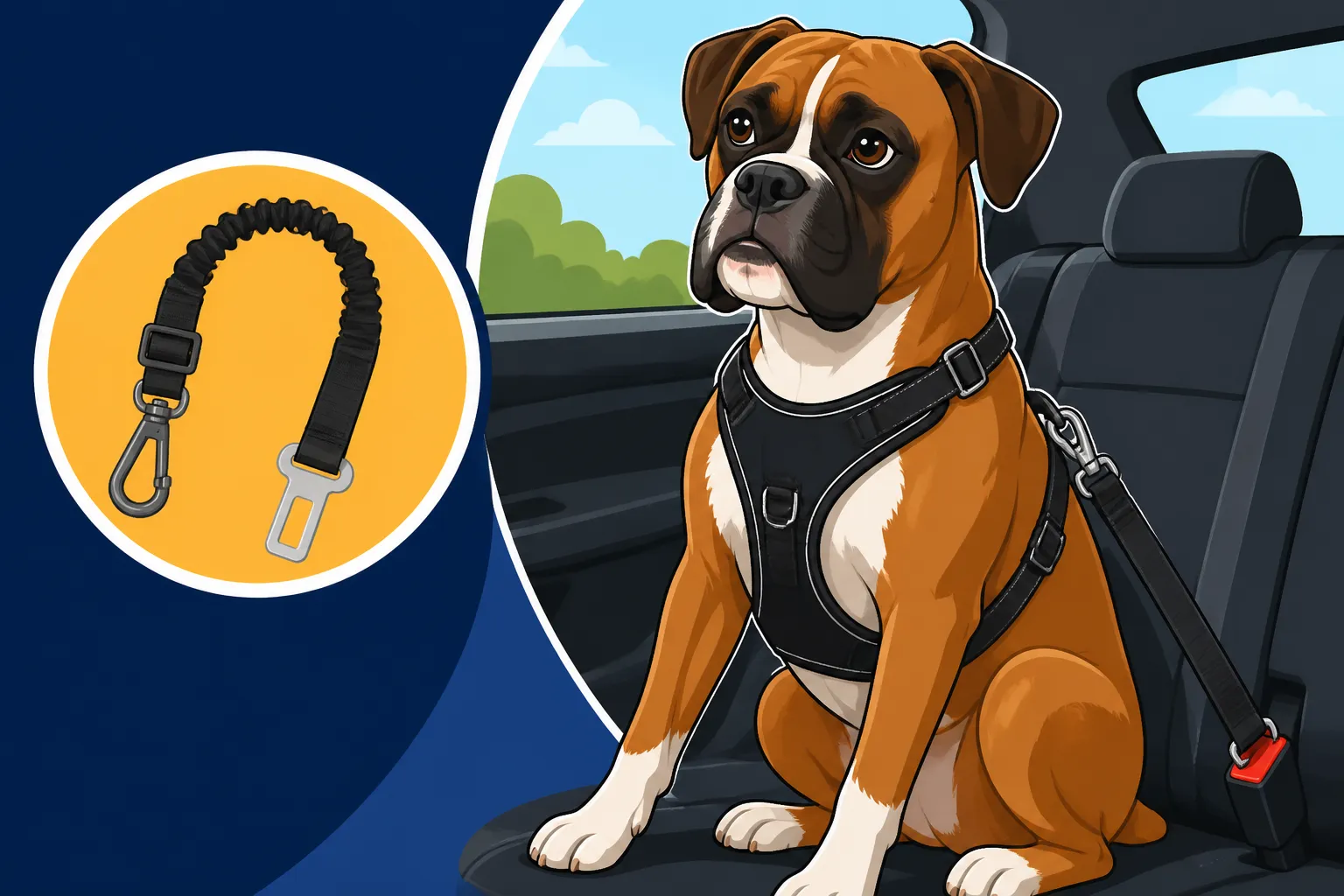
Car Restraints for a Seventy-Pound Boxer
We’ve all been there: you’re driving down the highway, maybe running a quick errand or heading out on a weekend adventure, and suddenly, your beloved seventy-pound Boxer decides to plant their big paws on your shoulder, stick their head out the window, or — even worse — try to nose their way into your lap. It’s sweet, in a goofy Boxer way, but it’s also incredibly dangerous, not just for them but for you and everyone else on the road. This guide is all about helping you understand why securing your powerful, energetic Boxer in the car isn't just a good idea, but an absolute necessity, and how to choose the right restraint to keep everyone safe.
Why Car Restraints Are Non-Negotiable for a Boxer
When you have a dog as strong and enthusiastic as a Boxer, ignoring car safety isn't just risky, it's irresponsible. It's easy to think, "Oh, my dog is fine, they just sit there," until that one time they aren't. And with a seventy-pound bundle of muscle and playful energy, the consequences can be severe.
The Dangers of Unrestrained Canine Passengers
Imagine hitting the brakes suddenly, or worse, getting into an accident. An unrestrained Boxer instantly becomes a projectile, a heavy object hurtling through your vehicle. This isn't just theoretical; studies and real-world accidents have shown that an unbuckled pet can exert many times its own body weight in force upon impact. That seventy-pound dog could become a thousand-pound force, capable of causing serious injury or even death to human occupants, let alone themselves. It's a terrifying thought, but it's a reality we, as responsible Boxer owners, need to confront.
Beyond the immediate danger in a crash, an unrestrained Boxer is a massive distraction. Whether they're panting excitedly in your ear, trying to lick your face, or attempting to climb into the front seat because they saw a squirrel, their presence can divert your attention from the road in critical moments. Just a second or two of distraction is all it takes for an accident to happen. Moreover, in some places, driving with an unrestrained pet can actually land you a hefty fine or points on your license, as it's considered unsafe driving. It’s not about stifling their joy; it’s about making sure you all get to your destination safely, trip after trip.
Protecting Your Boxer in an Accident
While our primary concern is often the safety of human passengers, we also love our Boxers fiercely, and their well-being is paramount. An unrestrained Boxer is vulnerable to impact, whiplash, and being thrown from the vehicle in an accident. Even a minor fender bender can cause significant internal injuries or broken bones. A properly chosen and fitted car restraint is designed to absorb some of that impact, keep your dog contained within the vehicle, and minimize their injuries. It's like a seatbelt for humans – a life-saving device.
Think about it this way: if you're ever in a situation where paramedics or emergency services need to access your vehicle, an unrestrained, possibly injured and frightened Boxer can complicate matters significantly. They might try to escape the vehicle, putting themselves and others at risk on a busy road, or they might become aggressive due to pain and fear, hindering rescue efforts. A secure restraint keeps them contained and allows emergency personnel to work more safely and efficiently, ensuring your Boxer can receive prompt medical attention. Keeping a Boxer Calm During Recovery is much easier if they haven't been severely injured in the first place.
Types of Car Restraints for a Seventy-Pound Boxer
When it comes to securing a powerful breed like a Boxer in the car, you've got a few main options. Each has its pros and cons, and what works best really depends on your specific dog, your vehicle, and your travel habits. The goal is always the same: safety, comfort, and minimizing distractions.
Crash-Tested Safety Harnesses
A car safety harness is essentially a modified dog harness designed to buckle directly into your car's seatbelt system. The best ones are specifically crash-tested by organizations like the Center for Pet Safety (CPS) to ensure they can withstand impact forces. For a seventy-pound Boxer, you absolutely need a harness that is rated for large breeds and has undergone rigorous testing. Look for harnesses with wide, padded straps that distribute force across the chest and shoulders, rather than concentrating it on the throat or a single point.
The harness itself typically attaches to the car's seatbelt via a loop on the back of the harness or with a short tether that clips into the seatbelt buckle or wraps around the seatbelt. This keeps your Boxer from moving freely around the car but still allows them to sit, stand, or lie down comfortably. It’s a good option if your Boxer enjoys looking out the window or prefers to be closer to you, but still needs to be secured. It’s important to ensure the tether is short enough to prevent them from hitting the seat in front of them or being ejected. When you're used to using Harnesses and Leads for a Pulling Boxer for walks, you'll find these car versions offer a similar secure feel.
Vehicle Crates and Carriers
For many Boxer owners, a sturdy travel crate is the gold standard for car safety. These aren't your everyday wire crates; car crates are often made from impact-resistant materials like aluminum or reinforced plastic and are designed to fit snugly in your vehicle, usually in the cargo area of an SUV, hatchback, or truck bed (with proper ventilation and securing). For a seventy-pound Boxer, you'll need a large, robust crate that provides enough space for them to stand up, turn around, and lie down comfortably, but not so much space that they can be jostled excessively within it.
The biggest advantage of a crate is containment. In an accident, a crash-tested crate provides a protective shell, much like a roll cage, absorbing impact and preventing your Boxer from becoming a projectile or being thrown from the vehicle. It also completely eliminates driver distraction. The best car crates often have multiple points for securing them to your vehicle's cargo tie-downs, preventing them from shifting or tipping. While the initial investment might be higher, the peace of mind and superior protection offered by a high-quality, crash-tested crate is often worth it. Don't forget to check out Choosing a Crate a Boxer Cannot Wreck for options that can stand up to your dog's strength. You can even find comfortable, durable crate pads on sites like Chewy that make the ride more enjoyable for your dog.
Car Barriers and Dividers
Car barriers and dividers are less about restraint and more about containment. These typically come in mesh, metal, or plastic forms and are installed between the front and back seats, or between the back seats and the cargo area. Their primary purpose is to prevent your Boxer from accessing the front of the vehicle, thus minimizing driver distraction.
However, it's crucial to understand that barriers do not protect your Boxer in the event of a crash. An unrestrained Boxer behind a barrier can still be severely injured by impact with the barrier itself or other parts of the car. They can also still become a projectile, hitting the barrier with force before potentially being thrown around the cargo area. So, if you opt for a barrier, it should always be used in conjunction with a crash-tested harness or a secure crate within the cargo area. Think of a barrier as a secondary line of defense against distraction, not a primary safety device. It’s a useful tool for ensuring your Boxer stays in their designated area, especially if you have a particularly inquisitive dog that loves to explore every inch of the car.
Here's a quick comparison of the main types of restraints:
| Restraint Type | Primary Benefit | Crash Protection | Distraction Prevention | Typical Location | Cost Range |
|---|---|---|---|---|---|
| Safety Harness | Allows movement, comfort | Moderate to High (if crash-tested) | Moderate | Back seat | Moderate |
| Travel Crate | Superior containment | High (if crash-tested) | High | Cargo area/Back seat | High |
| Car Barrier/Divider | Containment, space | Low (prevents front access only) | High (front access) | Between seats/Cargo | Low to Moderate |
Choosing the Right Restraint for Your Boxer
Selecting the perfect car restraint for your seventy-pound Boxer isn't a one-size-fits-all situation. There are several factors to weigh, ensuring you pick a solution that's effective, safe, and comfortable for your specific dog and lifestyle.
Assessing Your Boxer's Temperament and Size
First things first: think about your Boxer. Are they a calm, seasoned traveler who just needs a little nudge to stay put, or are they an excitable, bouncy puppy who sees every car ride as an invitation to a full-body exploration of your vehicle? A high-energy, easily bored Boxer might do better in a secure crate that limits their range of motion and provides a den-like sense of security. Training a Boxer That Gets Bored Fast can definitely extend to car rides, making a comfortable setup even more important.
Consider their size and strength. A seventy-pound Boxer is a formidable creature. Any harness or tether you choose needs to be robust enough to hold their weight and withstand their strength if they try to lunge or shift suddenly. Cheap, flimsy materials are a false economy when it comes to Boxer safety. Measure your Boxer accurately – chest girth, neck, and back length – to ensure a proper fit for any harness. For crates, measure your dog's length from nose to tail and height from head to floor while standing, then add a few inches to each dimension to ensure ample space. Remember, a crate that is too large can still allow your dog to be thrown around inside.
Vehicle Compatibility and Travel Habits
Your vehicle plays a significant role in your choice. Do you drive a compact car, an SUV, or a truck? A large crate might not fit in the back seat of a small sedan, but it could be perfect for the cargo area of an SUV. Always measure your vehicle's available space before purchasing a crate or barrier.
How often do you travel with your Boxer, and for what distances? If it's just short trips to the vet or dog park, a reliable crash-tested harness might be perfectly adequate and easier to manage. If you're a regular adventurer who takes Road Trips With a Boxer in Summer, a secure crate might be a better long-term investment, providing a more consistent and contained environment for extended periods. Also, consider the number of passengers. If you frequently have a full car of people, a back seat harness might be less feasible, making a cargo area crate the only option. Think about what your Crates, Beds and Gear Sized for a Boxer need to look like to accommodate both your dog and your car's dimensions.
Prioritizing Crash-Tested Products
This is perhaps the most critical factor. When it comes to car restraints, not all products are created equal. The pet product industry, for a long time, didn't have standardized crash-testing protocols. Thankfully, organizations like the Center for Pet Safety (CPS) have stepped up, conducting independent crash tests on various pet travel products and certifying those that pass.
Always look for a car restraint — be it a harness or a crate — that explicitly states it is "crash-tested" or "CPS Certified." These certifications mean the product has been subjected to rigorous testing standards that simulate real-world crash scenarios, providing the best assurance that it will perform as intended when it matters most. Avoid products that simply say "safety tested" without specifying the standards or organization; this can be vague and misleading. Investing in a crash-tested product isn't just buying gear; it's investing in peace of mind and proven protection for your beloved Boxer. This is especially true given the generally shorter Boxer Lifespan and the Years That Decide It, meaning we want to protect them for every moment.
Tips for Acclimating Your Boxer to a Car Restraint
Even the most confident, well-adjusted Boxer can find a new car restraint a bit bewildering at first. The key is to introduce it gradually and positively, making it a normal, even enjoyable, part of your routine. Patience and consistency are your best friends here.
Gradual Introduction and Positive Reinforcement
Start by introducing the restraint outside the car. If it's a harness, let your Boxer sniff it, praise them, and give a treat. Gently put it on for short periods indoors, followed by praise and rewards. If it's a crate, place it in your living room with the door open, make it comfortable with a familiar blanket, and toss treats inside. Let them explore it on their own terms. The goal is to associate the restraint with positive experiences. Companies like Ollie, known for their fresh dog food, can be a great source for high-value training treats that will motivate your Boxer during this process.
Once they're comfortable with the restraint itself, move the training to the car.
- Stationary Practice: With the car off and parked, put the restraint on your Boxer and place them in their designated spot. Sit with them, offer treats, and give calm praise. Let them get used to the feel of being confined in the vehicle without the stress of movement.
- Short, Positive Rides: Start with very short trips around the block. Keep it positive, calm, and end the trip with praise and a high-value reward. Gradually increase the duration and distance of your drives as your Boxer gets more comfortable.
- Consistency is Key: Use the restraint every single time you drive, even for quick trips. This establishes it as a non-negotiable routine. Boxers thrive on routine, and knowing what to expect can reduce anxiety.
Addressing Anxiety and Discomfort
Some Boxers might show signs of anxiety, like whining, panting, drooling, or trying to escape the restraint. It's important to address these calmly and with empathy.
- Rule out physical discomfort: Double-check the fit of the harness or the size of the crate. Is anything pinching or rubbing? Is the crate too small?
- Manage motion sickness: If your Boxer suffers from motion sickness, consult your vet. They might recommend anti-nausea medication or natural remedies. Some Boxers also benefit from facing forward or having a view out the window (with a harness) versus being crated.
- Create a calming environment: Use familiar blankets or toys in the crate to provide comfort. Some owners find pheromone sprays or calming supplements helpful, but always discuss these with your vet first. Keeping the car cool and quiet can also help.
- Don't give in: It's tempting to release a whining Boxer, but doing so teaches them that whining gets them out of the restraint. Only release them when they are calm, even if it's just for a moment of quiet.
- Consider professional help: If anxiety is severe and persistent, a professional dog trainer or veterinary behaviorist can offer tailored strategies and support. Sometimes a new trick or two can help with Training a Boxer That Gets Bored Fast in the car as well.
Remember, the goal is to create a positive association with car travel and the restraint. With patience and consistent positive reinforcement, your seventy-pound Boxer will learn that their car restraint is a safe and normal part of any adventure, big or small. This way, you can both enjoy your journeys, knowing you've taken the best steps to ensure everyone's safety. And if an unforeseen accident happens, having quality pet insurance like Healthy Paws can truly make a difference in managing potential vet bills. Whether Pet Insurance Pays Off for a Boxer is a question many owners ask, but for peace of mind, it’s often invaluable.
Disclaimer
This article is for general informational purposes only and does not constitute professional advice. Laws, prices and regulations vary by location and change over time. Consult a qualified professional for guidance on your specific situation.