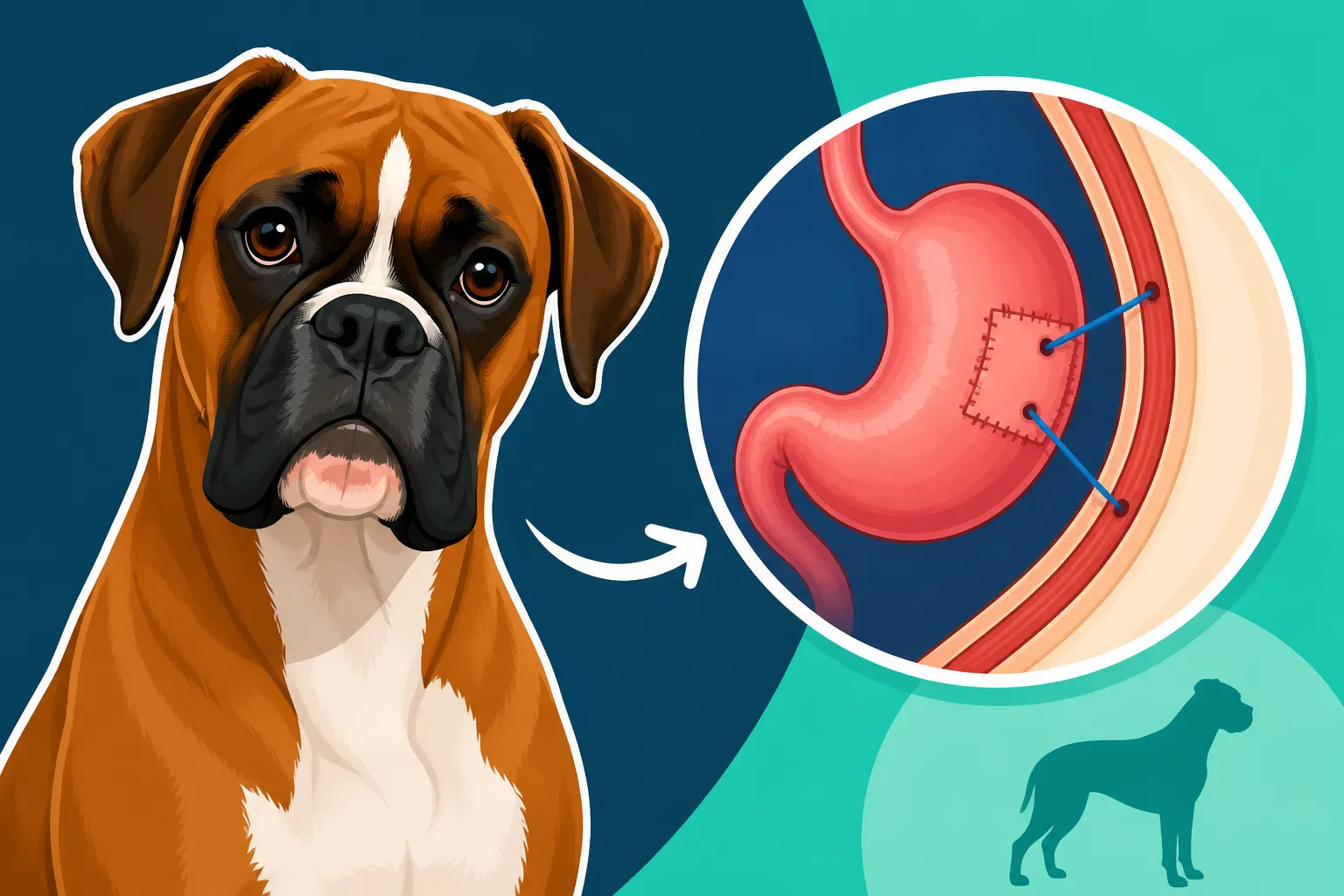
Adding a Gastropexy to a Boxer Neuter
One of the most terrifying emergencies a Boxer owner can face is bloat, medically known as Gastric Dilatation-Volvulus (GDV). This life-threatening condition can strike without warning, often turning a perfectly healthy dog into a critical patient within hours, if not minutes. For many of us, the fear of waking up to a bloated, distressed Boxer is a constant worry. This guide will walk you through the proactive measure of adding a gastropexy to your Boxer's neuter surgery, explaining what it is, why it's so important for our beloved Boxers, and what you can expect from the procedure and recovery.
Why Bloat Is a Terrifying Threat for Boxers
The deep-chested anatomy of a Boxer, while giving them that regal, athletic look we adore, unfortunately makes them particularly susceptible to bloat. This isn't just an upset stomach; it's a condition where the stomach fills with gas and often twists on itself, cutting off blood supply and quickly leading to shock and death if not treated immediately.
The Anatomy That Puts Boxers at Risk
It’s heartbreaking to think that something as fundamental as your Boxer’s build can be a hidden danger, but it's true. Our Boxers have chests that are quite deep and relatively narrow compared to other breeds, creating a spacious abdominal cavity where the stomach has more room to move around. Imagine a heavy bag loosely tied inside a big box; it can swing and flip. That's essentially what happens with a Boxer's stomach. When the stomach fills with air, food, or fluid, it becomes a heavy, unstable organ, making it prone to twisting. This twisting is the "volvulus" part of GDV, and it's the really dangerous bit because it traps gas and prevents anything from passing in or out, including blood flow. This breed-specific risk is why discussions around Why a Boxer's Chest Shape Invites Bloat are so vital for owners.
The Urgency of Bloat: Every Minute Counts
When bloat strikes, it doesn't wait. The initial signs can be subtle – maybe your Boxer seems a little restless, tries to vomit but can’t, or paces nervously. But within a short time, they can become visibly distressed, with a distended abdomen, rapid shallow breathing, and signs of extreme pain. This is an immediate, drop-everything emergency. You can't wait for your vet's office to open; you need to get to an emergency clinic right away. Time is literally of the essence. The prognosis for a Boxer with bloat dramatically decreases with every hour that passes without surgical intervention. This is why knowing Bloat Signs Every Boxer Owner Should Know can quite literally save their life.
What Exactly Is a Gastropexy?
A gastropexy is a surgical procedure designed to prevent the stomach from twisting in the future. It doesn't prevent the stomach from dilating (filling with gas), but it critically prevents the volvulus (the twist), which is the fatal component of GDV.
How Gastropexy Anchors the Stomach
Think of a gastropexy as permanently tacking your Boxer's stomach to their abdominal wall. During the procedure, a veterinarian creates an adhesion between a specific part of the stomach (typically the pylorus) and the right side of the abdominal wall. This permanent attachment stops the stomach from being able to flip over. If your Boxer's stomach fills with gas after a gastropexy, it can still expand, but it can't rotate and cut off its own blood supply or block the exits. This means that while they might still experience uncomfortable gas buildup, it won't escalate into the fatal twisted scenario. It’s an incredibly reassuring layer of protection for a breed like the Boxer. This procedure directly addresses the vulnerability discussed in Whether Preventive Bloat Surgery Suits a Boxer.
Traditional vs. Laparoscopic Techniques
Gastropexies can be performed in a couple of ways, and the choice often depends on your veterinarian's expertise and the clinic's equipment.
- Traditional Open Surgery: This involves a larger incision in the abdomen, similar to what would be done for a spay or neuter, allowing the vet direct access to the stomach and abdominal wall. It's a very effective method and often performed when a gastropexy is combined with another abdominal surgery, like a neuter. Recovery is typically a bit longer due to the larger incision.
- Laparoscopic Surgery: This minimally invasive technique uses a camera and specialized instruments inserted through small incisions. The stomach is visualized and then attached to the body wall using sutures. This method usually results in less pain, smaller incisions, and a faster recovery. However, not all veterinary clinics are equipped for laparoscopic surgery, and it can sometimes be more costly due to the specialized equipment and training required. If your vet offers it, it's worth discussing.
Combining Gastropexy with a Boxer Neuter
Deciding to neuter your male Boxer is a significant decision on its own. Adding a gastropexy to this routine surgery is a smart, proactive choice that addresses two important aspects of your dog's health at once.
The Benefits of a Combined Procedure
The biggest advantage of combining a gastropexy with a neuter is that your Boxer only undergoes anesthesia once. Anesthesia, while generally safe, always carries some degree of risk, especially for brachycephalic (flat-faced) breeds like Boxers, who can have particular sensitivities to sedatives and anesthetic agents. Minimizing exposure is always a good thing, a point often highlighted in discussions about Anesthesia Risk in a Flat-Faced Boxer. A single surgery also means one recovery period, one course of post-operative pain medication, and one set of costs for the surgical facility and staff. From a practical standpoint, it simply makes sense to get both done while your Boxer is already under. It reduces stress for both you and your dog, condensing the recovery timeline into one consolidated period.
What to Expect on Surgery Day
On the day of the surgery, your Boxer will need to be fasted for a set period, usually overnight, to ensure an empty stomach and minimize anesthetic risks. You'll bring them to the clinic, and the veterinary team will perform pre-anesthetic blood work to check organ function and ensure they are healthy enough for surgery. Once cleared, they will be sedated and then fully anesthetized. The neuter procedure typically comes first, involving the removal of the testicles. Following this, the gastropexy will be performed. The surgeon will access the abdomen, manipulate the stomach, and secure it to the abdominal wall using sutures. The incisions are then closed, and your Boxer will be carefully monitored as they wake up from anesthesia. They will likely stay overnight for observation, ensuring they are comfortable and stable before going home.
Post-Operative Care and Recovery
When your Boxer comes home, they’ll be a bit groggy and might seem a little more withdrawn than usual. The recovery period typically lasts about 10-14 days. You’ll need to:
- Restrict Activity: This is crucial. No running, jumping, stairs, or rough play. Leashed walks for potty breaks only. This period of quiet rest is essential for the surgical sites to heal properly and prevent any complications.
- Manage Pain: Your vet will send you home with pain medication, which you should administer exactly as prescribed. Don't skip doses, even if your Boxer seems to be feeling better.
- Monitor Incisions: Check the incision sites daily for any signs of redness, swelling, discharge, or opening. If you notice anything concerning, contact your vet immediately. Ensure your Boxer doesn't lick or chew at the incisions; an E-collar (cone of shame) will be your best friend here.
- Food and Water: Offer small, frequent meals of easily digestible food. Your vet might recommend a specific recovery diet, or you can opt for something gentle like boiled chicken and rice for a few days. Online retailers like Chewy often have a variety of sensitive stomach formulas, or you might consider fresh food options from services like Ollie, which can be very gentle. Just remember to introduce any new food slowly and with vet approval.
It’s a tough couple of weeks, but it's a small price to pay for the peace of mind it brings.
Cost and Considerations for This Combined Procedure
Talking about money is never fun, but it's a crucial part of responsible pet ownership, especially when it comes to preventative measures like a gastropexy. The upfront cost of this combined surgery is an investment in your Boxer’s long-term health and your peace of mind.
Understanding the Financial Aspect
The cost of adding a gastropexy to a neuter can vary significantly based on your geographic location, the veterinary clinic's pricing structure, the type of procedure (traditional vs. laparoscopic), and any pre-operative tests required. Generally, you can expect the combined procedure to cost more than a neuter alone, as it involves additional surgical time, materials, and expertise.
To put it in perspective, consider the alternative: emergency bloat surgery. This is a complex, high-stakes procedure that often takes place in the middle of the night at an emergency veterinary hospital. The costs can be astronomical, easily running into several thousands of dollars, not including follow-up care or potential complications. You can read more about What Boxer Bloat Surgery Costs Overnight to get a clearer picture of the difference. Many owners look into pet insurance providers like Healthy Paws long before any procedures are needed, as coverage for elective procedures or pre-existing conditions can vary greatly. In some cases, a preventive gastropexy might be covered, reducing your out-of-pocket expenses. It's always a good idea to discuss the full cost breakdown with your vet and inquire about payment plans or financing options.
Here's a simplified comparison of potential financial scenarios:
| Factor | Elective Combined Neuter & Gastropexy | Emergency Bloat Surgery (GDV) |
|---|---|---|
| Timing | Planned during regular hours | Unplanned, often after hours |
| Cost (Relative) | Moderate to High | Very High to Extremely High |
| Anesthesia | Single, planned event | Emergency, potentially higher risk |
| Recovery | Controlled, expected | Intensive, critical care |
| Stress Level (Owner) | Manageable, anticipatory | Extreme, crisis |
| Prognosis | Excellent for prevention | Guarded, especially with delay |
Note: Specific dollar amounts are omitted as they vary widely.
When Is the Best Time to Perform the Procedure?
The ideal time to perform a gastropexy is often debated, but many veterinarians recommend doing it at the same time as a neuter, usually between 6 months and 1 year of age. This allows the dog to recover from both procedures simultaneously while they are still young and resilient. Some owners prefer to wait until their Boxer is a bit older, perhaps closer to 18 months or two years, believing the growth plates should be closed. However, the risk of bloat exists even in younger Boxers. Your veterinarian is the best person to consult on the optimal timing for your individual Boxer, taking into account their growth, health, and lifestyle.
Questions to Ask Your Veterinarian
Before proceeding, make sure you have a thorough conversation with your vet. Don't be shy about asking questions!
- "Do you recommend a gastropexy for my Boxer specifically, given their age and health?" Every Boxer is an individual, and while the breed as a whole is at risk, your vet can assess your dog's specific situation.
- "What surgical technique do you typically use (traditional vs. laparoscopic), and what are the pros and cons for my Boxer?" Understanding the method helps you anticipate recovery.
- "What is the total estimated cost for the combined procedure, including pre-op blood work, anesthesia, surgery, pain medication, and overnight stays?" Get a clear, itemized estimate.
- "What is the expected recovery time, and what specific restrictions will be in place during that period?" Knowing the exact expectations will help you prepare your home and schedule.
- "What are the potential complications of this surgery, and how will they be addressed?" It's important to be aware of all possibilities.
- "What type of post-operative pain management will be provided, and what can I do at home to keep my Boxer comfortable?"
- "Will my pet insurance, like Healthy Paws, cover any portion of this elective procedure, and what documentation do I need?" It's always worth checking before the surgery, not after.
Adding a gastropexy to your Boxer's neuter is a powerful preventative measure against a truly devastating condition. It’s a decision that offers immense peace of mind, knowing you've taken a significant step to protect your goofy, loving companion. After all, their health and happiness are what truly matter most.
Disclaimer
This article is for general informational purposes only and does not constitute professional advice. Laws, prices and regulations vary by location and change over time. Consult a qualified professional for guidance on your specific situation.