Finding a Lump on a Boxer Early
Finding an unexpected lump on your beloved Boxer can send a chill down your spine, instantly conjuring up fears about their health and future. It’s a moment of anxiety many of us Boxer parents know all too well, given our breed’s unfortunate predisposition to various growths. This comprehensive guide is here to walk you through how to approach finding a lump, what different types might mean, and most importantly, why early detection is your Boxer's best friend.
Why Regular Lump Checks Are Non-Negotiable for Boxer Owners
Let's face it, Boxers are prone to lumps and bumps. It's a sad reality of the breed, and it means that being diligent about checking your dog isn't just a good idea, it's an essential part of responsible Boxer ownership. The sheer worry that washes over you when your fingers brush against something new and unwelcome is palpable, and that's why we need to empower ourselves with knowledge and a routine.
The Boxer's Predisposition to Lumps and Bumps
Boxers, bless their blocky heads and goofy grins, are statistically more susceptible to certain types of growths than many other breeds. When you talk to fellow Boxer owners, or spend time in Boxer forums online, stories about "the lump" are incredibly common. This isn't just anecdotal; scientific studies and veterinary experience consistently show that Boxers have a higher incidence of mast cell tumors, lipomas, and other skin masses. It’s part of what makes their health profile unique, and frankly, a bit more challenging to manage. This genetic lottery means we can't afford to be complacent. Every wrinkle, every fold, every stretch of their short, fine coat needs to be familiar to you. The more you know your dog's skin, the faster you'll notice a change, and that speed can make all the difference.
Early Detection as Your Best Defense
Imagine finding a tiny little pebble on your dog's side, barely the size of a pea. Now imagine that same lump growing for months, unchecked, until it's the size of a golf ball. Which scenario feels less daunting to deal with? Exactly. Early detection isn't just a buzzword; it's a lifeline. When a lump is small, localized, and hasn't had the chance to spread, treatment options are often more numerous, less invasive, and more successful. Whether it's a simple benign cyst that can be easily removed or something more serious that requires prompt intervention, catching it when it's small significantly improves your Boxer's prognosis. It can mean the difference between a minor surgery and a much more complex, expensive, and stressful battle. This is why cultivating a habit of weekly lump checks on a Boxer is so crucial for every owner.
Your Weekly Boxer Lump Check Routine
I know, I know. Life gets busy. You've got work, kids, errands, and then there's your high-energy Boxer demanding zoomies and cuddles. It feels like there's no time for anything else. But carving out just a few minutes each week for a thorough lump check can truly save you heartache down the line. Think of it as a special bonding moment where you're not just petting them, you're actively caring for their future.
A Head-to-Tail Approach
To make sure you don't miss anything, adopt a systematic approach to your lump checks. Don't just randomly pet them and hope to feel something. Start at their head and work your way down to their tail and paws.
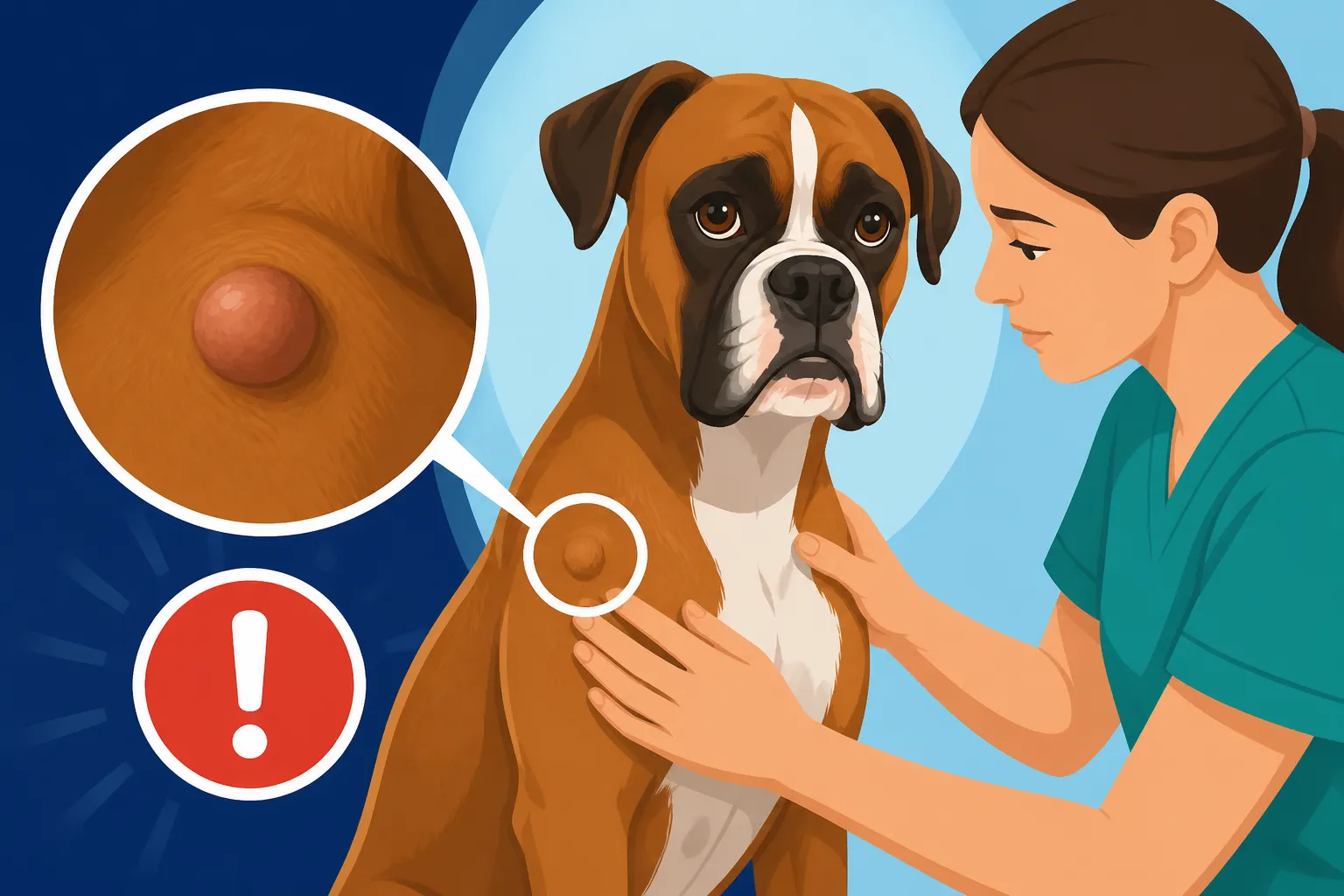
- Head and Face: Gently feel their muzzle, around their eyes, over their skull, and particularly in the jowls and skin folds around their mouth. Don't forget their ears – both the outer flap and gently feeling the base inside. Check their neck, especially under the jaw, where lymph nodes can sometimes swell.
- Neck and Shoulders: Run your hands firmly but gently over their entire neck, down their powerful shoulders, and along their front legs. Feel the armpits and chest.
- Body and Back: Cover every inch of their torso. Pay close attention to their ribs, flank, and spine. Work your way down both sides, checking for anything unusual.
- Belly and Groin: While your Boxer is lying down or standing, lift their legs and check their belly, groin area, and inner thighs. Female Boxers need extra attention around their mammary glands.
- Legs and Paws: Finish by feeling down each leg, examining their joints, and especially their paws. Spread their toes and check the pads, as lumps can hide in surprising places like between their paw pads.
- Tail and Rear: Don't forget the base of their tail and around their rear end.
This systematic sweep ensures you cover all your bases, increasing the likelihood of finding anything new.
What to Feel For and Where
When you're doing your weekly check, you're not just looking for obvious bumps. You're feeling for any change.
- Size: Is it tiny, like a BB pellet, or larger, like a grape?
- Shape: Is it round, oval, or irregular?
- Texture: Is it soft and squishy, firm and rubbery, or hard like bone?
- Mobility: Does it move freely under the skin, or is it fixed to underlying tissue? This is a really important one. Benign fatty lumps, or lipomas, often feel soft and movable. More concerning masses might feel firm and "stuck."
- Pain/Sensitivity: Does your Boxer react when you touch it? Do they flinch or show discomfort?
- Skin Changes: Is the skin over the lump red, inflamed, ulcerated, or losing hair?
It's natural to feel a bit overwhelmed at first. But the more you do these checks, the more familiar you'll become with your Boxer's normal topography, and the quicker you'll spot an outlier.
Documenting Your Findings
Finding a new lump can be alarming, but acting rationally is key. Don't panic! Grab a notebook, or use your phone's notes app, and create a "lump map" for your Boxer.
- Date Found: Always note the exact date you first discovered the lump.
- Location: Be specific. "Right side, just behind the last rib" is much more helpful than "on his side." You can even draw a simple sketch of your Boxer and mark the location.
- Description: Jot down everything you felt for: size (you can compare it to a common object like a pea, marble, or grape), shape, texture, whether it moved, and any skin changes.
- Photos: Take clear photos, especially if there's any visible discoloration or skin involvement. Place a ruler or coin next to the lump for scale.
- Monitor: If it's small, perfectly round, and moves freely, your vet might suggest monitoring it for a week or two. If so, document any changes daily or every few days. Is it growing? Changing color? Becoming more firm?
This detailed record will be invaluable when you talk to your veterinarian. It helps them track the lump's progression and aids in diagnosis. Remember, your vet relies on your observations. You are your Boxer's first line of defense!
Understanding Different Types of Lumps on Boxers
Okay, so you've found a lump. Now what? The sheer variety of lumps a Boxer can develop is mind-boggling, and it's easy to jump to the worst conclusions. But it’s important to remember that not all lumps are cancer. Many are benign, and some even disappear on their own. The key is knowing which ones need immediate attention and which can be monitored under veterinary guidance.
| Lump Type | Common Appearance | Texture & Mobility | Typical Location | Age Often Seen | Urgency for Vet Visit |
|---|---|---|---|---|---|
| Lipoma | Soft, rounded, non-painful, often skin-colored | Soft, "fatty" feel, easily movable under skin | Trunk, armpits, inner thighs | Middle-aged to older | Non-urgent, but get it checked |
| Histiocytoma | Small, red, raised, "button-like," hairless spot | Firm, rubbery, often dome-shaped | Face, ears, paws, legs | Young Boxers (under 3) | Non-urgent, but get it checked |
| Mast Cell Tumor | Highly variable: can be red, ulcerated, swollen, or just a small bump | Can be soft, firm, or squishy; may change size rapidly; can be fixed or movable | Any skin surface, can be internal | Any age, but common in Boxers | Urgent – seek vet advice promptly |
| Sebaceous Cyst | Small, firm, skin-colored or slightly yellowish bump with a central pore | Firm, often feels like a small pea or kernel | Trunk, head, neck | Middle-aged to older | Non-urgent, but get it checked |
| Wart (Papilloma) | Small, fleshy, cauliflower-like growth | Bumpy, firm | Mouth, eyelids, paws (oral in young dogs) | Young or older | Non-urgent, unless bleeding/bothering dog |
Benign Fatty Lumps (Lipomas)
One of the most common lumps you’ll find on an older Boxer is a lipoma, or a fatty tumor. These are almost always benign, meaning they are not cancerous and don’t spread. They’re essentially just a collection of fat cells under the skin. You might find several of these as your Boxer ages. I remember the first time I found one on my Boxer, Duke, near his ribcage. My heart leaped into my throat! But after a quick trip to the vet and a fine needle aspirate, we learned it was just fat. What a relief!
Lipomas typically feel soft and squishy, almost like a small water balloon or a pad of butter under the skin. They are usually easily movable when you pinch them, and the skin over them generally looks normal. While they're generally harmless, it's still crucial to have any new lump checked by a vet to confirm its identity. Your vet might suggest monitoring its size or even removing it if it's in a location that bothers your dog, like an armpit where it could rub. Telling a Boxer fatty lump from a tumor is a common concern for owners, and it's always best left to a professional.
Histiocytomas in Young Boxers
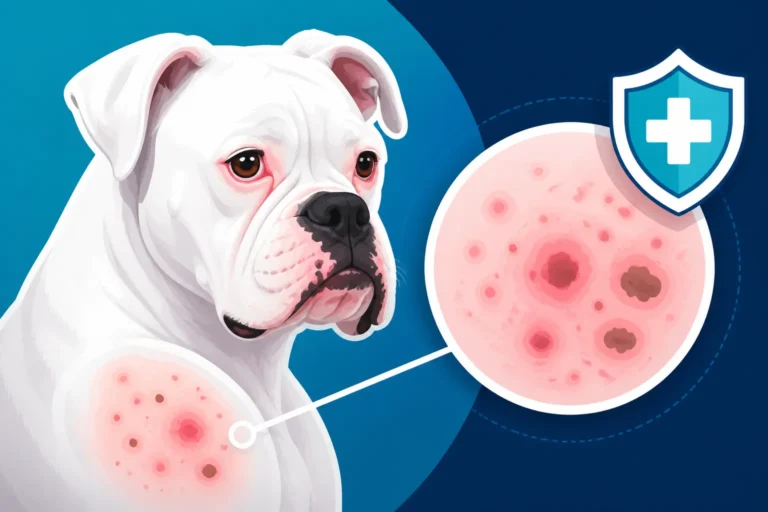
If you have a Boxer puppy or a young Boxer, you might encounter a completely different kind of lump: a histiocytoma. These are benign skin tumors that often appear suddenly and grow quickly, which can be incredibly alarming. They often look like a small, red, raised button or dome, sometimes hairless on top. They most commonly show up on the face, ears, or legs.
The good news is that histiocytomas in a young Boxer usually resolve on their own within a few weeks to a few months without any treatment. It's almost like a puppy pimple. However, because they can resemble more serious skin cancers, it's vital to have your vet confirm the diagnosis. They'll likely do a fine needle aspirate to be sure. My friend's Boxer, Luna, had one on her ear when she was about a year old. It was scary how fast it appeared, but true to form, it shrunk and disappeared completely after two months.
The Concern with Mast Cell Tumors
Now, let's talk about the one that makes every Boxer owner's stomach drop: mast cell tumors. Boxers are unfortunately overrepresented when it comes to this type of cancer. The insidious thing about mast cell tumors is their ability to mimic almost any other skin lump. They can be soft, firm, squishy, movable, fixed, red, hairless, ulcerated, or just look like a benign wart. They can even change in size day to day, a phenomenon known as Darier's sign, where manipulation causes them to become red and swollen due to histamine release. This unpredictable nature is precisely why every new lump on a Boxer should be considered a mast cell tumor until proven otherwise by a veterinarian.
Catching these early is paramount because mast cell tumors can be aggressive and can spread to lymph nodes, spleen, liver, and bone marrow. A fine needle aspirate is the go-to diagnostic tool, and if it confirms a mast cell tumor, your vet will discuss options like wide-margin surgery to remove it. Understanding what a Boxer mast cell grade means after removal is also critical for prognosis and further treatment decisions.
Other Common Skin Tumors
Beyond lipomas, histiocytomas, and mast cell tumors, Boxers can develop a whole host of other skin growths. These might include:
- Sebaceous Cysts: These form when a sebaceous gland (which produces oil for the skin) becomes blocked. They often look like a small, firm bump, sometimes with a tiny blackhead-like opening, and can occasionally rupture, releasing a thick, cheesy, white substance. While generally benign, they can sometimes get infected.
- Warts (Papillomas): Caused by a virus, these typically appear as small, cauliflower-like growths. In young Boxers, they often occur in the mouth. They usually go away on their own.
- Fibromas or Histiocytomas (benign fibrous tumors): These are firm, non-painful nodules that are usually benign.
- Basal Cell Tumors: While more common in certain breeds, Boxers can get these. They're often solitary, firm, hairless, and can be benign or malignant.
- Melanomas: While often associated with dark-skinned areas (like the mouth or paw pads) and more common in certain breeds, Boxers can get them. They can be benign or malignant and vary greatly in appearance.
The takeaway here is that while many lumps are benign, their appearance alone often isn't enough to tell you what they are. This is why a professional diagnosis is non-negotiable. Don't play guessing games with your Boxer's health. For more general information, you can always look into boxer skin tumors that are not cancer.
When a Lump Needs Immediate Veterinary Attention
You've found a lump, you've documented it, and now you're wondering if it can wait until your regular annual check-up or if you need to call the vet now. This is where your careful observations and understanding of warning signs come into play.
Red Flags to Watch For
While a tiny, soft, movable lump might be okay to monitor for a week or two (with your vet's explicit guidance, of course), certain characteristics scream "urgent appointment!"
- Rapid Growth: If a lump appears and seems to double in size within days or a couple of weeks, get it checked immediately. Rapid growth is a significant red flag for aggressive tumors.
- Changes in Texture or Appearance: If a lump suddenly becomes firm, discolored, or starts to bleed or ulcerate, don't delay.
- Pain or Discomfort: If your Boxer flinches, pulls away, or seems bothered when you touch the lump, it warrants immediate attention.
- Fixation: A lump that feels "stuck" to the underlying tissue, rather than moving freely under the skin, is more concerning.
- Multiple Lumps: While Boxers can get multiple lipomas, new, rapidly appearing, or changing multiple lumps should be seen quickly.
- Lumps in Specific Areas: Lumps around lymph nodes (under the jaw, in the armpits, behind the knees), or those in the mouth or on paw pads, are often more urgent due to the higher likelihood of malignancy or the impact on vital functions. Swollen glands under a Boxer's jaw, for instance, are definitely something to get checked out.
- Systemic Signs: If your Boxer is also showing other signs of illness – lethargy, loss of appetite, vomiting, weight loss, or difficulty breathing – alongside a new lump, that's an emergency.
When in doubt, always err on the side of caution. A quick phone call to your vet to describe what you've found is never a bad idea. They can help you determine the urgency.
The Importance of a Fine Needle Aspirate (FNA)
The single most valuable diagnostic tool for evaluating a lump on your Boxer is often a fine needle aspirate (FNA). This is a relatively simple, quick, and minimally invasive procedure that can often be done during your regular vet visit, sometimes even without sedation.
Here's how it generally works: Your vet will use a very fine needle (similar to the one used for vaccinations) to collect a small sample of cells directly from the lump. These cells are then spread onto a slide, stained, and examined under a microscope by your vet or sent to a veterinary pathologist. The goal is to identify the type of cells present – are they fat cells (lipoma), inflammatory cells (cyst or infection), or something more concerning like mast cells or other cancerous cells?
An FNA is often the first step in determining what you're dealing with. While it's not always 100% definitive, it can provide crucial information, guide the next steps, and help avoid unnecessary surgeries. It’s important to understand that a needle biopsy on a Boxer lump might sometimes be inconclusive, especially if the sample isn't adequate or the tumor type is difficult to differentiate without a tissue biopsy. In such cases, your vet may recommend re-aspirating or proceeding directly to surgical removal for a full biopsy.
Next Steps After a Diagnosis
The path forward after a lump diagnosis depends entirely on what the FNA or biopsy reveals.
- Benign Lumps (e.g., Lipoma, Histiocytoma, Sebaceous Cyst): If it’s definitively benign, your vet might recommend monitoring it for growth, especially if it’s small and not bothering your Boxer. If it’s large, in an awkward spot, or ruptures repeatedly (like some sebaceous cysts), surgical removal might be advised.
- Mast Cell Tumors or Other Cancers: If cancer is diagnosed, the urgency and complexity of treatment escalate.
- Surgery: Surgical removal with wide, clean margins is usually the first line of defense for solid tumors like mast cell tumors. The goal is to get all the cancerous cells.
- Staging: For aggressive cancers, your vet might recommend "staging" tests. This involves checking if the cancer has spread elsewhere, often through blood tests, X-rays of the chest and abdomen, and ultrasound of internal organs, and aspirates of regional lymph nodes.
- Oncology Referral: Depending on the type and grade of cancer, your vet might refer you to a veterinary oncologist, a specialist in cancer treatment. They can discuss options like chemotherapy for a Boxer with cancer, radiation therapy, or newer targeted therapies.
- Palliative Care: If cancer is advanced or highly aggressive, or if treatment isn't feasible or desired, your vet will help you focus on palliative care to keep your Boxer comfortable and maintain their quality of life for as long as possible.
This journey can be emotional and expensive. This is where having pet insurance can be a game-changer. Companies like Healthy Paws, for example, can help cushion the financial blow of diagnostics, surgeries, and ongoing treatments for cancer, allowing you to focus on what’s best for your Boxer without the added stress of overwhelming vet bills. Knowing that a significant portion of the cost will be reimbursed can make difficult decisions a little easier.
Living Proactively to Manage Boxer Health
Finding a lump is a stark reminder of our Boxers' vulnerability. But it doesn't have to be a constant source of fear. By adopting a proactive mindset and integrating good health practices into your routine, you can significantly contribute to your Boxer's long-term well-being and catch issues early.
Nutrition and Overall Well-being
A strong foundation for health starts with what you put in their bowl. Good nutrition is paramount for supporting your Boxer's immune system and overall vitality.
- High-Quality Diet: Feed a well-balanced, high-quality dog food appropriate for your Boxer's age and activity level. Look for ingredients that support skin and coat health, and avoid fillers or common allergens if your Boxer has sensitivities.
- Maintaining a Healthy Weight: This is huge for Boxers. Extra weight puts strain on their joints, heart, and can even contribute to inflammation, which is never good news when you're battling potential growths. You should be able to easily feel your Boxer's ribs without seeing them prominently, and they should have a discernible waistline.
- Supplements: Discuss with your vet if supplements like omega-3 fatty acids (fish oil) might benefit your Boxer’s skin health and general anti-inflammatory support. These can also be beneficial for a Boxer's arrhythmia, so they do double duty. Always consult your vet before adding supplements.
- Regular Exercise: Alongside good food, consistent, appropriate exercise keeps your Boxer physically and mentally fit. A strong, lean body is better equipped to fight off illness. Just be mindful of their brachycephalic nature and propensity to overheat, especially during warmer months or intense activity.
The Role of Pet Insurance
Let's be frank, veterinary care for a Boxer, especially when dealing with something as serious as a potential cancer diagnosis, can be incredibly expensive. Diagnostics, specialist consultations, surgery, chemotherapy, and follow-up care can quickly tally up to thousands of dollars. This financial burden can sometimes force heartbreaking decisions upon owners who simply can't afford the necessary treatment. This is where pet insurance truly shines.
Enrolling your Boxer in a comprehensive pet insurance plan, ideally when they are young, healthy, and before any lumps appear, can provide a critical safety net. For instance, companies like Healthy Paws cover accidents and illnesses, including most cancers, once your waiting periods are met. This means if you find a mast cell tumor, the costs associated with the needle biopsy on a Boxer lump, subsequent wide-margin surgery, histopathology fees on a Boxer tumor, and even chemotherapy can be significantly reimbursed. Without insurance, the price of removing a Boxer mast cell tumor or a full Boxer chemotherapy protocol priced out can be financially crippling. Proactive planning with pet insurance is one of the kindest things you can do for your Boxer and your peace of mind.
Partnering with Your Vet
Your veterinarian is your most important ally in your Boxer's health journey. Don't view them as just someone you see for vaccines; they are your trusted partner.
- Open Communication: Don't hesitate to call or email your vet with questions or concerns about lumps. Share your detailed notes and photos.
- Regular Check-ups: Even if your Boxer seems perfectly healthy, annual (or even twice-yearly for older Boxers) wellness exams are crucial. These visits allow your vet to perform a thorough physical examination, catch subtle changes you might miss, and run routine blood work that can provide early indicators of underlying issues. Caring for a Boxer past eight years old often involves more frequent vet visits.
- Follow Recommendations: If your vet recommends an FNA, a biopsy, or a specific treatment plan, understand why and follow through. They have your Boxer’s best interest at heart.
- Trust Your Gut: You know your Boxer better than anyone. If something feels "off" to you, even if you can't quite pinpoint it, trust your instincts and call your vet. Often, those gut feelings are spot on.
By being proactive, observant, and working closely with your vet, you give your beloved Boxer the best possible chance at a long, healthy, and happy life, even in the face of their breed-specific challenges.
Disclaimer
This article is intended for informational purposes only and does not constitute veterinary advice. Always consult with a qualified veterinarian for any health concerns or before making any decisions about your Boxer's medical care.