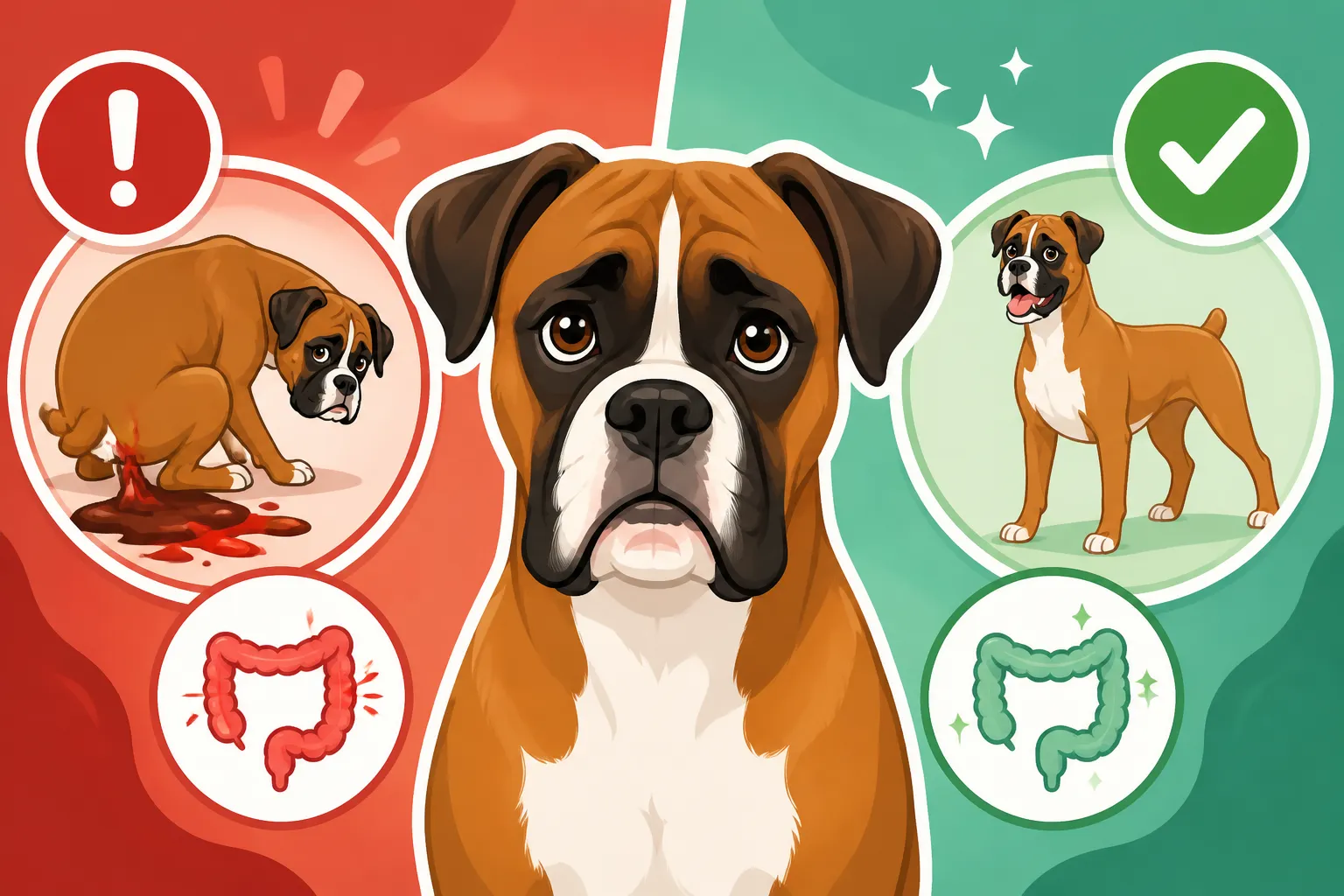
Telling Boxer Colitis From Ordinary Diarrhea
It’s a sight no Boxer owner wants to see: loose stools, messy cleanups, and a worried expression on your dog’s face. Figuring out if your beloved Boxer is just experiencing a minor tummy upset or something more persistent and concerning like Boxer colitis can be incredibly stressful and confusing. This comprehensive guide aims to clear up that confusion, helping you understand the key differences between ordinary diarrhea and the specific challenges of Boxer colitis, so you know exactly when to act and how to get your furry friend feeling better.
What Exactly Is "Ordinary" Diarrhea in a Boxer?
Let's be honest, every dog, including our sensitive Boxers, will likely experience a bout of diarrhea at some point. It's often a transient issue, a temporary upset that clears up on its own with a little care and attention. Think of it as your Boxer's digestive system hitting a momentary speed bump, reacting to something it shouldn't have ingested, or simply going through a minor bacterial imbalance. It's usually less severe, doesn't last long, and doesn't typically come with other alarming systemic symptoms.
Common Triggers for Upset Stomachs
Our Boxers are notorious for their curiosity and, let's face it, their willingness to try to eat just about anything they can get their jowls on. This adventurous palate is often the number one culprit behind a sudden case of ordinary diarrhea. Did your Boxer snatch a dropped piece of human food from the floor that their system isn't used to? Maybe they raided the garbage can or found something "interesting" in the yard during a walk. Even a sudden, drastic change in their regular diet – like switching kibble too quickly without a gradual transition – can throw their digestive system into disarray.
Beyond dietary indiscretions, stress can also play a significant role. A new environment, a trip to the vet, or even a change in household routine can sometimes manifest as a runny tummy. Parasites, though often causing more persistent issues, can sometimes present with an acute bout of diarrhea if picked up recently. Even certain medications, particularly antibiotics, can disrupt the natural gut flora and lead to temporary digestive upset. It’s always worth considering what might have changed in your Boxer's life or diet in the 24-48 hours leading up to the loose stools.
Recognizing Mild Versus Moderate Diarrhea
When you see loose stool, the first thing many of us do is gauge its severity. Mild diarrhea might just be softer-than-usual stool, perhaps a bit shapeless, but still relatively controlled. Your Boxer might still be acting completely normal, eating, playing, and having their usual happy-go-lucky attitude. They might need to go outside a bit more frequently, but there isn't extreme urgency or accidents in the house. This kind of mild upset can often be resolved quite quickly.
Moderate diarrhea is a step up. The stool is watery, possibly more frequent, and your Boxer might show some signs of discomfort. They might strain a little more, or you might notice them hunching. There could be some mucus, or even tiny flecks of fresh, bright red blood if the straining has irritated the rectum. While they might still be eating, their appetite might be a bit reduced, and their energy levels could dip slightly. This is when you start thinking about intervention, but it's not usually a full-blown emergency. It's important to keep an eye on them because moderate diarrhea can sometimes escalate if not managed.
Home Care and When It's Safe
For mild, uncomplicated diarrhea in a Boxer who is otherwise acting fine, home care is often a good first step. The golden rule is usually a bland diet. Boiled chicken (skinless, boneless) and plain white rice are the go-to for a reason. This simple meal is easy on the digestive system and provides some nourishment without further irritation. You'll want to offer small, frequent meals rather than large ones, to avoid overwhelming their stomach. Make sure they have constant access to fresh water to prevent dehydration, which is a real concern with any diarrhea.
Many owners also find it helpful to introduce a canine-specific probiotic during and after a bout of diarrhea to help restore healthy gut bacteria. These can be purchased over the counter at pet stores or from your vet. Monitor their stool and overall demeanor closely. If the diarrhea doesn't start to firm up within 24-48 hours, if it worsens, or if your Boxer starts showing other concerning symptoms like lethargy, vomiting, or a complete refusal to eat, it's time to call the vet. What might seem like Whether a Boxer Puppy Outgrows Loose Stools can sometimes be a sign of something more. Remember, while a bland diet helps, if you see Bloody Mucus in a Young Boxer's Stool, that's usually a red flag indicating a vet visit is in order sooner rather than later.
Understanding Boxer Colitis and Its Unique Presentation
Colitis is a fancy word for inflammation of the colon, and for Boxers, it’s unfortunately a condition they are particularly susceptible to. Unlike a fleeting bout of ordinary diarrhea, Boxer colitis often presents as a chronic or recurring problem, deeply impacting their quality of life. It’s not just a temporary upset; it's a specific type of inflammatory bowel disease that requires focused attention and often long-term management. This isn't just about what your Boxer ate yesterday; it's about a deeper, underlying issue within their digestive system.
The Distinct Symptoms of Boxer Colitis
While both ordinary diarrhea and colitis involve loose stools, the presentation of Boxer colitis tends to have some distinct characteristics. The most telling sign is often the presence of blood and mucus in the stool, sometimes quite pronounced. The blood is usually bright red, indicating it's coming from the lower gastrointestinal tract, specifically the inflamed colon. The stools themselves are often small in volume, frequent, and accompanied by significant straining, known as tenesmus. Your Boxer might look like they're trying really hard to pass stool, even when not much comes out. This can lead to them asking to go outside repeatedly, sometimes having accidents indoors because the urge is so sudden and intense. You might also notice Straining and Small Stools in a Boxer, which is a classic indicator.
Beyond the stool itself, Boxers with colitis often show other signs of discomfort. They might appear visibly uncomfortable or in pain, hunching their back or having a tense abdomen. They may also be noticeably gassy, which can sometimes lead to a household clearing event, giving new meaning to Why a Boxer Clears a Room. Weight loss can occur over time if the condition is chronic and affecting nutrient absorption. Unlike a simple upset stomach where your Boxer might still be energetic, colitis can drain their energy, making them lethargic and less interested in play. This chronic inflammation affects their overall well-being.
Why Boxers Are Predisposed to Colitis
It's a frustrating reality for Boxer owners: our beloved breed seems to have a genetic predisposition to certain health issues, and colitis is definitely on that list. Specifically, Boxers are known to be prone to a condition often referred to as "Histiocytic Ulcerative Colitis" (HUC), or sometimes "Granulomatous Colitis." This isn't just a general sensitivity; it's a recognized, breed-specific inflammatory bowel disease. While the exact causes are still being researched, it's believed to involve an abnormal immune response within the colon, possibly triggered by certain bacteria.
Their genetic makeup seems to contribute to their immune system overreacting to normal gut flora or other dietary components, leading to chronic inflammation. This is often an immune-mediated disease where the body essentially attacks itself, causing severe irritation and ulceration in the lining of the colon. It's not something they "catch" in the traditional sense, but rather an internal dysfunction that manifests as colitis. This inherent vulnerability means that even seemingly minor irritants can trigger a more severe, prolonged inflammatory response in a Boxer compared to other breeds. The Age Boxer Colitis Usually Starts is often in younger Boxers, typically under two years of age, though it can appear later.
The Role of E. coli in Boxer Colitis
For a long time, the specific mechanisms behind Boxer colitis were a bit of a mystery, but research has shed light on a fascinating and somewhat unique aspect: the role of invasive E. coli bacteria. In many cases of HUC in Boxers, specific strains of Escherichia coli bacteria have been found to invade and colonize the lining of the colon. This isn't just a fleeting presence; these bacteria actually penetrate the cells of the intestinal wall, setting off a profound inflammatory response.
This makes Boxer colitis particularly tricky because it’s not just about reducing inflammation; it’s also about targeting these intracellular bacteria. Ordinary antibiotics might not be effective enough because they don't penetrate the cells in the same way. This is why certain broad-spectrum antibiotics, like enrofloxacin, are often the go-to treatment for Boxer colitis, as they are capable of reaching these invading bacteria. Understanding Why E Coli Sits Inside a Boxer's Colon Wall is crucial to grasping why standard treatments for general diarrhea often fail to resolve colitis in Boxers. This distinct bacterial involvement is a key differentiator from most other forms of canine diarrhea.
Key Differences: How to Tell Them Apart
Distinguishing between a harmless upset stomach and the more serious Boxer colitis can feel daunting, but paying close attention to specific details can provide crucial clues. It's not just about the mess; it's about the consistency, the frequency, and the presence of other symptoms that truly tell the story. Let's break down the observable differences that can guide your decision-making.
| Feature | Ordinary Diarrhea | Boxer Colitis |
|---|---|---|
| Stool Volume | Can be large, watery | Often small, frequent, "pudding-like" |
| Mucus Presence | Minimal or absent | Often significant, jelly-like |
| Blood Presence | Rare, or tiny flecks from straining | Common, bright red, mixed in or on surface |
| Straining | Mild or absent | Pronounced (tenesmus), frequent attempts |
| Urgency | Increased need to go out | Extreme urgency, sometimes accidents |
| Other Symptoms | Usually none, dog acts normal (mild cases) | Lethargy, pain, weight loss, decreased appetite |
| Duration | Acute, typically resolves in 24-48 hours | Chronic, recurring, or persistent |
| Response to Bland Diet | Often improves quickly | Little to no improvement, or temporary relief |
Stool Characteristics: Appearance and Consistency
The most immediate difference you'll likely notice is in the stool itself. With ordinary diarrhea, the stool can vary quite a bit – it might be soft and shapeless, or completely watery. The volume is often larger, reflecting a general inability to absorb water throughout the digestive tract. You might see undigested food, especially if it was a quick reaction to something new they ate.
In contrast, Boxer colitis often produces very distinct stools. They tend to be smaller in volume because the inflammation is mostly confined to the large intestine, meaning much of the digestion and absorption has already occurred. The consistency is frequently described as "pudding-like" or mucoid. Most strikingly, you will almost certainly see a significant amount of jelly-like mucus coating the stool or mixed throughout it. And, unfortunately, bright red blood is a common companion, appearing as streaks or clots. This combination of small, mucoid, bloody stools with significant straining is a hallmark of colitis in our Boxers.
Accompanying Symptoms and Behavioral Clues
Beyond the visible output, how your Boxer is acting can offer critical insight. With plain old diarrhea, especially the mild kind, your Boxer might still be their usual energetic self. They might just be a little more insistent about needing to go outside. Their appetite usually remains intact, and they're generally not showing signs of systemic illness. It’s more of an inconvenience than a true illness.
However, a Boxer suffering from colitis often displays more generalized symptoms of feeling unwell. They might be noticeably lethargic, sleeping more and showing little interest in play or walks. You might see them hunching their back, an indicator of abdominal pain, or refusing to let you touch their belly. Their appetite can decrease significantly, and over time, weight loss becomes a concern. The constant straining and discomfort can make them irritable or anxious. If you observe your Boxer exhibiting this combination of physical discomfort and behavioral changes, especially with the characteristic stool, it points much more strongly towards a condition like colitis.
Duration, Frequency, and Recurrence as Indicators
One of the most telling distinctions lies in the timeline. Ordinary diarrhea is typically an acute event. It comes on suddenly, often resolves with a bland diet within 24 to 48 hours, and then your Boxer is back to normal. It might be a one-off incident, or perhaps happens every few months if your Boxer is particularly prone to scavenging.
Boxer colitis, on the other hand, is usually chronic or recurrent. It might seem to improve for a short period with symptomatic treatment, only to flare up again. These episodes can last for days or even weeks if left untreated, and they might come back regularly, perhaps every few weeks or months. This persistent or relapsing nature is a huge red flag that you're dealing with something more than just a passing tummy bug. If your Boxer has had multiple bouts of bloody, mucousy diarrhea that doesn't resolve with standard bland diets, or if an episode drags on for more than a couple of days, it's definitely time for a deeper investigation. For long-term conditions like this, having pet insurance like Healthy Paws can provide immense peace of mind, covering the costs of repeated vet visits and specialized treatments that can add up quickly.
When to Seek Veterinary Care and What to Expect
It's natural to try to manage minor issues at home, but knowing when to call the veterinarian is paramount, especially with a breed like the Boxer, known for its stoicism even when uncomfortable. Delaying professional care for colitis can lead to prolonged suffering for your dog and make the condition harder to manage in the long run.
Urgent Signs That Demand Immediate Attention
While some mild diarrhea can be monitored, certain symptoms warrant an immediate trip to the emergency vet or your regular clinic. If your Boxer is experiencing severe, projectile vomiting along with diarrhea, this is an urgent sign, as dehydration can set in very quickly. Extreme lethargy, collapse, or unresponsiveness are also emergencies. If your Boxer's gums are pale or white, or if their abdomen feels hard and distended, these could indicate a very serious issue like bloat (gastric dilatation-volvulus), which is a life-threatening emergency in Boxers.
Any diarrhea accompanied by a fever (over 102.5°F or 39.2°C) or signs of intense pain should also prompt an immediate vet visit. And while some mild blood can occur with straining, copious amounts of bright red blood or black, tarry stools (which indicate digested blood from higher up in the digestive tract) are critical and require immediate professional attention. Never hesitate if your gut instinct tells you something is seriously wrong; it's always better to be safe than sorry.
The Veterinary Diagnostic Process
When you take your Boxer in for suspected colitis, your vet will start with a thorough physical examination and a detailed history. Be prepared to answer questions about the frequency, consistency, color, and any other characteristics of the stool, as well as your Boxer's eating habits, energy levels, and any recent changes in their diet or environment. This information is critical for guiding the diagnostic process.
Often, the first step is a fecal analysis to rule out common parasites or other infectious causes. This involves checking for worms, giardia, or other microscopic invaders. Blood work might also be performed to assess their overall health, hydration, and to rule out other systemic diseases that could mimic colitis. If parasitic causes are ruled out and symptoms persist, your vet might recommend antibiotics, especially enrofloxacin, to address the E. coli component of Boxer colitis. Sometimes, a trial of a prescription novel protein or hydrolyzed protein diet is initiated, as food sensitivities can contribute to inflammation. In more stubborn or recurrent cases, a colonoscopy with biopsies may be recommended. This procedure, performed under general anesthesia, allows the vet to directly visualize the colon and take tissue samples to confirm the diagnosis of histiocytic ulcerative colitis and rule out other conditions. This type of specialized care can quickly add up, so having a good pet insurance policy, such as one from Healthy Paws, can be invaluable.
Managing and Preventing Future Episodes
Managing Boxer colitis often requires a multi-faceted approach. Medication is usually a key component, with antibiotics like enrofloxacin often used for several weeks to months to clear the bacterial infection. Anti-inflammatory medications might also be prescribed to soothe the inflamed colon. For many Boxers, Diet Changes for a Boxer With Colitis are absolutely essential. This typically involves a highly digestible, often novel protein or hydrolyzed protein prescription diet. These diets minimize ingredients that could trigger an immune response and are easier for their sensitive digestive systems to process. Your vet might discuss Enrofloxacin for a Boxer With Colitis specifically, which is a known effective treatment.
Beyond medication and diet, probiotics and prebiotics can help restore and maintain a healthy gut microbiome, which is crucial for long-term digestive health. Stress reduction and consistent routines can also play a role, as stress can exacerbate inflammatory conditions. Regular follow-up appointments with your vet are vital to monitor progress and adjust treatment as needed. The goal is to find a long-term management plan that keeps your Boxer comfortable and free from symptoms. Unfortunately, Boxer colitis can be a lifelong condition, and owners often wonder Whether Boxer Colitis Comes Back – the answer is often yes, requiring ongoing vigilance and management. While it’s a commitment, with proper care and support, many Boxers with colitis can live full, happy lives. Considering that Prescription Food Costs for a Boxer With Colitis can be a recurring expense, in addition to medications and vet visits, budgeting for these can be significant, reinforcing the value of comprehensive pet insurance to help manage The Yearly Bill for a Seventy-Pound Boxer. It’s why many discerning owners look into Insuring a Boxer Before the Cancer Years or other chronic conditions develop, ensuring coverage for these breed-specific challenges.
Disclaimer
The information provided in this article is for general informational purposes only and is not a substitute for professional veterinary advice. Always consult with a qualified veterinarian for any health concerns or before making any decisions related to your Boxer's care.