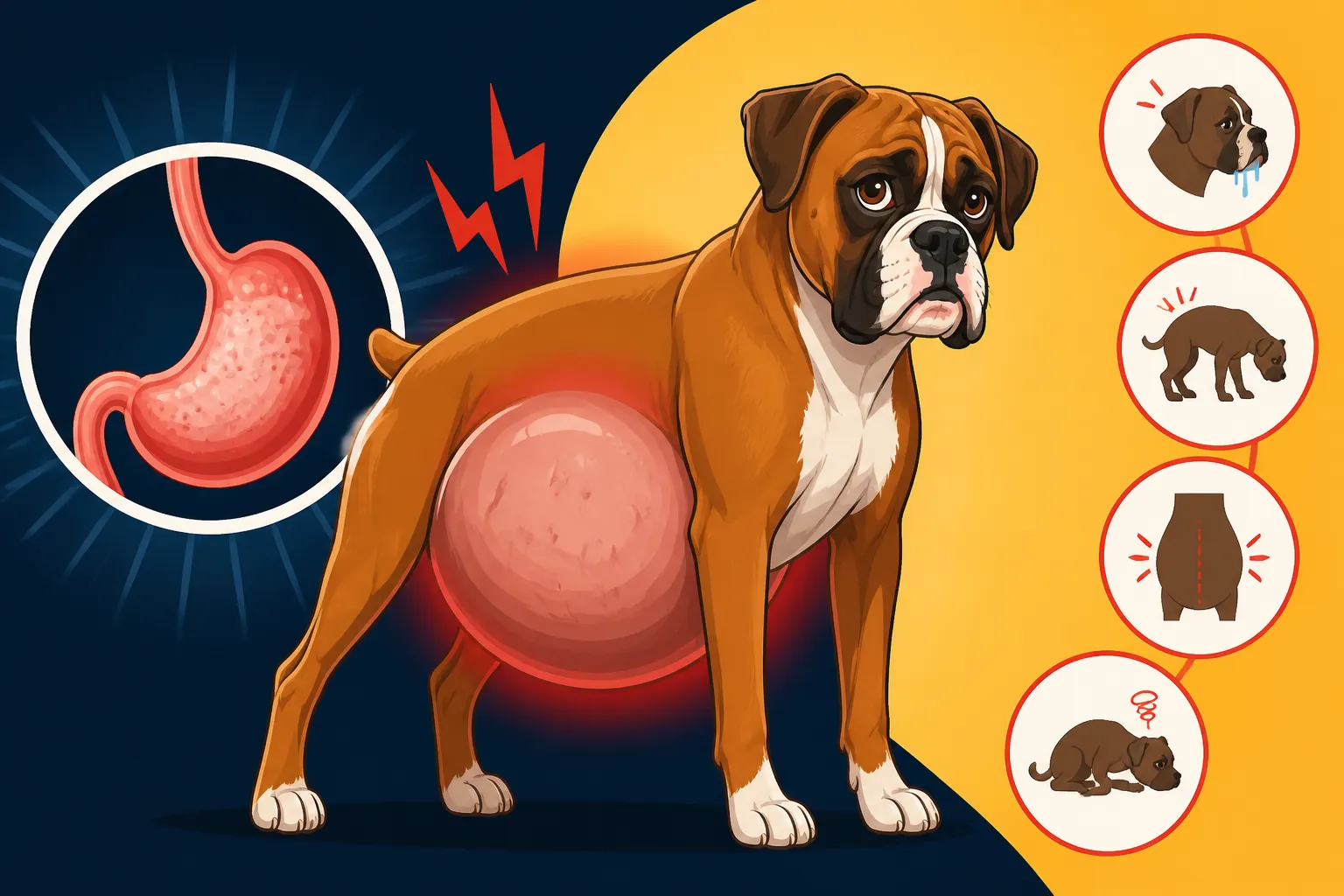
Bloat Signs Every Boxer Owner Should Know
It's every Boxer owner's worst nightmare: the sudden, terrifying onset of bloat. This isn't just a simple upset stomach; it's a life-threatening emergency where minutes can mean the difference between life and death for your beloved companion. Knowing the early signs of bloat, officially known as gastric dilatation-volvulus or GDV, is one of the most critical pieces of knowledge you can arm yourself with to protect your Boxer. This guide will walk you through what to look for, from the subtle hints to the undeniable crisis, so you can act fast.
Understanding Bloat and Why Boxers Face High Risk
Bloat is a terrifying condition, and for Boxer owners, it's a constant, lurking worry. It’s not just a casual term for an upset belly; it refers specifically to Gastric Dilatation-Volvulus (GDV), a rapidly progressive and life-threatening condition in which the dog’s stomach fills with gas, fluid, or food and then twists on its axis. This twisting cuts off blood supply to the stomach and other organs, sending the dog into shock. The consequences are dire and swift, making immediate recognition and action paramount.
The Mechanics of Gastric Dilatation-Volvulus GDV
Imagine your Boxer's stomach as a balloon. In GDV, this balloon first inflates with gas, often accumulating from swallowed air during frantic eating or drinking, or from fermentation of food. This initial distension is the "dilatation" phase. At this point, your dog is uncomfortable, but the situation hasn't yet become critical. However, due to the ligaments holding the stomach being stretched and the sheer weight of the distended organ, it can then "volvulus" or twist. This twist typically occurs clockwise, clamping off both the entrance (esophagus) and exit (duodenum) of the stomach.
Once twisted, gas and fluid become trapped, rapidly increasing pressure within the stomach. This pressure obstructs blood flow to the stomach wall, leading to tissue death (necrosis). It also compresses major blood vessels, impairing circulation to the rest of the body, including the heart and lungs. This cascade quickly leads to shock, organ damage, and if not treated within hours, often results in death. It's a truly horrifying scenario, and the speed at which it can unfold is what makes it so incredibly dangerous.
Why a Boxer's Chest Shape Invites Bloat
While any large, deep-chested dog breed can experience GDV, Boxers are unfortunately high on the list of predisposed breeds. Their distinctive, athletic build, characterized by a deep and narrow chest, creates an anatomical "pocket" where the stomach can more easily distend and twist. It’s not just about their frame, though; there are several contributing factors that make Boxers particularly vulnerable.
Firstly, genetics play a significant role. If a Boxer’s close relatives – parents or siblings – have experienced bloat, their risk increases. Secondly, lifestyle factors often exacerbate this predisposition. Eating one large meal a day, especially if consumed rapidly, increases the amount of air swallowed. Drinking large amounts of water immediately before or after eating, or engaging in vigorous exercise right after a meal, can also contribute to the stomach dilating and potentially twisting. Stress and anxiety have also been implicated, though the exact mechanisms are less understood. We delve deeper into the specifics of Why a Boxer's Chest Shape Invites Bloat in another article, but for now, understand that your Boxer's unique physique, coupled with certain habits, places them at higher risk.
Recognizing the Early, Subtle Signs of Bloat
This is the absolutely crucial section for any Boxer owner. Bloat doesn’t always start with a massively distended belly and a dog collapsing. Often, the initial signs are subtle, easily mistaken for indigestion or mild discomfort. Learning to catch these early indicators can be the single most important factor in saving your dog's life. Think of yourself as a detective, always observing your Boxer’s normal behavior so you can spot even the slightest deviation.
Behavioral Changes That Precede Obvious Swelling
Before you see any physical changes in your Boxer’s abdomen, you'll almost certainly notice behavioral shifts. These can be vague, which is why they’re so often overlooked until it’s too late. Your Boxer might become restless and anxious, unable to settle down. They might pace constantly, shifting positions, or get up and lie down repeatedly as if they can't find a comfortable spot. You might see them looking at their flank, almost as if they're trying to figure out what's going on back there.
Perhaps the most classic early sign, and one you absolutely must watch for, is non-productive retching or dry heaving. This is when your Boxer tries repeatedly to vomit, straining and gagging, but nothing comes up, or perhaps only a small amount of foamy saliva appears. This is a huge red flag. It indicates that their stomach is trying to expel something but is blocked, often because it's already beginning to twist. This isn't just regular vomiting; it's a frantic, unproductive effort, and it should trigger an immediate call to your vet.
Physical Clues You Might Miss in the Initial Stages
Beyond behavioral changes, there are subtle physical clues that can indicate bloat is starting to set in. One of the first things you might notice is increased salivation or drooling. This can be a sign of nausea and discomfort. Your Boxer might also be grunting or whining softly, expressing general discomfort that isn't immediately obvious as severe pain. They might also appear hunched or have a tense, guarded posture, especially around their abdomen.
While the dramatically swollen belly is a later stage symptom, a subtle distension might be present even early on. It can be hard to spot, especially on a muscular Boxer, but try gently feeling your dog’s abdomen. If it feels tight or drum-like, even slightly, it's a cause for concern. If your Boxer is usually cuddly but suddenly recoils or snaps when you touch their belly, take it very seriously. Comparing their current appearance to their normal relaxed state after a meal can help you discern if something is truly off. These early signs are easily dismissed as "just a stomach ache," but in a Boxer, they demand immediate investigation.
The Advanced and Emergency Symptoms of Bloat
If the early, subtle signs are missed, bloat will rapidly progress to an emergency stage where symptoms become much more pronounced and undeniably alarming. At this point, your Boxer is in severe distress and likely going into shock. There is no time to waste; this is when you literally race against the clock to get to an emergency veterinary clinic.
Pronounced Abdominal Swelling and Pain
The most unmistakable sign of advanced bloat is the rapid and significant swelling of your Boxer's abdomen. Their belly will look visibly distended and hard to the touch, often described as taut like a drum. This distension might be more prominent on one side than the other, particularly the left side behind the last rib, as the stomach fills with gas and shifts. The pain your Boxer experiences at this stage will be intense. They may whine loudly, groan, tremble, or pant heavily. They might repeatedly stretch or adopt a prayer-like position (front end down, rear end up) in an attempt to relieve the pressure.
As the stomach continues to twist and swell, the pressure will mount, making breathing difficult as the diaphragm cannot expand fully. Your Boxer might stand with an arched back or refuse to lie down at all. Any attempt to touch their abdomen will likely elicit a strong pain response, from flinching to snapping. This level of discomfort is a clear indication that the situation has become critical, and your dog is suffering immensely.
Signs of Systemic Shock and Collapse
As GDV progresses, the impact on your Boxer’s circulatory system becomes severe, leading to systemic shock. This is where the lack of blood flow to vital organs takes its toll. You'll notice several alarming signs that indicate your dog is in a life-threatening state:
- Weakness and Collapse: Your Boxer may become extremely weak, unable to stand, and might collapse. Their legs may give out, or they might struggle to maintain balance.
- Pale Gums: Check their gums. In shock, they will appear pale, white, or even bluish (cyanotic) instead of their normal healthy pink.
- Rapid, Shallow Breathing: Due to the stomach pressing on the diaphragm and the body's attempt to get more oxygen, breathing will become labored, rapid, and shallow.
- Increased Heart Rate: Their heart will race as it tries to compensate for the compromised circulation. You might feel a weak, thready pulse.
- Cold Extremities: Their paws and ears may feel cold to the touch due to poor blood flow.
- Lethargy and Depression: While initially restless, a dog in advanced shock may become extremely lethargic, unresponsive, or even comatose.
If you observe any of these symptoms in conjunction with abdominal distension and non-productive retching, your Boxer is experiencing a dire emergency. Every minute counts. Do not attempt home remedies or wait to see if it improves; get your Boxer to the nearest veterinary emergency clinic immediately.
Here's a quick reference table for identifying bloat signs:
| Symptom Category | Early/Subtle Signs (Act Fast!) | Advanced/Emergency Signs (Vet NOW!) |
|---|---|---|
| Behavioral | Restlessness, pacing, anxiety | Severe pain, whining, groaning |
| Looking at flank | Attempts to stretch or hunch | |
| Non-productive retching/dry heaving | Collapse, unresponsiveness | |
| Physical | Increased drooling | Significantly distended, drum-tight abdomen |
| Grunting, mild discomfort | Pale or bluish gums | |
| Subtle abdominal tautness | Rapid, shallow breathing | |
| Tense, guarded posture | Weak, rapid pulse | |
| Cold extremities (paws, ears) |
What to Do When You Suspect Bloat: Crucial Emergency Steps
The most important thing you can do when bloat is suspected is to act without hesitation. This is not a situation where you can "wait and see." Time is absolutely critical, and your quick response can be the difference between life and death for your Boxer.
Immediate Veterinary Intervention Is Non-Negotiable
As soon as you notice even a few of the early or subtle signs, pick up the phone and call your veterinarian or your nearest emergency veterinary clinic. Do not waste time trying to diagnose it yourself or looking up remedies online. Briefly explain your Boxer's symptoms, emphasizing that you suspect bloat (GDV) due to their breed and the specific signs like non-productive retching or a distended belly. This allows the veterinary staff to prepare for your arrival, often saving precious minutes.
Then, get your Boxer into your car and drive to the clinic immediately. Have someone call ahead again if possible, giving an updated estimated time of arrival. Keep your Boxer as calm and comfortable as possible during the ride, but focus on getting there safely and swiftly. Remember, the internal damage caused by GDV progresses incredibly fast, so speed is truly of the essence. You might also want to review our article on Emergency Bloat Surgery on a Boxer to understand the potential procedure ahead.
What to Expect at the Vet and the Road to Recovery
When you arrive at the emergency clinic, be prepared for immediate action. The veterinary team will prioritize stabilizing your Boxer, which typically involves placing an IV catheter to administer fluids and medications for shock and pain. They will likely attempt to decompress the stomach by passing a tube down the esophagus or, if that's not possible, by using a large needle to release gas through the abdominal wall (a procedure called trocharization). X-rays will be taken to confirm the diagnosis of GDV and to determine if the stomach has twisted.
If GDV is confirmed, surgery is almost always required. The surgeon will untwist the stomach, assess the damage, and if necessary, remove any dead tissue. Crucially, they will perform a gastropexy, a procedure where the stomach is surgically tacked to the abdominal wall. This significantly reduces the risk of the stomach twisting again in the future, though it doesn't prevent future dilatation (filling with gas). It's a life-saving procedure, but it's important to understand the significant costs involved, which can easily run into thousands of dollars. This is precisely why many Boxer owners consider comprehensive pet insurance, with providers like Healthy Paws often stepping in to help manage these unexpected and substantial expenses. Investing in coverage before any health issues arise, as discussed in Insuring a Boxer Before the First Lump, can make these critical decisions much easier in an emergency.
Post-surgery, your Boxer will require intensive monitoring for several days in the hospital to manage pain, prevent complications like arrhythmias or peritonitis, and ensure they are recovering well. The recovery at home will involve restricted activity, medication, and a careful reintroduction of food and water. It’s a challenging time, both emotionally and financially, but with quick action and expert veterinary care, many Boxers can make a full recovery and go on to live many more happy years.
Disclaimer
This article is intended for informational purposes only and does not constitute medical advice. If you suspect your Boxer is suffering from bloat or any other medical emergency, please contact your veterinarian or an emergency veterinary clinic immediately. Do not attempt to diagnose or treat the condition yourself.