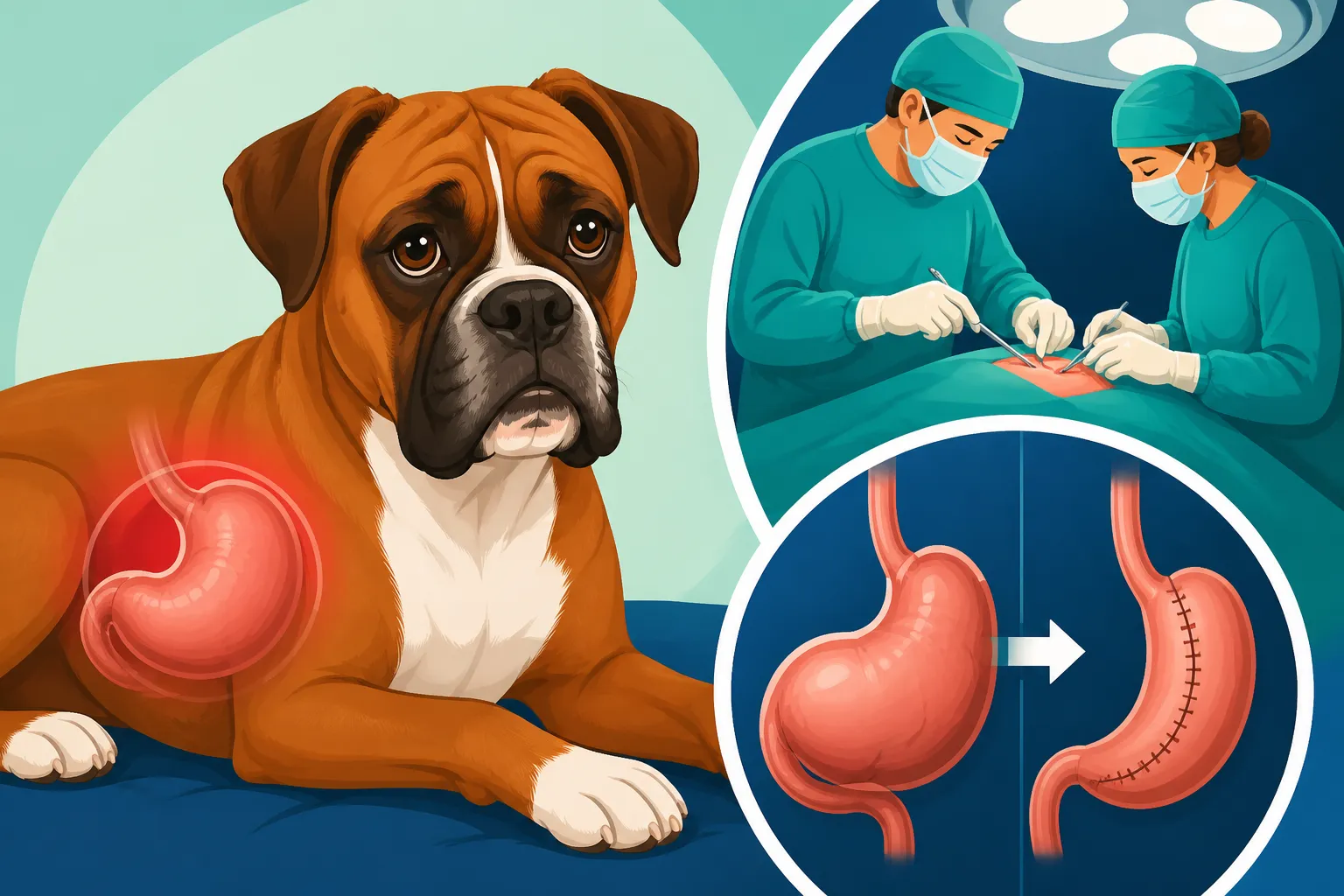
What Bloat Surgery Involves for a Boxer
When your Boxer suddenly starts retching uncontrollably, stomach distended, and looking utterly miserable, a wave of terror can wash over you. This isn't just an upset tummy; it's often Gastric Dilatation-Volvulus, or GDV, more commonly known as bloat, and it's a terrifying emergency that demands immediate action. This guide is here to walk you through exactly what happens when your beloved Boxer needs emergency bloat surgery, explaining the intricate procedures, the challenging road to recovery, and crucial preventive measures to protect your furry family member.
Understanding Gastric Dilatation-Volvulus (GDV) in Boxers
Bloat is a condition that strikes fear into the hearts of Boxer owners, and for good reason. It's an agonizing and often fatal condition if not treated promptly. Boxers, with their deep chests and active lifestyles, are unfortunately predisposed to this terrifying ailment. It starts when your dog's stomach fills with gas, food, or fluid, causing it to swell dramatically – this is the "dilatation" part. But the real danger kicks in when that distended stomach then twists on its axis, a phenomenon called "volvulus." This twisting cuts off blood supply to the stomach and often the spleen, trapping gas and fluid, and setting off a cascade of life-threatening events. The urgency cannot be overstated; every minute counts when a Boxer is suffering from bloat.
The Immediate Emergency and Diagnosis
Recognizing the signs of bloat is absolutely critical because time is of the essence. You might notice your Boxer pacing, restless, and unable to get comfortable. The most telling symptom, though, is repeated, unproductive retching – they're trying to vomit but nothing comes up, or maybe just foamy saliva. Their abdomen, especially the left side behind the ribs, might appear noticeably swollen and feel tight, like a drum. Your Boxer will be in obvious pain, panting heavily, and their gums might look pale.
If you suspect bloat, drop everything and get to the nearest emergency veterinary clinic, ideally one that's well-equipped for critical care. Call ahead if you can, to give them a heads-up. Once there, the vet will perform an immediate physical exam, and often, an X-ray is the definitive diagnostic tool. This image will clearly show if the stomach is distended and, more importantly, if it has twisted into that tell-tale "double bubble" or "Smurf hat" appearance. Simultaneously, your vet will work to stabilize your Boxer with intravenous (IV) fluids to combat shock, administer powerful pain medications, and might attempt to decompress the stomach by passing a tube down the esophagus or, in some cases, by using a large needle to release gas directly through the abdominal wall (a trocharization).
Why Bloat Is So Dangerous
The danger of bloat extends far beyond a simple stomachache. When the stomach twists, it effectively strangles itself and surrounding organs. The blood vessels supplying the stomach and spleen become compressed, cutting off vital blood flow. This rapid loss of circulation quickly leads to tissue death (necrosis) in these organs. Imagine trying to breathe with a vice grip around your throat – that's what's happening internally.
As blood flow is restricted, the body goes into a state of shock, a severe condition where organs don't get enough blood or oxygen. Toxins can build up from dying tissues and enter the bloodstream, causing systemic issues. One of the most common and frightening complications is the development of severe heart arrhythmias, irregular heartbeats that can be life-threatening even after the stomach is untwisted. These arrhythmias can occur before, during, or even days after surgery, which is why close monitoring is so vital. It's a race against time to untwist the stomach and restore blood flow before irreversible damage sets in.
The Surgical Procedure for GDV (Gastropexy)
Once your Boxer is stable enough, emergency surgery becomes the critical next step. The primary goal of this operation is to untwist the stomach (derotation) and assess the extent of any damage to the stomach wall or spleen. However, simply untwisting the stomach isn't enough; without further intervention, the risk of recurrence is incredibly high, often over 80%. This is why the essential next step in bloat surgery is almost always a gastropexy. This procedure, which involves tacking the stomach wall to the abdominal wall, dramatically reduces the chance of the stomach twisting again in the future. It doesn't prevent the stomach from dilating (filling with gas), but it prevents the lethal twist.
Pre-Surgical Preparations
Before your Boxer can go under the knife, the veterinary team will work tirelessly to prepare them for surgery. This involves a crucial balance of diagnostics and stabilization. Full blood work will be performed to assess organ function, check for electrolyte imbalances, and evaluate clotting abilities, as many Boxers, being a flat-faced breed, can have Anesthesia Risk in a Flat-Faced Boxer considerations. Intensive fluid therapy is administered to stabilize blood pressure and combat shock, which is often severe.
Pain management is a huge priority throughout this entire process. Strong pain medications will be given to ensure your Boxer is as comfortable as possible before, during, and after the invasive procedure. The team will also monitor vital signs closely, including heart rate, respiration, and oxygen saturation, as the effects of bloat can put immense strain on the cardiovascular system. Every effort is made to get your Boxer in the best possible condition to withstand the stress of surgery.
Steps During the Surgery
Once your Boxer is under general anesthesia, the surgical team begins. A long incision is typically made down the midline of the abdomen, from just below the ribs to near the pelvis, giving the surgeon full access to the abdominal cavity.
- De-rotation: The first critical step is to carefully untwist the stomach. This often involves gently manipulating the stomach back into its correct anatomical position. It’s a delicate process, as the stomach can be incredibly fragile and prone to tearing if handled too roughly.
- Assessing Viability: Once the stomach is untwisted, the surgeon thoroughly inspects the stomach wall and the spleen. The goal is to identify any areas of tissue that have been so deprived of blood flow that they are no longer viable (necrotic). These areas will appear dark, purple, or even black.
- Resection (if needed): If portions of the stomach wall are severely damaged, they may need to be surgically removed (resected) to prevent future complications like perforation or peritonitis. Similarly, if the spleen has suffered significant damage due to the twist, a splenectomy (removal of the spleen) may be necessary. These additional procedures add to the complexity and recovery time.
- Performing the Gastropexy: This is the most crucial part for long-term prevention. The surgeon will permanently attach a section of the stomach wall to the inner abdominal wall. There are several techniques, including incisional gastropexy (where an incision is made in both the stomach seromuscular layer and the abdominal wall, and then sewn together), belt-loop gastropexy, and laparoscopic-assisted gastropexy. The goal is the same: to create a permanent adhesion that prevents the stomach from twisting again. This vital step can also be performed preventatively in Boxers predisposed to bloat, a procedure known as a prophylactic gastropexy. You might be interested in learning Whether Preventive Bloat Surgery Suits a Boxer if you have other at-risk Boxers.
- Closure: Finally, after ensuring all bleeding is controlled and no foreign bodies remain, the abdominal incision is closed in several layers, including muscle, subcutaneous tissue, and skin.
Post-Operative Care and Recovery
The surgery itself is a huge hurdle, but the journey isn't over. The post-operative period, particularly the first 24 to 72 hours, is critical and requires intensive care. Your Boxer will need constant monitoring and meticulous attention to ensure a smooth recovery. This usually involves a stay in the veterinary intensive care unit (ICU), where dedicated staff can provide round-the-clock observation.
The Critical First Days
One of the most significant concerns after bloat surgery is the risk of post-operative cardiac arrhythmias. Even after the stomach is untwisted and blood flow is restored, the heart can develop irregular rhythms due to the toxins released from the previously deprived tissues. These arrhythmias can be life-threatening, so continuous ECG monitoring is essential. If detected, anti-arrhythmic medications will be administered.
Maintaining proper fluid balance is also key. Your Boxer will continue to receive IV fluids to support their circulation and prevent dehydration. Pain management remains a top priority; veterinarians will use a combination of injectable and oral medications to keep your dog comfortable. The surgical incision needs to be meticulously cared for, kept clean and dry, and checked regularly for any signs of infection or dehiscence (opening). Activity will be severely restricted during this time; no jumping, running, or strenuous activity to prevent strain on the incision site. Feeding will be reintroduced very gradually, starting with small amounts of easily digestible food and slowly increasing as tolerated.
Long-Term Recovery and Prevention
Once your Boxer is discharged from the hospital, the recovery continues at home, typically lasting several weeks. Activity restrictions will still be in place: short, controlled leash walks only, absolutely no rough play, jumping on furniture, or stairs for at least 2-4 weeks. The incision site will need daily checks, and any sutures or staples will be removed by your vet at a follow-up appointment.
Dietary changes are crucial for long-term prevention. Most vets recommend feeding smaller, more frequent meals (2-3 times a day) rather than one large meal. This helps prevent the stomach from getting overly full at any one time. The debate around elevated food bowls and their impact on bloat risk is ongoing; some studies suggest they might actually increase risk, so it’s best to discuss this with your vet. Ensuring your Boxer doesn’t gulp down water too quickly after exercise is also important. The gastropexy performed during surgery significantly reduces the risk of recurrence, making it the most important preventive measure. However, it's still vital to be vigilant for Bloat Signs Every Boxer Owner Should Know even after surgery, as the stomach can still distend. Avoiding strenuous exercise immediately after meals is another common recommendation; remember to let your Boxer Whether a Boxer Should Rest After Meals.
Costs and Emotional Toll of Bloat Surgery
Facing emergency bloat surgery for your Boxer is not only terrifying but also comes with a significant financial burden. This is an unexpected expense that can run into thousands of dollars, hitting families hard during an already stressful time. Beyond the monetary cost, the emotional toll on owners is immense.
Understanding the Financial Investment
Emergency veterinary care, especially for a condition as serious as bloat, is rarely inexpensive. The costs can vary widely depending on your geographic location, the veterinary facility, the complexity of the surgery (e.g., if spleen removal or stomach resection is needed), and the length of the post-operative ICU stay.
Here's a breakdown of typical costs involved:
| Item | Estimated Cost Range (USD) | Notes |
|---|---|---|
| Emergency Exam & Initial Diagnostics | $200 – $800 | Includes X-rays, initial stabilization, IV fluids, basic blood work |
| Surgical Procedure (Gastropexy) | $2,500 – $6,000 | Surgeon's fees, anesthesia, operating room time, surgical supplies |
| Post-Operative ICU Care (1-3 days) | $500 – $1,500 per day | Continuous monitoring, pain management, medications, additional diagnostics, fluid therapy |
| Take-Home Medications | $50 – $200 | Antibiotics, pain relief, anti-arrhythmics |
| Follow-up Vet Visits | $100 – $300 | Incision checks, suture/staple removal, recheck exams |
| Total Estimated Cost | $3,350 – $10,500+ | Can vary widely by location, severity, and complications. |
These figures can feel overwhelming, especially when you're in a state of panic. This is where pet insurance can be a lifesaver. Providers like Healthy Paws offer coverage for unexpected emergencies, which can significantly alleviate the financial strain. Enrolling your Boxer in a good pet insurance plan before any emergencies arise is a smart move, as pre-existing conditions are typically not covered. Thinking about Insuring a Boxer Before the First Lump applies to bloat too, as once it happens, it might be considered pre-existing for future plans. Understanding The Yearly Bill for a Seventy-Pound Boxer can help you budget for potential emergencies, as bloat can strike at any age.
The Emotional Rollercoaster for Owners
Beyond the financial aspect, the emotional experience of a Boxer suffering from bloat is incredibly taxing. There's the initial panic and fear of seeing your vibrant dog in such distress. The frantic rush to the emergency clinic is filled with anxiety, wondering if you'll make it in time. Then comes the agonizing wait while your Boxer is in surgery, hours that feel like an eternity.
Owners often grapple with guilt, questioning if they could have done something differently or missed earlier signs. The relief when you hear the surgery was successful is immense, but it's often followed by continued worry during the critical post-operative monitoring period. Watching your beloved pet recover from such a major procedure, dealing with pain and restricted activity, can be heartbreaking. However, successfully navigating this crisis strengthens the bond you share with your Boxer, reaffirming the deep love and commitment you have for them.
Bloat is a terrifying ordeal, but with prompt veterinary intervention and surgery, many Boxers go on to make a full recovery and enjoy many more happy years.
Disclaimer
The information provided in this guide is for general educational purposes only and should not be considered a substitute for professional veterinary advice. Always consult with a qualified veterinarian for any health concerns or before making any decisions related to your Boxer's health or treatment.