Deciding Against Treatment for a Boxer
Deciding against treatment for a sick Boxer involves weighing emotional tolls, financial strains, and veterinary prognoses.

Deciding against treatment for a sick Boxer involves weighing emotional tolls, financial strains, and veterinary prognoses.

Boxer chemotherapy side effects, lymphoma risks, and gastrointestinal upset management strategies for dogs undergoing cancer treatment.

Early neutering in Boxers impacts cancer risk, preventing mammary gland tumors and benign prostatic hyperplasia in males.
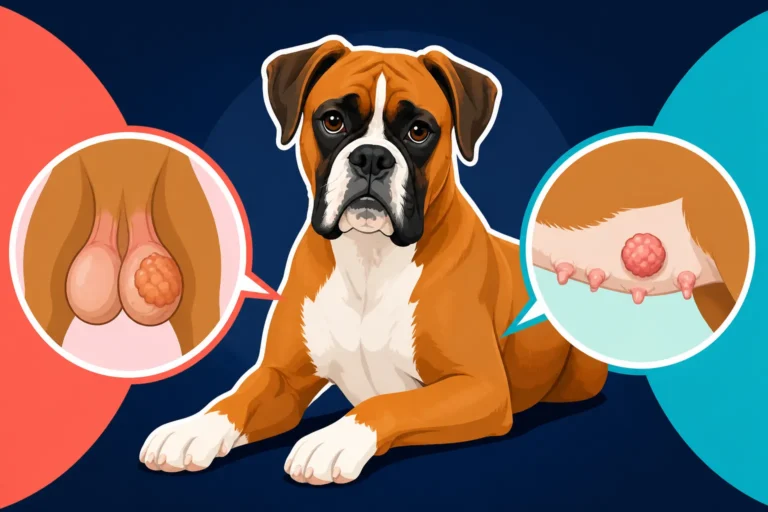
Testicular and mammary tumors in Boxers require early detection, veterinary intervention, and understanding cryptorchidism risks.

Histiocytomas are benign skin tumors arising from Langerhans cells that form small, firm, dome-shaped lumps on young dogs.

Common benign skin tumors in Boxers, including histiocytomas and button growths, explained with monitoring tips for owners.

Boxer brain tumor treatment options, genetic risks, and common neurological symptoms like seizures are explained for owners.

Boxer seizures and their potential link to brain tumors, including generalized, focal, and psychomotor types and post-ictal phases.

Prednisone treatment for a Boxer with lymphoma offers an explanation of its role, benefits, and limitations as a standalone medication option.

Boxer lymphoma prognosis factors and staging tests determine how long dogs live with this aggressive cancer of the lymphatic system.