CT and MRI Costs for a Boxer Brain Tumor
One of the most heart-wrenching moments for any Boxer parent is when your vivacious, goofy companion suddenly starts exhibiting neurological signs – a seizure, an unexplained head tilt, or a subtle change in behavior that makes your gut clench. The immediate, terrifying question is "what's going on in their head?" and the next is often "how much is it going to cost to find out?" This guide will walk you through what to expect when faced with the need for advanced imaging like CT or MRI scans to diagnose a potential brain tumor in your beloved Boxer, helping you understand the associated costs and what factors influence them.
The Alarming Signs That Prompt Brain Imaging
When your Boxer starts acting "off," it's more than just a behavioral quirk; it's a cry for help. Boxers are incredibly expressive dogs, and any significant change often signals something serious brewing beneath the surface. Neurological symptoms can be particularly frightening because they often appear suddenly and escalate quickly.
Recognizing Neurological Red Flags in Your Boxer
Imagine your normally playful Boxer, who usually greets you with an enthusiastic full-body wiggle, now seems disoriented, bumps into furniture, or walks in circles. These aren't just signs of old age or a bad day; they can point directly to issues within the brain. The most common and alarming symptom that drives people to seek immediate veterinary attention is a seizure. A seizure can range from a subtle "fly-biting" episode where your dog snaps at imaginary flies, to a full-blown grand mal seizure with loss of consciousness and uncontrolled paddling. Beyond seizures, you might notice sudden blindness, an unusual head tilt, loss of balance, or profound changes in personality, like aggression or extreme lethargy. These symptoms are incredibly stressful to witness, and they warrant a thorough investigation by your veterinarian.
Why Standard X-rays Don't Cut It for Brain Issues
When your vet first examines your Boxer, they'll likely start with blood tests and standard X-rays to rule out other common issues like metabolic imbalances, infections, or spinal problems. However, when it comes to the brain, traditional X-rays are largely unhelpful. Think of an X-ray as a shadow image – it's fantastic for bones and foreign objects, but the brain, being soft tissue, simply doesn't show up in enough detail. You can't see a tumor, inflammation, or fluid accumulation within the skull with a regular X-ray. This is why, once neurological problems are suspected, your vet will almost certainly recommend advanced imaging to peer inside your Boxer's skull and get a clear picture of what's happening. This often means a referral to a specialty veterinary hospital, which can be a whole new level of worry and expense.
Computer Tomography CT Scans for Boxer Brain Diagnostics
A CT scan, or Computed Tomography, is one of the primary tools veterinary specialists use to look for brain tumors and other neurological issues in dogs. It's often the first step in advanced imaging due to its availability and relatively quicker scan time compared to an MRI.
How a CT Scan Works and What It Reveals
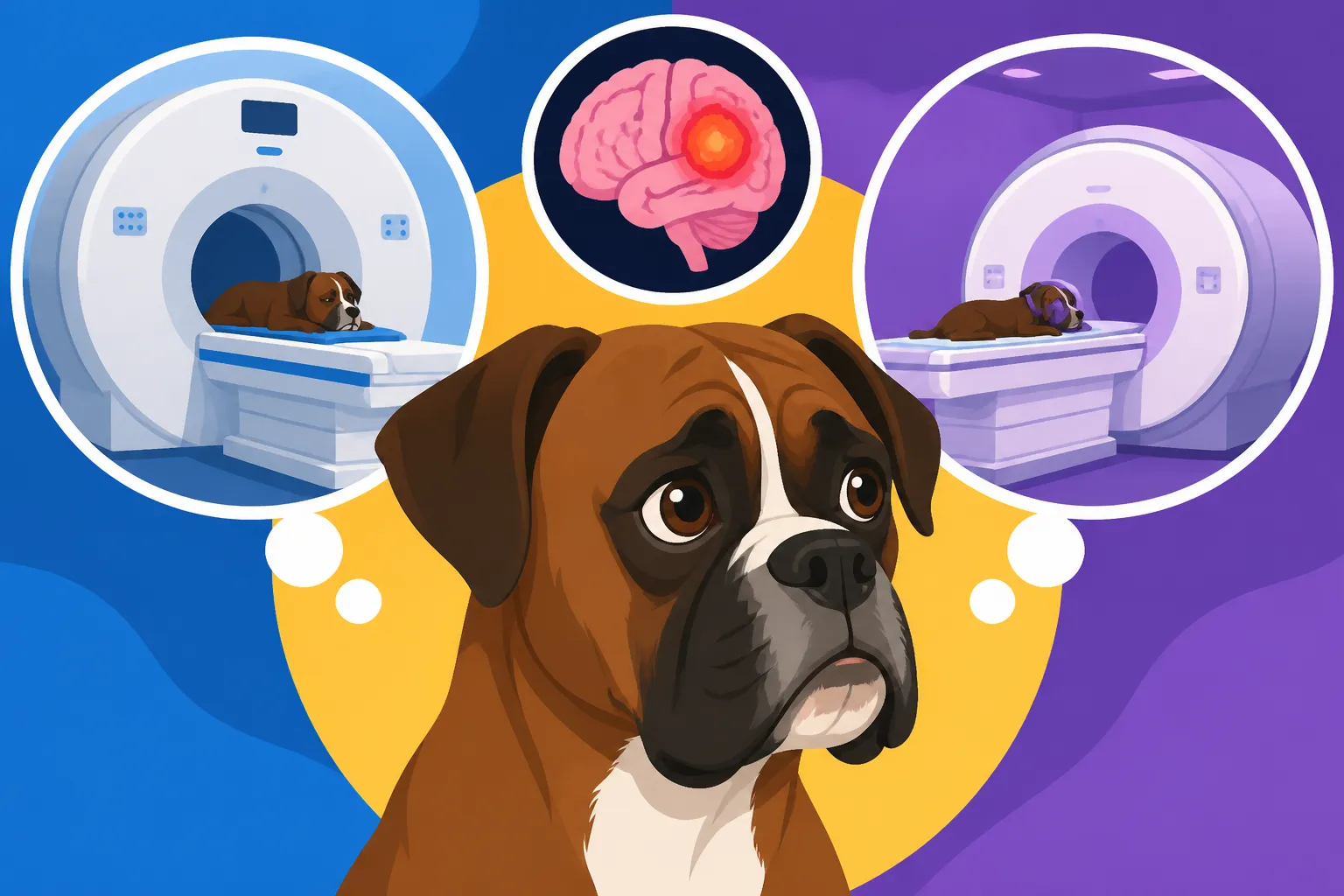
A CT scanner uses a series of X-ray beams taken from many different angles around your Boxer's head. A computer then processes these images to create cross-sectional "slices" of the brain. Imagine slicing a loaf of bread very thinly; each slice gives a detailed view of that specific plane. For your Boxer, this means the vet can see bone structures, as well as some soft tissue details. While not as detailed for soft tissue as an MRI, a CT scan can still reveal large masses, fluid buildup (hydrocephalus), or skull fractures. It's especially useful for identifying tumors that have calcified or have a distinct density difference from surrounding brain tissue. The entire procedure requires your Boxer to be completely still, which means full general anesthesia will be necessary. This anesthetic protocol will be carefully tailored to your Boxer, taking into account their age and overall health.
The Financial Side of a Boxer CT Scan
The cost of a CT scan for your Boxer can vary significantly based on several factors, making it hard to pinpoint an exact figure without consulting a specific clinic. Generally, you're looking at a bill that covers not just the scan itself, but also the pre-anesthetic blood work, the anesthesia administered by a trained technician or veterinary anesthesiologist, the contrast dye used to highlight structures (if needed), the scan acquisition, and the interpretation of the images by a board-certified radiologist. Clinics in major metropolitan areas often charge more than those in more rural settings. Additionally, emergency clinics or university veterinary teaching hospitals might have different pricing structures compared to a private specialty referral center. Many pet insurance providers, like Healthy Paws, will cover a significant portion of diagnostic imaging costs once your deductible is met, provided the condition isn't pre-existing. It really highlights the value of having insurance in place before these kinds of issues arise.
Magnetic Resonance Imaging MRI Scans: Unparalleled Detail, Higher Cost
For truly detailed soft tissue imaging, especially when a brain tumor is suspected, an MRI (Magnetic Resonance Imaging) is often considered the gold standard. It provides an incredible level of clarity, allowing specialists to see subtle changes that a CT might miss.
The Intricacies of an MRI for Canine Brain Tumors
Unlike CT scans that use X-rays, an MRI uses powerful magnetic fields and radio waves to create incredibly detailed images of soft tissues, including the brain, spinal cord, nerves, and ligaments. This means it offers superior resolution for distinguishing between different types of brain tissue, identifying the exact margins of a tumor, detecting inflammation, and even assessing blood flow. When trying to determine the specific type of brain tumor, or whether it's a tumor at all versus another lesion like an abscess or stroke, an MRI is invaluable. Just like with a CT scan, your Boxer will require general anesthesia for the entire duration of the MRI, which can be a longer procedure than a CT. The machine makes loud knocking noises during the scan, so ear protection is also provided for your dog under anesthesia. The precision of an MRI can be critical in planning any potential treatment, such as surgery or radiation, if your Boxer's brain tumor is found to be treatable. You can learn more about Whether a Boxer Brain Tumor Can Be Treated in another one of our articles.
Why MRI Costs Tend to Be Higher
The cost of an MRI for your Boxer's brain is typically higher than a CT scan, and for good reason. The MRI equipment itself is far more expensive to purchase and maintain, and the specialist expertise required to operate it and interpret the complex images is considerable. The procedure takes longer, involving more time under anesthesia and more time for the specialist to analyze the extensive data generated. Factors influencing MRI cost are similar to CT: geographic location, the specific veterinary specialty hospital (e.g., a large university hospital versus a smaller private referral clinic), the complexity of the scan (e.g., how many areas need to be imaged, whether multiple contrast injections are used), and the inclusion of pre-anesthetic work, anesthesia, and radiologist fees. It's not uncommon for an MRI bill to be a significant financial undertaking, but the diagnostic clarity it offers can be priceless when facing a serious condition like a brain tumor.
Navigating the Financial Burden of Advanced Diagnostics
The emotional toll of a potential brain tumor diagnosis for your Boxer is immense, and the financial stress can compound it dramatically. Understanding the potential costs and planning for them, even retrospectively, is crucial.
Breaking Down the Cost Variables
When you receive an estimate for a CT or MRI scan, it's rarely just one line item. Here's a table to help you understand the different components that contribute to the overall bill:
| Component | Description | Impact on Cost |
|---|---|---|
| Initial Consultation | Visit with a veterinary neurologist or specialist to assess symptoms and recommend imaging. | Varies; may be separate from imaging package. |
| Pre-Anesthetic Work-up | Blood tests (CBC, chemistry panel) and possibly chest X-rays to ensure your Boxer is healthy enough for anesthesia. | Essential for safety; often a required part of the imaging estimate. |
| Anesthesia & Monitoring | Cost for the anesthetic drugs, equipment, and the skilled veterinary staff (technician, anesthesiologist) dedicated to monitoring your Boxer throughout the procedure. Boxers are a brachycephalic breed and require careful anesthetic management, which can increase the cost due to extended monitoring time and specialized protocols. | A significant portion of the total cost; varies by duration and complexity. |
| Imaging Procedure (CT/MRI) | The actual scan itself, covering the use of the machine and the technical staff. | The core cost; MRI typically higher than CT. |
| Contrast Agents | Medications administered intravenously to enhance the visibility of certain structures (like tumors or inflamed areas) during the scan. | Added cost, but crucial for diagnostic clarity. |
| Radiologist Interpretation | Fees for a board-certified veterinary radiologist to review and provide a detailed report of the scan images. | Standard and necessary for accurate diagnosis. |
| Hospitalization/Recovery | Costs for post-procedure monitoring and recovery, especially if your Boxer needs extra time to wake up from anesthesia or has other health considerations. | May be included or billed separately; can vary if an overnight stay is required. |
| Follow-up Consultation | Meeting with the specialist to discuss the results and plan next steps (e.g., biopsy, surgery, medication). | Separate fee; essential for understanding the diagnosis and prognosis. |
Keep in mind that factors like your geographic location (city vs. rural), the type of facility (private specialty clinic vs. university teaching hospital), and the urgency of the procedure can also influence the overall cost. Always ask for a detailed, itemized estimate upfront.
Practical Strategies for Managing High Veterinary Bills
Receiving an estimate for thousands of dollars for diagnostic imaging can feel like a punch to the gut. It's normal to feel overwhelmed and even frustrated. However, there are several avenues you can explore to help manage these significant costs.
First and foremost, if you have pet insurance, now is the time to utilize it. Providers like Healthy Paws are designed to help with unexpected high costs like these. However, it’s critical to remember that pet insurance, much like human health insurance, generally doesn't cover pre-existing conditions. This means if your Boxer developed seizures before you enrolled in a policy, those diagnostic and treatment costs might not be covered. This underscores the importance of Insuring a Boxer Before the First Lump or before any health issues arise.
Beyond insurance, many veterinary hospitals offer payment plans through third-party services like CareCredit, which allows you to pay over time, often with low or no interest for a set period. Don't hesitate to ask about these options. Some clinics may also work with you directly on a payment schedule, especially if you have a long-standing relationship with them. While daily expenses can be managed through online retailers like Chewy or fresh food services like Ollie, these emergency diagnostics require a different financial strategy.
Building a dedicated "cancer fund" or emergency savings account for your Boxer is another proactive step, as it can cushion the blow of unforeseen illnesses. Many Boxer owners are well aware of the breed's propensity for cancer, and having a financial safety net specifically for these possibilities can alleviate immense stress. We have an article dedicated to The Cancer Fund a Boxer Owner Should Build that provides more detail on this.
Finally, while difficult, it's important to have honest conversations with your veterinary team about all available options, including palliative care if aggressive treatment isn't feasible or desired. This can help you make informed decisions that prioritize your Boxer's comfort and your family's financial reality. Understanding Knowing When a Boxer With Cancer Has Had Enough can be one of the hardest parts of being a pet parent, but it's a valid and loving consideration.
This article is for general informational purposes only and does not constitute professional advice. Laws, prices and regulations vary by location and change over time. Consult a qualified professional for guidance on your specific situation.