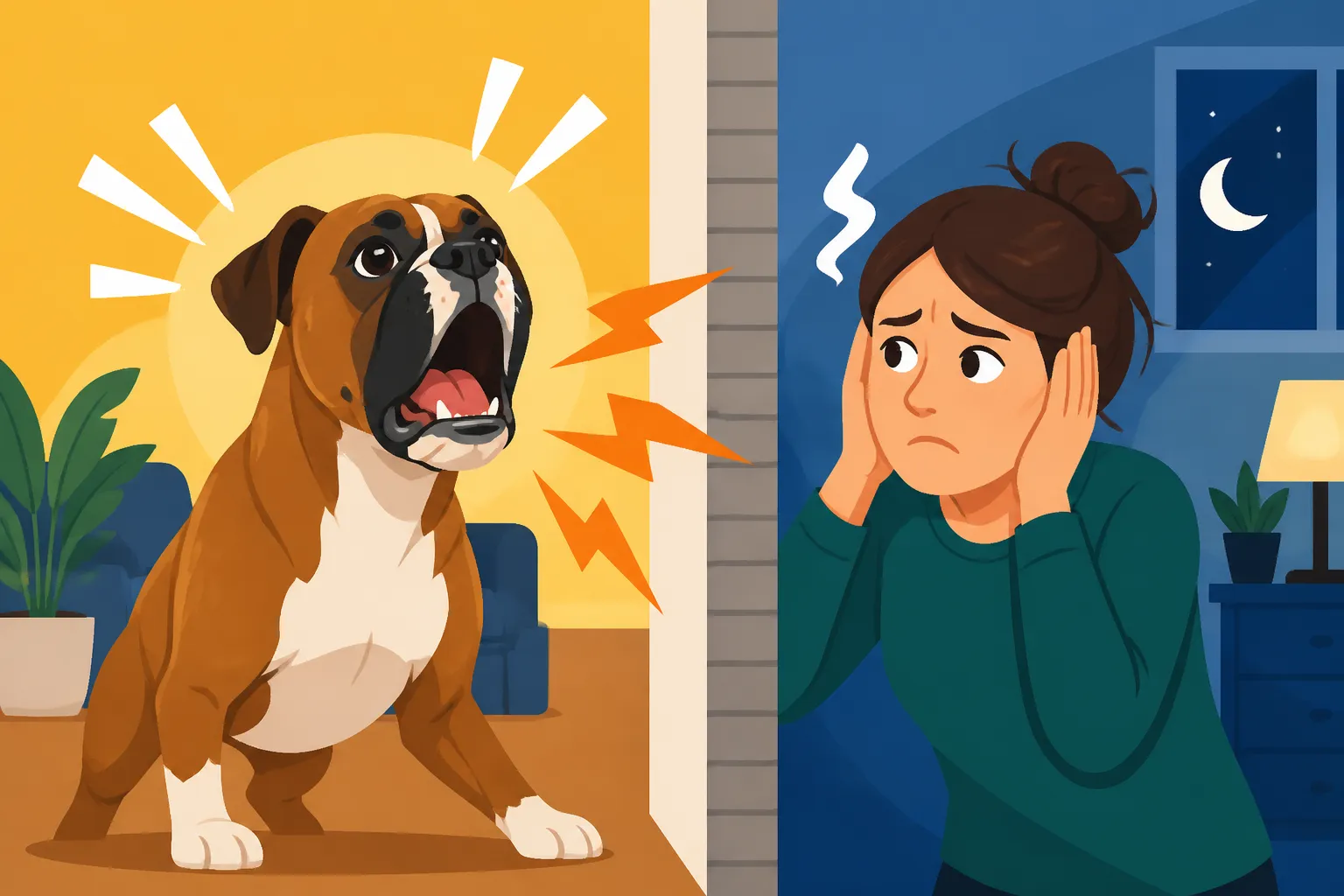
Whether a Boxer Is Too Loud for a Shared Wall
Living in an apartment, condo, or townhouse with shared walls brings a unique set of challenges for dog owners, and one of the biggest worries is often noise. You adore your Boxer, but their exuberant personality and vocal tendencies can make you anxious about disturbing your neighbors, constantly wondering if their barks, woofs, and enthusiastic thumps are echoing through the drywall. This guide will walk you through understanding your Boxer's vocalizations, identifying common triggers, and implementing effective strategies to manage their noise levels for a more peaceful shared living experience.
Understanding Boxer Vocalizations: Beyond Just Barking
When people think about a "loud dog," they often picture incessant barking. While Boxers certainly can bark, their repertoire of sounds is much broader and more expressive. Understanding this range is the first step in addressing any potential noise issues in a shared-wall environment.
The Boxer's Range of Sounds
Boxers are not shy about expressing themselves, and their vocalizations are as varied as their personalities. You'll hear distinct barks: sharp, urgent "alert" barks when someone approaches the door, excited, higher-pitched barks during play, or even frustrated, demanding barks when they want something from you. Beyond the typical bark, Boxers are famous for their unique "woo-woo" sounds, which are often a joyful greeting or an expression of pure happiness, sometimes accompanied by their signature wiggle. Then there are the whines – soft pleas for attention, or sometimes more insistent, drawn-out sounds of discontent. Don't forget the snorts and grunts, especially if your Boxer is particularly relaxed or dreaming, which are a common characteristic of their brachycephalic (flat-faced) structure. And yes, a sleeping Boxer can certainly snore loud enough to be heard through a thin wall! All these sounds, from the celebratory "woo" to the snoring, contribute to the overall noise level your neighbors might perceive.
Imagine your neighbor trying to enjoy a quiet evening, and suddenly a chorus of barks erupts because the mail carrier walked by. Or perhaps your Boxer, in a burst of zoomies, starts bouncing and "boxing" with the air, accompanied by enthusiastic growls and barks that translate into thumps and muffled roars next door. The sheer variety and volume of these sounds mean that managing a Boxer's noise isn't just about stopping barking; it's about understanding and moderating their entire expressive range.
Natural Tendencies vs. Learned Behaviors
Some of a Boxer's vocal habits are deeply ingrained in their breed characteristics, while others are developed over time through their environment and experiences. For instance, the propensity for snoring or snorting is a direct result of their unique head structure, and you're not likely to train that out of them. Similarly, their enthusiastic play style, which often involves playful growls and "boxing" with their front paws, is a natural part of their breed's charm. These are intrinsic parts of having a Boxer that you embrace.
However, many vocalizations are learned responses. An alert bark at every leaf that blows past the window or a sustained demand bark for attention can often be attributed to a lack of proper training, insufficient stimulation, or an owner inadvertently reinforcing the behavior. A Boxer that is bored or lonely might learn that barking brings attention, even negative attention, which reinforces the behavior. This distinction is crucial because while you might not stop your Boxer from snorting, you can absolutely work on mitigating excessive alert barking or demand barking through consistent training and management. Recognizing which behaviors are natural and which are learned empowers you to tackle the noise issue more effectively and realistically.
Common Reasons Boxers Get Loud and How Neighbors Hear It
To effectively manage your Boxer's vocalizations, you need to pinpoint why they're making noise. In a shared-wall setting, what might seem like a minor outburst to you can quickly become a major disturbance for those living around you.
Alert Barking and External Triggers
Boxers possess a natural watchdog instinct, and they are typically very aware of their surroundings. This makes them excellent alert dogs, but it can be a double-edged sword when you have close neighbors. Any perceived change in their environment – a knock at the door, the sound of a delivery truck, a child's laughter from the hallway, or even another dog barking down the street – can trigger a barking frenzy. This isn't usually aggression; it's often their way of saying, "Hey, something's happening! You should know about this!"
The problem is, through shared walls, these barks can sound magnified and intrusive. What starts as a quick "woof" can escalate into a sustained bark if the stimulus persists or if your Boxer doesn't feel like you've acknowledged their "alert." Living in an apartment, the number of external triggers increases exponentially. Think about the daily routine: mail delivery, neighbors leaving for work, apartment maintenance staff, or even the sound of another door closing. For a Boxer, each of these can be a reason to voice their observation, potentially several times a day. Managing these external triggers is crucial for maintaining peace in a shared living space.
Boredom, Loneliness, and Attention-Seeking
Boxers are incredibly social and high-energy dogs. They thrive on interaction, exercise, and mental stimulation. If a Boxer is left alone for long periods without adequate physical or mental outlets, boredom and loneliness can quickly set in, and they will find ways to entertain themselves or call for attention – often through barking or whining. This is a common issue for owners who work long hours, as a Boxer needs more than just a quick walk. Leaving them alone all day can lead to frustration. If you're wondering Hours a Boxer Can Manage Alone, it's generally not recommended for them to be left for eight hours or more without a break or enrichment.
When a Boxer feels under-stimulated, their vocalizations can become a desperate plea for engagement. This might manifest as persistent, mournful whining, rhythmic barking, or even destructive chewing that can be noisy in itself. For neighbors, this translates to a dog that sounds distressed or constantly demanding attention, which can be far more irritating than sporadic alert barking. Providing plenty of exercise, engaging toys (many great options on Chewy), and mental challenges is paramount to keeping a Boxer happy and, by extension, quiet. An under-stimulated Boxer is a noisy Boxer, and their frustration will inevitably be heard through shared walls.
Excitement and Play
The sheer exuberance of a Boxer is one of their most endearing qualities. They are perpetual puppies at heart, known for their enthusiastic greetings, goofy antics, and playful roughhousing. When a Boxer gets excited – whether it's anticipating a walk, playing fetch, or wrestling with another dog – they can get loud. This isn't just barking; it's often a combination of playful growls, excited yips, thumping paws, and the signature "boxing" with their front feet that gives the breed its name. If you've ever watched Boxer Play Style With Other Dogs, you know it's not a quiet affair.
While these sounds are a joy for the owner, for a neighbor, the thumping and boisterous vocalizations of an excited Boxer can be disruptive, especially if they occur during quiet hours or are prolonged. Imagine a Boxer having a serious case of the "zoomies" in an apartment, sliding across floors, bumping into furniture, and barking excitedly. Each thud and bark will likely transmit through the floor or wall. Understanding that their play is inherently noisy means you need to consciously manage when and where this play happens to minimize impact on your neighbors.
Managing Boxer Noise in Shared Wall Living
Successfully coexisting with a Boxer and neighbors requires a multi-faceted approach. It's not just about stopping barking, but about proactive management, consistent training, and understanding your dog's needs within the context of your living situation.
Training for Quieter Living
Effective training is the cornerstone of managing any dog's vocalizations, especially for a lively Boxer. Start early, ideally when they are a puppy, but it's never too late to teach an old dog new tricks. A key command is "quiet" or "enough." When your Boxer barks at a trigger, let them have a few barks to acknowledge their alert, then use your "quiet" command. Once they pause, even for a moment, reward them with a high-value treat. The goal isn't to stop them from ever barking, but to teach them to stop on command. This can be incredibly effective for alert barking.
Beyond specific commands, consider how you manage their environment. For instance, if your Boxer barks at every passerby, try blocking their view with window film or curtains when you're not actively supervising. Crate training is also invaluable. A crate can be a designated "quiet space" where your Boxer feels safe and secure, reducing anxiety-driven barking. Choosing a Crate a Boxer Cannot Wreck might seem daunting, but finding a durable, comfortable crate can provide a sanctuary for your dog and a quiet break for your neighbors. Consistency is paramount: everyone in the household must use the same commands and follow the same rules. If you're struggling, don't hesitate to seek advice from a professional dog trainer who has experience with Boxers and their unique personalities. They can help you implement a tailored training plan.
Exercise and Mental Stimulation
An under-exercised Boxer is a recipe for a noisy, bored, and potentially destructive dog. Boxers need significant daily physical activity, often 60 to 90 minutes of vigorous exercise, split into multiple sessions. This isn't just a leisurely stroll around the block; it's about getting their heart rate up, letting them run, and engaging their powerful muscles. If you're wondering about Boxer Exercise Needs and the Heat That Limits Them, remember that their brachycephalic nature means careful monitoring in warm weather, often requiring early morning or late evening outings. A physically tired Boxer is far less likely to have excess energy to direct into barking or destructive behaviors.
Beyond physical exercise, mental stimulation is equally vital for this intelligent breed. Boxers get bored quickly if their minds aren't engaged. Incorporate short, frequent training sessions throughout the day, play interactive games like fetch or hide-and-seek, and provide puzzle toys. Chewy offers a wide variety of interactive feeders and durable chew toys that can keep your Boxer occupied for extended periods, turning mealtime into a mental challenge. A Boxer who has had their physical and mental needs met is generally a calm, quiet, and happy companion, making them much better apartment dwellers. Think of it this way: a tired Boxer is often a quiet Boxer.
Environmental Management and Soundproofing
While you can't completely soundproof an apartment with shared walls, you can implement strategies to reduce noise transmission and minimize triggers. For visual triggers that cause alert barking, consider privacy window film or even just keeping blinds or curtains closed, especially on windows facing busy areas or shared hallways. For auditory triggers, white noise machines, fans, or even soft music can help mask external sounds that might otherwise set your Boxer off. Many people find that leaving the radio or TV on at a low volume provides comforting background noise for their dog while also muffling outside disturbances.
Strategic placement of your Boxer's bed or crate can also make a difference. If a particular wall is thin, or shared with a neighbor who has a loud TV, try to avoid placing your dog's sleeping area directly against it. Heavy drapes or acoustic panels on walls can absorb some sound, though their effectiveness in preventing sound transmission through shared structural elements is limited. However, every little bit helps in creating a quieter environment for both your Boxer and your neighbors. Consider the layout of your home and identify the "noisy zones" to mitigate their impact.
Living with a Boxer and Neighbors: Communication and Prevention
Maintaining a positive relationship with your neighbors is just as important as training your Boxer. Proactive communication and realistic expectations go a long way in ensuring a peaceful shared living situation.
Proactive Communication with Neighbors
One of the best strategies for managing potential noise complaints is to be proactive and communicate openly with your neighbors. Introduce your Boxer to them, perhaps with a friendly wag and a few treats (if appropriate and allowed). Let them know you're aware that living with a dog can sometimes come with noise, and assure them you're committed to training and managing your Boxer's vocalizations. Give them an easy way to reach you if noise becomes an issue, stressing that you'd rather they tell you directly than let frustration build.
This open dialogue can prevent small annoyances from escalating into serious conflicts. For example, if your Boxer tends to bark when you leave, your neighbor might be more understanding if they know you're actively working on it and appreciate their feedback. You could even ask them to let you know when they hear significant barking, so you can track triggers and timing. Offering a sincere apology and an immediate solution if a complaint arises can go a long way in preserving goodwill. Shared treats from Chewy for your neighbors' dogs might not fix barking, but it certainly doesn't hurt neighborly relations!
Breed Specific Considerations and Realistic Expectations
It's crucial for any potential Boxer owner, especially those in shared living spaces, to have realistic expectations about the breed's natural tendencies. Boxers are not known for being quiet, sedentary dogs. They are energetic, often goofy, and prone to expressive vocalizations. While excellent training and management can significantly reduce excessive noise, you should not expect a Boxer to be a silent inhabitant. Their enthusiastic nature means occasional excited barks, playful growls, and snoring are just part of the package. If you're contemplating Whether Boxers Bark More Than Other Breeds, it's fair to say they are on the more vocal side compared to some less communicative breeds, though they are not generally considered nuisance barkers without cause.
Before bringing a Boxer into an apartment or condo, consider if your lifestyle truly matches their needs. Can you commit to the substantial daily exercise and mental stimulation they require? If you work long shifts, you might need to budget for dog walkers or consider doggy daycare. Daycare Prices for a Boxer With Energy to Burn can add up, but it's often a worthwhile investment to prevent boredom-induced noise. If you're getting a puppy, inquire with breeders about the temperament of the parents, as genetics can play a role in vocal tendencies. If you're adopting an adult Boxer, ask the rescue about their known behaviors and any history of barking issues in previous homes. Setting these realistic expectations upfront will help you avoid frustrations down the line, both for you and your neighbors.
When to Seek Professional Help
Despite your best efforts, sometimes a Boxer's noise issues can become persistent, severe, or cause significant strain with neighbors. This is when it's absolutely appropriate, and often necessary, to seek professional help. A certified professional dog trainer or a veterinary behaviorist can assess the root cause of the vocalization. Is it separation anxiety, territorial aggression, frustration, or just an ingrained habit that's difficult to break on your own? They can provide expert guidance, develop a tailored behavior modification plan, and offer techniques that you might not have considered.
Furthermore, if your Boxer's barking or other vocalizations suddenly change, become more frequent, or are accompanied by other behavioral shifts, it's always wise to consult your veterinarian. Sometimes, an underlying medical condition, pain, or discomfort can manifest as increased vocalization. Rule out any health issues before delving deeper into behavioral training. When neighbor relations are strained to the point of complaints to property management, a professional can even act as an objective third party, helping to mediate and demonstrate your commitment to resolving the issue. Remember, investing in professional help isn't a sign of failure; it's a responsible step towards a harmonious life with your beloved Boxer in a shared community.
Disclaimer
This article is for general informational purposes only and does not constitute professional advice. Laws, prices and regulations vary by location and change over time. Consult a qualified professional for guidance on your specific situation.