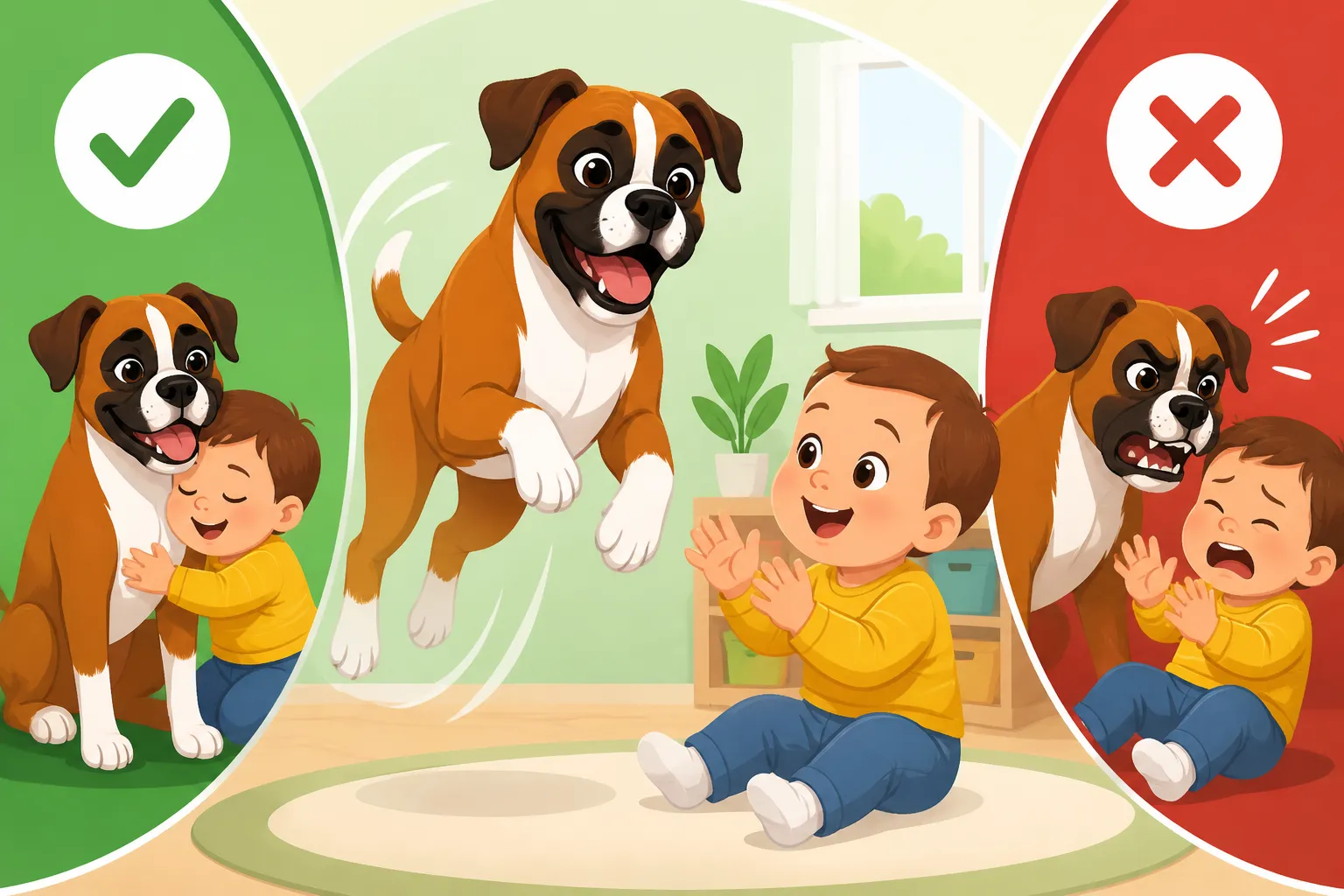
Whether a Bouncing Boxer Is Safe Around Toddlers
The boundless energy and affectionate nature of a Boxer are undoubtedly some of their most charming traits. However, when you introduce a tiny, unsteady human like a toddler into the equation, that exuberance can quickly shift from endearing to downright concerning. Many Boxer owners, or those contemplating bringing one into a bustling family home, wrestle with the very real fear of their beloved, boisterous Boxer accidentally knocking over or startling a young child. This guide will walk you through understanding your Boxer's natural tendencies, the potential hazards, and concrete steps you can take to foster a safe and loving environment where both your Boxer and your toddler can thrive together.
Understanding the Boxer's Innate Drive and Play Style
Boxers are renowned for their playful, clownish personalities and a zest for life that often lasts well beyond their puppy years. Their affectionate nature means they often want to be right in the middle of family activities, but their sheer size and enthusiasm can sometimes be a mismatch for small children. It's crucial to understand that these behaviors typically stem from excitement, not malice.
The Everlasting Puppy Syndrome
One of the most common descriptions you'll hear from Boxer owners is that they are "perpetual puppies." Indeed, it's not uncommon for a Boxer to maintain a puppy-like energy and lack of impulse control until they are two or even three years old. This means that a dog weighing 60 to 80 pounds can still have the coordination and decision-making skills of a much younger animal, making their interactions with small, fragile toddlers a significant point of concern for any responsible owner. You'll often see them zoom through the house, oblivious to obstacles.
This extended period of adolescence can be a real test of patience for families with young children. While other breeds might settle into a more sedate adulthood around 12-18 months, your Boxer might still be launching himself off the couch with gleeful abandon when a toddler is navigating the living room floor. Understanding that this is part of their breed's developmental timeline, rather than a failing on your Boxer's part, is the first step toward managing it effectively. It means your active management and training efforts will need to be sustained for longer.
This "puppyhood that lasts three years" also means they might still be prone to mouthing, nipping, or using their paws in play, even if they aren't trying to hurt anyone. These are natural canine play behaviors, but they are absolutely unacceptable and potentially dangerous when directed towards a small child. It's not about being aggressive; it's about being a dog who hasn't fully grasped the difference between rough-housing with another dog and interacting with a delicate human baby.
The Boxer's Characteristic "Boxing"
The very name "Boxer" comes from their distinctive habit of using their front paws in a punching motion, especially when playing. This is a natural instinct for the breed and can be incredibly charming to watch when they are engaging with another dog or a playful human adult. However, when that "boxing" action is directed, even playfully, at a toddler's head or face, it becomes a serious safety risk.
This pawing behavior can be particularly startling for a toddler, who may not understand the dog's intent and perceive it as an attack, even if the Boxer is just trying to initiate play. A strong swat from a Boxer's paw can easily knock a small child off balance, scratch their face, or even cause a more significant injury if they fall awkwardly. It’s important to be proactive in teaching your Boxer that human faces and bodies are not for pawing, especially those of tiny humans.
Moreover, Boxers often use their paws to get attention or express excitement. They might bat at your leg when they want food, or gently nudge your hand for a pet. While this is harmless with adults, a toddler cannot withstand such force. You need to consistently redirect this behavior from an early age, ensuring that your Boxer learns alternative, gentler ways to seek interaction, especially in a mixed-age household.
Identifying and Mitigating Potential Risks
While Boxers are generally good-natured, their physical attributes and high energy mean there are inherent risks when they share a space with a toddler. It's not about the Boxer being "bad"; it's about physics and instinct.
The Risk of Accidental Injury
The most obvious and frequent concern is the sheer size and strength of a full-grown Boxer combined with their boundless enthusiasm. A Boxer's powerful frame, muscular build, and often clumsy "zoomies" can easily lead to a toddler being knocked over, trampled, or pushed. This isn't usually an act of aggression, but rather a lack of awareness of their surroundings, particularly when they are caught up in a moment of play or excitement.
Imagine your Boxer getting a sudden burst of energy, tearing through the living room, and a toddler, just learning to walk, is in their path. The collision is almost inevitable and can result in bumps, bruises, or worse. Boxers also have a habit of leaning on people for affection, or backing into legs, which could easily send a wobbly toddler to the floor. These are the kinds of accidents that keep parents awake at night, and they are entirely preventable with proactive management.
Furthermore, a Boxer's wagging, powerful tail can also be a surprising hazard. A happy tail thump can sweep items off low tables, or, more concerningly, hit a toddler in the face or chest, causing a painful impact. These are the small, everyday incidents that add up to a potentially unsafe environment if not addressed. Being mindful of your Boxer's space and energy levels, especially when your toddler is mobile, is paramount.
Resource Guarding and Startle Reflexes
Even the most gentle Boxer can exhibit resource guarding, which is a natural canine behavior where a dog protects items they perceive as valuable – food, toys, sleeping spots, or even a preferred human. A toddler, innocent in their exploration, might unknowingly approach a Boxer's food bowl or try to grab a cherished toy, potentially triggering a growl or snap from the dog. While a Boxer might tolerate an adult's interference, a child's unpredictable movements and lack of understanding can be perceived differently.
It's vital to teach both your Boxer and your child boundaries around these valuable items. Your Boxer needs to learn that a child approaching their things doesn't mean they'll be taken away, and your child needs to learn to respect the dog's space, especially around food and toys. Never allow a toddler near a dog's food bowl, and always supervise playtime with toys. Boxers With Children and Other Dogs often requires careful management of these dynamics.
Additionally, toddlers are unpredictable. They can shriek, grab, or move suddenly, which might startle a sleeping or relaxed Boxer. A startled dog, regardless of breed, might react defensively, even if it's just a quick snap or a yelp of surprise. These reactions, while not intentional aggression, can still be terrifying and potentially harmful to a small child. Creating a safe retreat for your Boxer, such as a crate from Chewy with a comfy bed, where they can go undisturbed, is crucial for preventing these types of incidents.
Creating a Harmonious Home Environment
Building a safe and respectful relationship between your Boxer and your toddler requires dedication, consistency, and a clear understanding of boundaries for both parties. It's a journey, not a destination.
Supervision and Management are Key
The golden rule in any home with dogs and children is constant, vigilant supervision. Never, under any circumstances, leave your Boxer and your toddler alone together, even for a moment. This means no quick trips to the bathroom, no running to answer the door. If you cannot actively supervise, separate them. This might sound extreme, but it is the single most effective way to prevent accidents.
Management techniques like baby gates, closed doors, and crates are your best friends. Create designated "safe zones" for both your dog and your child. Your Boxer should have a quiet space, like a comfortable crate (you can find great durable options on Chewy), where they can retreat and be undisturbed. Likewise, your toddler should have areas where they can play freely without worrying about a curious or clumsy canine. This separation allows both species to decompress and reduces the opportunities for accidental interactions.
Consider a tethering system when you need to be in the same room but cannot give 100% focused attention to both. Attaching your Boxer to your waist or a sturdy piece of furniture with a leash means you can control their proximity and movement, preventing sudden charges or interactions. This is a temporary solution for specific situations, but it can be incredibly effective during busy times when direct supervision might falter for a moment.
Teaching Your Boxer Gentle Interactions
Training your Boxer to be gentle and respectful around children is paramount. Start early with obedience training that focuses on impulse control. "Sit," "stay," "down," and "off" should be solid commands. Crucially, teach your Boxer to stay on the floor and not jump on people, especially young children. This means consistent redirection and rewarding four-paws-on-the-floor behavior whenever someone, particularly a child, enters the room. Stopping a Seventy-Pound Boxer From Jumping is a critical skill for any Boxer owner, even more so with toddlers.
Practice gentle greetings. Instead of allowing your Boxer to rush visitors, practice having them sit calmly. Reward them heavily for calm behavior. When a child approaches, encourage them to offer an open hand for a sniff, rather than immediately petting. If your Boxer is too excited, have them go to their "place" command (a designated mat or bed) until they are calm. This teaches them that calm behavior earns rewards and interaction.
Desensitize your Boxer to typical toddler noises and movements. Play recordings of children laughing, crying, and shrieking at low volumes, gradually increasing the sound as your Boxer remains calm. Practice having adults simulate clumsy toddler movements – wobbling, falling, sudden loud noises – and reward your Boxer for remaining relaxed and unfazed. This builds their tolerance and reduces the likelihood of a startle reaction.
Empowering Your Toddler with Safe Dog Etiquette
It's not just about training the dog; it's equally about teaching the child. Toddlers are sponges, and they can learn boundaries and respectful behavior surprisingly early.
Establishing Clear Rules for Children
Even young toddlers can begin to understand simple rules about interacting with dogs. Start with "No pulling," "No hitting," and "Gentle hands." Use positive reinforcement when they follow these rules, praising them for petting gently or giving the dog space. Consistent repetition is key, as toddlers learn through experience and clear boundaries.
Teach your toddler to always approach the Boxer calmly and to ask "Can I pet the doggy?" before reaching out. If the Boxer walks away, teach the child to respect that signal and not chase. This empowers the child to understand and respond to the dog's body language, fostering a mutual respect rather than a one-sided imposition. Simple visual aids, like a picture of a calm dog vs. a stressed dog, can even help.
Emphasize that the Boxer's "bed" or "crate" is their private space, just like the child's own bed. They are not to bother the Boxer when the dog is in its designated safe zone. This teaches invaluable respect for personal space, a lesson that benefits both canine and human relationships. Why a Boxer Needs a Crate More Than Most highlights how important this den can be for their well-being and managing behavior.
Reading Boxer Body Language
Educating yourself and your children on basic canine body language is a game-changer. Learn to recognize signs of stress in your Boxer: lip licking, yawning, turning away, stiffness, a tucked tail, or whale eye (where the whites of their eyes show). These are clear signals that your Boxer is uncomfortable and needs space. Teach older toddlers to recognize these signs, too, and to alert an adult if they see them.
Conversely, also teach children to recognize signs of a happy, relaxed Boxer: a soft gaze, a loose body, a gently wagging tail (not a stiff, high one), and an open-mouthed "smile." This helps children understand when it's safe and appropriate to interact, and when it's time to give the dog a break. Understanding Boxer Body Slamming During Play and how to differentiate it from other behaviors is also important.
A good rule of thumb for any interaction between a dog and a child is the "consent test." Does the dog actively seek out the interaction, or is it merely tolerating it? If the dog is moving away, avoiding eye contact, or showing any signs of discomfort, it's time to intervene and give the Boxer some space. Never force interactions, and always prioritize the dog's comfort and willingness to engage.
Training and Tools for Success
Equipping yourself with the right training knowledge and tools can make all the difference in successfully integrating a Boxer with a toddler.
Prioritizing Obedience Training
Consistent and positive reinforcement-based obedience training is non-negotiable for a Boxer in a family with toddlers. Enroll in puppy classes and continue with advanced obedience as your Boxer matures. Focus on commands like "leave it" (for objects on the floor), "stay," and "down" from a distance. A well-trained Boxer is a safer Boxer, as you have more control over their actions.
Remember, Boxers are intelligent but can be stubborn and easily bored. Keep training sessions short, fun, and engaging. Use high-value treats (Chewy offers a wide selection of training treats) and praise to motivate them. If a session becomes frustrating, end it on a positive note and try again later. Consistency across all family members is vital; everyone needs to use the same commands and expectations. Why Short Sessions Suit a Boxer's Attention Span is particularly relevant here.
Beyond basic obedience, consider teaching your Boxer specific behaviors that will be useful around children, such as "go to your bed" or "settle." These commands provide an alternative behavior when the Boxer might otherwise jump or get overly excited. This gives them a clear, positive instruction rather than just saying "no."
Essential Gear and Resources
Investing in the right equipment can significantly aid in managing your Boxer in a household with a toddler. A sturdy crate is indispensable for providing your Boxer with a safe den and for safely containing them when you cannot actively supervise. Ensure it's appropriately sized for a grown Boxer – Crates Big Enough for a Grown Boxer will be much larger than you might initially think for a puppy.
Baby gates are another essential item for creating physical barriers and dividing your home into dog-friendly and child-friendly zones. Consider gates that are taller and sturdier, as an athletic Boxer can easily jump over or lean on flimsier models. These gates allow you to keep your Boxer in a separate room or area while your toddler plays, ensuring peace of mind.
Finally, don't hesitate to seek professional help from a certified dog trainer or behaviorist, especially one experienced with Boxers and family integration. They can offer tailored advice, help you troubleshoot specific issues, and provide hands-on guidance. Sometimes an objective third party can spot nuances you might miss and offer strategies that transform your home into a truly harmonious space for everyone.
| Boxer Behavior | Potential Toddler Risk | Mitigation Strategy |
|---|---|---|
| Zoomies / Bouncing | Accidental knock-over/trampling | Gates, crate time, structured exercise, "place" command |
| Pawing / "Boxing" | Scratches, bumps, fright | Redirect to toys, "paws off" command, gentle greetings |
| Mouthing / Nipping (play) | Skin punctures, fright | Strict "no bite" training, chew toys, immediate redirection |
| Resource Guarding | Aggression over food/toys | Separate feeding, secure dog toys, teach "leave it" |
| Tail Wagging (excited) | Facial/body impact, knocking items | Manage proximity, teach "settle", provide calm space |
| Startled Reaction | Defensive snap/growl | Safe retreat (crate), desensitize to sounds, teach child respect |
In conclusion, while a bouncing Boxer and a toddling child can seem like a recipe for chaos, it absolutely doesn't have to be. With careful planning, consistent training for both your beloved Boxer and your curious toddler, unwavering supervision, and the intelligent use of management tools, you can cultivate a beautiful, safe, and loving relationship between them. It requires effort, patience, and a deep understanding of your Boxer's unique personality, but the rewards of seeing them grow up together are truly priceless.
Disclaimer
This article is for general informational purposes only and does not constitute professional advice. Laws, prices and regulations vary by location and change over time. Consult a qualified professional for guidance on your specific situation.