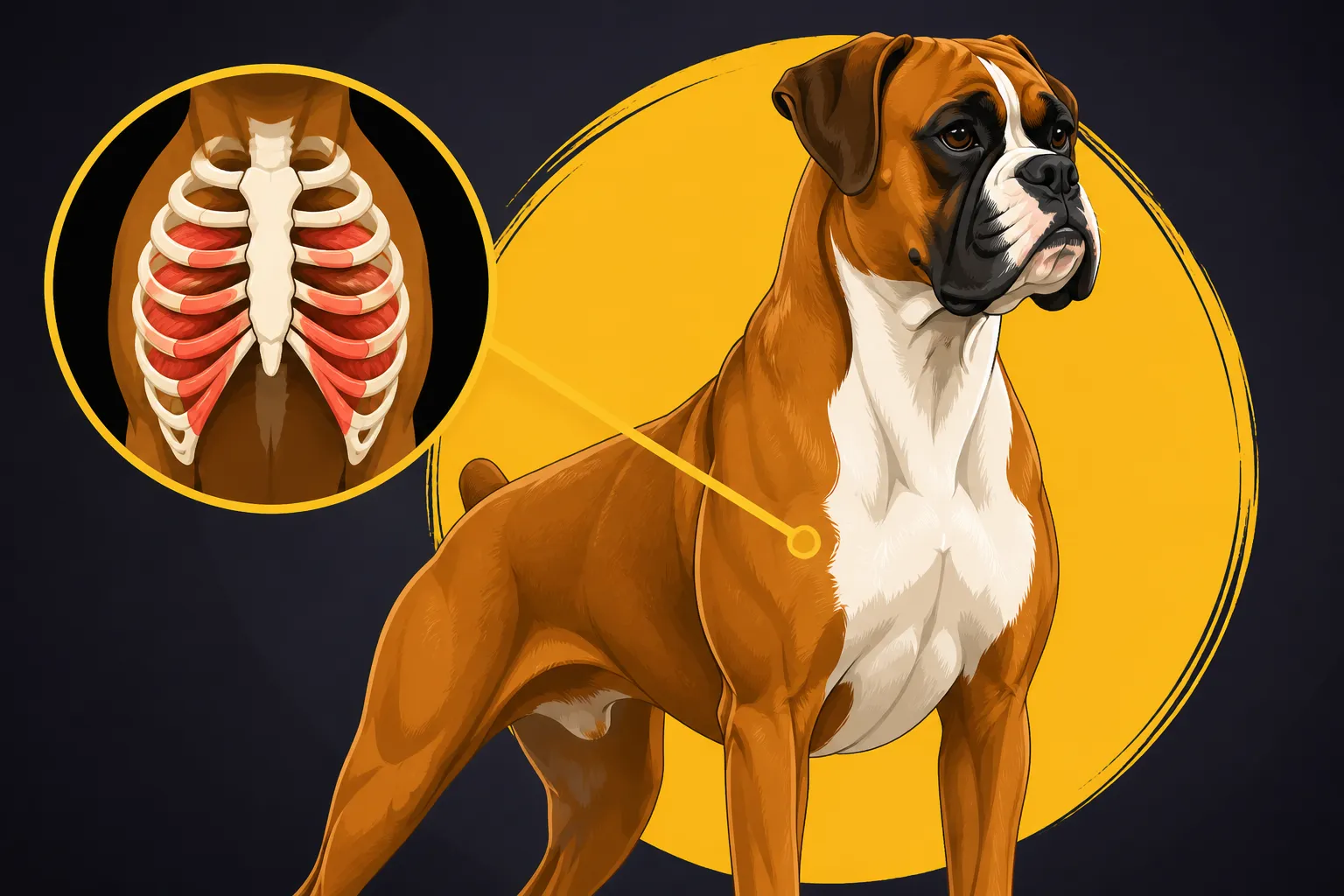
The Chest and Ribs a Boxer Should Have
It can be incredibly confusing to look at a breed standard and try to understand what "well-sprung ribs" or a "deep chest" actually means for your beloved Boxer. You might worry if your dog's build is really what it should be, or if their unique shape could be setting them up for health problems. This guide will walk you through the specifics of the Boxer's chest and rib structure, explaining what's considered ideal and why it matters for their health and athleticism.
Understanding the Ideal Boxer Chest: Depth, Width, and Form
When you look at a Boxer, one of the first things that strikes you is their powerful, athletic build. A significant part of this comes from their chest and rib cage, which the breed standard describes in quite specific terms. It's not just about aesthetics; this conformation plays a huge role in their function, breathing, and even their susceptibility to certain health issues.
The Importance of Chest Depth
The Boxer's chest is meant to be deep, reaching down to their elbows. This depth is crucial because it provides ample room for the heart and lungs, allowing for maximum capacity and efficient oxygen exchange. Imagine a finely-tuned athlete; their respiratory and cardiovascular systems need space to perform, and a Boxer is very much an athlete at heart. A deep chest allows them to take in plenty of air, which is vital for their high-energy bursts and playful antics. Without sufficient depth, a Boxer might struggle with endurance or appear less robust, impacting their ability to engage in long play sessions or even just a brisk walk without tiring. It also contributes to that characteristic powerful silhouette.
Chest Width and Forechest Development
While depth is paramount, the chest also needs appropriate width. It shouldn't be too narrow, pinching the elbows, nor should it be excessively broad, which can lead to a less agile movement. The ideal Boxer chest has a good width that is proportionate to the dog's overall build. More specifically, the forechest — the part of the chest that extends in front of the front legs — should be well-developed. Think of it as a strong, proud projection. This forechest development is often a hallmark of good angulation in the shoulder, which in turn contributes to efficient, powerful movement. A Boxer with a flat or underdeveloped forechest might have restricted movement or an appearance that lacks the breed's signature power.
The Role of the Breastbone
At the very front of the chest lies the breastbone, or sternum. In a well-conformed Boxer, the breastbone is distinct and visible, forming the prominent "point" of the forechest. It should not be recessed or appear sunken. This prominent breastbone flows smoothly into the well-sprung ribs, creating a graceful curve that defines the chest's shape. When you run your hand along your Boxer's chest, you should feel a clear, strong structure here, indicating good bone and muscle. It's an indicator of overall skeletal soundness and helps to protect the vital organs nestled within the rib cage.
The Significance of Rib Spring and Body Shape
Beyond the overall depth and width, the way the ribs "spring" or arch from the spine is another critical component of the Boxer's ideal structure. This rib spring, combined with the other aspects of their body shape, dictates everything from lung capacity to digestive health.
Well-Sprung Ribs: What They Mean
"Well-sprung ribs" refers to how the ribs curve outwards from the spine before tucking in towards the belly. In a Boxer, these ribs should be nicely rounded, creating a barrel-like effect, but not so rounded that they appear slab-sided or flat. This generous arch provides even more volume for the lungs and heart, enhancing the dog's stamina and allowing for unencumbered breathing, which is especially important for a brachycephalic breed like the Boxer. If a Boxer has flat ribs, sometimes called "slab-sided," their chest volume is reduced, potentially making them less efficient at oxygen intake, especially during strenuous activity. It can also make them look less athletic and more "lean" in a way that isn't characteristic of the breed's powerful build.
The Short, Strong Back
The Boxer breed standard also calls for a short, strong back. This isn't just a random preference; it's intricately linked to the chest and ribs and contributes to the Boxer's overall athleticism and balance. A short back means there's less "leverage" for movement, concentrating power closer to the core. Combined with well-sprung ribs, this short back creates a compact, sturdy body. This build allows for quick turns, powerful propulsion, and overall agility. A long back, on the other hand, can sometimes indicate a weaker frame and potentially be more prone to back issues down the line, affecting their active lifestyle. The connection between a short back and a robust chest ensures that the Boxer's powerful engine (heart and lungs) is housed within a strong, efficient chassis.
The Tucked-Up Abdomen
Beneath the powerful chest and robust ribs, the Boxer should have a distinctly tucked-up abdomen. This is often referred to as a "tuck-up" or "wasp waist." It means the belly gracefully curves upwards from the end of the rib cage towards the hindquarters. This tucked-up appearance is a clear sign of an athletic dog that is in good condition, without excess fat. It complements the deep chest beautifully, creating a distinct waistline and contributing to their streamlined profile. When a Boxer is overweight, this tuck-up diminishes, and the belly might appear saggy or distended, which can impact their movement and overall health. Maintaining a lean body condition is critical for Boxers, especially given their predispositions to certain health issues, and the tuck-up is a great visual indicator of good fitness. You can find quality weight management foods and supplements from retailers like Chewy to help maintain this lean physique.
Common Chest and Rib Issues in Boxers
While the ideal Boxer chest and rib structure is magnificent, not every Boxer conforms perfectly, and some structural deviations can lead to specific health concerns. Understanding these potential issues is key to proactive care for your Boxer.
Bloat and the Deep Chest
One of the most concerning health issues linked to a Boxer's chest structure is Gastric Dilatation-Volvulus (GDV), commonly known as bloat. Boxers are a deep-chested breed, and this conformation unfortunately makes them highly susceptible to bloat. A deep, narrow chest allows more room for the stomach to twist if it dilates with gas and/or fluid. When the stomach twists, it cuts off blood supply and can quickly become a life-threatening emergency. This is a common frustration for Boxer owners; while the deep chest is part of their beauty and athleticism, it's also a risk factor.
Symptoms of bloat include unproductive retching, a distended abdomen (which can be hard to spot in Boxers due to their strong musculature), restlessness, and discomfort. If you suspect bloat, time is of the essence. Many Boxer owners consider prophylactic gastropexy, a surgical procedure that tacks the stomach to the abdominal wall, to prevent it from twisting. This can often be done at the same time as a spay or neuter. Whether Preventive Bloat Surgery Suits a Boxer is a topic many owners research thoroughly.
Breathing Difficulties and Brachycephalic Structure
Boxers are a brachycephalic breed, meaning they have a "flat-faced" or short-nosed appearance. While not directly related to the chest and ribs in terms of structure, the chest's capacity plays a vital role in how effectively they can breathe with their compromised upper airways. Their deep chest allows for a greater volume of air, which helps compensate for the resistance caused by narrowed nostrils, an elongated soft palate, and a hypoplastic trachea.
However, even with a good chest, their brachycephalic nature means they are prone to overheating and can struggle with exercise in warm weather. If a Boxer also has compromised chest capacity due to poor rib spring or an oddly shaped chest, these breathing difficulties can be exacerbated, leading to more frequent respiratory distress, loud snoring, and reduced stamina. Keeping them cool and managing their exercise, especially during hot weather, is paramount. Snoring and Noisy Breathing in a Boxer can sometimes be an indicator of underlying issues that are compounded by their physical structure.
Weight Management Challenges
Maintaining a lean body condition is crucial for Boxers, and their deep chest and muscular build can sometimes make it tricky to visually assess their weight. An overweight Boxer will have less discernible rib spring and a less defined tuck-up. Extra weight puts strain on their joints, heart, and lungs, worsening any pre-existing conditions and reducing their overall quality of life. For a breed like the Boxer, which is already prone to Boxer Cardiomyopathy and the Holter Monitor, carrying excess weight can put additional, unnecessary stress on their cardiovascular system. Owners often struggle with finding the right balance of food and exercise. Using a quality dog food designed for active, medium-to-large breeds and measuring portions carefully is vital. Retailers like Chewy offer a wide range of specialized diets that can help manage weight effectively.
How to Assess Your Boxer's Chest and Ribs
Understanding the breed standard on paper is one thing, but knowing how to evaluate your own Boxer's chest and ribs in real life can be incredibly empowering. It helps you recognize what's normal, what might be a concern, and how to discuss their build with your veterinarian.
Visual Assessment: Looking for the Right Shape
Start by observing your Boxer from the side, top, and front.
- From the Side: You want to see that deep chest, dropping down at least to the elbows. Look for the distinct forechest jutting out in front of the front legs. The topline should be short and strong, and the abdomen should show a clear tuck-up. If your Boxer's chest looks shallow, like it doesn't reach their elbows, or if their belly is sagging instead of tucked, it might be worth mentioning to your vet.
- From the Top: Their body should show a clear waist, narrowing slightly from the ribs to the hips, indicating good rib spring and a proper tuck-up. Avoid a "barrel" shape where there's no waist, which can indicate being overweight, or a "slab-sided" look that is too straight down the sides.
- From the Front: The chest should be broad and muscular, but not so wide that it hinders movement. The front legs should appear straight and well-supported by the chest.
Hands-On Assessment: Feeling for Conformation
Actually feeling your Boxer's body can give you a lot of information that visuals alone might miss. This is also a fantastic way to bond with your dog and perform regular Weekly Lump Checks on a Boxer.
- Feel the Ribs: Gently run your hands along your Boxer's sides, from behind their shoulders down to their waist. You should be able to feel their ribs under a thin layer of muscle and fat, much like you can feel the knuckles on your hand, but not see them clearly. The ribs should curve out nicely, indicating good spring. If you can clearly see individual ribs without much effort, your Boxer might be too thin. Conversely, if you can't feel the ribs easily at all, they might be carrying too much weight.
- Check the Breastbone: Place your hand on the front of their chest, between their front legs. You should feel a distinct, prominent breastbone. It should feel solid and substantial, not sunken or overly sharp.
- Assess the Tuck-Up: Run your hand along their belly. It should feel firm and tight, curving upwards towards their hindquarters. There shouldn't be a lot of loose skin or fat hanging down.
When to Consult Your Veterinarian
If you have any concerns about your Boxer's chest or rib conformation, or if you notice any changes in their body shape, don't hesitate to consult your veterinarian. They can provide a professional assessment, confirm if your Boxer is at an ideal weight, and discuss any potential health risks or management strategies. For example, if your Boxer consistently struggles with breathing during exercise, even with a seemingly good chest, your vet might want to investigate other brachycephalic airway syndrome components or check their heart for conditions like Subaortic Stenosis in a Boxer Puppy or Boxer Cardiomyopathy and the Holter Monitor. Regular veterinary check-ups are essential for monitoring your Boxer's overall health and addressing any conformational issues that might impact their well-being.
Maintaining a Healthy Chest and Rib Structure
While a Boxer's chest and rib structure is largely determined by genetics, how you care for them plays a significant role in maintaining their health and ensuring their build supports a long, active life. It's about combining good nutrition with appropriate exercise and vigilance.
Nutrition for Optimal Bone and Muscle Development
Proper nutrition is fundamental from puppyhood through adulthood. During their rapid growth phase, Boxer puppies need a diet specifically formulated for large breeds to support healthy bone and muscle development without promoting overly fast growth, which can stress developing joints. As adults, they need a balanced diet rich in protein to maintain their powerful musculature and lean body condition. High-quality dog foods, easily found at pet suppliers like Chewy, provide the necessary nutrients.
It's also crucial to avoid overfeeding. Even a slightly overweight Boxer puts extra strain on their musculoskeletal system and cardiovascular system. Measure your Boxer's food portions accurately and be mindful of treats. Regular body condition scoring, feeling for those ribs, and observing the tuck-up are more reliable indicators than just stepping on a scale. Feeding a Boxer to Stay Lean and Muscled is a constant balancing act for many owners.
Exercise for a Strong Core and Respiratory Health
Consistent, appropriate exercise is key to building and maintaining strong core muscles, which support the rib cage and back, and for keeping their heart and lungs conditioned. Boxers are high-energy dogs, and they thrive on physical activity. Daily walks, playtime in a securely fenced yard, and engaging in dog sports like agility or obedience can all contribute to a healthy physique. However, remember their brachycephalic nature and propensity to overheat. Adjust exercise intensity and timing based on the weather, always providing access to fresh water and shade. Boxer Exercise Needs and the Heat That Limits Them is a crucial consideration for all Boxer owners. If you notice your Boxer struggling with breathing or tiring easily, it's a sign to slow down and consult your vet.
Regular Health Screenings and Preventative Care
Proactive health screening is non-negotiable for Boxers. Given their predispositions, particularly to bloat and heart conditions, regular veterinary check-ups are essential. Discuss preventative measures like gastropexy with your vet. For heart health, annual Holter monitoring from around three years of age is recommended to screen for Boxer cardiomyopathy (ARVC). Annual Holter Screening as a Boxer Expense is an investment that can catch issues early. Catching any issues related to their structure, such as early signs of arthritis or joint problems, is easier when your vet is familiar with your Boxer's baseline health and conformation. By combining a deep understanding of their unique structure with diligent care, you can help your Boxer live their best, healthiest life.
Disclaimer
This article is for general informational purposes only and does not constitute professional advice. Laws, prices and regulations vary by location and change over time. Consult a qualified professional for guidance on your specific situation.