Whether a Boxer’s Back Should Slope
It's completely understandable to scrutinize every curve and angle of your beloved Boxer, especially when you start noticing things that just don't seem quite right or you compare them to other dogs. Many Boxer owners find themselves wondering about their dog's back, particularly whether it should have a noticeable slope. While some breeds are indeed characterized by a sloped topline, a healthy, well-conformed Boxer should actually have a strong, level back. This guide will walk you through what the breed standard dictates, common visual misunderstandings, and crucially, when a change in your Boxer's back might signal an underlying health issue.
Understanding the Boxer Breed Standard for Back and Topline
When we talk about a Boxer's physique, especially its back, we're really looking at what the breed standard describes. This isn't just about aesthetics; it's about functionality and maintaining the health and athleticism for which the Boxer was originally bred. A strong, correctly formed back is fundamental to their powerful movement and overall well-being.
What the Standard Actually Says
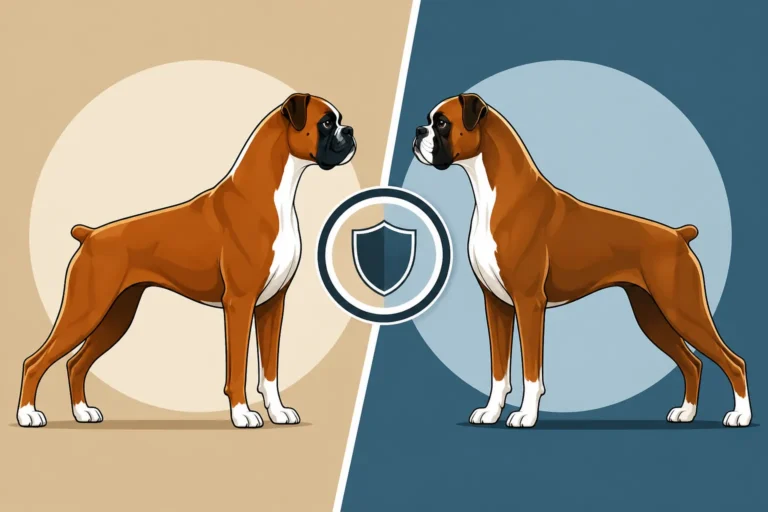
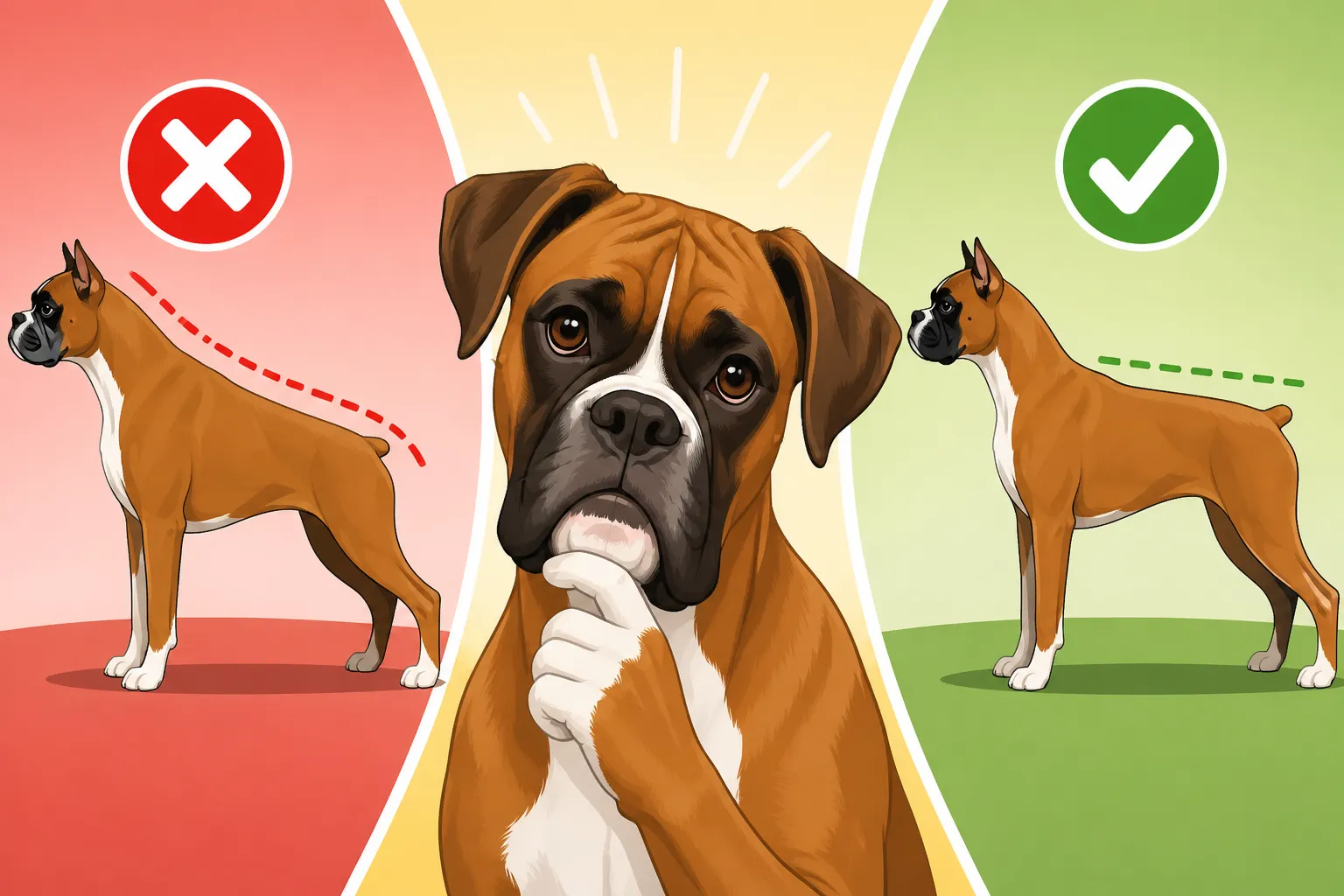
The official breed standard for the Boxer is quite clear when it comes to the topline. It describes a back that is "short, straight, and muscular, connecting the strong, well-laid-back shoulders to the muscular, slightly arched loin." The key word here is "straight." This means that when your Boxer is standing naturally, its back should present a level appearance from the shoulder blades to the point where the loin begins its slight arch over the powerful hindquarters. You shouldn't see a significant downward slope from front to back, nor should it appear swayed or roached. This level topline is crucial for transmitting power efficiently from the hindquarters through the body, which is essential for a dog known for its agile, driving gait. You can find more detail on this in The Boxer the Breed Standard Describes.
The ideal Boxer conformation emphasizes balance and strength. A perfectly level back allows for optimal movement and support of the internal organs. Any deviation from this, such as a noticeable slope, could indicate either a conformational fault or, more importantly, an underlying physical problem that deserves attention. It’s not just about looking good in the show ring; it’s about a design built for endurance and powerful bursts of activity.
Why a Level Topline Matters for a Working Dog
Think about the Boxer's history as a working dog, initially involved in hunting and later in police and military roles. Their build needed to be sturdy, resilient, and capable of powerful, explosive movement. A level topline is an architectural marvel in this context. It provides a stable platform for the muscles of the back and loin, which are integral to the dog's ability to run, jump, and turn quickly. Without this strong, level foundation, a Boxer's movement would be compromised, making them less efficient and more prone to injury.
This straight back contributes to the powerful, free-striding gait that is characteristic of the breed, as described in Boxer Gait and Movement in the Ring. A sloped back could indicate weakness in the rear or issues with spinal alignment, which would directly hinder their athletic capabilities and put undue stress on joints. Moreover, the musculature surrounding a healthy, level back helps to protect the spine. When the back is not correctly supported or aligned, the potential for strain, pain, and more serious conditions increases significantly over time. It truly is a testament to form following function.
Common Variations and What Might Look Like a Slope
It's easy to look at a Boxer and think you see a slope where none truly exists, or to confuse natural muscle development with an issue. Boxers are incredibly athletic dogs with powerful builds, and sometimes their strong hindquarters can create an optical illusion.
The Boxer's Athletic Build vs. a "Slopped" Back
One common misunderstanding comes from the Boxer's powerful hindquarters. They have well-developed, muscular thighs and a strong angulation at the stifles (knees), which is what gives them their incredible drive and spring in movement. When viewed from certain angles, this powerful rear assembly, combined with their slightly tucked-up abdomen, can sometimes make it seem as though their back slopes downwards towards the tail. However, if you run your hand along their spine from shoulders to tail, you should feel a relatively consistent, level line, even if their overall silhouette from a distance might suggest otherwise.
It's also important to consider their posture. A Boxer that is stretching, playing, or in a "play bow" stance will naturally contort its body, temporarily creating curves or dips in its topline that are not present when standing squarely. Furthermore, some Boxers, particularly those with a slightly longer body or less developed loin muscles, might appear to have a less taut topline, which can sometimes be mistaken for a sag rather than a proper slope. Observing your Boxer when they are relaxed and standing square is key to an accurate assessment.
Age-Related Changes and the Older Boxer
Just like with people, a Boxer's body changes as it ages, and their back is certainly not immune. What might appear as a slight slope or a sag in an older Boxer often isn't a congenital issue but rather a consequence of age. As Boxers enter their senior years, typically past seven or eight, they can begin to lose muscle tone, even if they remain active. This natural muscle atrophy can lead to a less taut topline, making the back appear less perfectly level than it once was. You might notice them starting to thicken and slow down, which can contribute to changes in their posture and overall physique. More information on how the body changes can be found in What Changes in a Boxer After Seven.
Conditions like arthritis in the spine (spondylosis) or hips (hip dysplasia) can also subtly alter a senior Boxer's posture, leading them to carry themselves in a way that creates a perceived slope to alleviate discomfort. For example, a Boxer trying to take pressure off sore hips might shift their weight forward, which could make their rear seem lower. These changes are part of the aging process and, while sometimes manageable, are different from a structural fault present from puppyhood. Keeping up with regular vet check-ups and paying attention to their comfort levels is vital for Caring for a Boxer Past Eight.
Health Concerns That Can Cause a Sloping or Sagging Back
While a true "slope" isn't typical for a healthy Boxer, a change in the back's appearance or posture can be a red flag for several significant health issues. These aren't just cosmetic concerns; they can severely impact your Boxer's quality of life and mobility.
Degenerative Myelopathy and Its Impact
One of the most heart-wrenching conditions that can affect a Boxer's back and posture is Degenerative Myelopathy (DM). This is a progressive neurological disease affecting the spinal cord, particularly in the thoracic (mid-back) region. DM is akin to ALS in humans, causing a gradual weakening and loss of coordination in the hind limbs. As the disease progresses, Boxers with DM will often start dragging their back feet, develop an unsteady gait, and eventually lose the ability to walk. The changes in their hind limbs inevitably impact their back, causing it to appear weaker, sway, or even take on a 'sloped' appearance as the muscle support diminishes and they compensate for their weakness. You might notice them struggling with stairs or getting up from lying down. We discuss this further in Degenerative Myelopathy in an Older Boxer.
The "slope" in this context isn't a skeletal abnormality but rather a consequence of the severe muscular weakness and neurological deficit. The dog's rear end sags because it simply can't support itself properly anymore. Observing a Boxer lose its back legs is incredibly difficult, and sadly, DM is a progressive disease with no cure. Early diagnosis and supportive care are crucial to maintaining comfort and mobility for as long as possible. Many owners turn to specialized harnesses and carts, often purchased from retailers like Chewy, to help their dogs stay mobile.
Hip Dysplasia, Spondylosis, and Other Orthopedic Issues
Beyond DM, other orthopedic issues can manifest as changes in a Boxer's back or gait. Hip dysplasia, while primarily affecting the hip joints, can cause a Boxer to carry its weight differently, leading to compensatory changes in the back and gait. A dog with painful hips might tuck its tail, shorten its stride, or shift its weight forward, which can give the appearance of a sloped or uneven back as they try to alleviate discomfort. Boxer Hip Dysplasia and Spondylosis delves deeper into these conditions.
Spondylosis deformans is another common condition, especially in older Boxers. This involves the formation of bony spurs (osteophytes) along the vertebrae of the spine. While often asymptomatic, severe cases can lead to pain, stiffness, and a reduced range of motion, which might cause the Boxer to adopt a stiff, slightly arched, or even seemingly "sloped" posture to minimize pain. An X-ray is typically needed to confirm spondylosis, and often, it's discovered during imaging for other issues, as discussed in Spondylosis on a Boxer's X-Ray. Other less common issues like intervertebral disc disease (IVDD) can also cause back pain and changes in posture, though Boxers are generally less prone to severe IVDD than some other breeds.
| Condition | Primary Impact on Back/Posture | Typical Age of Onset | Prognosis |
|---|---|---|---|
| Normal Healthy Boxer | Strong, level topline, powerful hindquarters | All ages | Excellent |
| Degenerative Myelopathy (DM) | Progressive hindquarter weakness, sagging rear, unsteady gait | Middle to older age | Progressive, no cure, supportive care |
| Hip Dysplasia | Compensatory posture, pain-induced "slope," difficulty rising | Puppyhood to older age | Manageable with diet, exercise, medication |
| Spondylosis Deformans | Stiffness, arched back, reduced flexibility, pain | Middle to older age | Manageable with pain relief, mobility support |
| General Aging/Muscle Loss | Less taut topline, slight sag, reduced athleticism | Senior years | Natural process, managed with exercise/diet |
When to Consult Your Vet About Your Boxer's Back
It’s one thing to observe your Boxer and another to know when those observations warrant a trip to the vet. As responsible Boxer parents, we're always on the lookout for subtle cues that something isn't quite right. When it comes to their back and posture, being proactive can make a huge difference.
Observing Changes and When to Act
Regularly observing your Boxer's gait and posture is incredibly important. If you notice a gradual change in your Boxer's topline, particularly if it's accompanied by other symptoms, it's time to call your veterinarian. These symptoms could include:
- Weakness in the hind legs: Your Boxer might stumble, drag their feet, or have trouble standing up. This is a significant red flag, especially for conditions like DM.
- Difficulty with stairs or jumping: If they hesitate to jump on the couch or struggle with stairs when they used to bound up them, it's worth noting.
- Pain or sensitivity to touch: If your Boxer cries out, flinches, or avoids being touched along their back or hips, this strongly suggests discomfort.
- Changes in activity level or demeanor: A Boxer in pain might become more withdrawn, less enthusiastic about walks, or even a bit irritable.
- Muscle loss in the hindquarters: Visibly smaller or weaker muscles in the back legs can be a sign of neurological or orthopedic issues.
Don't dismiss these changes as "just old age." While age is a factor, many conditions are treatable or manageable, and catching them early can significantly improve your Boxer's quality of life. Even if it's nothing serious, peace of mind is invaluable. The annual costs associated with a Boxer can be high, and preventative care and early intervention are often less expensive in the long run than treating advanced conditions. Consider the comprehensive outlook provided by The Yearly Bill for a Seventy-Pound Boxer.
Diagnostic Tools and Management Options
When you bring your Boxer to the vet with concerns about their back, your veterinarian will start with a thorough physical examination. They will check your Boxer's reflexes, palpate their spine and joints, and observe their gait. Depending on their findings, they might recommend further diagnostic tests. These could include:
- X-rays: To visualize the bones of the spine and hips, checking for signs of arthritis, spondylosis, or hip dysplasia.
- Blood tests: To rule out other systemic diseases or inflammatory conditions.
- Neurological examination: A more in-depth assessment of nerve function, especially if DM is suspected.
- MRI or CT scan: These advanced imaging techniques provide detailed views of soft tissues, such as spinal discs and the spinal cord, which can be crucial for diagnosing conditions like disc disease or more complex neurological issues.
Once a diagnosis is made, your vet will discuss management options. For conditions like spondylosis or hip dysplasia, this might involve anti-inflammatory medications, pain relief, joint supplements (many of which are readily available from online pet suppliers like Chewy), controlled exercise programs, and potentially physical therapy. For DM, management focuses on supportive care, maintaining mobility for as long as possible through things like slings or dog carts, and ensuring comfort. While we hope our Boxers live a long, healthy life, understanding their potential health challenges allows us to provide the best care possible.
Disclaimer
This article is for general informational purposes only and does not constitute professional advice. Laws, prices and regulations vary by location and change over time. Consult a qualified professional for guidance on your specific situation.