Dental Work on a Boxer’s Undershot Jaw
Few things are cuter than a Boxer's perpetually worried, slightly grumpy-looking face, often paired with that distinctive undershot jaw. While it's a hallmark of the breed's charm, this unique facial structure also brings with it a whole host of specific dental challenges that many owners aren't prepared for. This comprehensive guide will walk you through everything you need to know about keeping your Boxer's mouth healthy, from daily brushing to professional cleanings, so you can prevent painful problems and keep that adorable mug smiling for years.
The Boxer's Unique Dental Anatomy and Its Challenges
That endearing “bulldog bite” isn't just for looks; it’s a direct result of the Boxer's brachycephalic (short-nosed) skull and how their teeth are meant to meet, or rather, not quite meet. This characteristic, while adorable, sets the stage for particular dental issues that might not be as prevalent in other breeds. Understanding this anatomy is the first step in providing the best care for your beloved Boxer.
Understanding the Undershot Jaw
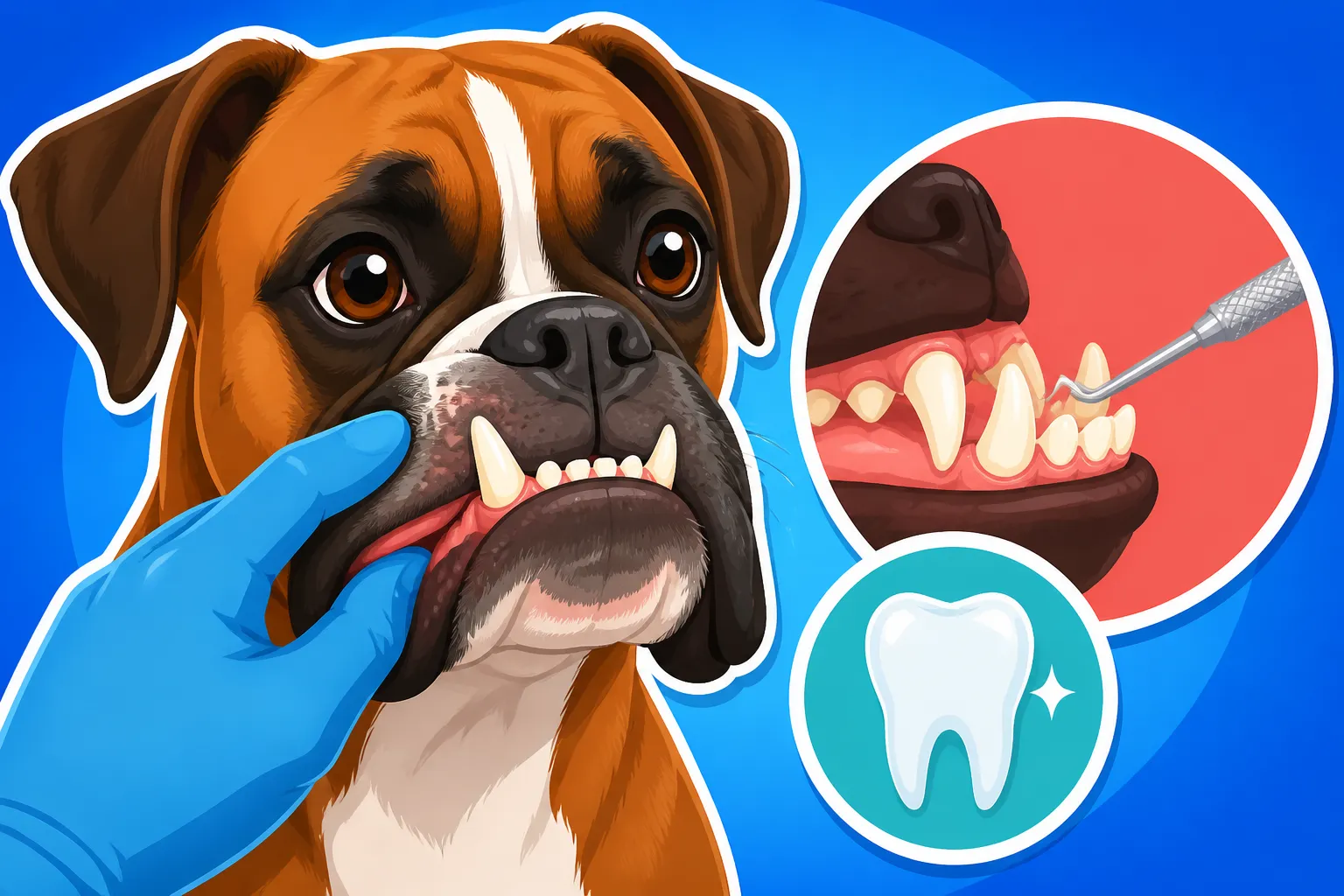
An undershot jaw, or prognathism, means that the lower jaw extends beyond the upper jaw, resulting in the lower incisors (front teeth) sitting in front of the upper incisors. It’s part of the Boxer breed standard and gives them that classic, tough-yet-tender expression. However, this isn't just a cosmetic trait; it means your Boxer’s bite is inherently different from most other dogs, and this difference can cause functional problems. Think of it like a puzzle where some pieces don't quite align perfectly. The teeth may not meet as they should, leading to areas where food particles and plaque can accumulate undisturbed, or worse, where teeth can rub or impinge on soft tissues.
This isn't to say every Boxer will have severe dental problems, but the foundation for them is often laid by this very characteristic. You might notice your Boxer's lower canines don't seat neatly behind their upper canines, or that some of their molars don't interlock efficiently when they chew. These subtle misalignments can lead to uneven wear patterns on their teeth, or create tiny crevices and pockets that become havens for bacteria.
Crowding and Misalignment Within the Jaw
Because of the shorter skull, Boxers often have more teeth than space, especially in the lower jaw. This crowding means that individual teeth can be rotated, tilted, or pushed out of their normal alignment. Imagine trying to fit too many books onto a shelf – some will inevitably be at an angle or sticking out. For a Boxer, this crowding is particularly common with the incisors and premolars. These misaligned teeth are notoriously difficult to clean effectively, even with diligent brushing. The tight spaces between them become perfect traps for food debris and plaque, which can quickly harden into tartar.
Furthermore, a misaligned tooth might constantly rub against an opposing tooth, leading to excessive wear. Or, in some cases, a lower canine might impinge on the roof of the mouth, causing chronic pain and even creating holes (oronasal fistulas) if not addressed. This is not just uncomfortable for your dog; it can be a source of persistent infection. It’s a common frustration for Boxer owners: you try your best with brushing, but it feels like you're fighting an uphill battle against their natural anatomy.
Predisposition to Dental Issues
Due to this unique bite and the often-crowded dentition, Boxers are generally more prone to a range of dental health issues compared to breeds with more conventional scissor bites. The chronic accumulation of plaque and tartar, especially on those awkwardly angled or overlapping teeth, significantly increases their risk of developing periodontal disease. This isn't just bad breath; periodontal disease is a progressive infection that affects the gums, ligaments, and bone supporting the teeth. Left untreated, it can lead to pain, tooth loss, and even systemic health problems as bacteria from the mouth enter the bloodstream and affect organs like the heart, liver, and kidneys.
Beyond periodontal disease, the mechanics of their bite can lead to issues like tooth-on-tooth wear, fractured teeth from abnormal contact, and gingival recession where the gums pull away, exposing sensitive tooth roots. These issues often go unnoticed by owners until they become quite advanced and painful, largely because dogs are incredibly stoic about oral discomfort. This predisposition means that proactive and consistent dental care isn't just recommended for Boxers, it's absolutely crucial for their overall health and quality of life.
Common Dental Problems in Boxers
Beyond the general predisposition, there are specific dental ailments that Boxer owners should be particularly vigilant about. These issues often stem directly from their unique oral structure and can become quite serious if not detected and treated early.
Tartar and Plaque Buildup
The most ubiquitous dental problem for almost all dogs, and especially Boxers, is the relentless accumulation of plaque and tartar. Plaque is a sticky, colorless film of bacteria that constantly forms on teeth. If not removed daily, it mineralizes into hard, yellowish-brown tartar (calculus) within 24-48 hours. In Boxers, the crowded and often uneven surfaces of their teeth, combined with the way their undershot jaw affects the natural self-cleaning action of their tongue and saliva, create ideal conditions for tartar to thrive. You'll often see it building up particularly quickly on the outer surfaces of the upper molars and on the lower incisors, which are typically more exposed.
This isn't just an aesthetic problem; tartar is porous and provides an excellent surface for more bacteria to cling to, exacerbating the problem. The bacteria in plaque and tartar produce toxins that irritate the gums, leading to gingivitis – the first stage of periodontal disease. Your Boxer's breath might start to smell, their gums might look red and swollen, and you might even see some bleeding when they chew on hard toys. Catching and addressing this buildup early is key to preventing more serious complications down the road.
Periodontal Disease
Periodontal disease is the number one clinical condition affecting adult dogs, and Boxers are frequently at the forefront of this statistic. It begins as gingivitis, an inflammation of the gums caused by bacterial plaque. If the plaque and tartar are not removed, the infection progresses below the gum line. The bacteria start to attack the supporting structures of the tooth: the periodontal ligament, the cementum (which covers the tooth root), and eventually the alveolar bone that holds the tooth in the jaw. This process is irreversible without professional intervention.
As the disease advances, pockets form between the gums and the teeth, deepening as more tissue and bone are destroyed. These pockets fill with pus and bacteria, causing further infection and breakdown. Ultimately, teeth become loose and painful, and can even fall out. Dogs with advanced periodontal disease often experience chronic pain, difficulty eating, and a decreased quality of life. The bacteria from these infections can also travel through the bloodstream, impacting vital organs. This is why regular professional dental cleanings are so important for preventing the progression of this debilitating disease in Boxers, whose anatomy makes them so susceptible.
Traumatic Occlusion and Worn Teeth
Traumatic occlusion occurs when teeth don't meet correctly, leading to abnormal contact points that cause trauma to other teeth or soft tissues in the mouth. In Boxers, due to their undershot jaw and potential crowding, certain teeth might constantly hit against an opposing tooth in an unnatural way, or even press into the gum tissue or the roof of the mouth. This repeated trauma can lead to several problems.
One common issue is excessive tooth wear. Instead of wearing down evenly from normal chewing, specific teeth might grind against each other, causing the enamel to erode prematurely. In severe cases, the wear can expose the sensitive dentin layer, or even the pulp chamber (the nerve), leading to pain and infection. Imagine having a tooth that's constantly being ground down or poked. Another serious manifestation of traumatic occlusion is when a lower canine tooth bites directly into the palate (roof of the mouth). This can cause painful ulcers, infections, and even create an oronasal fistula, a hole connecting the mouth and nasal cavity. Addressing these issues often requires specialist veterinary dental care, which might involve extractions or orthodontic procedures to alleviate the constant trauma.
Retained Deciduous Teeth
Sometimes, a Boxer puppy's baby teeth (deciduous teeth) don't fall out when their adult teeth start to emerge. This condition is called retained deciduous teeth, and it's a particular concern in breeds like Boxers who already have potential issues with dental crowding. When both a baby tooth and an adult tooth occupy the same socket, it creates an abnormal situation. The adult tooth is forced to erupt in an incorrect position, further contributing to crowding and misalignment.
At-Home Dental Care for Your Boxer
While professional cleanings are undeniably crucial for a Boxer, what you do at home, day in and day out, is arguably even more important for maintaining their oral health between vet visits. It’s an ongoing commitment, but one that pays dividends in comfort and longevity for your furry family member.
Daily Brushing Techniques
Brushing your Boxer's teeth daily is the gold standard for at-home dental care. Yes, daily! This might sound daunting, especially with a Boxer's sometimes chaotic energy, but consistency is key. You'll need a soft-bristled toothbrush designed for dogs, or even a finger brush, and dog-specific toothpaste (never use human toothpaste, as it contains xylitol which is toxic to dogs).
Dental Chews and Toys
While brushing is king, certain dental chews and toys can complement your at-home routine by helping to mechanically scrub teeth and reduce plaque. However, it's crucial to choose wisely. Not all dental products are created equal, and some can even be detrimental. Look for chews that are specifically designed to reduce plaque and tartar, often indicated by the Veterinary Oral Health Council (VOHC) seal of approval. These products have undergone scientific studies to prove their effectiveness.
For Boxers, choose chews that are appropriately sized for their powerful jaws and consider their chewing style. Something too hard could potentially fracture a tooth, especially if they have any existing weakness or malocclusion. Soft, pliable chews that allow the teeth to sink in a bit are often better than rock-hard ones. Toys with textured surfaces can also help, but again, ensure they are durable enough not to break into pieces that could be swallowed. Products like Greenies or certain brands available on Chewy.com are popular choices, but always supervise your Boxer with any chew to ensure safety and prevent choking. Remember, these are aids, not replacements for brushing.
Dietary Considerations
What your Boxer eats can also play a role in their oral health, though perhaps not as significant as direct mechanical cleaning. For years, hard kibble was touted as being beneficial for "scrubbing" teeth, but the reality is that most kibble shatters upon impact, offering minimal abrasive action. Some specialty dental diets, however, are formulated with larger kibble pieces that force the tooth to penetrate deeper before breaking, or contain specific ingredients designed to prevent plaque mineralization. These diets can be a good option, especially if your Boxer is particularly prone to tartar buildup or if daily brushing is a major struggle.
Regular Oral Inspections
Beyond brushing, getting into the habit of regularly inspecting your Boxer's mouth at home can help you spot potential problems early. This means a quick visual check, perhaps once a week or every few days. Get your Boxer comfortable with you lifting their lips and gently opening their mouth. Look for any signs of trouble:
Professional Dental Cleanings and Examinations
No matter how diligent you are with at-home care, professional dental cleanings are an indispensable part of your Boxer’s oral health routine. Think of it like getting your own teeth professionally cleaned – you brush daily, but your hygienist can reach those spots you can’t, and remove hardened plaque and tartar. For Boxers, with their unique anatomy, these visits are even more critical.
The Importance of Anesthesia
Anesthesia is absolutely essential for a proper dental cleaning. It allows the veterinarian to:
- Perform a comprehensive oral exam: Your Boxer won't tolerate a thorough inspection of every tooth, gum line, and oral cavity while awake.
- Clean below the gum line: This is where the most damaging periodontal disease occurs, and it's impossible to do without the patient being still.
- Take dental X-rays: Around 60% of dental disease lies below the gum line and can only be detected with X-rays. Your Boxer needs to be perfectly still for these images.
- Address painful procedures: Extractions, fillings, or other treatments would be impossible and inhumane without proper pain control and sedation.
Before any anesthetic procedure, your vet will conduct a thorough pre-anesthetic workup, including blood tests, to ensure your Boxer is a good candidate. They’ll also use modern monitoring equipment, intravenous fluids, and tailored anesthetic agents to minimize risks. Discuss any concerns openly with your vet; they can explain their specific protocols and address your fears.
What Happens During a Professional Cleaning
A professional dental cleaning, often referred to as a COHAT (Comprehensive Oral Assessment and Treatment), is far more than just "scraping teeth." It's a multi-step procedure performed under general anesthesia.
- Pre-anesthetic evaluation: Blood tests, physical exam, and sometimes an ECG.
- Anesthesia and monitoring: Your Boxer will be intubated, and their heart rate, respiration, blood pressure, and oxygen saturation will be continuously monitored.
- Full-mouth dental X-rays: These are critical for assessing the health of the tooth roots and surrounding bone structure, identifying issues like abscesses, bone loss, or unerupted teeth.
- Oral examination: The vet will examine each tooth individually, probing gum pockets to check for depth and disease.
- Ultrasonic scaling: A specialized tool is used to remove plaque and tartar from above and below the gum line.
- Hand scaling: Fine hand instruments are used for detailed cleaning, especially in tight or crowded areas typical of a Boxer's mouth.
- Polishing: After scaling, the teeth are polished to smooth out any microscopic etches left by the scaling, making it harder for plaque to adhere.
- Fluoride treatment: Sometimes applied to strengthen enamel and reduce sensitivity.
- Further treatment (if needed): If X-rays or the oral exam reveal issues like diseased teeth, extractions, or other interventions may be performed.
Your Boxer will then be carefully recovered from anesthesia under close supervision, with pain management in place if any extractions or surgical procedures were performed.
Frequency of Cleanings
The ideal frequency for professional dental cleanings can vary widely from one Boxer to another, depending on their individual genetics, diet, chewing habits, and the effectiveness of their at-home care. However, due to their predisposition to dental disease, many Boxers benefit from annual professional cleanings. Some Boxers with excellent home care and no underlying issues might be able to stretch it to every 18 months, while others with severe crowding, a history of rapid tartar buildup, or advanced periodontal disease might need cleanings every 6-9 months.
Your veterinarian will be the best judge of your Boxer's specific needs. During routine wellness exams, they'll perform an awake oral examination to assess the state of their teeth and gums and recommend a cleaning schedule. Don’t wait until your Boxer's breath is unbearable or they’re showing obvious signs of pain. By then, the disease is often advanced. Regular, proactive cleanings are key to preventing the cumulative damage that eventually leads to tooth loss and significant discomfort. This preventative approach is far more beneficial and often less expensive in the long run than waiting for emergency treatment.
Cost of Dental Work
The cost of dental work on a Boxer can be a significant concern for owners, and it's important to be prepared for the financial aspect. A routine professional dental cleaning, including anesthesia, scaling, polishing, and oral examination, can range from a few hundred dollars to upwards of $1,000, depending on your geographic location, the veterinary clinic, and the comprehensiveness of their protocol (e.g., whether full-mouth X-rays are included).
Addressing Advanced Dental Issues
Sometimes, despite our best efforts, or simply due to the Boxer's inherent predispositions, more advanced dental issues develop. When this happens, a deeper level of veterinary intervention is required. These situations can be stressful, but knowing what to expect can help you navigate the process.
Tooth Extractions
Tooth extractions are a common procedure performed during professional dental cleanings when a tooth is too diseased, fractured, or malpositioned to be saved. For Boxers, this might often involve teeth that are severely affected by periodontal disease, those causing traumatic occlusion (biting into the palate), or even retained deciduous teeth that were never removed. The decision to extract a tooth is never taken lightly; it's made after a thorough oral examination and review of full-mouth dental X-rays, ensuring that saving the tooth isn't viable or would cause continued pain.
The extraction process itself involves careful surgical removal of the tooth, often with the need for gum flaps and bone removal, followed by sutures to close the gum. This requires general anesthesia and skilled veterinary hands. Post-operative care typically includes pain medication, antibiotics, and feeding soft food for a week or two to allow the extraction site to heal. While losing a tooth might sound drastic, removing a source of chronic pain and infection significantly improves your Boxer's comfort and overall health. It's truly a relief for many Boxers once that pain source is gone, allowing them to eat and play without discomfort.
Orthodontic Interventions
While not as common for cosmetic reasons in pet Boxers, orthodontic interventions may be necessary to correct severe malocclusions that cause pain or trauma. If a Boxer’s lower canine tooth, for instance, is pointing inward and constantly impinging on the roof of their mouth, causing a painful lesion, a veterinary dental specialist might recommend orthodontic treatment. This could involve using an appliance to gently move the tooth into a more appropriate position, or in some cases, a crown reduction (shortening the tooth) and vital pulpectomy to reduce its height and eliminate the painful contact.
These procedures are complex and often require multiple anesthetic events and specialized equipment. They are typically reserved for severe cases where the malocclusion is causing significant discomfort or damage. For most Boxers, the goal is simply to ensure a pain-free mouth, which usually involves a combination of extractions and consistent preventative care rather than extensive orthodontics. However, if your Boxer is suffering from a functionally painful bite, it's worth discussing these options with your veterinarian or seeking a referral to a veterinary dental specialist.
Treating Periodontal Disease
Treating periodontal disease depends entirely on its stage. In the early stages (gingivitis), a professional cleaning, scaling, and polishing, combined with diligent at-home care, can often reverse the inflammation. However, once the disease progresses beyond gingivitis, it becomes irreversible and focuses on management and preventing further progression.
Recovery and Aftercare
After any dental procedure, especially one involving extractions, proper recovery and aftercare are paramount for your Boxer's comfort and healing. Your vet will provide specific instructions, but generally, this will involve:
Follow-up appointments may also be scheduled to check on the healing process. While dental procedures can be tough on both you and your Boxer, proper aftercare ensures a quicker, more comfortable recovery and sets them up for a healthier mouth in the long run.
Disclaimer
This article is for general informational purposes only and does not constitute professional advice. Laws, prices and regulations vary by location and change over time. Consult a qualified professional for guidance on your specific situation.