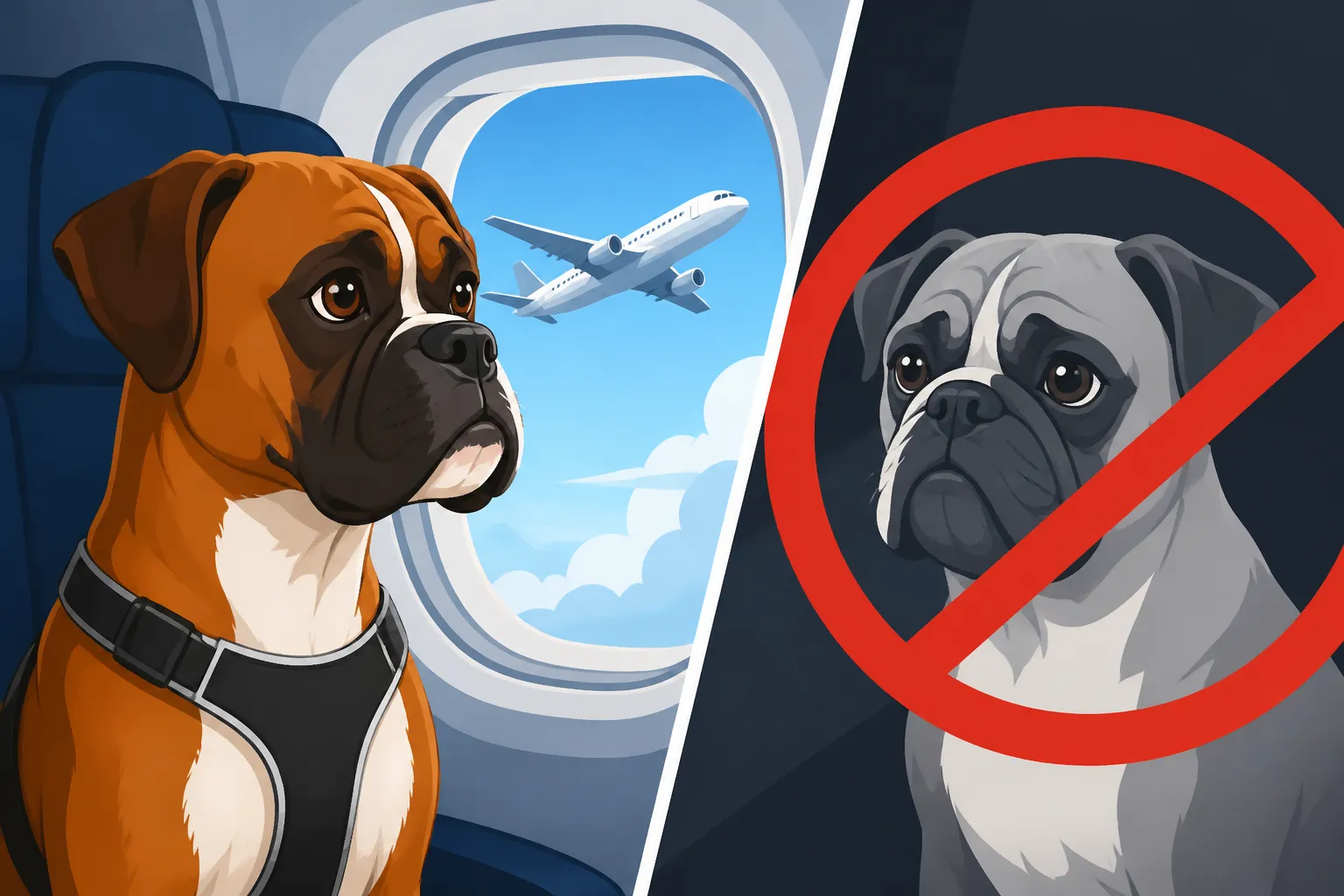
Flying a Boxer and the Snub-Nose Ban
The thought of taking your beloved Boxer with you on a trip, especially one that involves flying, might feel like the ultimate dream — sharing every adventure with your best friend. But for Boxer owners, that dream often crashes head-first into the very real, very frustrating reality of airline restrictions on snub-nosed breeds. It's not just about booking a ticket; it's about navigating a complex web of rules and significant health risks. This guide will help you understand why flying with a Boxer is so challenging, the potential dangers involved, and far safer alternatives to ensure your furry companion's well-being.
The Reality of Flying with a Brachycephalic Breed
It's a harsh truth that many Boxer owners discover only when they start planning a trip: the very characteristics that make our Boxers so adorable – their short, pushed-in noses and endearing squishy faces – are precisely what make flying with them incredibly risky, and often, impossible. Airlines aren't being arbitrary; these restrictions come from a place of genuine concern, unfortunately often born from past tragedies.
Why Snub-Nose Dogs Face Flight Restrictions
Boxers, like Bulldogs, Pugs, and French Bulldogs, are classified as "brachycephalic" breeds. This term literally means "short-headed," and it refers to the unique skull structure that gives them their distinctive flattened faces. While we adore their adorable expressions, this anatomical feature comes with significant physiological challenges, particularly when it comes to breathing and regulating body temperature. Their airways are often compressed and obstructed; they might have elongated soft palates, narrowed nostrils, or even collapsed tracheas. This makes them prone to respiratory distress even under normal conditions.
Now, imagine adding the stress of air travel to this inherent vulnerability. The cargo hold of an airplane, even when temperature-controlled, can fluctuate. The air pressure changes, the noise can be intense, and the overall environment is highly stressful. For a Boxer, whose body is already working harder to take in oxygen, these conditions can quickly become life-threatening. They struggle to pant effectively, which is a dog's primary way of cooling down. In an enclosed space with limited airflow, the risk of overheating (heatstroke) and respiratory collapse skyrockets. It's a terrifying prospect for any owner, and the thought of putting your loyal companion through such an ordeal is enough to make anyone second-guess their travel plans.
Airline Bans and Restrictions: What to Expect
Because of these very real health and safety concerns, most major airlines have implemented strict policies, ranging from outright bans on brachycephalic breeds in cargo to severe restrictions based on temperature and travel duration. It's not uncommon to find policies that state no snub-nosed dogs can fly in cargo at all, regardless of the time of year or destination. Others might have "temperature embargoes," meaning if the temperature at any point along the travel route (departure, layover, or arrival) is forecast to be above a certain degree (often 75-85°F or 24-29°C), or below a certain degree, your Boxer cannot fly.
These policies are not standardized across the industry. What one airline allows, another explicitly forbids. This means you can't assume that because your friend flew their Pug on one airline, you can do the same with your Boxer on another. You absolutely must check the specific pet policy of every single airline involved in your itinerary, including connecting flights and codeshares, well in advance of booking any tickets. These rules are non-negotiable, and trying to circumvent them could put your Boxer's life at risk. While you might have good pet insurance like Healthy Paws to cover unexpected veterinary emergencies, no amount of financial coverage can bring back a pet lost to preventable travel complications.
Navigating Airline Policies and Health Risks for Your Boxer
Even if by some slim chance an airline permits a Boxer in cargo, understanding the comprehensive health risks and logistical hurdles is paramount. It’s not just about complying with rules; it's about making a responsible, informed decision that prioritizes your Boxer's well-being above your travel convenience.
Health Concerns Beyond the Snub-Nose Syndrome
While the brachycephalic airway syndrome is the most immediate concern, Boxers carry other breed-specific health predispositions that can complicate air travel. Many Boxers are prone to certain heart conditions, notably Arrhythmogenic Right Ventricular Cardiomyopathy (ARVC), also known as Boxer cardiomyopathy. The stress of being in a cargo hold – the noise, vibrations, isolation, and temperature changes – can be a significant trigger for arrhythmias or even sudden cardiac events. Owners often conduct regular screening like Boxer Cardiomyopathy and the Holter Monitor precisely to monitor for such issues, and these conditions are only exacerbated by stress.
Furthermore, Boxers are unfortunately highly susceptible to certain cancers, which can affect their overall resilience. Why Cancer Kills More Boxers Than Anything Else explains the prevalence of these diseases in the breed. Imagine a Boxer already dealing with an underlying, perhaps undiagnosed, health issue being subjected to the rigors of air travel. The sudden pressure changes can cause discomfort, and if they're experiencing any digestive issues or are prone to bloat, the stress can trigger further problems. Why a Boxer's Chest Shape Invites Bloat details how serious this condition can be, and the last thing you want is a distressed Boxer in a cargo hold with a medical emergency. A pre-flight vet check is crucial, but even a perfectly healthy Boxer carries inherent risks that other breeds might not.
The Logistical Hurdles: Crates, Sedation, and Acclimation
Should you manage to find an airline willing to transport your Boxer, the logistical requirements are stringent. Airlines typically demand IATA-compliant crates that are large enough for your Boxer to stand up, turn around, and lie down comfortably. These crates often need specific "Live Animal" labels, directional arrows, water bowls secured to the inside, and sometimes even a supply of food taped to the top. The crate itself can be a significant investment, but you can find sturdy options at pet retailers like Chewy that are airline-approved and built to last. Remember, the goal isn't just to meet the minimum requirement but to provide the safest, most comfortable temporary home possible for your dog.
One of the most critical aspects, however, is the widespread recommendation against sedating brachycephalic dogs for air travel. While it might seem counterintuitive, sedation can actually worsen a Boxer's respiratory problems. It can relax their already compromised airway muscles, making breathing even harder, and can also interfere with their body's ability to regulate temperature. This combination can be fatal. Instead, if your Boxer isn't accustomed to a crate, you'd need to start acclimation training months in advance, associating the crate with positive experiences and comfort, not a scary travel container. This is a huge undertaking and still doesn't mitigate the inherent physiological risks associated with air pressure and temperature. The dangers of Anesthesia Risk in a Flat-Faced Boxer highlight just how sensitive these dogs are to respiratory compromise under chemical influence, and sedation for flights is no different.
Safer Alternatives to Flying Your Boxer
Given the substantial risks and emotional toll of flying with a Boxer, many owners find that prioritizing their dog's safety and comfort means exploring other avenues for travel or care. These alternatives might require more planning or a different approach to your vacation, but they offer peace of mind that no airline ticket can provide.
Road Trips: The Preferred Method for Boxer Travel
For most Boxer owners who want to travel with their dogs, the open road is by far the safest and most enjoyable option. Driving offers unparalleled control over your Boxer's environment. You can set the temperature in the car, stop for frequent potty breaks, offer water and food when needed, and give them opportunities to stretch their legs and de-stress. This dramatically reduces the risk of overheating, respiratory distress, and anxiety compared to air travel.
When planning a road trip with your Boxer, consider the following:
- Temperature Control: Always ensure your vehicle's air conditioning is working well, especially in warmer months. Boxers are prone to overheating, and even a slightly warm car can quickly become dangerous. You might even consider having cooling vests or pads on hand. Cooling Vests and Fans for a Boxer are excellent tools for managing their core temperature.
- Frequent Stops: Plan for stops every 2-3 hours. This allows your Boxer to relieve themselves, walk around, and rehydrate. It also breaks up the monotony and stress of being confined in a moving vehicle.
- Hydration: Always have plenty of fresh water available. Consider a spill-proof travel bowl.
- Safety First: Use a crash-tested car harness or a secure travel crate in the car to keep your Boxer safe in case of sudden stops or accidents. Never allow them to ride unsecured.
- Familiarity: Bring familiar items like their favorite bed, blankets, or toys to make the car feel more like a safe space. If your Boxer eats fresh food, a brand like
Olliecan provide convenient, pre-portioned meals that make feeding on the go simple, without upsetting their sensitive stomachs. - Patience: Expect the journey to take longer than if you were traveling alone. Factor in extra time for your Boxer's needs.
Professional Ground Transport Services
For longer distances that are simply not feasible for you to drive, or if you need your Boxer transported while you fly, a reputable professional ground transport service can be an excellent option. These services specialize in safely moving pets across states or even continents, utilizing vehicles designed for animal comfort.
When choosing a ground transport service, look for companies that:
- Specialize in Brachycephalic Breeds: Inquire specifically about their experience with Boxers and other snub-nosed dogs. They should have protocols for monitoring breathing and temperature.
- Offer Temperature-Controlled Vehicles: This is non-negotiable for Boxers. Ensure their vehicles are properly air-conditioned and heated, and that temperatures are monitored throughout the journey.
- Provide Regular Updates: A good transporter will give you frequent updates on your Boxer's status, including stops for potty breaks, food, and water.
- Have Vet Checks and References: Ask for proof of their licensing and insurance, and don't hesitate to ask for references from other Boxer owners. Verify their process for handling medical emergencies.
- Limit Pet Numbers: Smaller, more personalized services often mean less stress for individual animals. Avoid services that cram too many animals into one vehicle.
Leaving Your Boxer at Home with Care
Sometimes, the kindest and safest option for your Boxer is to simply leave them in the comfort of their own home environment while you travel. This can significantly reduce stress and eliminate all travel-related risks.
Consider these options:
- Trusted Pet Sitters: A professional pet sitter who comes to your home is often ideal. Your Boxer stays in their familiar surroundings, maintains their routine, and receives one-on-one attention. Ensure the sitter is experienced with Boxers, understands their unique needs (like heat sensitivity and exercise requirements), and knows how to administer any medications.
- Reputable Boarding Kennels: If a pet sitter isn't an option, a well-regarded boarding kennel can work. Look for facilities with climate-controlled indoor spaces, large outdoor exercise areas, and staff experienced with high-energy breeds like Boxers. Ask about their protocols for monitoring brachycephalic dogs for signs of overheating or distress. Visiting the kennel beforehand and asking about their routines, especially regarding exercise and quiet time, is crucial. For an energetic breed like ours, finding a place that can handle Boarding a High-Energy Boxer successfully is key.
- Friends or Family: If you have trusted friends or family who understand Boxers and are willing to care for yours in your absence, this can be a wonderful, low-stress solution. Just make sure they are fully briefed on your Boxer's routine, diet, and any specific health considerations.
Ultimately, the decision of how to travel with your Boxer rests with you. But given the significant health risks associated with flying snub-nosed breeds, opting for ground travel or ensuring excellent care at home will always be the most responsible and loving choice for your Boxer's safety and well-being.
Disclaimer
This article is for general informational purposes only and does not constitute professional advice. Laws, prices and regulations vary by location and change over time. Consult a qualified professional for guidance on your specific situation.