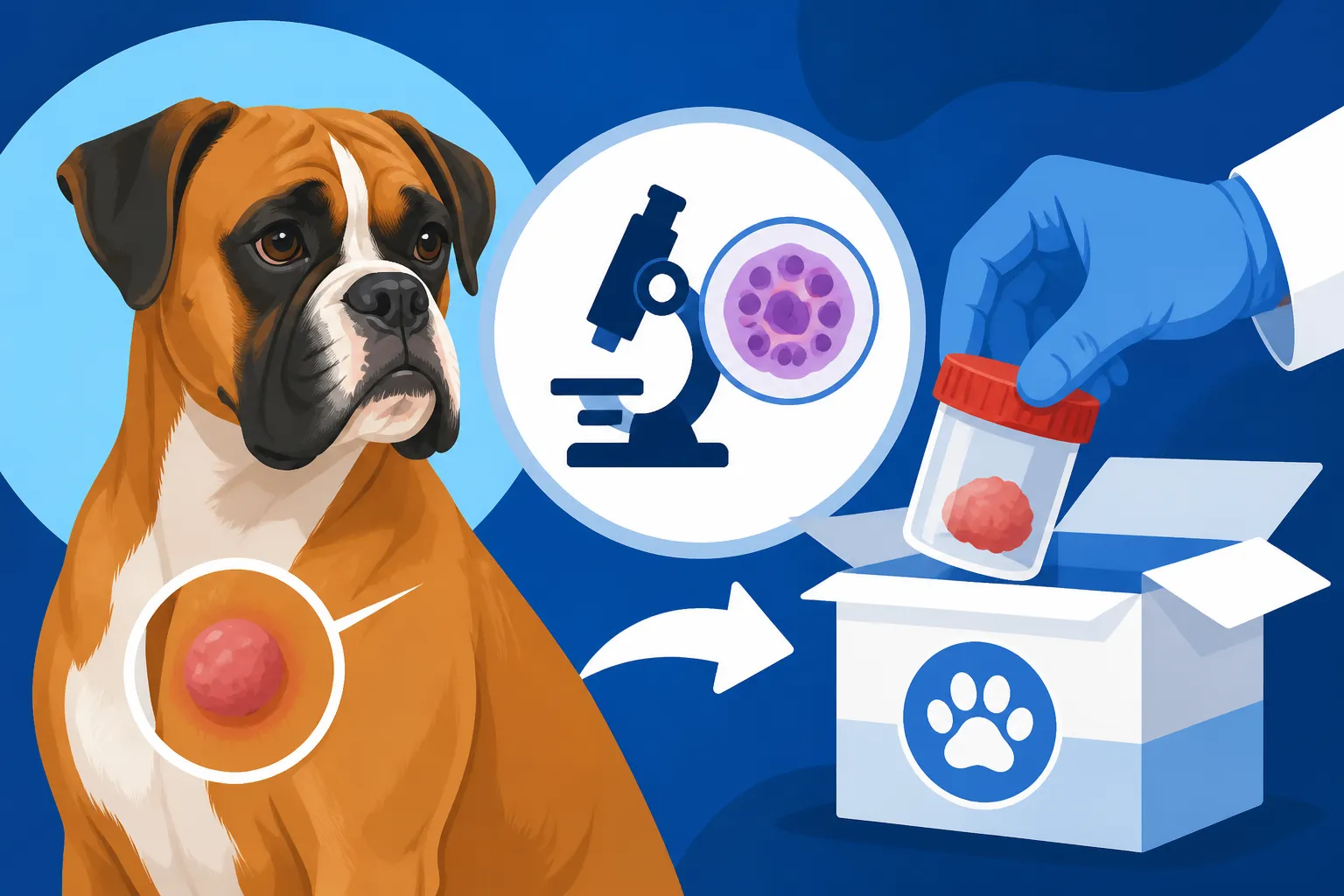
Sending a Boxer Tumor for Grading
Finding a lump on your beloved Boxer is one of those heart-stopping moments that every dog owner dreads. The knot of fear in your stomach immediately screams "cancer," and suddenly, your world narrows to that one worrying spot. This guide is here to walk you through the critical next step after discovery: sending that tumor for grading, why it's so important, what to expect, and how to navigate the results with as much clarity and support as possible.
What Exactly Is Tumor Grading and Why Is It Crucial for Your Boxer?
When you find a lump on your Boxer, the first thought is often "Is it cancer?" But if it is cancer, the next, equally vital question is "How aggressive is it?" That's where tumor grading comes in. It's not just about getting a diagnosis of 'malignant' or 'benign'; it's about understanding the specific behavior of those abnormal cells. For a breed like the Boxer, known for its higher incidence of certain cancers, this level of detail is absolutely paramount. Without grading, your vet is essentially flying blind when it comes to recommending the best course of action. It's the roadmap that guides treatment decisions and helps give you a more realistic picture of what lies ahead.
The Purpose of Grading in Boxer Cancers
Think of tumor grading as telling you the personality of the cancer. Is it a slow-moving, relatively docile presence, or is it an aggressive, fast-spreading bully? Pathologists examine the tumor cells under a microscope, looking for specific characteristics that indicate how quickly the cells are dividing, how abnormal they look compared to healthy cells, and whether they are invading surrounding tissues. This information is vital because it directly correlates with how the tumor is likely to behave in your Boxer's body. A low-grade tumor might be easily removed with surgery and have a good long-term prognosis, whereas a high-grade tumor could be much more invasive, prone to metastasis (spreading), and require more intensive treatments like chemotherapy or radiation. It helps vets predict the likelihood of recurrence and the general life expectancy after diagnosis, giving you crucial data to make informed decisions about your Boxer's care.
Common Types of Boxer Tumors Requiring Grading
Boxers, unfortunately, have a genetic predisposition to several types of cancer, many of which absolutely require proper grading for effective management. Mast cell tumors are perhaps the most infamous, appearing as anything from a small, innocent-looking bump to a larger, ulcerated mass. These are notoriously tricky, as their external appearance doesn't always reflect their internal aggressiveness, making grading indispensable. Lymphoma is another prevalent Boxer cancer, often presenting as swollen lymph nodes, and while its diagnosis is often through cytology, a biopsy and subsequent grading can refine the prognosis and guide specific chemotherapy protocols. Soft tissue sarcomas, appearing as firm masses under the skin or within muscle, also require grading to determine their invasiveness and potential to spread. Even seemingly benign-looking skin growths can sometimes surprise everyone with a more aggressive nature once graded. Knowing the specific type of tumor and its grade is the only way to tailor an effective treatment plan for your dog.
Why Early Grading Is Paramount
Waiting to grade a tumor can be a costly mistake, both in terms of your Boxer's health and your peace of mind. The sooner you know the nature of the beast, the sooner you can act decisively. For instance, a low-grade mast cell tumor caught early and completely removed with good surgical margins has a far better prognosis than the same tumor left to grow and potentially become a higher grade or metastasize. Finding a Lump on a Boxer Early is always the best defense. If you've been diligent with Weekly Lump Checks on a Boxer, you might catch something when it's still small and localized. Early grading allows your vet to intervene before the cancer has a chance to invade deeper tissues, spread to lymph nodes, or travel to distant organs. It can mean the difference between a relatively simple surgical removal and a complex, multi-modal treatment plan with a much more uncertain outcome. This proactive approach not only improves your Boxer's chances but also reduces the stress and uncertainty you face as an owner.
The Process of Getting a Boxer Tumor Biopsied and Sent for Grading
The moment you discover a suspicious lump on your Boxer, the journey to understanding it typically begins with a visit to your veterinarian. They’ll perform an initial examination and likely recommend a biopsy to collect cells or tissue from the mass. This isn't just a simple scrape; it's a careful procedure designed to get the most accurate sample possible for the diagnostic lab. It can feel overwhelming as you try to grasp all the medical terms and procedures, but understanding each step can help you feel more prepared and in control.
Different Biopsy Methods for Your Boxer
There isn't a one-size-fits-all approach to taking a biopsy. Your vet will choose the method best suited to the lump's size, location, and initial assessment.
-
Fine Needle Aspirate (FNA): This is often the first, least invasive step. The vet uses a very thin needle (like those used for vaccinations) to poke into the lump and suck out a sample of cells. It's usually done during a regular office visit, often without sedation, especially if your Boxer is calm. The sample is then spread on a slide and examined under a microscope, either in-house or by a pathologist. While quick and easy, an FNA might not collect enough cells to get a definitive diagnosis or a precise grade, particularly for certain types of tumors. This is a good way to differentiate between a benign fatty lump and something more suspicious, but it often can't provide the detailed grading information needed for comprehensive treatment planning. You might get an initial answer from a Needle Biopsy on a Boxer Lump, but for definitive grading, a tissue biopsy is usually required.
-
Incisional Biopsy: If the FNA is inconclusive or highly suspicious, an incisional biopsy might be recommended. This involves surgically removing a small piece of the tumor. Your Boxer will need sedation or general anesthesia for this procedure. The goal is to get a representative sample of the tumor while leaving the rest intact. This method provides more tissue for the pathologist, increasing the likelihood of an accurate diagnosis and grade. The incision will be closed with stitches, and your Boxer will need some recovery time.
-
Excisional Biopsy: This is where the entire tumor is surgically removed in one go. Sometimes, if a lump is small, easily accessible, and the vet suspects it might be benign or a low-grade tumor that can be completely excised, they may opt to remove the whole thing during the initial biopsy procedure. This method has the advantage of potentially being both diagnostic and therapeutic, meaning the surgery might be the only treatment needed if the margins are clear and the grade is low. However, if the tumor turns out to be high-grade or has incomplete margins, a second, more extensive surgery may be necessary. This is often the preferred method for skin masses where complete removal is feasible.
How the Tissue Sample Is Prepared and Sent
Once the tissue is collected, either from an incisional or excisional biopsy, proper handling is crucial to ensure an accurate pathology report. The tissue is typically placed immediately into a formalin solution, which is a chemical fixative. Formalin stops the cells from decomposing and preserves their structure, allowing the pathologist to examine them accurately days or even weeks later. The container with the tissue is carefully labeled with your Boxer's information and the location of the mass.
Your veterinary clinic will then package the sample and send it to an external veterinary pathology laboratory. These labs specialize in analyzing animal tissues and have board-certified veterinary pathologists who are experts in identifying diseases and grading tumors. The clinic will fill out a detailed submission form, providing the pathologist with all relevant clinical history, including how long the lump has been present, any changes in its size or appearance, and details of your Boxer's general health. This context helps the pathologist interpret their findings more accurately. Depending on the lab's location and shipping times, it can take anywhere from a few days to a couple of weeks to receive the full report back.
The Role of the Veterinary Pathologist
The veterinary pathologist is the unsung hero in diagnosing and grading your Boxer's tumor. These highly specialized veterinarians spend years training to interpret what they see under a microscope. They're not just looking for abnormal cells; they're assessing a whole host of features, including:
- Cellular morphology: How the individual cells look – their size, shape, and nuclear characteristics.
- Mitotic index: How many cells are actively dividing, which is a key indicator of a tumor's growth rate and aggressiveness.
- Invasiveness: Whether the tumor cells are pushing into or infiltrating surrounding healthy tissues.
- Necrosis: Areas of cell death within the tumor, which can also indicate rapid growth.
- Inflammation: The presence and type of inflammatory cells, which can sometimes complicate interpretation.
Their expertise allows them to differentiate between various types of tumors, provide an accurate grade, and offer prognostic information. They also assess surgical margins, telling your vet if the entire tumor was removed, which is absolutely critical for determining the need for further surgery or additional treatments. Your vet relies heavily on the pathologist's report to formulate the most effective treatment plan for your Boxer.
Deciphering Tumor Grades and Their Implications
Receiving a tumor grading report can feel like reading a foreign language. Words like "mitotic index," "pleomorphism," and "aneuploidy" might fly around, making an already stressful situation even more confusing. But understanding these terms, and more importantly, what the overall grade signifies, is essential. This information directly dictates the urgency of treatment, the types of therapies available, and ultimately, your Boxer’s prognosis.
Understanding Low-Grade Versus High-Grade Tumors
The concept of "grade" is central to pathology. It's the pathologist's way of categorizing a tumor's biological aggressiveness based on its microscopic appearance.
-
Low-Grade Tumors: These tumors generally consist of cells that look relatively similar to normal cells. They tend to have fewer mitotic figures (cells actively dividing), minimal cellular abnormality (pleomorphism), and usually don't invade surrounding tissues aggressively. For your Boxer, a low-grade diagnosis typically implies a slower growth rate and a lower likelihood of metastasis (spreading to other parts of the body). If completely removed, the prognosis is often good, and long-term survival is common. While any cancer diagnosis is serious, a low-grade classification offers a glimmer of hope and often allows for more straightforward treatment plans. For instance, a low-grade mast cell tumor might be successfully managed with surgery alone.
-
High-Grade Tumors: In contrast, high-grade tumors are composed of cells that appear very abnormal or "anaplastic." They show significant cellular pleomorphism, meaning the cells vary greatly in size and shape, and often have a high mitotic index, indicating rapid and uncontrolled division. These tumors are usually much more aggressive, grow quickly, and have a significantly higher propensity for local recurrence and distant metastasis. For a Boxer, a high-grade diagnosis often means a more guarded prognosis and necessitates aggressive, multi-modal treatment strategies, potentially involving extensive surgery, chemotherapy, or radiation therapy. This is where conditions like How Long a Boxer Lives With Lymphoma can be severely impacted by a high grade, requiring immediate and intensive intervention.
It's important to remember that grading systems can vary slightly depending on the type of cancer (e.g., mast cell tumors often use the Patnaik or Kiupel grading systems, while soft tissue sarcomas have their own scale). Your vet will explain the specific grading system applicable to your Boxer's diagnosis.
The Significance of Mitotic Index and Other Cellular Features
Beyond the general low-grade/high-grade classification, pathologists look at specific cellular features that contribute to the overall grade:
-
Mitotic Index (or Mitotic Count): This is arguably one of the most crucial indicators. It refers to the number of cells undergoing mitosis (cell division) within a certain microscopic field. A high mitotic index means the cells are replicating rapidly, suggesting a fast-growing and potentially aggressive tumor. For Boxer mast cell tumors, the mitotic index is a major factor in the Kiupel two-tier grading system, where a count of 7 or more mitotic figures in 10 high-power fields generally indicates a high-grade tumor. This can profoundly impact What a Boxer Mast Cell Grade Means for your pet's future.
-
Cellular Pleomorphism: This describes the variation in cell size and shape. Normal cells are relatively uniform; cancer cells, especially high-grade ones, are often highly variable and disorganized. The more abnormal and varied the cells, the more aggressive the tumor typically is.
-
Karyomegaly/Anisokaryosis: These terms refer to variations in nuclear size (karyomegaly) and shape (anisokaryosis). Enlarged or irregularly shaped nuclei are common features of malignant cells.
-
Invasiveness: The pathologist will note whether the tumor cells are pushing into or infiltrating the surrounding healthy tissues (e.g., dermis, subcutis). Tumors that invade blood vessels or lymphatic channels have a higher risk of metastasis.
-
Necrosis: The presence of dead or dying cells within the tumor indicates that the tumor is outgrowing its blood supply, often a sign of very rapid growth and aggressiveness.
These microscopic details are painstakingly assessed by the pathologist to provide the most accurate grade possible, offering a nuanced understanding of your Boxer's specific cancer.
How Grade Impacts Treatment Planning
The tumor grade is the cornerstone upon which your Boxer's entire treatment plan is built. It dictates not only the type of treatment but also its intensity and invasiveness.
-
Surgery: For low-grade tumors, especially those on the skin or easily accessible, surgery to achieve wide, clean margins might be curative. However, even for low-grade tumors, a pathologist's report on the surgical margins is critical. If the margins are "dirty" (meaning cancer cells are found at the edge of the removed tissue), further surgery might be necessary. For high-grade tumors, surgery might be more extensive, requiring removal of a larger area of tissue, and it's almost always followed by additional therapies. The Price of Removing a Boxer Mast Cell Tumor can vary significantly based on the tumor's size and invasiveness, directly influenced by its grade.
-
Chemotherapy: High-grade tumors, particularly those with a high risk of metastasis or that have already spread to lymph nodes, frequently warrant chemotherapy. This might be given after surgery (adjuvant therapy) to kill any remaining cancer cells or reduce the risk of recurrence, or it could be the primary treatment for cancers like lymphoma. The specific chemotherapy drugs and protocols chosen will depend on the tumor type and grade. For example, Chemotherapy for a Boxer With Cancer for high-grade lymphoma will be much more aggressive than for a low-grade soft tissue sarcoma.
-
Radiation Therapy: This might be recommended for tumors that are difficult to remove surgically due to their location, or for those with incomplete surgical margins. High-grade tumors, in particular, may benefit from radiation to control local disease.
-
Palliative Care: In cases of highly aggressive, metastatic, or untreatable high-grade tumors, the focus might shift to palliative care aimed at improving your Boxer's quality of life and managing symptoms rather than seeking a cure.
The grade, combined with the tumor's size, location, and whether it has spread (staging), gives your veterinary oncologist the full picture needed to propose the most effective and humane path forward for your beloved Boxer. For some Boxers, a good prognosis may mean Two Years or More After a Low-Grade Boxer Tumor, while others face a much more challenging journey.
Factors That Influence the Cost of Tumor Grading and Pathology Reports
When your Boxer is facing a suspected tumor, the emotional burden is immense. Add to that the financial strain of diagnostic tests, and it can feel overwhelming. Understanding the costs associated with tumor grading and pathology reports can help you prepare and navigate these expenses. It's not just a single fee; rather, it’s a combination of different services that contribute to the final bill.
Itemized Costs: Biopsy Procedure, Pathology Fees, Follow-up Vet Visits
The cost of getting a tumor graded for your Boxer is typically broken down into several components:
-
Biopsy Procedure: This is the initial step where the sample is collected. The cost will vary significantly based on the type of biopsy performed:
- Fine Needle Aspirate (FNA): This is generally the least expensive, ranging from $50 to $200. It's often done during a regular office visit, and sometimes the vet will examine the slides in-house first, incurring a small additional fee for "cytology." If they send it out to a specialist, that adds to the cost.
- Incisional or Excisional Biopsy: These are surgical procedures requiring sedation or general anesthesia. The cost can range from $300 to $1,500 or more, depending on the tumor's location, size, complexity of the surgery, and the need for pre-surgical blood work, pain medication, and post-operative care. This often includes the surgeon's fee, anesthesia, monitoring, and facility use. For example, a simple skin mass removal on the trunk might be on the lower end, while a deeply embedded tumor on a limb could be much higher.
-
Pathology Fees: Once the tissue is collected, it needs to be sent to a specialized veterinary pathologist for analysis. The pathology lab charges for their expertise in processing the tissue and generating the detailed report. These fees typically range from $150 to $400, depending on the complexity of the case, the specific tests requested (e.g., immunohistochemistry for certain markers), and the turnaround time (some labs offer expedited services for an additional fee). This is the cost for Sending a Boxer Tumor for Grading specifically.
-
Follow-up Vet Visits: After the biopsy is taken and the results are back, you’ll need at least one, if not several, follow-up appointments with your veterinarian. This is to discuss the pathology report, understand the diagnosis and grade, and formulate a treatment plan. Each follow-up visit will incur standard consultation fees, typically ranging from $60 to $150 per visit. These visits are crucial for explaining complex medical information and answering all your questions.
These costs can quickly add up, and it's important to ask your vet for a detailed estimate upfront so you know what to expect.
Pet Insurance and Tumor Grading Coverage
This is where planning ahead truly pays off. If you have pet insurance, especially a comprehensive plan that covers illnesses, the diagnostic costs for tumor grading may be significantly reimbursed. Companies like Healthy Paws are well-regarded for their coverage of unexpected illnesses and accidents, which includes cancer diagnostics and treatment.
However, there's a critical caveat: pre-existing conditions. Most pet insurance policies will not cover conditions that were present or showed symptoms before your policy's waiting period ended. This means if you only purchase insurance after finding a lump on your Boxer, it will almost certainly be considered a pre-existing condition, and the diagnostic and treatment costs for that specific lump (and potentially related cancers) will not be covered. This highlights the importance of Insuring a Boxer Before the First Lump. Waiting until a health issue arises is often too late, leading to situations where Claims Refused Because a Boxer Lump Came First are unfortunately common.
It's highly advisable to enroll your Boxer in a good pet insurance plan when they are young and healthy. Review your policy carefully to understand:
- What percentage of veterinary bills they reimburse (e.g., 70%, 80%, 90%).
- Your deductible amount.
- Any annual or per-incident limits.
- The waiting periods for illnesses, as these can vary (typically 14-30 days).
Having pet insurance can provide immense peace of mind and significantly reduce the financial stress during an already difficult time.
Financial Aid Options for Diagnostic Testing
Even with careful planning, unexpected veterinary bills can strain any budget. If you find yourself in a situation where the costs for tumor grading are daunting, there are resources available:
- Payment Plans with Your Vet: Many veterinary clinics understand the financial burden of serious diagnoses and offer in-house payment plans, allowing you to pay the bill over several installments. Don't be afraid to ask about this.
- Credit Options: Services like CareCredit or Scratchpay are specifically designed to help finance veterinary expenses. They offer various payment options, including interest-free periods if paid in full within a certain timeframe.
- Veterinary Charity Organizations: Several national and local organizations provide financial assistance to pet owners facing serious diagnoses. Examples include The Pet Fund, RedRover, and the Animal Cancer Foundation. Eligibility requirements and grant amounts vary, so it's worth researching these options.
- Breed-Specific Rescues: Some Boxer-specific rescue organizations or breed clubs may have funds available to assist owners with veterinary bills, especially for common Boxer health issues like cancer.
- Crowdfunding: Platforms like GoFundMe can be used to raise money from friends, family, and the wider community. While not guaranteed, many pet owners have found success this way.
Dealing with a potential cancer diagnosis in your Boxer is incredibly stressful. Don't let financial concerns prevent you from getting the necessary diagnostic information. Explore all available options, and communicate openly with your veterinary team about your financial situation.
Making Sense of the Pathology Report: What to Look For and Questions to Ask
The day the pathology report comes back can feel like a lifetime. It’s a moment filled with anxiety, hope, and dread all at once. When your vet calls to discuss the results, or when you receive a copy yourself, it can be a dense document full of medical jargon. Don't let that overwhelm you. Your vet is there to translate, but knowing what to look for and having a list of questions ready will empower you to be a proactive advocate for your Boxer's health.
Key Sections of a Typical Pathology Report
While reports can vary slightly between labs, most veterinary pathology reports for tumor grading will include these crucial sections:
-
Patient and Sample Information: This section confirms the details of your Boxer (name, breed, age, sex) and the sample submitted (date collected, site of biopsy, type of biopsy). Always double-check this for accuracy.
-
Gross Description: This is a macroscopic description of the tissue sample as it was received by the pathologist. It details the size, shape, color, consistency, and any visible abnormalities of the tissue (e.g., "a 2 cm diameter, firm, white nodule"). If it was an excisional biopsy, it will mention the overall size of the removed mass.
-
Microscopic Findings: This is the heart of the report, describing what the pathologist observed under the microscope. This section is often dense with technical terms. It will detail the cellular characteristics, arrangement of cells, presence of mitotic figures, necrosis, and any infiltration into surrounding tissues. This is where the specific features that determine the tumor's grade are discussed.
-
Diagnosis/Morphologic Diagnosis: This is the pathologist's definitive identification of the tumor type. For example, "Mast Cell Tumor, Grade II" or "Histiocytic Sarcoma." This provides the formal name of the cancer or mass.
-
Prognostic Comments/Recommendations: This section is incredibly valuable. Based on the diagnosis and grade, the pathologist will offer insights into the tumor's likely biological behavior, risk of metastasis, and potential for recurrence. They may also suggest further diagnostic tests (e.g., lymph node biopsy, staging radiographs) or comment on the adequacy of surgical margins. For a Boxer with a mast cell tumor, this might specifically mention the Patnaik or Kiupel grading system used.
-
Surgical Margins (if applicable): If the report is from an excisional biopsy (where the entire mass was removed), this section is paramount. It will state whether the surgical margins are "clean" (tumor-free) or "dirty" (tumor cells are present at the edge of the removed tissue). Clean margins are crucial for a good prognosis, especially for tumors like mast cell tumors. If margins are dirty, it means some cancer cells likely remain, and further surgery or radiation might be needed.
Questions to Ask Your Vet After Receiving the Report
Once you have the report, or as your vet is explaining it, don't hesitate to ask questions. There are no "stupid" questions when your Boxer's health is on the line. Here are some essential ones:
- "What exactly does this diagnosis mean for my Boxer?": Get a clear, plain-language explanation of the tumor type and its specific grade.
- "What is the typical prognosis for this type and grade of tumor in a Boxer?": Ask about expected lifespan, recurrence rates, and metastatic potential. Be realistic. This directly relates to concepts like The Age Boxer Cancer Usually Appears and overall breed lifespan.
- "What are our treatment options, and what are the pros and cons of each?": Discuss surgery, chemotherapy, radiation, or a combination. Inquire about the goals of each treatment (curative vs. palliative), potential side effects, and estimated costs.
- "Were the surgical margins clean? If not, what are our next steps?": This is critical. If margins are dirty, discuss re-excision, radiation, or other therapies.
- "Are there any additional tests we should consider?": Your vet might recommend further diagnostics like chest X-rays, abdominal ultrasound, or regional lymph node biopsies to "stage" the cancer and see if it has spread.
- "Should we consult with a veterinary oncologist?": For many cancer types, especially high-grade or complex cases, a referral to a specialist in veterinary oncology is highly recommended. They have the most up-to-date knowledge and treatment protocols.
- "What changes do we need to make to my Boxer's diet or lifestyle?": Depending on the diagnosis and treatment, dietary changes might be suggested. For example, some Boxers might benefit from a low-carbohydrate, higher-protein diet. You might even look into fresh food companies like Ollie for specialized nutritional support.
- "What should I watch out for at home?": Ask about signs of recurrence, metastasis, or treatment side effects that warrant immediate veterinary attention.
- "What are the estimated costs for the recommended treatment plan?": Get a clear financial outline. This allows you to plan and explore options, especially if you have pet insurance like Healthy Paws.
What a Clear or Inconclusive Report Might Mean
Sometimes, the pathology report might not provide a straightforward answer, which can be incredibly frustrating.
-
Inconclusive Reports: An inconclusive result often means the sample collected was insufficient or not representative enough to make a definitive diagnosis or grade. This can happen with FNAs that only yield a few cells, or if the biopsy piece was too small. In this scenario, your vet will likely recommend a more invasive biopsy (incisional or excisional) to get a better sample. It's frustrating, but it means the pathologist couldn't give a definitive answer with the provided material.
-
Benign Diagnosis: This is the best-case scenario! A report stating the mass is benign (non-cancerous) means a huge sigh of relief. Examples include lipomas (fatty tumors) or histiocytomas (benign skin tumors in young dogs). While these may still require monitoring or removal if they cause discomfort, they don't carry the same grave implications as malignancy. However, even with a benign diagnosis, continued What a Boxer's Yearly Lump Checks Cost are a good idea to monitor for new growths.
-
Unexpected or Rare Diagnosis: Occasionally, the diagnosis might be for a less common tumor type. This could lead to a recommendation for further specialist consultation, as your general practitioner might want input from someone with more experience with that specific cancer.
Regardless of the outcome, the pathology report is a crucial piece of the puzzle. It gives you the information needed to move forward, even if that means more tests or a challenging treatment path.
Living with a Diagnosis: Emotional and Practical Considerations
Receiving a cancer diagnosis for your Boxer, especially after getting the tumor grade, is a moment that can shake you to your core. It's normal to feel a whirlwind of emotions—shock, grief, anger, denial, and profound sadness. This isn't just about managing a medical condition; it's about navigating a deeply personal and emotional journey alongside your beloved companion. Beyond the emotional toll, there are significant practical adjustments that will need to be made to ensure your Boxer receives the best possible care.
The Emotional Toll of a Cancer Diagnosis
When you hear those words, "It's cancer," time can stand still. For many Boxer owners, their dog isn't just a pet; they're a cherished family member, a constant source of joy, and often, their best friend. The immediate fear for their future, the guilt that you might have missed something, and the dread of difficult decisions ahead can be overwhelming.
- Grief and Anticipatory Loss: You may experience a form of anticipatory grief, mourning the potential loss of your Boxer even while they are still with you. This is a natural and valid response. Don't feel guilty for crying, for being angry, or for feeling utterly heartbroken.
- Decision Fatigue: The sheer volume of information, treatment options, financial implications, and lifestyle changes can lead to severe decision fatigue. You'll be asked to make choices about surgery, chemotherapy, radiation, quality of life, and more. It's okay to feel exhausted by it all. Lean on your veterinary team and trusted loved ones for support.
- Isolation: Sometimes, friends and family who don't have pets might not fully understand the depth of your bond with your Boxer or the gravity of the situation. This can lead to feelings of isolation. Seek out others who understand, whether through online communities or local pet loss support groups.
- Hope and Despair: Your emotions might swing wildly between hope (after a positive vet visit or a successful treatment round) and despair (if there's a setback or a bad day). This emotional rollercoaster is entirely normal.
- Guilt: It’s common to feel guilt, wondering if you could have done something differently, noticed something sooner, or provided better care. Remember that cancer often strikes without warning, and you are doing everything you can now.
Allow yourself to feel these emotions. Acknowledge them, and don't try to suppress them. Your well-being is intrinsically linked to your Boxer's, and taking care of yourself is part of taking care of them.
Practical Steps Post-Diagnosis
Once the initial shock subsides, practical steps become necessary to manage your Boxer's care.
-
Second Opinions and Specialist Referrals: For most cancer diagnoses, especially high-grade or complex tumors, a consultation with a board-certified veterinary oncologist is highly recommended. These specialists have advanced knowledge and access to the latest treatments. They can review your Boxer's pathology report, staging results, and overall health to provide a tailored, evidence-based treatment plan. Your primary vet will likely facilitate this referral. Don't view a second opinion as a sign of distrust; it's about gathering all available information to make the best decision for your Boxer.
-
Creating a Treatment Plan: Work closely with your vet and/or oncologist to develop a comprehensive treatment plan. This plan should outline the specific therapies (surgery, chemotherapy, radiation, palliative care), their schedule, expected outcomes, potential side effects, and estimated costs. Discuss quality of life considerations at every stage. For example, if your Boxer is undergoing chemotherapy, ensuring they have comfortable bedding from Chewy or a specialized diet might be part of the plan.
-
Medication Management: Many Boxers with cancer will be on multiple medications, including anti-cancer drugs, pain relief, anti-nausea medications, and supplements. Keep a detailed log of all medications, dosages, and administration times. Setting alarms and using pill organizers can be incredibly helpful.
-
Monitoring at Home: You’ll become an essential part of your Boxer's care team. Learn to monitor their appetite, water intake, energy levels, stool quality, and any new lumps or changes in existing ones. Be vigilant about observing for side effects of medication or signs of disease progression. Promptly report any concerns to your vet.
-
Dietary Adjustments: Nutrition plays a vital role in supporting a Boxer with cancer. Your vet or oncologist might recommend specific dietary changes, such as a diet higher in protein and fat, and lower in carbohydrates, to help fight the cancer and maintain muscle mass. Some owners explore fresh-food delivery services like Ollie, which can be customized to their dog's needs and may be more palatable for a Boxer experiencing appetite changes due to treatment.
Building a Support System
You don't have to go through this alone. Building a strong support system is crucial for both you and your Boxer.
- Family and Friends: Lean on trusted loved ones. They can offer emotional support, help with daily tasks, or even accompany you to vet appointments. Sometimes, simply having someone to listen without judgment is invaluable.
- Your Veterinary Team: Remember that your vet and their staff are not just medical professionals; they are often compassionate allies. They are there to answer your questions, provide guidance, and offer emotional support. Don't hesitate to communicate your fears and concerns with them.
- Online Communities and Support Groups: Connecting with other Boxer owners who have experienced or are currently navigating a cancer diagnosis can be incredibly therapeutic. Websites, forums, and social media groups dedicated to Boxer health or canine cancer can provide a safe space to share experiences, ask questions, and gain insights from those who truly understand. You might learn about new coping strategies, practical tips, or simply find comfort in knowing you're not alone.
- Professional Counseling: If you find yourself struggling significantly with the emotional burden, consider seeking support from a grief counselor specializing in pet loss. These professionals can provide tools and strategies for coping with the intense emotions you're experiencing.
Living with a Boxer cancer diagnosis is a marathon, not a sprint. It requires resilience, patience, and an unwavering commitment to your furry friend. By understanding the process, advocating for your Boxer, and building a strong support system, you can navigate this challenging time with as much strength and compassion as possible.
Disclaimer
The information provided in this article is for general informational purposes only and is not intended as a substitute for professional veterinary advice. Always seek the advice of your veterinarian or other qualified animal health provider with any questions you may have regarding a medical condition or treatment for your Boxer. Never disregard professional veterinary advice or delay in seeking it because of something you have read here.