How Wide a Boxer Tumor Margin Should Be
Finding out your beloved Boxer has a tumor is one of those gut-wrenching moments no pet parent ever wants to experience. Once you've processed the initial shock, your mind immediately jumps to treatment options, especially surgery. One of the most critical, and often confusing, aspects of tumor removal surgery is understanding "surgical margins" – essentially, how much surrounding healthy tissue needs to be taken with the tumor to give your Boxer the best chance at a full recovery. This guide aims to clear up that confusion, helping you understand what good margins mean for your Boxer's prognosis.
Understanding Surgical Margins in Boxer Tumor Removal
When your vet talks about removing a tumor, it’s not just about getting the visible lump out. It’s about ensuring that any microscopic cells that may have spread beyond what the eye can see are also eradicated. This is where the concept of surgical margins comes in, and for Boxer owners, especially given our breed’s unfortunate propensity for certain types of cancer, it’s a critically important detail.
What "Surgical Margin" Actually Means
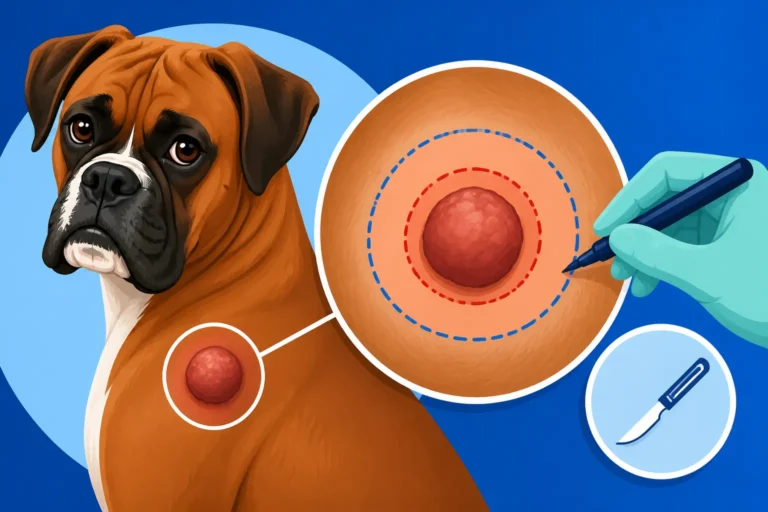
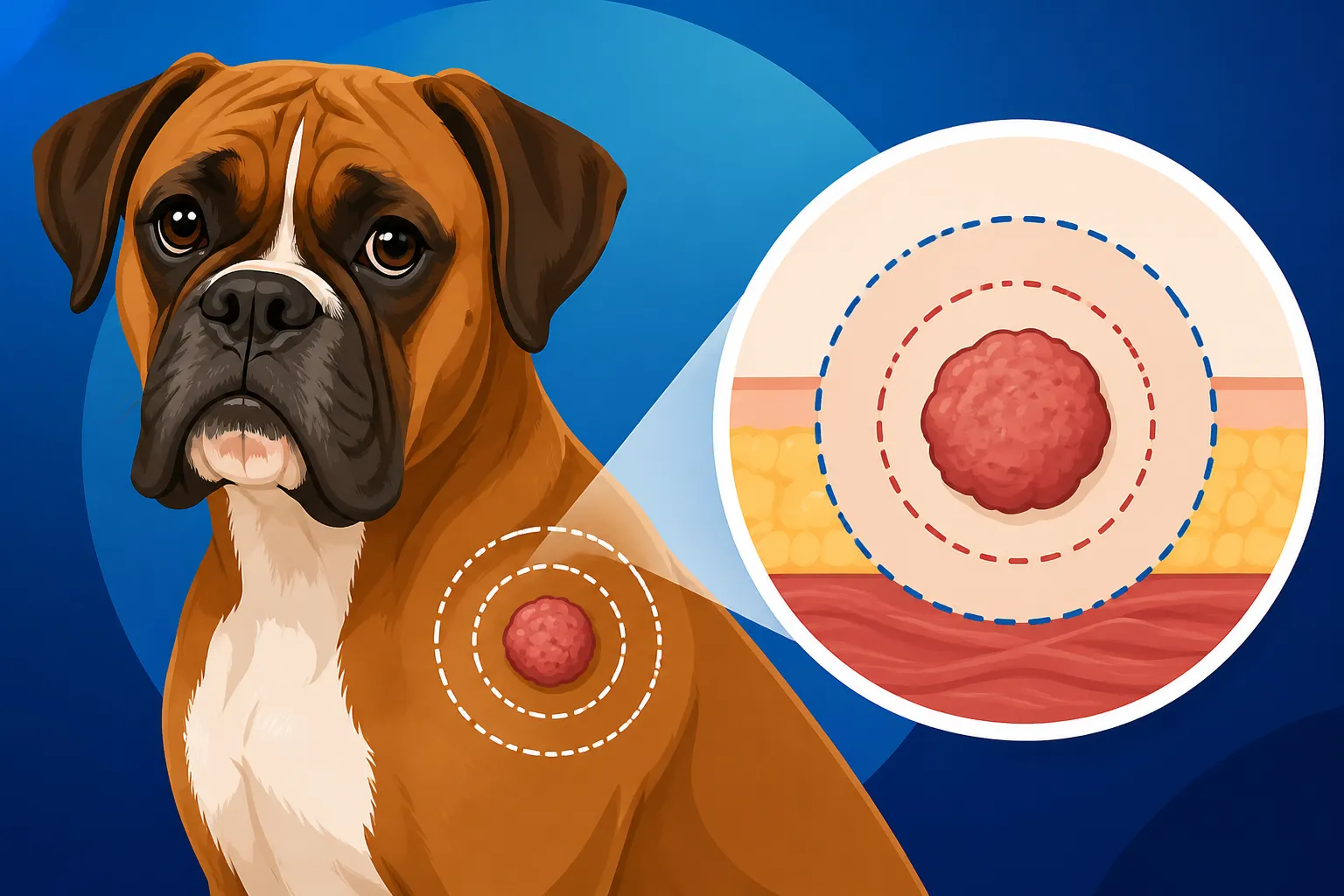
Think of a tumor as an iceberg. What you see on the surface, the lump you can feel or notice, is often just a small part of the problem. Beneath the surface, there might be tendrils of cancerous cells extending into the surrounding tissue that aren't visible to the naked eye. A "surgical margin" refers to the ring of healthy tissue that a surgeon intentionally removes around the visible tumor. The goal is to create a buffer zone, taking out enough healthy cells to capture any invisible cancer cells that might be lurking. If these invisible cells are left behind, even after the main lump is gone, the tumor is highly likely to regrow. It’s the constant worry for us Boxer parents: did they really get it all? The margin is the surgeon's best shot at answering that question with a resounding "yes."
Why Boxers and Their Tumors Are Different
Boxers, bless their hearts, are unfortunately prone to certain types of tumors, particularly mast cell tumors. These sneaky tumors are notorious for their unpredictable behavior and how aggressively they can spread microscopically, often far beyond their visible boundaries. This infiltrative nature means that what looks like a small, well-defined lump on your Boxer’s skin might have a much wider microscopic footprint. Because of this, the "standard" surgical approach for a mast cell tumor in a Boxer often calls for wider, more aggressive margins than you might see for a benign fatty lump, for example. Additionally, our Boxers' unique anatomy – their short, tight coats, relatively thin skin, and often muscular builds – can sometimes make achieving wide margins challenging, especially in certain locations like the legs, face, or areas with little spare skin. This makes careful planning even more critical to ensure the best possible outcome.
Recommended Margin Widths for Common Boxer Tumors
The ideal margin width isn't a one-size-fits-all answer; it truly depends on the specific type of tumor, its location, and its aggressiveness. It’s a discussion you’ll have in depth with your veterinarian or a veterinary oncologist once a suspected tumor has been identified. For Boxers, this conversation often revolves around mast cell tumors due to their prevalence in the breed.
Mast Cell Tumors: The "2-3-1 Rule" and Beyond
When discussing mast cell tumors in Boxers, you'll frequently hear about the "2-3-1 rule." This guideline suggests a minimum of a 2-centimeter (cm) lateral margin (meaning 2 cm of healthy skin around the visible edges of the tumor) and 3 centimeters (cm) of deep margin (meaning taking out tissue down to 3 cm deep, or at least one fascial plane beneath the tumor, whichever is greater). The fascial plane is a layer of connective tissue that can act as a natural barrier to tumor spread. This "2-3-1" recommendation isn't just pulled out of thin air; it's based on extensive research into the microscopic spread patterns of mast cell tumors. Even when a mast cell tumor looks perfectly contained, those invisible cellular tendrils can extend surprisingly far, making wide margins absolutely critical for preventing local recurrence.
However, it's important to understand that this rule is a guideline, not a rigid law. For higher-grade mast cell tumors, or those that have already recurred, even wider margins might be recommended, sometimes up to 3 cm lateral. This becomes especially complex if the tumor is on an area like a paw or a joint where excessive skin removal would severely impact mobility or healing. In these cases, the surgeon must balance the ideal margin with what is functionally possible for your Boxer. Early diagnosis and careful surgical planning are key here, and having comprehensive pet insurance, like a plan from Healthy Paws, can certainly help ease the financial burden of these complex procedures, allowing you to prioritize the best care for your furry friend.
Other Tumors: Lipomas, Histiocytomas, and More
While mast cell tumors demand aggressive margins, not all Boxer lumps require such a radical approach. Boxers can develop a variety of skin and subcutaneous masses, and many of them are benign.
Lipomas, for instance, are benign fatty tumors that are incredibly common in older Boxers. They usually feel soft, movable under the skin, and don't typically grow rapidly. For these, if they're not bothering your dog, not growing excessively, or not interfering with movement, a "wait and watch" approach is often perfectly acceptable. If removal is opted for (perhaps it's very large, in an awkward spot, or for cosmetic reasons), the margins needed are much smaller – often just enough to encompass the visible mass itself, as they don't microscopically infiltrate surrounding tissues.
Similarly, histiocytomas are benign skin tumors, more common in young Boxers (under three years old). These often appear as button-like, hairless lumps that can grow quickly but then spontaneously regress and disappear within a few months. For these, surgical removal with minimal margins is only done if they become irritated, ulcerated, or are not regressing as expected. Your vet might even suggest just monitoring it.
Then there are other potentially malignant tumors like soft tissue sarcomas, which can be locally invasive but tend to metastasize later in the disease course. For these, a 3 cm lateral margin and one fascial plane deep is typically recommended. Understanding the suspected tumor type before surgery, often through a needle biopsy or incisional biopsy, is crucial because it allows the surgical plan to be tailored specifically to your Boxer's needs. This foresight can prevent the need for a second, more extensive surgery if the initial margins prove insufficient.
Factors Influencing Margin Decisions
Deciding on the appropriate surgical margin for your Boxer's tumor is a nuanced process. It's not just about the type of lump, but a careful consideration of several interconnected factors that your veterinary team will evaluate. This holistic approach ensures that the surgical plan is as effective as possible while minimizing impact on your Boxer's quality of life.
Tumor Type, Grade, and Location
The fundamental drivers behind margin decisions are the tumor type and its grade. As discussed, a highly aggressive, infiltrative tumor like a high-grade mast cell tumor demands a much wider margin than a benign lipoma. The "grade" of the tumor, determined by a pathologist after a biopsy, tells us how aggressive the cancer cells appear under a microscope. A low-grade tumor might allow for slightly less aggressive margins if its location is particularly challenging, whereas a high-grade tumor warrants every effort to achieve the widest possible clear margins.
The location of the tumor is another huge factor. Removing a tumor from your Boxer's flank, where there's plenty of loose skin, is a very different proposition from removing one on a paw, near an eye, or on the face. In areas with limited excess skin or near critical structures (like joints, nerves, or major blood vessels), achieving the ideal 2-3 cm margin can be incredibly difficult, if not impossible, without causing significant functional impairment. In such cases, your veterinary surgeon might have to accept narrower margins and then recommend adjunctive therapies like radiation therapy following surgery to "clean up" any potentially remaining microscopic cells. This strategy aims to compensate for the inability to achieve a truly wide surgical excision in a sensitive anatomical area. For instance, removing a tumor on a Boxer's elbow might require a more creative skin closure or even a skin flap, impacting the recovery process and emphasizing the need for robust planning.
The Importance of Pathology and Staging
After surgery, the removed tumor, along with its surrounding margin of tissue, is sent to a specialized veterinary pathologist. This step, known as histopathology, is absolutely non-negotiable. The pathologist examines the tissue under a microscope to confirm the type of tumor, its grade, and critically, whether the excised margins are "clean" or "dirty."
- "Clean margins" (or "clear margins") mean the pathologist found no cancer cells at the very edges of the removed tissue. This is the ideal outcome, indicating that, to the best of our knowledge, all cancerous cells have been removed, significantly reducing the risk of local recurrence.
- "Dirty margins" (or "incomplete margins") mean that cancer cells were found at the edges of the removed tissue. This unfortunately tells us that some cancer cells were likely left behind in your Boxer's body.
If the margins are dirty, you'll need to discuss further steps with your vet. This might involve a second surgery to remove more tissue, radiation therapy aimed at killing any remaining cells, or in some cases, chemotherapy for more systemic cancers. This unexpected turn of events can be distressing and financially draining, highlighting why early consideration of pet insurance is wise. Plans from companies like Healthy Paws can be incredibly helpful, as they typically cover the costs associated with diagnostics, surgery, and follow-up treatments like chemotherapy or radiation, especially if your Boxer was enrolled before any conditions were pre-existing. It's truly an investment in peace of mind when facing something as unpredictable as cancer.
Furthermore, tumor staging is another vital part of the process, particularly for aggressive cancers like mast cell tumors. This involves checking if the cancer has spread to regional lymph nodes, or to distant organs like the spleen or liver. Staging helps determine the overall prognosis and influences the decision-making process for post-surgical treatments, ensuring your Boxer receives the most comprehensive care possible.
Practical Considerations and What to Expect
Facing a tumor diagnosis and subsequent surgery for your Boxer can feel overwhelming. Beyond understanding the technical aspects of surgical margins, knowing what to expect during the diagnostic process, surgery, and recovery can help you feel more prepared and in control.
Pre-Surgical Planning and Diagnostic Steps
Before any incision is made, your vet will undertake a thorough pre-surgical planning process. This often starts with a fine needle aspirate (FNA), where a small needle is used to collect cells from the lump. While an FNA can often give a presumptive diagnosis (e.g., "consistent with mast cell tumor" or "lipoma"), it's crucial to understand its limitations. An FNA can't always definitively determine the grade of a tumor, and it won't tell you anything about surgical margins. For certain suspicious lumps, particularly those suspected to be malignant, an incisional biopsy (removing a small piece of the tumor) might be performed beforehand to get a definitive diagnosis and grade, allowing for precise surgical planning.
For deeper or more extensive tumors, especially those in critical areas, your vet might recommend advanced imaging like ultrasound, CT (computed tomography) scans, or even MRI (magnetic resonance imaging). These imaging techniques provide a detailed 3D map of the tumor's extent, its relationship to surrounding tissues, and can help detect any spread. This information is invaluable for the surgeon to plan the most effective and safest approach to achieve optimal margins. In complex cases, especially with high-grade or challenging-location tumors, your primary vet might recommend a referral to a veterinary oncologist or a board-certified veterinary surgeon. These specialists have advanced training and experience that can be incredibly beneficial for ensuring the best possible outcome for your Boxer. They can provide expertise in both surgical technique and subsequent treatment protocols.
Managing Post-Surgery and Potential Recurrence
After surgery, your Boxer will need diligent care during the recovery period. This typically involves managing pain with medication, restricting activity to allow the incision to heal, and monitoring the surgical site for any signs of infection or complications. The incision from a wide-margin excision can sometimes be quite large and might require special care, such as cold compresses or pressure bandages, to minimize swelling. Waiting for the histopathology results can be an agonizing period, often taking several days to a week. This is when you'll learn if those all-important margins were clear.
If the pathology report indicates "dirty margins," it's understandable to feel heartbroken and frustrated. However, it's not the end of the road. Your vet will discuss options with you, which might include a second surgery to remove more tissue, if feasible. Another common option, especially if a second surgery is too risky or not practical due to the tumor's location, is radiation therapy. Radiation can effectively target and destroy any remaining microscopic cancer cells in the area, significantly reducing the risk of local recurrence. For certain types of cancer or if there's evidence of spread, chemotherapy might also be recommended.
The journey doesn't end after successful surgery and clear margins. Regular follow-up examinations are crucial. Your vet will advise on how often your Boxer needs to be re-checked, particularly for the first year or two after surgery, to monitor for any signs of recurrence or the development of new tumors. These check-ups often involve thorough physical examinations, palpation of the surgical site, and feeling for any new lumps, reinforcing the importance of Weekly Lump Checks on a Boxer and other preventative measures. Being proactive and staying vigilant gives your Boxer the best chance at a long and healthy life, even after a cancer diagnosis.
Comparing Tumor Types and Margin Requirements
To help visualize the difference in margin recommendations, here's a general guide. Keep in mind that these are guidelines, and your vet's specific recommendations will always be tailored to your Boxer's individual case.
| Tumor Type | Typical Behavior | Recommended Lateral Margin | Recommended Deep Margin | Common Locations | Post-Surgery Follow-up Considerations |
|---|---|---|---|---|---|
| Benign Lipoma | Fatty, non-invasive | Encompass the mass | Minimal, just under the mass | Trunk, limbs, chest | Monitor for growth/irritation if not removed; minimal follow-up needed if excised completely. |
| Histiocytoma | Benign, self-resolving | Minimal (if removed) | Minimal | Head, ears, limbs | Often resolves on its own; if removed due to irritation, normal wound care. |
| Low-Grade Mast Cell Tumor | Potentially invasive | 2 cm | 1 fascial plane or 3 cm | Skin, trunk, limbs | Histopathology for margin assessment and grading; regular checks for recurrence or new lumps; consideration for Two Years or More After a Low-Grade Boxer Tumor. |
| High-Grade Mast Cell Tumor | Highly invasive, metastatic | 2-3 cm | 1 fascial plane or 3 cm (more aggressive) | Skin, internal organs | Aggressive histopathology review; potential for dirty margins requiring further surgery or radiation; systemic staging (lymph nodes, organs); discussions about Chemotherapy for a Boxer With Cancer and Why a High-Grade Boxer Tumor Changes the Timeline. |
| Soft Tissue Sarcoma | Locally invasive, slow to metastasize | 3 cm | 1 fascial plane (or more depending on depth/invasion) | Limbs, trunk, oral cavity | Histopathology for margin assessment and grading; local recurrence common with incomplete margins; radiation may be recommended; systemic staging. |
Understanding these differences, and engaging in open, honest conversations with your veterinary team, is your best approach. Always remember to ask about the pathologist's findings, especially regarding those crucial margins, as this information will dictate the next steps in your Boxer's care plan. The goal is always to achieve Surgery Margins on a Boxer Mast Cell Tumor that are clean, giving your Boxer the greatest chance at a positive long-term outcome. Knowing the ins and outs of The Cancers That Take Most Boxers and how they behave is powerful knowledge for any Boxer owner. You might also want to look into Insuring a Boxer Before the First Lump to help with unexpected costs.
Disclaimer
This article is intended for informational purposes only and does not constitute medical advice. Always consult with a qualified veterinary professional for any health concerns or before making any decisions about your Boxer's care.