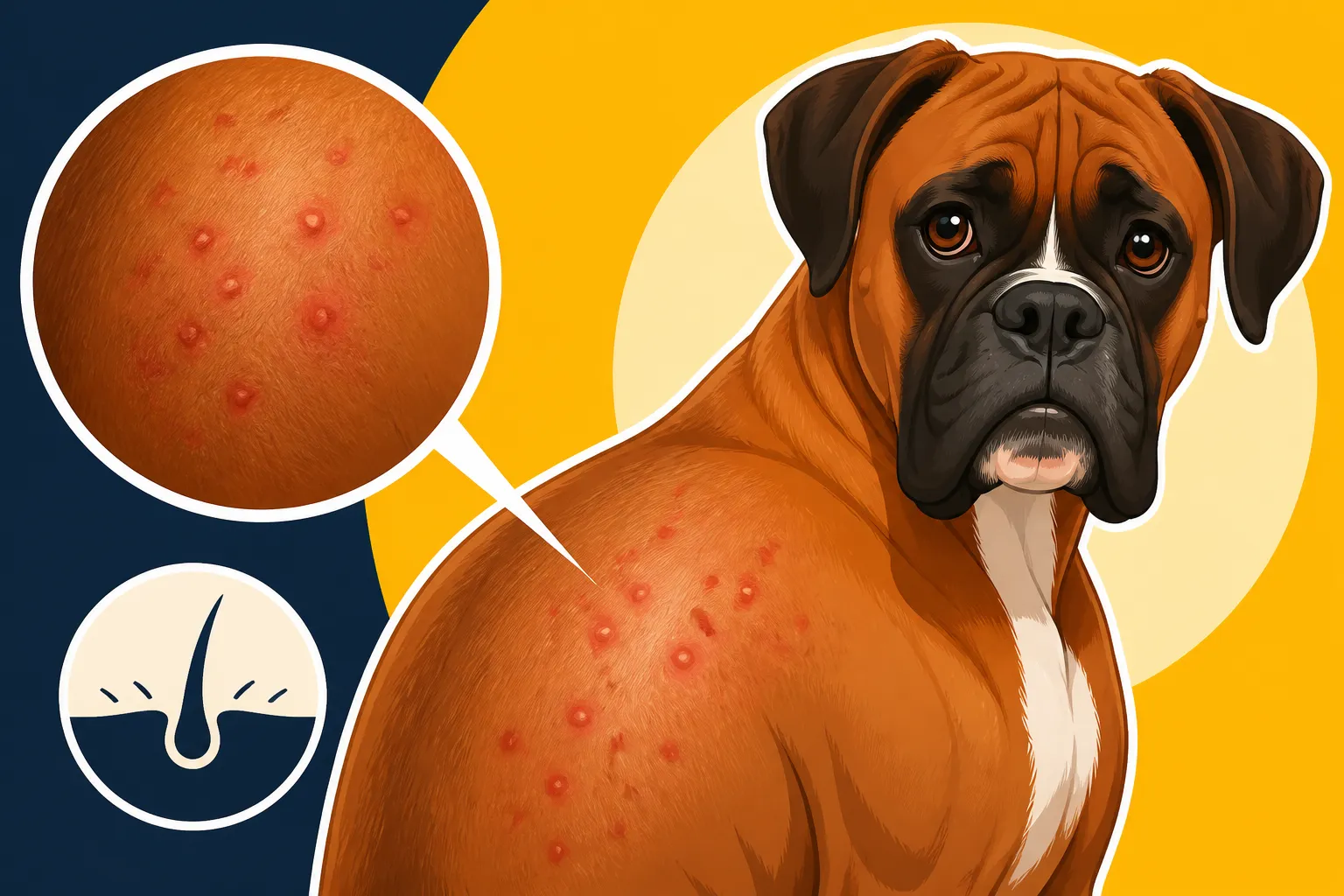
Why a Boxer’s Short Coat Shows Every Rash
It’s a unique frustration for Boxer owners: that moment when you spot even the tiniest speck of redness, a subtle bump, or a patch of flaky skin on your dog. While other breeds might hide these issues under a luxurious mane of fur, the Boxer’s sleek, short coat offers absolutely no concealment. This guide will walk you through exactly why your Boxer's short coat makes every little skin issue stand out, what those common issues might be, and how you can stay on top of their skin health.
The Unvarnished Truth of a Boxer's Short Coat
There's no denying the Boxer's beauty – that muscular build, the expressive face, and that stunning, close-lying coat. But that very attribute, which makes them so striking, also means their skin is essentially on display 24/7. It’s a double-edged sword: you get to admire their gorgeous physique, but you also get a front-row seat to every minor dermatological drama.
No Place to Hide: The Naked Reality
Think about breeds with longer, thicker coats, like a Golden Retriever or a Siberian Husky. A small rash, a tick, or even a minor cut can go unnoticed for days, sometimes weeks, simply because the hair acts like a natural curtain. You might only discover it during a deep groom or a particularly vigorous petting session.
With a Boxer, that luxury just doesn't exist. Their short, smooth, single-layer coat is designed to lie flat against their powerful bodies, accentuating their musculature. This means there’s no fluff, no undercoat, and no dense thatch of hair to obscure what's happening underneath. If a patch of skin gets irritated, if a flea bites, or if a small lesion develops, it's right there, plain as day, often highlighted against their fawn, brindle, or white fur. This lack of natural camouflage means you, as the owner, are often the first to notice even the most subtle changes, which can be both a blessing and a curse.
Close to the Surface: Why Every Bump and Redness Pops
Because the Boxer's hair is so short and sparse, their skin is incredibly visible. You don't have to part layers of fur to see the epidermal layer; it’s practically staring you in the face. This makes even minor changes in skin color, texture, or integrity much more prominent. A slight pinkness that might be a tiny hidden rash on another dog can look like a glaring red spot on a Boxer. A tiny pimple-like bump, often hidden from view on many breeds, is distinctly noticeable on a Boxer's taut skin.
This constant visibility means that while you might feel like your Boxer is constantly developing new skin issues, it’s often just that you're seeing everything. It forces a level of vigilance that owners of other breeds might not experience. It can be a little anxiety-inducing sometimes, but it’s also a powerful tool for early detection. The moment you see something that wasn't there before, you know it's time to investigate further, helping you address problems before they become more serious. This close visibility is why performing The Weekly Skin Check Every Boxer Needs is such an indispensable part of their routine care.
More Than Just the Coat: Inherited Skin Sensitivities
It’s not just the short coat that makes Boxers seem predisposed to skin issues; they genuinely can have more sensitive skin than many other breeds. Boxers, as a breed, are known for certain health predispositions, and skin conditions are definitely on that list. They are often prone to allergies, which can manifest as skin irritation, redness, and itchiness. This means that a Boxer might react more strongly or visibly to environmental allergens like pollen, dust mites, or even certain food ingredients than a dog with a different genetic makeup.
Their immune systems can sometimes be a bit overzeealous, leading to inflammatory responses in the skin. Additionally, their unique body structure, with those lovely wrinkles and folds around the muzzle, can create warm, moist environments where bacteria and yeast thrive, leading to secondary infections. So, while their short coat certainly reveals everything, the underlying predisposition to various skin sensitivities means there's often something to reveal in the first place, reinforcing the need for constant monitoring and proactive care.
Common Skin Woes That Are Hard to Miss
Because of their exposed skin and sensitivities, Boxers are prone to several common skin conditions that pop up like unwelcome guests. Knowing what to look for can help you distinguish between a minor irritation and something that warrants a vet visit.
The Itch and the Allergy: Environmental and Food Triggers
Allergies are probably one of the most common reasons a Boxer's short coat will betray a skin issue. Both environmental and food allergies can cause a host of problems that manifest on the skin, leaving a Boxer red, itchy, and uncomfortable.
Environmental allergies, often called atopy, are responses to things like pollen, grass, mold spores, or dust mites. When a Boxer with atopy is exposed to these allergens, their immune system overreacts, causing inflammation. On their short coat, this often appears as diffuse redness, particularly on the belly, paws, armpits, and groin. You might also see small red bumps (papules) or hives, which look like raised welts. The itching can be intense, leading your Boxer to lick, chew, or scratch persistently, which only exacerbates the problem and can lead to secondary bacterial or yeast infections. It’s a vicious cycle that quickly becomes apparent on their visible skin.
Food allergies, while less common than environmental ones, can also cause significant skin irritation. These are typically reactions to protein sources like chicken, beef, or dairy, though grains can also be a culprit for some dogs. The symptoms often mirror environmental allergies: persistent itching, redness, ear infections, and sometimes gastrointestinal upset. If your Boxer is constantly scratching despite your best efforts to manage environmental factors, a food allergy might be at play. Your vet might suggest an elimination diet, where you feed a novel protein source for a set period, like the protocol described in Eight Weeks of One Protein for an Itchy Boxer, to identify the allergen. Many owners find that investing in pet insurance like Healthy Paws can be incredibly helpful for covering the costs of allergy testing and specialized diets if their Boxer develops chronic skin issues.
Uninvited Guests: Infections and Parasites
Beyond allergies, infections and parasites are frequent offenders when it comes to Boxer skin problems. These issues, once again, are glaringly obvious on their short coats.
Bacterial infections, often called pyoderma, are very common, especially as a secondary issue to allergies or other skin irritations. When a Boxer scratches or licks excessively, they can break the skin's barrier, allowing bacteria (often Staphylococcus) to move in. Pyoderma can appear as red bumps, pustules (small pus-filled bumps), crusting, or circular areas of hair loss. These spots can be itchy and painful, and their distinct appearance makes them impossible to ignore on a Boxer. Sometimes, skin folds around the muzzle can trap moisture, leading to bacterial growth and fold dermatitis, causing Sore Skin Under a Boxer's Lip Fold or Cleaning a Boxer's Chin Acne to become a regular concern.
Fungal and yeast infections also leave their mark. Ringworm, a common fungal infection, often presents as circular patches of hair loss with red, scaly centers. Yeast infections, particularly caused by Malassezia, thrive in warm, moist areas like paw pads, ears, and skin folds. On a Boxer, this might show up as thickened, greasy, reddish-brown skin that has a distinct, often unpleasant, odor.
Parasites, though often tiny, cause visible havoc. Fleas can cause intense itching, leading to flea allergy dermatitis, where even one bite can trigger a widespread rash. You’ll see small, red, itchy bumps, often with tell-tale "flea dirt" (digested blood) on the skin. Mites are another concern; Demodex Mange in a Boxer Puppy, caused by Demodex mites, can lead to localized or generalized patches of hair loss, redness, and scaling. These bald spots are undeniably visible on a Boxer's short coat and require prompt veterinary attention.
Bumps and Growths: When Rashes Aren't Just Redness
Sometimes, what looks like a rash might actually be a bump or growth, and Boxers are known for developing various types of skin lumps, some benign and some more serious. Their short coats ensure you’ll spot them quickly.
One common, usually harmless, bump seen frequently in young Boxers is a histiocytoma. These are benign skin tumors that often appear as solitary, red, button-like growths, typically on the head, ears, or limbs. While they can look alarming, especially when they first pop up, Histiocytomas on a Young Boxer usually resolve on their own within a few months. However, their sudden appearance and distinct look make them hard to miss on a Boxer's exposed skin.
Contact dermatitis, while technically an irritation rather than a growth, can sometimes cause localized swelling or thickened skin that feels like a bump. This occurs when a Boxer’s skin comes into direct contact with an irritant, such as certain cleaning products, fertilizers, or even materials like rough carpeting. The affected area will be red, itchy, and possibly bumpy.
Then there are other types of lumps, which might not be rashes but certainly grab your attention. Boxers are unfortunately prone to certain types of skin tumors, including mast cell tumors. While these can initially appear as innocuous bumps, their visibility on a Boxer's coat means you're more likely to notice changes quickly. It's crucial to understand the difference between a harmless fatty lump and a potentially more serious growth, which is why topics like Telling a Boxer Fatty Lump From a Tumor are so vital for Boxer owners. Even non-cancerous issues like Interdigital Cysts on a Boxer's Paw are easily spotted when inspecting your Boxer's exposed skin.
| Skin Issue | Common Appearance on Boxer | Typical Location | Key Symptoms |
|---|---|---|---|
| Environmental Allergies (Atopy) | Diffuse redness, small red bumps (papules), hives | Belly, paws, armpits, groin, ears | Intense itching, licking, chewing |
| Food Allergies | Similar to atopy; persistent redness, itching | Paws, ears, face, groin | Persistent itching, sometimes GI upset |
| Bacterial Pyoderma | Red bumps, pustules, crusting, circular hair loss | Anywhere, often secondary to itching | Itching, pain, sometimes foul odor |
| Yeast Infection (Malassezia) | Reddish-brown, greasy, thickened skin; foul odor | Paw pads, ears, skin folds | Itching, greasy coat, "yeasty" smell |
| Histiocytoma | Single, red, button-like raised growth | Head, ears, limbs | Usually non-itchy, can resolve spontaneously |
| Demodex Mange | Patches of hair loss, redness, scaling | Face, legs, trunk | Mild to intense itching, depends on severity |
| Flea Allergy Dermatitis | Small red bumps, intense itching, crusting | Base of tail, inner thighs, belly | Severe itching, restlessness, "flea dirt" |
Catching Things Early: The Importance of Regular Checks
Given how easily skin issues show up on a Boxer's short coat, you might think it's enough to just notice things as they happen. But being proactive with regular checks is truly your best defense against minor irritations escalating into bigger, more painful problems. This is where you leverage that visible skin to your Boxer's advantage.
Making the Weekly Check a Ritual
Establishing a routine for skin checks is paramount for a Boxer owner. You're not just casually petting them; you're performing a thorough examination. Aim for at least once a week, perhaps while you're enjoying some quiet time together or after a bath. This is more than just a quick glance; it’s an opportunity to truly get to know your Boxer’s normal skin and body, allowing you to instantly recognize anything new or out of place.
Start from the head and work your way down. Gently lift their jowls and check inside their mouth for any irritations or unusual growths on the gums or lips. Look at their eyes for discharge or redness, and gently pull back their ears to examine the skin inside – Boxers with natural ears can sometimes get infections. Move down to their neck, chest, and belly, feeling for any bumps, lumps, or changes in texture. Pay close attention to the armpits and groin areas, which are prone to moisture and rubbing, often leading to redness or rashes. Don't forget their paws! Spread their toes apart to check between the pads for redness, swelling, or foreign objects, and inspect their nail beds for any abnormalities or signs of Interdigital Cysts on a Boxer's Paw. Finish by running your hands along their back and tail, again feeling for anything new.
During these checks, you're looking for several key indicators:
- Redness or Discoloration: Any pink, red, or darker patches that aren't usually there.
- Bumps, Lumps, or Swelling: Anything from tiny pimple-like lesions to larger masses. Remember the importance of distinguishing between Telling a Boxer Fatty Lump From a Tumor.
- Flakiness or Scaling: Dry, white, or greasy flakes, which can indicate dry skin, allergies, or infections.
- Hair Loss: Patches where the fur is sparse or missing entirely.
- Crusts or Scabs: Signs of previous irritation, scratching, or infection.
- Odor: An unusual or strong smell coming from the skin or ears.
- Behavioral Cues: Increased licking, chewing, scratching, or sensitivity when touched in certain areas.
By making this The Weekly Skin Check Every Boxer Needs a consistent ritual, you become an expert on your individual Boxer's skin, making early detection second nature.
When to Reach Out to Your Vet
While you’ll likely spot many minor things that resolve on their own, knowing when to call the vet is crucial. If you notice any of the following, it’s time to seek professional advice:
- Persistent Redness or Itching: If an area remains red, inflamed, or intensely itchy for more than a day or two, especially if your Boxer is clearly uncomfortable.
- Rapid Spread or Worsening: If a rash or lesion is growing quickly, spreading to other areas, or getting more inflamed.
- Pain or Tenderness: If your Boxer cries out, flinches, or avoids being touched in a particular area.
- Open Sores, Pustules, or Deep Wounds: These are almost always signs of infection that need medical intervention.
- Lumps that Change: Any new lump, or an existing lump that changes in size, shape, color, or texture, should be evaluated. Even a benign Histiocytomas on a Young Boxer should still be checked to confirm it’s nothing more serious.
- Systemic Symptoms: If skin issues are accompanied by other signs of illness like lethargy, loss of appetite, vomiting, or diarrhea.
When you do need to visit the vet, remember that diagnostics like skin scrapes, fungal cultures, or even a Skin Biopsy Costs on a Boxer can add up. This is where a robust pet insurance plan can be a lifesaver. Companies like Healthy Paws are well-regarded for covering a significant portion of unexpected vet bills, including those for persistent or complicated skin conditions, allowing you to make decisions based on your Boxer's health needs, not just your wallet.
Proactive Care for Your Boxer's Skin
Beyond vigilance, there are many proactive steps you can take to maintain your Boxer’s skin health and minimize the appearance of those tell-tale rashes. It’s all about creating a supportive environment and working closely with your vet.
Diet, Environment, and Grooming: Your First Lines of Defense
The foundation of healthy skin starts from within and with their immediate surroundings. A high-quality diet, for instance, plays a huge role. Look for dog foods with excellent protein sources and healthy fats, especially omega-3 fatty acids, which are fantastic for skin and coat health. Sometimes, a change in diet can make a world of difference for a Boxer prone to sensitivities, even helping to reduce excess shedding, which can be a concern as discussed in Why a Boxer Sheds More Than It Looks Like It Should.
Your Boxer’s environment also contributes significantly. Keep your home clean to reduce dust mites, pollen, and other environmental allergens. Regularly wash their bedding and use pet-safe cleaning products on your floors. If environmental allergies are a known issue, consider air purifiers in your home.
When it comes to grooming, it might seem like Boxers don’t need much, but regular baths with the right products are important. Choose a gentle, hypoallergenic shampoo specifically formulated for dogs with sensitive skin. Avoid harsh chemicals or human shampoos that can strip their natural oils and exacerbate dryness or irritation. For more detailed guidance, refer to Shampoo for a Boxer With Sensitive Skin. After bathing, always ensure their skin folds are thoroughly dried to prevent moisture buildup that can lead to bacterial or yeast infections. Wiping out the folds around their muzzle daily with a soft, damp cloth can prevent irritation and infection from drool and food debris, mitigating issues like Sore Skin Under a Boxer's Lip Fold or Cleaning a Boxer's Chin Acne.
Partnering with Your Veterinarian for Long-Term Skin Health
For Boxers with chronic or recurring skin issues, your veterinarian becomes an indispensable partner. They can help you identify specific triggers through allergy testing (blood tests or intradermal skin tests) and develop a long-term management plan. This might include prescription medications like antihistamines, corticosteroids, or even Apoquel or Cytopoint injections to control itching and inflammation. Sometimes, specialized therapeutic shampoos or topical treatments are prescribed.
For food allergies, your vet will guide you through strict elimination diets, often recommending specific prescription hydrolyzed protein or novel protein diets. They can also advise on appropriate supplements, such as fish oil, to support skin barrier health. Managing conditions like Demodex Mange in a Boxer Puppy will also require specific medications and ongoing veterinary oversight.
Living with a Boxer prone to skin issues can sometimes feel like a continuous battle, and the costs associated with ongoing diagnostics, specialist visits, and long-term medications can be substantial. This is another area where pet insurance can truly provide peace of mind. Many pet parents find that companies like Healthy Paws help manage the financial aspect of chronic conditions, ensuring their beloved Boxer gets the best possible care without economic strain. By combining diligent at-home care with expert veterinary guidance, you can help your Boxer enjoy a life with comfortable, healthy skin, no matter how exposed their beautiful short coat makes it.
Disclaimer
This article is intended for informational purposes only and does not constitute medical advice. Always consult with a qualified veterinarian for any health concerns or before making any decisions about your Boxer's care.