Why a Neutered Boxer Puts on Weight
Testosterone loss in neutered male Boxers lowers metabolic rate, reduces muscle mass, and increases appetite, causing weight gain.

Testosterone loss in neutered male Boxers lowers metabolic rate, reduces muscle mass, and increases appetite, causing weight gain.

Boxer weight loss rates of one to two percent per week safely preserve lean muscle mass and protect joints from strain.

Boxer dog rib visibility and athletic physique characteristics explain why lean bodies are normal and healthy for this breed.

Underweight Boxer dogs need veterinarian parasite tests, dental exams, and proper food adjustments to safely gain healthy muscle mass.
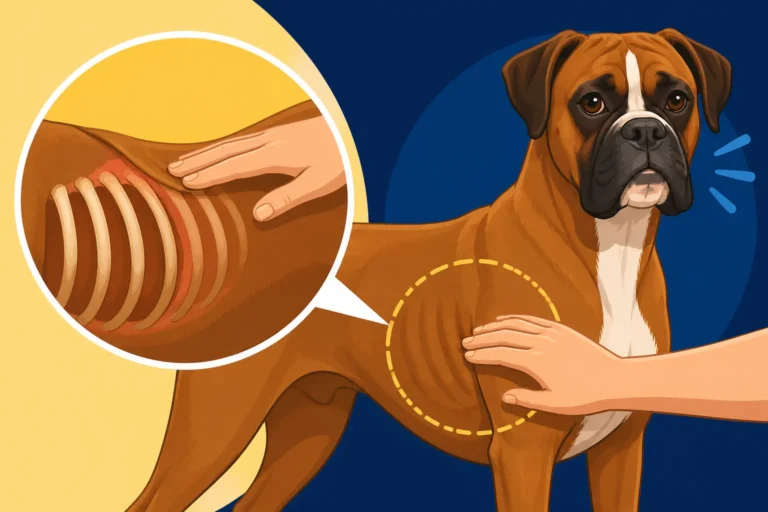
Boxer owners can perform a hands-on rib test behind the front leg to accurately assess their athletic dog body condition.

What a fit Boxer weighs, with males about 65 to 80 pounds and females 50 to 65 pounds, and why body condition matters more than a number on the scale.

Boxer feeding charts provide broad weight averages, explaining why owners must adjust portions for individual dog activity levels.

Free-feeding Boxers causes fatal bloat and severe obesity, increasing deadly stomach twisting risks, heart strain, and joint pain.

Feeding a Boxer two daily meals prevents fatal stomach twists, supports digestion, and ensures steady nutrient absorption.

Boxer daily food amounts depend on age, activity level, weight, and health conditions, plus 60 to 90 minutes of daily exercise.