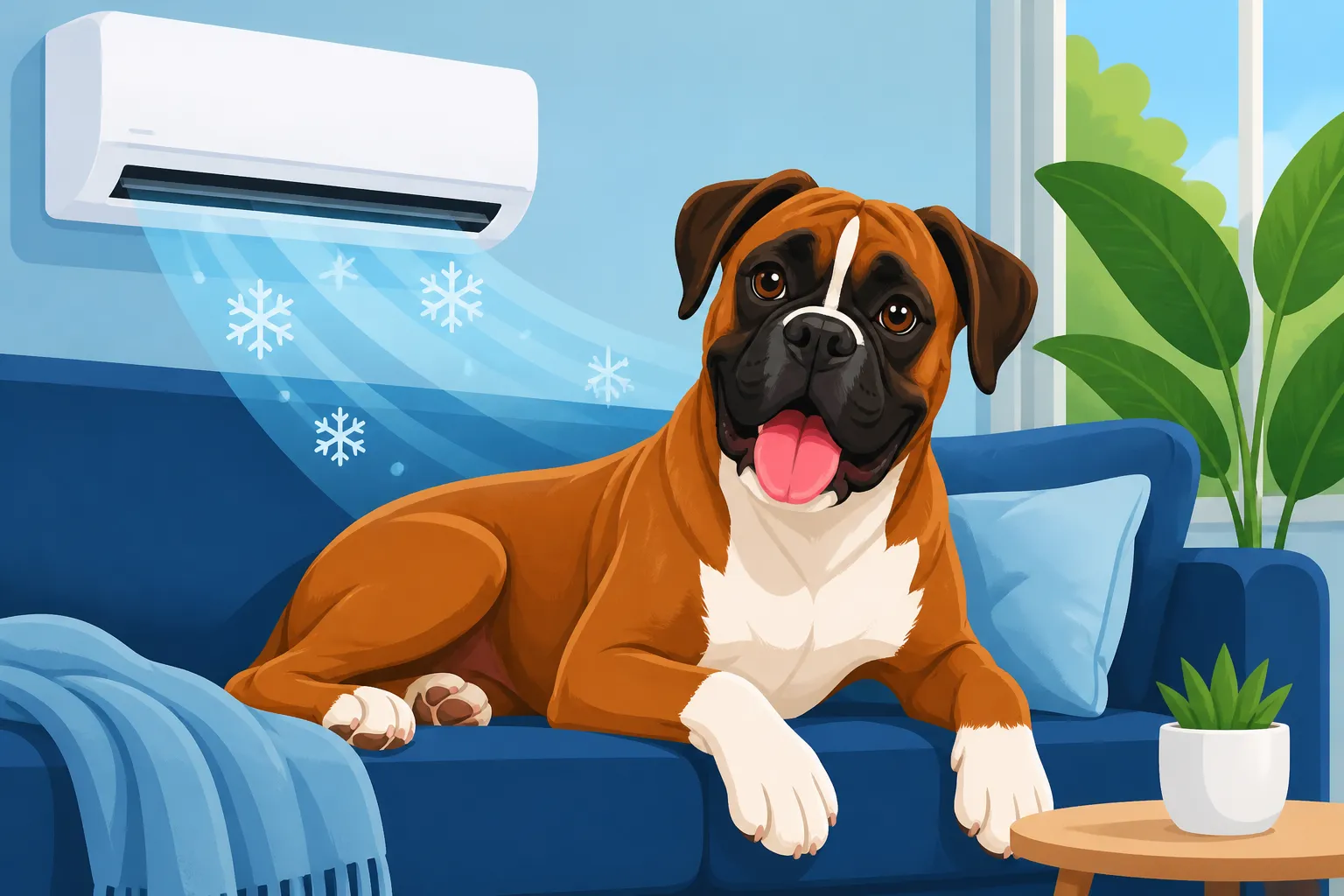
Air Conditioning in a Boxer Household
There's nothing quite like the joy and boundless energy of a Boxer, but for all their silly antics and devoted companionship, Boxer owners face a unique challenge: keeping these flat-faced beauties cool. Their distinctive physiology makes them particularly susceptible to overheating, turning even a mild summer day into a potential health hazard. This guide will walk you through exactly why Boxers struggle with heat and how to create a safe, comfortably cool environment to protect your beloved family member.
Why Boxers Struggle with Heat More Than Other Breeds
It's easy to look at a Boxer's short coat and think they'd be fine in warmer weather, but their internal mechanics tell a very different story. Their anatomy, coupled with their inherent zest for life, creates a perfect storm for heat intolerance. Understanding these underlying factors is the first step in effectively managing their comfort and safety.
Brachycephalic Anatomy and Breathing Challenges
The most significant factor contributing to a Boxer's heat sensitivity is their brachycephalic, or "flat-faced," skull structure. While it gives them that adorable, pushed-in look we all love, it comes with considerable respiratory challenges. Dogs cool themselves primarily through panting. As they pant, air passes over the moist surfaces of their tongues and respiratory tracts, and the evaporation of that moisture cools their blood. For a Boxer, this natural cooling mechanism is severely compromised.
Their shortened muzzle means their nasal passages are often narrower, and they frequently have an elongated soft palate that can obstruct their airway, sometimes quite significantly. This condition, often referred to as Brachycephalic Airway Obstructive Syndrome (BOAS), makes it harder for them to move air efficiently. Imagine trying to breathe through a straw while running a marathon – that's a bit what it's like for a Boxer trying to pant effectively in the heat. They have to work much harder to breathe and exchange air, which ironically generates more body heat, creating a dangerous cycle. This is why you'll often hear them snorting, snoring, and making loud breathing noises even at rest.
Single Coat and Exercise Drive
Unlike double-coated breeds with thick undercoats that provide insulation against both heat and cold, Boxers have a single, short, sleek coat. While this seems like it would be an advantage in hot weather, it doesn't offer much in the way of insulation. It's not like wearing a thin shirt in the desert where you still need protection from direct sun. Their skin is quite exposed, and direct sun exposure can quickly raise their core body temperature.
Compounding this is the Boxer's incredible enthusiasm and high energy levels. They are playful, robust dogs with a strong desire to run, jump, and "box" with their front paws. Even if you, as an owner, are aware of the heat, a Boxer's sheer joy and boundless energy can override their body's signals of distress. They might continue playing long past the point of safety, pushing themselves harder than they should. This combination of a less-than-ideal cooling system and a powerful drive to exercise means that even moderate temperatures can put them at risk. It’s a good idea to limit their outdoor time significantly when the temperature climbs, as even a short burst of play can lead to overheating. For more on this, check out our guide on The Degrees at Which a Boxer Struggles.
Recognizing Heat Stress in Your Boxer
Being able to spot the early warning signs of heat stress and knowing what to do in an emergency is paramount for Boxer owners. These dogs can go from appearing fine to being in critical condition remarkably quickly. Their brachycephalic nature means that by the time you notice obvious distress, they may already be in serious trouble.
Subtle Signs of Overheating
The key to preventing full-blown heatstroke is recognizing the subtle, initial signs that your Boxer is getting too warm. Don't wait for dramatic symptoms; by then, it might be an emergency. Look for changes in their normal behavior and breathing patterns.
One of the first things you'll likely notice is increased panting – it will be heavier and more labored than usual, even if they haven't been exercising strenuously. Their tongue might appear wider and longer than normal, sometimes curling at the edges, and their gums might become a darker red than their usual healthy pink. You might also observe excessive drooling, with thicker, stringier saliva. Restlessness is another common sign; they might pace, try to find cooler spots on the floor, or seem agitated. They could also become less responsive to commands or appear generally lethargic. Their eyes might seem glazed or distant, and they may show increased thirst. If you're concerned about Signs a Boxer Is Overheating, remember these early indicators are your first line of defense.
Emergency Symptoms and What They Mean
If early signs of overheating are missed or ignored, your Boxer can quickly progress to a dangerous state of heatstroke, which is a medical emergency. These symptoms are far more severe and require immediate intervention and veterinary care.
Emergency symptoms include staggering, loss of coordination, or a drunken gait. They might collapse, be unable to stand, or even have seizures. Vomiting and diarrhea, sometimes bloody, are also critical indicators. Their gums may turn a pale blue or purple color, indicating a lack of oxygen, or they might be brick red and dry. Their body temperature will be noticeably high to the touch. In the most severe cases, they can lose consciousness. If you witness any of these emergency signs, you must act fast. Knowing How Fast a Flat-Faced Boxer Overheats can help you understand the urgency. Immediately move them to a cool environment, apply cool (not ice cold) water to their body, especially their belly and paw pads, and get them to the nearest emergency veterinary clinic. Time is absolutely critical in these situations.
Setting Up Your Home for a Boxer's Comfort
Creating an ideal indoor environment is non-negotiable for Boxer owners, especially in warmer climates or during summer months. Air conditioning isn't a luxury; it's a vital component of a Boxer's health management.
Optimal AC Settings and Maintenance
For a Boxer household, your air conditioning unit is your dog's best friend. Keeping your home consistently cool is the most effective way to prevent overheating. Generally, aim to keep your indoor temperature between 72-75°F (22-24°C) during the day, and perhaps slightly cooler if you're going to be out for extended periods, even if it means bundling up in a sweater yourself. Remember, your comfort level and your Boxer's are often very different.
Regular maintenance of your AC unit is crucial. A malfunctioning or inefficient system could lead to unexpectedly high temperatures indoors, putting your Boxer at risk. Make sure to change your air filters regularly, typically every 1-3 months, to ensure optimal airflow and efficiency. Consider having your unit professionally serviced annually, ideally before the start of summer. This preventative measure can save you from a costly breakdown and, more importantly, a potential health crisis for your Boxer. If you live in an area prone to power outages, having a backup plan for cooling, such as a generator, is a wise investment, especially if you have a Boxer or other brachycephalic breed.
Creating Cool Zones and Safe Havens
Even with a well-maintained AC, it's beneficial to create specific "cool zones" within your home where your Boxer can retreat. These areas provide an extra layer of defense against rising temperatures and a designated spot for relaxation.
Identify the coolest rooms in your house. Often, this is a north-facing room that doesn't get direct sunlight, or a basement if you have one. Keep the blinds or curtains closed in rooms that receive direct sunlight throughout the day to block solar heat gain. Consider investing in a cooling mat, readily available from retailers like Chewy, which uses gel or water to provide a cool surface for your Boxer to lie on. Elevated dog beds can also help, as they allow air circulation underneath, preventing heat from building up. Ensure these cool zones are always accessible, particularly if you're leaving your Boxer home alone. Some Boxers naturally gravitate to tile or hardwood floors because they're cooler than carpet, so make sure these areas are clean and clear for them.
Cost Implications of Cooling a Boxer Household
Let's be real, running the air conditioner more often isn't free. Understanding the financial implications of maintaining a cool environment for your Boxer is an important part of responsible ownership. It's not just about the daily comfort; it's about budgeting for their long-term health.
Understanding Energy Consumption
Air conditioning is one of the biggest energy consumers in many households, and keeping your home consistently cool for your Boxer will inevitably lead to higher electricity bills. Factors influencing energy consumption include the size of your home, the efficiency of your AC unit, your local climate, and how well insulated your house is.
For example, a family in Phoenix, Arizona, with a 2,000 sq ft home and an older AC unit, might see their electricity bill spike by hundreds of dollars a month during peak summer. Contrast this with a family in Portland, Oregon, with a newer, energy-efficient unit and a well-insulated home, whose increase might be more modest. It's crucial to understand your own home's energy footprint and what to expect. Smart thermostats can help manage this by allowing you to program schedules and even control your AC remotely, ensuring the house is cool when your Boxer is home and perhaps slightly warmer when they're not. However, for a Boxer, a constant, stable cool temperature is often best, so don't drastically raise the temperature to save a few dollars if your dog is home.
Budgeting for Increased Utility Bills
Given the necessity of keeping your Boxer cool, budgeting for increased utility bills should be a fixed part of your monthly expenses. Don't let it be an afterthought. Just as you budget for food from Ollie or vet visits, factor in the "Boxer AC tax."
The best approach is to look at your utility bills from previous summers (if you've lived in the same place) or estimate based on local averages for homes of similar size. Add a buffer, as summers can be unexpectedly hot. If you're a new Boxer owner, this might be a wake-up call, but it's a non-negotiable aspect of their care. Consider enrolling in an "equal payment plan" offered by many utility companies, which averages your yearly energy costs into consistent monthly payments, helping to avoid those shocking summer spikes. This makes financial planning much easier and ensures you never feel compelled to cut back on essential cooling to save money, potentially putting your Boxer at risk. For a broader look at financial planning, you might be interested in The Yearly Bill for a Seventy-Pound Boxer.
Insuring Against Heat-Related Emergencies
Beyond the increased utility costs, there's the potential financial burden of a heat-related medical emergency. Heatstroke in Boxers is not only life-threatening but can also be incredibly expensive to treat, often requiring emergency hospitalization, IV fluids, cooling measures, and monitoring for organ damage.
This is where pet insurance becomes a true lifeline. Companies like Healthy Paws offer comprehensive coverage that can help mitigate the financial stress of unexpected veterinary bills. Enrolling your Boxer in pet insurance before any heat-related incidents occur is crucial. Once an incident happens, it often becomes a pre-existing condition and may not be covered by new policies. A comprehensive policy can cover emergency vet visits, diagnostics, and treatment for heatstroke, giving you peace of mind that you can afford the best care for your Boxer when they need it most. Considering the high risk Boxers face, this is a prudent investment.
Alternative and Supplemental Cooling Strategies
While air conditioning is the gold standard for keeping a Boxer cool indoors, there are many supplemental strategies and tools you can employ to enhance their comfort and safety, both inside and out. These methods are not replacements for AC but excellent complements.
Fans, Cooling Mats, and Elevated Beds
Even in an air-conditioned home, strategic use of fans can improve air circulation and create a wind-chill effect, making your Boxer feel even cooler. A box fan or tower fan placed in a safe spot, not directly on them but near their resting area, can be very effective. Just make sure cords are tucked away safely to prevent chewing hazards.
Cooling mats, as mentioned before, are fantastic for providing a direct cool surface. Many use pressure-activated gel that stays cool for hours, offering relief without electricity. These are perfect for placing in their favorite nap spots or even in their crate. Elevated dog beds, typically made with a mesh fabric, allow air to circulate underneath your Boxer, preventing heat from getting trapped. Brands like Chewy offer a wide range of these products, from simple cooling pads to more advanced elevated beds. These items are particularly useful during short periods outdoors in shaded areas, or when traveling. Check out Cooling Vests and Fans for a Boxer for more ideas on gear.
Hydration and Diet Considerations
Proper hydration is foundational to keeping any dog healthy, but it's especially critical for Boxers in warm weather. Always ensure fresh, clean water is available. Consider having multiple water bowls around the house and even outside in shaded areas. Adding ice cubes to their water bowl can make it more appealing and help slightly lower their body temperature. Some Boxers enjoy a paddling pool with a few inches of water, allowing them to cool their paws and belly – just supervise closely, as Boxers aren't always natural swimmers due to their head shape. Our article Paddling Pools and a Boxer That Cannot Cool Itself has more tips.
Beyond water, diet plays a role. Wet food or rehydrated dry kibble can contribute to overall hydration. You can also offer frozen treats like unsweetened fruit (melon, berries, banana) or diluted chicken broth frozen in ice cube trays. Some dog food brands, like Ollie, offer fresh, human-grade food that often has a higher moisture content than traditional kibble, which can be beneficial for hydration. Ensure their diet helps them maintain a lean body condition; excess weight puts more strain on their heart and respiratory system, making them even more susceptible to overheating. For insights on maintaining optimal weight, read Feeding a Boxer to Stay Lean and Muscled.
When to Seek Veterinary Help for Heat-Related Issues
Knowing when a situation crosses the line from "my Boxer is a bit warm" to "this is an emergency" is a critical skill for any Boxer owner. Delaying veterinary attention for heatstroke can have fatal consequences.
Immediate Actions for Heatstroke
If your Boxer is exhibiting any of the emergency symptoms of heatstroke – staggering, collapse, profuse drooling, dark red or pale gums, vomiting, or seizures – you need to act immediately. This is not a situation to "wait and see."
- Move to a cool area: Get your Boxer out of the sun and into an air-conditioned room or in front of a fan.
- Apply cool water: Do NOT use ice-cold water, as this can cause blood vessels to constrict and actually hinder cooling, potentially leading to shock. Instead, use cool tap water to wet their entire body, focusing on the head, neck, armpits, and groin. You can use a hose, wet towels, or even a sponge.
- Use fans: Direct a fan towards them to aid evaporative cooling.
- Offer water: If they are conscious and willing, offer small amounts of cool water. Do not force them to drink.
- Get to the vet IMMEDIATELY: While you're initiating these first-aid measures, have someone call the nearest emergency veterinary clinic to let them know you're on your way. Continuous cooling and professional medical care are essential, even if your dog seems to be improving. They might have internal damage that isn't immediately visible. Our guide on Getting a Boxer's Temperature Down in Minutes offers more specific steps for initial cooling.
Preventative Vet Consultations
It’s always a good idea to have a conversation with your veterinarian about your Boxer's heat risk, especially if you live in a warm climate or have an older Boxer. Your vet can assess your individual dog's health, discuss any underlying conditions like Boxer Cardiomyopathy and the Holter Monitor that might increase their risk, and offer personalized advice.
They can also discuss preventative measures, such as monitoring specific medications that might increase heat sensitivity, or even surgical options for severe BOAS that could improve their breathing and overall quality of life. During annual check-ups, bring up your concerns about heat. Your vet can provide guidance on safe exercise routines during warmer months, appropriate cooling products, and what to look out for. Having this proactive dialogue can help you stay ahead of potential problems and ensure your Boxer enjoys a safe, comfortable life year-round.
| Cooling Method | Effectiveness for Boxers | Pros | Cons | Best Use Case |
|---|---|---|---|---|
| Air Conditioning | Essential (High) | Consistent, whole-house cooling; prevents heat buildup | High energy cost; power outages are a risk | Primary indoor cooling, especially when unsupervised |
| Cooling Mats | Very Good | Direct contact cooling; portable; no electricity needed | Can be chewed; effectiveness decreases over time without re-cooling | Designated resting spots, crates, travel |
| Fans | Moderate | Aids evaporative cooling; improves air circulation; low cost | Only effective if air is cooler than body temp; cords are hazards | Complement to AC, mild temps, shaded outdoor spots |
| Elevated Beds | Moderate | Promotes airflow underneath; comfortable | Does not actively cool; mostly for air circulation | Year-round comfort, mild indoor/outdoor use |
| Paddling Pools | Very Good | Allows self-cooling of paws/belly; engaging | Requires supervision; can be messy; not all Boxers like water | Supervised outdoor activity, short relief |
| Cooling Vests/Bandanas | Good | Direct body cooling; portable for walks | Can cause skin irritation if left on too long; needs re-wetting | Brief outdoor exercise, walks |
| Frozen Treats/Ice | Moderate | Hydrating; enjoyable; provides internal cool down | Can upset sensitive stomachs; choking hazard (large ice cubes) | Hydration boost, occasional treat |
Disclaimer
The information provided in this article is for general informational purposes only and is not a substitute for professional veterinary advice. Always consult with a qualified veterinarian for any health concerns or before making any decisions about your Boxer's care, diet, or treatment. Heatstroke is a serious medical emergency, and prompt veterinary attention is crucial.