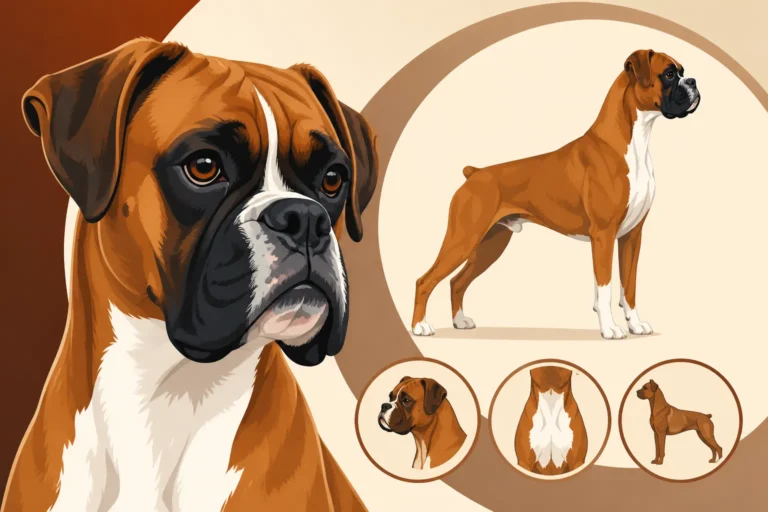
The Boxers That Made the Breed Famous
A famous Boxer may be remembered for a show-ring win, a place in breed history, or simply the way its personality made people notice the breed. But well-known names can blur together, and stories about them are not always precise. This guide looks at the Boxers whose individual achievements helped shape the breed’s public reputation—and what their fame does and doesn’t tell us about Boxers today.
Early Boxers who helped establish the breed
Flocki and the first Boxer stories
When people talk about famous Boxers, the earliest names tend to come from breed history rather than modern celebrity. Flocki is often identified as the first Boxer entered in the German stud book, and is also associated with the early Munich dog-show scene. These first dogs lived before the Boxer had the polished, familiar public image many people recognize today. Their importance lies in being part of the breed’s beginning, not in having the kind of widely documented competition records or media following that later dogs received.
The details around early breed history can be difficult to separate from the larger story of how the Boxer was developed. Breeders were establishing a recognizable type and recording dogs at a time when the breed’s identity was still taking shape. For context on the people, dogs, and setting behind those early years, see The German Origins of the Boxer and The Bullenbeisser the Boxer Came From.
The value of a name like Flocki is historical: it connects modern Boxers to the first organized efforts to record and define the breed. It does not mean every Boxer today is a direct descendant in a simple, easily traced line, nor does it tell us what an individual dog’s temperament or health would have been like. A registered name is one piece of a much larger story.
Meta and the work of setting a breed type
Meta von der Passage is another name that appears in accounts of the breed’s early development. She is remembered as an influential foundation dog, a reminder that Boxer history was shaped not only by show winners but also by the breeding choices made across multiple generations. A single dog can become prominent in the story because descendants carry traits breeders value, but breed development is never the work of one animal alone.
That distinction matters when people read about famous ancestors. It is tempting to imagine that one celebrated dog “created” the modern Boxer, but the breed took shape through repeated decisions about structure, character, and function. The people involved were trying to establish a consistent type while working with the dogs available to them. The story of early Boxer development is therefore about a community and a lineage, not one heroic individual.
The breed’s early records can also be a useful reminder that fame and quality are not identical. A dog may be historically important because it influenced later breeding, while a modern family may care more about the health, temperament, and suitability of the individual puppy in front of them. The early chapters of the breed’s story are explored further in The Three Germans Who Fixed the Boxer Type.
Famous Boxers in American show history
Dampf vom Dom and a milestone in the United States
Dampf vom Dom is widely remembered as an early American Boxer champion and a milestone in the breed’s recognition in the United States. His achievement helped show that Boxers could compete successfully within the American kennel-show system, at a time when the breed was still becoming familiar to many people. That kind of recognition matters because it gives a developing breed a visible public foothold.
A championship title, however, is a specific accomplishment—not a guarantee that a dog is the ideal example of every trait a family might want. Show titles reflect competition under defined judging standards. They don’t automatically tell a prospective owner how a dog behaved at home, how it handled children, or what its health was like across its lifetime. For a closer look at Dampf’s place in the breed’s American story, see Dampf vom Dom, the First AKC Boxer Champion.
His fame also belongs to a broader period when American audiences were learning what a Boxer looked like and what the breed was meant to be. The growth of the Boxer in the United States depended on breeders, clubs, show events, and the families who took these dogs home. The Boxer’s First Twenty Years in America provides more background on that transition.
Bang Away and the Westminster win
Bang Away of Sirrah Crest is one of the best-known Boxers in American show history. In 1951, he won Best in Show at the Westminster Kennel Club Dog Show, a high-profile achievement that helped make his name familiar well beyond Boxer circles. For many people, Bang Away represents the moment a Boxer became a national show-ring star.
A major win can bring attention to a breed, but it doesn’t mean every dog of that breed will have the same build, drive, or personality. Bang Away was one individual, judged at one event under the standards of his time. His win is an important piece of Boxer history, not a promise that a puppy from any line will look or behave like a famous champion. Read more about the event in The Boxer That Won Westminster in 1951.
| Famous Boxer | What the dog is remembered for | What that recognition tells us |
|---|---|---|
| Flocki | An early German Boxer associated with the breed’s first records | A link to the breed’s beginnings |
| Meta von der Passage | An influential early dog in Boxer development | The role of foundation lines in shaping a breed |
| Dampf vom Dom | An early American Boxer champion | The breed’s growing recognition in the United States |
| Bang Away of Sirrah Crest | Best in Show at Westminster in 1951 | A landmark show-ring achievement |
Bang Away’s legacy is often told as a turning point in the public image of the breed. The Boxer could be athletic and powerful while also presenting as a polished show dog. That combination helped the breed attract attention, but it is only part of the picture: the Boxer’s character and working history matter too. The breed standard describes a dog’s desired appearance and qualities, while everyday life reveals how much training, exercise, and thoughtful handling each individual needs. See The Boxer the Breed Standard Describes for more on the distinction between a standard and a real dog.
What Boxer fame can and cannot tell you
A show title is not a personality profile
It is easy to see a champion’s photograph and assume that a dog with a similar face or pedigree will have a predictable temperament. In reality, a show title says that a dog was recognized in a particular competition. It does not certify that the dog will be calm in an apartment, naturally reliable off leash, or easy for a first-time owner to manage.
Boxers are often playful, people-oriented, and physically exuberant, but individuals vary. One may settle easily after a walk; another may need more structured activity and training to avoid turning every greeting into a full-body celebration. A famous dog can introduce people to the breed, but a realistic picture comes from learning about its traits and needs. For the name’s history and common explanations, see Why the Boxer Is Called a Boxer.
The same caution applies to famous bloodlines. A pedigree can help explain ancestry, but it does not replace health information, observation of the dog, or a conversation with a responsible breeder or rescue. If you’re considering a Boxer, ask about the individual dog’s health screening and family history rather than choosing based on a celebrated ancestor’s name alone.
The legacy lives on in ordinary Boxer households
The most lasting effect of famous Boxers may be that they helped people notice the breed. A championship dog can spark interest, but the daily experience of living with a Boxer is made up of less glamorous things: walks, play, training, grooming, vet visits, and the familiar challenge of managing a powerful dog who wants to greet everyone at once.
That practical side is worth thinking about before bringing a Boxer home. Someone preparing for a puppy may need a secure harness, a crate that will still fit as the dog grows, durable enrichment toys, and grooming basics. Chewy is one retailer where owners can compare everyday supplies, but the right choices depend on the dog’s age, size, chewing habits, and any advice from a veterinarian or trainer. A toy that works for a gentle chewer may not last long with a determined one.
It also helps to plan for training and exercise instead of assuming that a backyard or a famous pedigree will solve everything. A Boxer needs regular interaction and clear, consistent boundaries. For families searching for a dog, Where Most People Find Their Boxer can help frame the choices between a breeder, rescue, or other responsible route. Once a dog is home, owners may use Chewy to check options for food puzzles or basic care items, while choosing products that suit the dog rather than buying based on a celebrity dog’s story.
Remembering famous dogs without expecting a replica
Flocki, Meta, Dampf vom Dom, and Bang Away each stand for a different chapter: early breed records, foundation breeding, American recognition, and a landmark Westminster win. Their stories are compelling because they give the Boxer a history beyond its familiar square muzzle and springy, comic energy. They are also reminders that the breed’s reputation was built over time by many dogs and people.
If a famous Boxer has made you curious about the breed, use that interest as a starting point. Read about the Boxer’s history, understand the standard, and then look closely at the needs and temperament of the dog you may actually live with. Chewy can be a practical place to compare routine supplies once you know what your dog needs, but no shopping list or historic name can substitute for suitable care, training, and a good match.
The celebrated dogs are part of Boxer history—not a template every Boxer must fit. Their fame gives us a way into the breed’s past, while the dog beside you will have its own personality, strengths, and quirks.
Disclaimer
This article is for general informational purposes only and does not constitute professional advice. Laws, prices and regulations vary by location and change over time. Consult a qualified professional for guidance on your specific situation.