Which Breeds Were Crossed to Make the Boxer
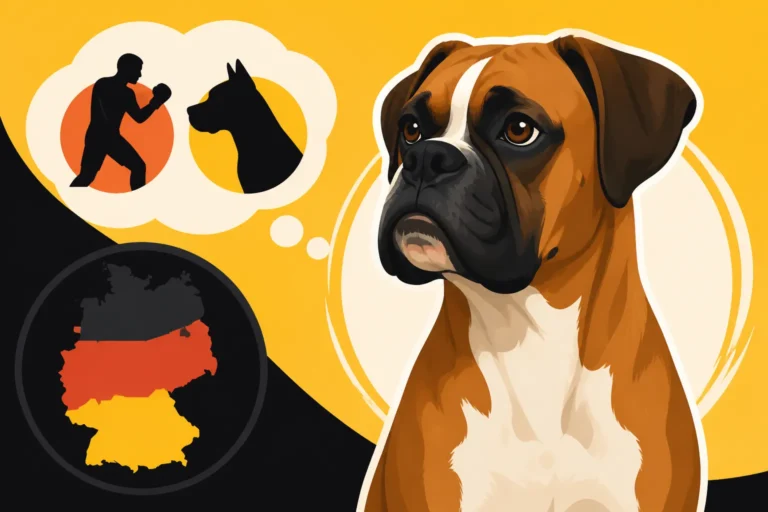
Many Boxer owners look at their quirky, energetic companions and wonder, "Where did this unique personality and powerful physique come from?" It's not just about Germany; the Boxer breed has a fascinating lineage, a tapestry woven from several distinct historical dog types that contributed to the loyal, playful, and protective dog we know today. This guide will take you on a journey back in time, unraveling the precise breeds that were crossed and carefully selected to forge the magnificent Boxer.
The Mighty Bullenbeisser: The Boxer's Primary Ancestor
To understand the Boxer, we must first pay homage to its most significant ancestor: the Bullenbeisser. This wasn't a single, uniform breed in the way we think of breeds today, but rather a type of dog, a group of powerful, mastiff-like canines used for hunting large, dangerous game across various regions of Europe. Think of them as the ultimate working dogs of their era, designed for pure function and strength.
Tracing the Bullenbeisser's Role in Germany
The Bullenbeisser was particularly prominent in Germany, where different regional variations existed, often named after the cities or areas they originated from, like the Brabanter Bullenbeisser. These dogs were indispensable to hunters, their primary role being to seize and hold large prey like wild boars, bears, and even deer, until the hunter could arrive to make the kill. This required immense courage, a powerful bite, unwavering tenacity, and incredible physical fortitude. They weren't just running alongside; they were actively engaging with formidable animals, often alone, and holding them firmly by the snout or ear. Imagine the sheer strength and determination needed to do that.
Their physical characteristics were clearly geared towards this demanding task. They were robust, muscular dogs with broad chests, strong necks, and powerful jaws. Their build was compact yet athletic, allowing for both strength and a degree of agility. When you observe a modern Boxer's powerful stride or the way they lean into a pull on the leash, you’re seeing echoes of this ancient heritage. The original Bullenbeissers, while varied, all shared this common thread of being formidable "bull-biters" – their name literally meaning "bull biter" in German, though their prey was far more diverse than just bulls. This historical function deeply embedded certain traits into the Boxer's genetic code, making them naturally brave and determined, even if their modern job is mostly chasing squirrels in the backyard.
Why the Bullenbeisser Traits Were So Important
The specific traits of the Bullenbeisser were absolutely foundational in the development of the Boxer. Breeders weren't just looking for a pretty face; they needed a dog that could carry on a legacy of hard work and resilience. The Bullenbeisser provided that in spades. Its powerful, punishing bite, coupled with an unwavering grip, became the blueprint for the Boxer's strong jaws and distinctive undershot bite, perfectly designed for holding onto things — or, these days, carrying around a favorite squeaky toy with immense satisfaction.
Their incredible courage and natural protective instincts, born from facing down wild beasts, translated into the Boxer's renowned loyalty and vigilance as a family guardian. Even today, a Boxer will often position itself between its family and an unknown visitor, not out of aggression, but a deep-seated instinct to protect its "pack." This brave spirit is a direct inheritance from those Bullenbeisser ancestors who never backed down from a challenge. Furthermore, the Bullenbeisser's robust health and stamina were crucial for a dog expected to work long hours in challenging terrain. These were not delicate dogs, and that inherent hardiness contributes to the Boxer's generally strong constitution, though, like all purebreds, they do have their specific health concerns, which is why we talk about things like Boxer Cardiomyopathy and the Holter Monitor and The Lumps a Boxer Owner Has to Check For. The Bullenbeisser provided the raw material—strength, courage, and an undeniable working drive—that later breeders would refine into the Boxer we cherish.
The English Bulldog's Influence: Refining the Boxer's Look and Temperament
While the Bullenbeisser laid the groundwork for the Boxer's power and drive, the introduction of the English Bulldog was pivotal in shaping the breed's distinctive appearance and, interestingly, mellowing some of its more intense working traits. This cross was less about creating a new working dog from scratch and more about refining and standardizing the existing Bullenbeisser type.
The Arrival of the English Bulldog in Germany
In the mid-to-late 19th century, as dog breeding became more formalized and less purely functional, English Bulldogs were imported into Germany. It's important to remember that the English Bulldog of that era was not quite the heavily wrinkled, very low-slung dog we often see in show rings today. They were still formidable, powerful dogs with broad chests and strong heads, but generally more agile and less exaggerated in their features than some modern lines. Their historical role had also been in "bull-baiting," so they shared a certain tenacity and bite strength with the Bullenbeisser, though their fighting style differed.
The appeal of the English Bulldog was multi-faceted. They brought a more compact, square build and a distinctive head shape that breeders found desirable for aesthetic reasons and for formalizing the look of their emerging "Boxer" type. The goal was to develop a dog that was still a powerful guardian and companion, but perhaps with a more pronounced and standardized physical type suitable for exhibition and general ownership. This was a critical step in moving from a loose "type" of dog to a recognized "breed" with a written standard. The influence of these imported Bulldogs on the developing Boxer population was undeniable, contributing to the breed's unique silhouette and instantly recognizable facial features.
Shaping the Boxer's Iconic Head and Jaw
The most striking contribution of the English Bulldog was undoubtedly to the Boxer's head, particularly its short, broad muzzle and prominent undershot jaw. The Bullenbeisser already had a strong jaw, but the Bulldog helped to shorten the muzzle further and enhance that distinctive "turn-up" that gives the Boxer its characteristic expression. This unique jaw structure, where the lower jaw protrudes beyond the upper, is described in great detail in the breed standard and is a hallmark of the Boxer. It wasn't just for looks; this jaw was historically perfect for gripping and holding.
This influence also played a role in the Boxer's broader skull and the set of its eyes, contributing to that famously alert and intelligent gaze. However, it's a double-edged sword: while it creates a beloved appearance, it also contributes to the Boxer being a brachycephalic (flat-faced) breed, which can lead to certain respiratory challenges. This is why considerations about Anesthesia Risk in a Flat-Faced Boxer are so important, and why it's crucial to be mindful of how easily How Fast a Flat-Faced Boxer Overheats. The combination of the Bullenbeisser's strength and the Bulldog's specific facial characteristics resulted in the powerful, yet distinctively unique, head of the modern Boxer, a feature that makes them instantly recognizable worldwide.
Other Influences and the Early Development of the Breed
While the Bullenbeisser and English Bulldog are the clear primary progenitors, the early days of any breed's development are rarely simple. The path to the modern Boxer involved not just cross-breeding, but also careful selection and the establishment of foundational breeding programs.
The Selective Breeding Process and Early Boxer Clubs
The creation of the Boxer wasn't a random occurrence; it was the result of deliberate and dedicated selective breeding by a few key German individuals in the late 19th century. Friedrich Robert, Elard König, and R. Höpner are often credited with being instrumental in fixing the Boxer type. They took the existing Bullenbeisser dogs, crossed them with English Bulldogs, and then meticulously selected offspring that exhibited the desired combination of traits: the power and courage of the Bullenbeisser, combined with the refined head and temperament contributed by the Bulldog. This process involved culling dogs that didn't meet their evolving vision and carefully planning matings to accentuate specific characteristics.
This era also saw the birth of formal dog clubs, which were essential for standardizing breeds. The first Boxer Club was founded in Munich, Germany, in 1895, and it was here that the initial breed standard was drawn up. This document outlined the ideal physical and temperamental traits, guiding future breeding efforts and ensuring a consistent type. This formalization was critical for the Boxer to move from a regionally recognized "type" to a globally acknowledged "breed." These early clubs also organized dog shows, providing a platform for breeders to showcase their dogs and compare their progress against the emerging standard. If you ever wondered how precise the standards are, reading about The German Boxer Club and Its 1902 Standard gives you a sense of that early dedication.
This meticulous selection process wasn't just about looks; it was about ensuring the dogs retained their utility and sound temperament. They were still viewed as working dogs—capable of protection, police work, and even guiding the blind—while also being wonderful family companions. The foundation of the breed was laid by individuals who understood the importance of both form and function.
How Ancestry Manifests in the Modern Boxer
It's truly remarkable how the characteristics of these historical breeds resonate so strongly in the Boxers we share our lives with today. Their ancestors didn't just contribute genes; they contributed the very essence of what makes a Boxer a Boxer.
Physical Traits Inherited from the Ancestors
When you look at a modern Boxer, you're essentially looking at a living testament to its lineage. The strong, muscular build, often described as "powerful" and "athletic," is a direct inheritance from the Bullenbeisser, a dog bred for raw strength and endurance. That deep chest and well-sprung ribs? Also from the Bullenbeisser, designed for stamina and powerful lung capacity, crucial for its intense working life. The short, sleek coat, requiring minimal grooming beyond a quick brush (a good stiff brush from Chewy works wonders!), is also characteristic of many old European working breeds, practical for dogs that spent a lot of time outdoors.
Then there's that unmistakable head. The broad skull, the strong jaw, and especially the undershot bite and the distinctive "turn-up" of the muzzle are clear gifts from the English Bulldog influence. This combination gives the Boxer its unique, often serious yet ultimately endearing, expression. Even the color patterns—fawn and brindle—are deep-rooted in the ancestral breeds. Fawn Boxers and Their Shades and What Makes a Boxer Brindle or Reverse Brindle are variations that have been present for centuries, though specific white markings were often less desired in early working dogs. Every physical attribute, from their powerful gait to their intelligent eyes, tells a story of purposeful breeding designed to create a dog that was both capable and visually striking.
Temperamental Echoes: Courage, Loyalty, and Playfulness
Beyond the physical, the Boxer's personality is perhaps the most enduring legacy of its ancestors. The innate courage and protective instincts that made the Bullenbeisser a formidable hunter translate directly into the Boxer's role as a fearless guardian of its family. They are inherently vigilant, quick to alert you to anything unusual, and possess an unwavering loyalty that defines their bond with their human companions. Whether Boxers Are Naturally Protective isn't a question of training; it's deep in their DNA.
Yet, this strong protective streak is beautifully balanced by an incredible playfulness and a profound desire for companionship, traits that were fostered by early breeders selecting for more tractable and stable temperaments suitable for a family environment. The English Bulldog, particularly the version used in the Boxer's development, contributed to this more companionable nature. This is why Boxers are famously known as "the clowns of the canine world"—their zest for life, goofy antics, and boundless energy are legendary. If you've ever seen a Boxer "box" with its front paws, you're seeing an echo of both its name and its playful, physical approach to interaction. Why a Boxer Boxes With Its Front Paws isn't just a quirk; it's a signature move!
Their intelligence, combined with a sometimes stubborn streak, also comes from this working heritage. They are smart, eager to please, but can get bored easily if not engaged. That's why positive, engaging training sessions with plenty of rewards (and maybe some yummy treats from Chewy!) are key to working with their active minds. The Boxer is a dog that thrives on interaction, companionship, and a clear role within the family, a direct result of the complex blend of its powerful, working ancestors and the careful selection for a devoted, playful spirit.
| Ancestor Breed | Primary Contribution to Boxer | Key Physical Traits | Key Temperamental Traits |
|---|---|---|---|
| Bullenbeisser | Strength, power, courage, athleticism, strong bite, working drive | Muscular build, deep chest, robust frame, strong jaws | Fearless, tenacious, protective, loyal, high stamina |
| English Bulldog | Refined head shape, shortened muzzle, distinct undershot jaw, more compact build, calmer temperament | Broad skull, prominent undershot jaw, strong forequarters | Brave, determined, good-natured, more companion-oriented |
Ultimately, the Boxer is a magnificent blend of these powerful and purposeful ancestors. Each time you marvel at your Boxer's agility, laugh at their goofy antics, or feel secure in their protective presence, you're witnessing the living history of the Bullenbeisser and the English Bulldog, seamlessly woven together into one of the most beloved breeds in the world. Knowing their roots helps us appreciate the full spectrum of what makes these dogs so special. It also informs how we understand their needs, from nutrition (finding good food on Chewy is always a priority) to exercise and training.
Disclaimer
This article is for general informational purposes only and does not constitute professional advice. Laws, prices and regulations vary by location and change over time. Consult a qualified professional for guidance on your specific situation.