The Lumps a Boxer Owner Has to Check For
Finding a new lump or bump on your Boxer can send a wave of panic through even the most seasoned dog owner. It’s a moment where your heart leaps into your throat, and every worst-case scenario flashes before your eyes, especially with a breed as prone to certain health issues as our beloved Boxers. This comprehensive guide is here to help you navigate that anxiety, understand the different types of lumps your Boxer might develop, and equip you with the knowledge to perform regular checks, know when to worry, and what steps to take next.
The Inevitable Journey: Why Boxers and Lumps Go Hand-in-Hand
If you've owned a Boxer for any length of time, or even if you're just considering bringing one of these magnificent dogs into your home, you've likely heard whispers about their predisposition to various health concerns. Lumps and bumps on their skin are, unfortunately, a very common part of the Boxer ownership experience. It's not a matter of if you'll find one, but often when. This reality can be incredibly daunting, but understanding why it happens is the first step toward managing it.
The Boxer's Unique Skin and Coat: A Double-Edged Sword
Our Boxers have such a distinctive appearance, don't they? That sleek, short, shiny coat is undeniably handsome and relatively low-maintenance when it comes to grooming. But this very characteristic—their short, close-lying fur—is a double-edged sword when it comes to lumps. On one hand, it makes lumps incredibly easy to spot. A new bump, no matter how small, tends to stand out quite clearly against their tight skin. There's no thick, fluffy undercoat to hide things for months on end, which can be a blessing in disguise for early detection.
However, the skin itself is also quite delicate and prone to various issues. Boxers can be susceptible to allergies, environmental sensitivities, and even minor irritations that can manifest as small, temporary bumps or inflamed areas. Their less-pigmented skin, especially in white Boxers, can also be more sensitive to sun exposure, leading to other skin concerns. While these aren't always serious, they add to the general "bumpiness" of Boxer life and can make it harder for an owner to discern a harmless irritation from something more concerning without a careful check.
A Breed Predisposed: Understanding the Genetic Component
Here's the tough truth that every Boxer owner eventually faces: Boxers, as a breed, have a higher incidence of certain cancers than many other dog breeds. It's a cruel twist of genetics for a dog so full of life and joy. This predisposition isn't just hearsay; it's well-documented in veterinary medicine. You might be interested to read more about Why Cancer Kills More Boxers Than Anything Else. When we talk about lumps, we're not just talking about benign fatty deposits; we're often talking about the very real risk of cancerous growths, particularly mast cell tumors, which we'll delve into shortly.
This genetic vulnerability means that finding a lump on your Boxer often carries a heavier weight of anxiety than it might for owners of other breeds. It’s not an irrational fear; it’s grounded in the breed’s reality. Many owners worry constantly about The Cancers That Take Most Boxers, and this constant low-level dread is a frustrating part of living with and loving a Boxer. Knowing that Whether Boxer Cancer Risk Is Inherited is a factor can also add to the concern, especially if you know the health history of your dog's parents or previous Boxers in your life. This knowledge doesn't mean every lump is cancer, but it absolutely means every lump deserves your attention and a swift evaluation from your veterinarian.
Decoding the Bumps: Common, Benign Growths
Before we dive into the more worrying possibilities, it's important to remember that not every lump is a death sentence. In fact, many lumps found on Boxers are entirely benign – meaning they're non-cancerous and usually pose no serious threat to your dog's health. Knowing about these common, typically harmless growths can help ease some of that initial panic, though a definitive diagnosis always requires a professional opinion.
The Wobbly Wonders: Lipomas and Fatty Deposits
One of the most frequent types of lumps you'll encounter on an older Boxer is a lipoma. These are essentially benign tumors made up of fat cells. They're incredibly common, especially as dogs age, and Boxers seem to get their fair share of them.
- What they feel like: Lipomas are often described as "squishy" or "rubbery" and are typically quite mobile under the skin. You can usually push them around easily with your fingers, almost like they're just floating there. They can range in size from a small pea to something quite large, like a golf ball or even bigger.
- Where they appear: You'll most often find lipomas on the trunk, chest, or upper legs, but they can honestly pop up almost anywhere there's fatty tissue. They tend to grow slowly over time.
- When to worry (a little): For the most part, lipomas are just cosmetic and don't bother the dog. However, sometimes they can grow so large or be located in an awkward spot (like in an armpit or on a joint) that they interfere with movement or become uncomfortable. In rare cases, they can be an infiltrative lipoma, which means they're still benign but grow into muscle tissue, making removal more complex. This is why it's always worth getting any new lump checked, even if you suspect it's "just a fatty lump." Your vet can help you tell Telling a Boxer Fatty Lump From a Tumor, which is critical, as some malignant tumors can mimic the feel of a lipoma. If a lipoma grows rapidly, changes texture, or becomes painful, that’s also a sign to have it re-evaluated.
Youthful Outbreaks: Histiocytomas
If you have a young Boxer, particularly under two years of age, and you discover a small, rapidly growing button-like lump, there's a good chance it could be a histiocytoma. These are typically benign skin tumors that are unique because they often resolve on their own without intervention.
- What they look like: Histiocytomas usually appear as firm, dome-shaped, hairless, and often ulcerated (meaning the skin on top is broken or scabbed) red lumps. They can grow quite quickly, which can be alarming to owners.
- Where they appear: They are most commonly found on the head, ears, or limbs.
- The "button" analogy: Vets sometimes call them "button tumors" because of their distinct shape. The most reassuring thing about histiocytomas is their typical life cycle: they appear suddenly, grow for a few weeks, and then, in most cases, spontaneously regress and disappear over a couple of months as the dog's immune system clears them.
- Vet's role: Even though they usually go away, it's still crucial to have your vet confirm the diagnosis. They might perform a fine needle aspirate (FNA) to confirm it's a histiocytoma and rule out more aggressive types of cancer. While you're often advised to simply monitor them, sometimes if they're particularly large, ulcerated, or bothering the dog, your vet might recommend surgical removal. You can learn more about Histiocytomas on a Young Boxer to better understand this specific type of lump.
Other Benign Skin Quirks: Cysts, Warts, and Skin Tags
Beyond lipomas and histiocytomas, Boxers can develop a variety of other harmless skin growths. These might look concerning at first glance, but are generally not a cause for major alarm.
- Sebaceous Cysts: These occur when a sebaceous gland (which produces oil for the skin) becomes blocked. They often appear as firm or slightly squishy bumps under the skin. Sometimes they can rupture, releasing a thick, cheesy, white or gray material, which can be messy and sometimes lead to secondary infection. They are usually painless unless infected. Your vet can often express them or, if they recur or become problematic, surgically remove them.
- Warts (Papillomas): These are viral skin tumors, often appearing as small, cauliflower-like growths. They are more common in older dogs, though puppies can get them too (especially around the mouth). While not cancerous, they can become irritated or bleed if scratched or rubbed. Most warts are benign, but some persistent or unusual-looking growths might warrant an FNA or removal. It's often debated Whether a Boxer Wart Needs Removing, as many resolve on their own, but if it's in an irritating location or growing, removal might be best.
- Skin Tags: Just like in humans, Boxers can develop small, benign skin tags. These are usually soft, fleshy growths that hang off the skin. They're typically harmless but can sometimes get snagged or irritated, leading to bleeding or discomfort. Removal is usually straightforward if they become a nuisance.
Remember, even with these "benign" descriptions, only a veterinarian can provide a definitive diagnosis. It’s always best to err on the side of caution and get any new lump checked out.
The Shadow of Concern: Potentially Malignant Lumps
This is often the part that makes every Boxer owner's stomach drop. While many lumps are harmless, our beloved Boxers are, sadly, highly predisposed to certain types of cancer. When you find a lump, your vet's primary goal will be to rule out these more serious possibilities. Early detection and diagnosis can make a world of difference in prognosis and treatment outcomes.
Mast Cell Tumors: The Chameleon of Canine Cancer
If there's one cancer that Boxer owners need to be acutely aware of, it's the mast cell tumor. Boxers have an alarmingly high incidence of these, and they are notorious for their unpredictable nature and variable appearance. This makes them particularly tricky and concerning.
- What they are: Mast cells are a normal part of the immune system, involved in inflammatory and allergic responses. A mast cell tumor (MCT) is an uncontrolled growth of these cells.
- The great mimickers: This is the most frustrating and dangerous aspect of MCTs. They can look and feel like almost anything. They might be:
- A soft, squishy lump that feels just like a lipoma.
- A firm, rubbery lump.
- A small, red, inflamed bump that looks like an insect bite or allergic reaction.
- An ulcerated or scabbed lesion.
- They can even change in size and appearance from day to day or week to week. One moment it's small, the next it's swollen and red, which is why Why Boxer Mast Cell Tumors Change Size is a common and concerning observation for owners.
- Where they appear: MCTs can arise anywhere on or under the skin, but common sites include the trunk, limbs, and head. They can also occur internally, in organs like the spleen or liver, though these are not "lumps you check for" on the skin.
- The urgency of diagnosis: Because of their variable nature and potential to be aggressive (metastasizing to lymph nodes or internal organs), every new lump on a Boxer should be considered a potential mast cell tumor until proven otherwise. A fine needle aspirate (FNA) is usually the first diagnostic step to identify the characteristic mast cells. If MCTs are suspected, complete surgical removal with wide margins, followed by histopathology (biopsy), is crucial not only for definitive diagnosis but also for determining the tumor's grade. Understanding Grading a Boxer's Mast Cell Tumor is key, as the grade dictates prognosis and further treatment recommendations.
Lymph Node Swelling: A Silent Alarm
While not a "skin lump" in the traditional sense, swollen lymph nodes are a critical type of lump that Boxer owners must learn to feel for, as they can be a primary indicator of lymphoma, another cancer to which Boxers are prone.
- What they are: Lymph nodes are small, bean-shaped glands that are part of the immune system. They filter lymph fluid and house immune cells. In a healthy dog, they are usually small and hard to feel.
- Where to check: There are several superficial lymph nodes that you can feel:
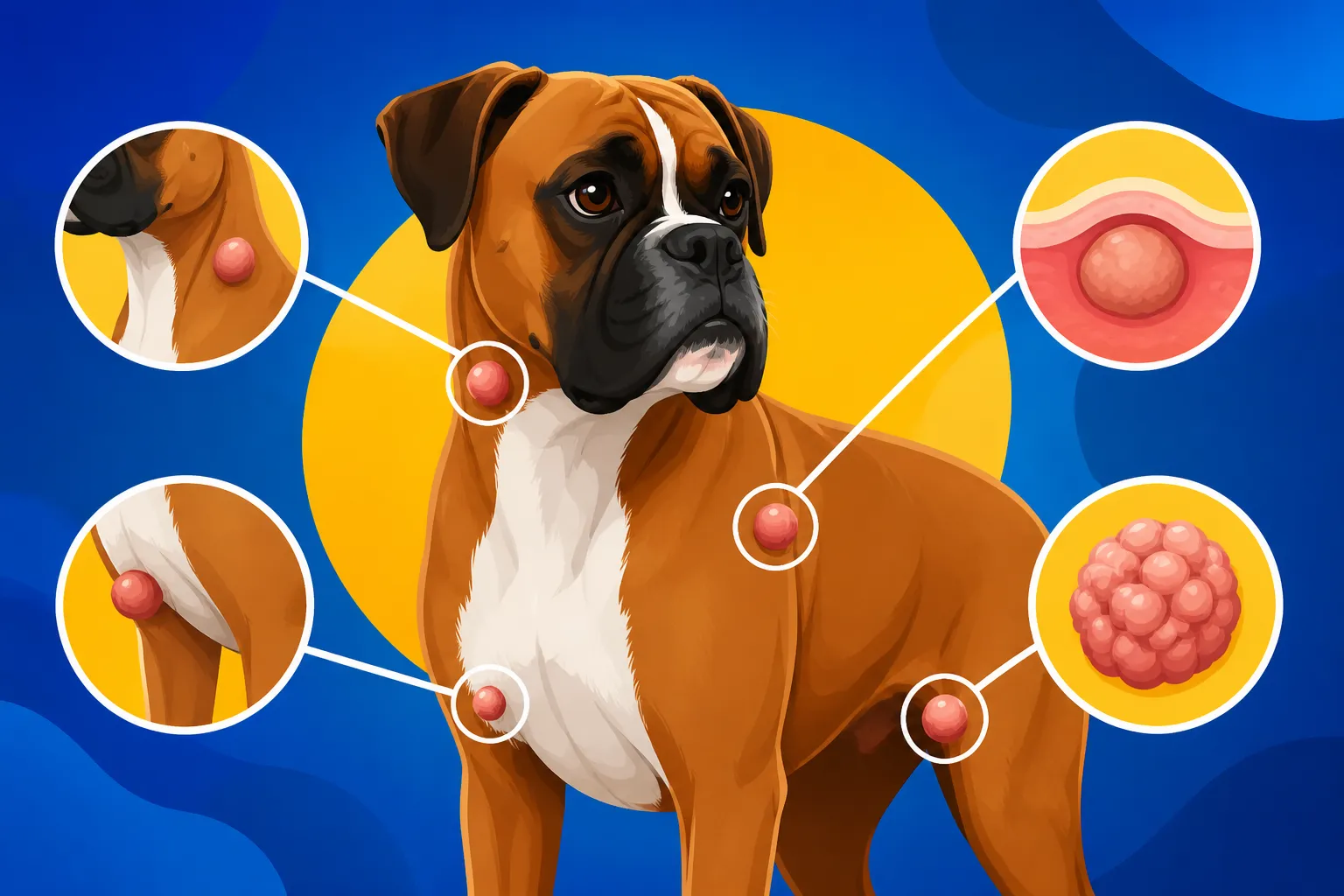
- Mandibular lymph nodes: Under the jaw, on either side of the windpipe.
- Prescapular lymph nodes: In front of the shoulder blade, on either side of the chest.
- Popliteal lymph nodes: Behind the knee, in the crease of the back leg.
- Axillary (armpit) and Inguinal (groin) lymph nodes: These are harder to feel unless significantly enlarged.
- When they're a concern: If these lymph nodes are noticeably enlarged (feeling like firm grapes or even larger), they can indicate an infection, inflammation, or, more concerningly, lymphoma. With lymphoma, the lymph nodes typically become firm, non-painful, and symmetrically enlarged.
- The stealth of lymphoma: Lymphoma often presents initially with these swollen lymph nodes, sometimes before any other obvious symptoms are apparent. Learning Boxer Lymphoma and How It Presents is vital, as early intervention can impact treatment effectiveness. If you feel Swollen Glands Under a Boxer's Jaw or in any other region, it's time for an immediate vet visit. Diagnosis usually involves an FNA of the affected lymph node.
Other Worrying Lumps: Melanomas, Soft Tissue Sarcomas
While less common than mast cell tumors or lymphoma, other types of malignant skin or subcutaneous (under the skin) lumps can affect Boxers. These also require prompt veterinary attention for diagnosis and treatment.
- Melanomas: These can occur anywhere on the skin, but are particularly concerning when found in the mouth (oral melanomas) or on the nail beds/paw pads, where they are often highly aggressive. Skin melanomas can sometimes be benign, but their appearance can be deceptive. They can be darkly pigmented, raised, or flat, and sometimes even unpigmented (amelanotic).
- Soft Tissue Sarcomas (e.g., Fibrosarcomas, Hemangiosarcomas): These are tumors that arise from connective tissues (fat, muscle, fibrous tissue). They tend to be firm, irregular, and often deeply embedded, making them feel fixed to underlying structures rather than mobile like a lipoma. Hemangiosarcomas, while often internal and aggressive, can also appear on the skin, sometimes looking like a bruised area or a red/purple mass.
- The consistent message: The key takeaway with all potentially malignant lumps is that visual inspection alone is insufficient. Their appearance can be misleading. A professional veterinary examination and diagnostic testing are always necessary to determine the exact nature of the lump and formulate an appropriate treatment plan.
The Power of Proactivity: Regular At-Home Lump Checks
Okay, so we’ve covered the scary stuff. Now, let’s talk about how you, as a Boxer owner, can become your dog’s first and best line of defense. The most powerful tool you have against the anxiety and potential severity of lumps is a consistent, thorough, at-home checking routine. This isn't just a suggestion; it's a vital part of responsible Boxer ownership.
Crafting Your Weekly "Body Scan" Routine
Think of this as a bonding experience, a full-body massage with a purpose. Making it a positive interaction for your Boxer will make it easier to do regularly.
- Find a quiet time: Pick a time when your Boxer is relaxed – perhaps after a walk, during cuddle time on the couch, or while they're dozing. A calm environment will make your dog more cooperative.
- Start with the head and face: Gently cup your Boxer's head and run your fingers over their skull, around their ears (inside and out), and down their muzzle. Pay close attention to their jowls and the folds around their mouth and nose. Carefully lift their lips and check their gums and tongue for any growths or discolored areas. Don't forget their neck, especially feeling for those mandibular (under the jaw) lymph nodes.
- Move down the body: Systematically work your way from neck to tail. Use the pads of your fingers, not just your fingertips, and apply gentle but firm pressure. You're feeling for anything new or unusual.
- Chest and Shoulders: Feel over their chest, around their shoulders, and especially in their armpits (checking for prescapular and axillary lymph nodes). Boxers often have a muscular chest, so get used to what their normal contours feel like.
- Torso: Run your hands along their ribs and back. Don't forget their belly and sides.
- Legs: Go down each leg, feeling all the way to their paws. Check between their toes and on their paw pads for any bumps or lesions. Remember to feel behind their knees for the popliteal lymph nodes.
- Tail and Hindquarters: Finish by checking their tail, paying attention to the base, and then their hindquarters and groin area (inguinal lymph nodes).
- Be methodical: It doesn't matter if you go head-to-tail or tail-to-head, just be consistent with your pattern each time so you don't miss any spots.
- What you're feeling for: You're looking for anything new:
- Any raised area, bump, or mass.
- Changes in texture (firm, soft, squishy, gritty).
- Changes in temperature (hot spots).
- Any areas of pain or sensitivity when touched.
- Discoloration, scabbing, or ulceration.
This weekly full-body check is so crucial for Boxers, and you can find more detailed guidance on Weekly Lump Checks on a Boxer to hone your technique. The more familiar you become with your dog's normal landscape of moles, scars, and typical fatty deposits, the quicker you'll notice anything new or changing.
Documenting Your Findings: The Essential "Lump Map"
Finding a new lump can be alarming, but don't just panic. Your next step, after that initial discovery, is to document it. This "lump map" or log is one of the most invaluable tools you can bring to your vet appointment. It provides objective information that can help your vet in their diagnosis and monitoring.
- Why document?
- Tracking changes: Is it growing? Shrinking? Changing color? This information is critical for distinguishing benign from potentially malignant growths.
- Communication with vet: A clear record helps you accurately describe the lump to your vet, even if you’re stressed during the appointment.
- Baseline for future: If it’s a benign lump, your notes provide a baseline against which any new or altered lumps can be compared.
- What to include in your log:
- Date Discovered: When did you first notice it?
- Location: Be as precise as possible. Use anatomical landmarks (e.g., "right side of chest, 2 inches behind elbow," or "left rear leg, medial side, just above hock"). You can even draw a simple diagram of your Boxer and mark the spot.
- Size: Measure it! A flexible tape measure or even just comparing it to common objects (a pea, a grape, a marble) can be helpful. Note if it's growing or shrinking over time.
- Shape: Is it round, irregular, dome-shaped?
- Texture/Consistency: Is it soft, firm, squishy, hard, rubbery?
- Mobility: Can you move it freely under the skin (mobile), or does it feel fixed to underlying tissue?
- Color: Is it skin-colored, red, dark, ulcerated?
- Pain/Sensitivity: Does your Boxer react when you touch it?
- Photos: Take clear photos from different angles. Use a ruler next to the lump for scale if possible. Date the photos.
Here's a simple table format you could use:
| Date Found | Location (Specific) | Size (Approx. & Meas.) | Shape | Texture | Mobility | Color | Pain/Sensitivity | Notes/Changes |
|---|---|---|---|---|---|---|---|---|
| 2023-10-26 | Left rib cage, just behind last rib | Pea-sized (0.5cm) | Round | Soft, squishy | Highly mobile | Skin-colored | No | Discovered during weekly check. |
| 2023-11-09 | Same location | Grape-sized (1.5cm) | Round | Soft, squishy | Highly mobile | Skin-colored | No | Grew noticeably. |
| 2023-11-15 | Right front leg, inner thigh | Marble-sized (1cm) | Dome-shaped | Firm | Fixed | Red, hairless | Yes (flinches) | New, rapidly growing. |
| 2023-11-20 | Mandibular lymph node, left | Almond-sized | Oval | Firm | Mobile | Skin-colored | No | Larger than right side. |
This structured approach not only helps you but also provides invaluable data for your vet. Learning to accurately log your findings will give you a better sense of control and empowerment in your Boxer's health journey. For more on this, check out Mapping a Boxer's Lumps on Paper.
The Vet's Role: Diagnosis and Initial Steps
Once you've discovered a new lump or noticed changes in an existing one, the next crucial step is a visit to your veterinarian. This can be nerve-wracking, but remember, your vet is your partner in your Boxer's health. The faster you get a professional opinion, the better, especially with a breed predisposed to aggressive cancers.
The Initial Consultation: What Your Vet Will Do
When you arrive at the clinic, your vet will begin with a thorough examination, focusing on the lump itself but also assessing your Boxer's overall health. This isn't just a cursory glance; it's a systematic approach to gather as much information as possible.
- Detailed History Taking: This is where your diligent "lump map" comes in handy! Your vet will ask you a series of questions:
- When did you first notice the lump?
- Has it changed in size, shape, or color? How quickly?
- Does it seem to bother your Boxer (licking, scratching, pain)?
- Are there any other new symptoms (lethargy, appetite changes, vomiting, diarrhea, limping)?
- What is your Boxer's overall health history?
The more information you can provide, the better.
- Physical Examination: Your vet will palpate the lump carefully, noting its size, shape, consistency (soft, firm, rubbery, hard), mobility (is it free-moving under the skin or fixed to underlying tissue?), and whether it's painful. They'll also check all accessible lymph nodes (mandibular, prescapular, popliteal) for enlargement, and perform a general physical exam to check heart, lungs, abdomen, and mucous membranes. This holistic approach helps them determine if the lump is an isolated issue or part of a broader health concern. They are looking for clues that might point them towards either a benign or a malignant diagnosis.
Getting Answers: Fine Needle Aspirates and Biopsies
Once the initial exam is complete, your vet will discuss diagnostic options. It’s important to understand that simply looking at or feeling a lump is rarely enough for a definitive diagnosis, especially with Boxers and their chameleon-like mast cell tumors.
- Fine Needle Aspiration (FNA): This is usually the first and least invasive diagnostic step.
- How it works: Your vet will use a small, sterile needle (like the ones used for vaccinations) attached to a syringe to aspirate (draw out) a sample of cells from the lump. This is often done while your Boxer is awake, as it's quick and generally well-tolerated.
- Pros: It's minimally invasive, quick, and relatively inexpensive. It can often provide a rapid preliminary diagnosis for common lumps like lipomas, histiocytomas, or fluid-filled cysts. It's also excellent for confirming the presence of mast cells or lymphoma cells.
- Cons/Limitations: An FNA is not always definitive. Sometimes, not enough cells are collected, or the sample might not be representative of the entire mass (especially if the lump is heterogeneous). This means a "benign" FNA doesn't always completely rule out malignancy, though it's a strong indicator. It also doesn't provide information on the tumor's grade or how deeply it infiltrates, which is crucial for certain cancers. Learning more about Needle Biopsy on a Boxer Lump can help you understand this process better.
- Biopsy (Incisional or Excisional): If the FNA is inconclusive, or if the vet strongly suspects malignancy, a biopsy will be recommended.
- Incisional Biopsy: This involves surgically removing only a small piece of the lump for analysis. It's typically done under sedation or general anesthesia. The goal is to get enough tissue for a pathologist to make a definitive diagnosis, including tumor type and grade, before planning a more extensive surgery. This is often preferred when the lump is large, in a difficult location, or if an aggressive cancer is suspected, allowing for proper surgical planning.
- Excisional Biopsy: This involves surgically removing the entire lump, with a margin of healthy tissue around it. The entire mass is then sent to a pathologist. This is often done for smaller, easily accessible lumps where the vet is reasonably confident it can be removed with clear margins in one go, acting as both a diagnostic and therapeutic procedure.
- Why a biopsy is superior: Biopsies provide much more comprehensive information than FNAs. They allow for histological examination (looking at tissue architecture) and grading, which are critical for determining prognosis and guiding treatment, especially for cancers like mast cell tumors. Many owners find a good pet insurance policy, like one from Healthy Paws, can significantly ease the burden of these diagnostic costs, covering a significant portion of these procedures.
Understanding the Results: Pathology Reports
Once a sample is taken (via FNA or biopsy), it's sent to a veterinary pathologist. This expert will examine the cells or tissue under a microscope and provide a detailed report. Understanding this report is crucial.
- FNA Report: Will typically state the type of cells identified (e.g., "adipocytes consistent with lipoma," "inflammatory cells," "mast cells present"). It will indicate if the findings are benign, inflammatory, or suspicious for malignancy.
- Biopsy (Histopathology) Report: This is much more detailed. For a cancerous lump, it will specify:
- Tumor Type: The exact name of the cancer (e.g., cutaneous mast cell tumor, fibrosarcoma).
- Grade: For certain cancers like mast cell tumors, the grade (e.g., Grade I, II, or III, or low vs. high grade) is critical. Higher grades indicate more aggressive behavior and a worse prognosis.
- Mitotic Index: A measure of how quickly the cells are dividing, another indicator of aggression.
- Margins: This is vital. It indicates whether the surgical removal achieved "clean margins" – meaning no cancer cells were detected at the edges of the removed tissue. If margins are "dirty" or "incomplete," it means cancer cells were left behind, and further treatment (re-excision, radiation, chemotherapy) will be necessary.
- Staging: If cancer is diagnosed, your vet may recommend further "staging" tests to determine if the cancer has spread. This can involve blood work, urinalysis, chest X-rays (to check for lung metastasis), and abdominal ultrasound (to check internal organs and lymph nodes). This information helps your vet give you the most accurate prognosis and treatment plan.
Charting a Course: Treatment Paths for Boxer Lumps
Once a definitive diagnosis is made for a problematic lump, especially if it's cancerous, your vet will discuss a range of treatment options. This can feel overwhelming, but remember that modern veterinary oncology offers many avenues for care, focusing not just on eradication but also on your Boxer's quality of life.
Surgical Excision: The Primary Treatment for Many Lumps
For most solid tumors, whether benign but problematic (like a very large lipoma) or malignant, surgical removal is the cornerstone of treatment. The goal is to remove the entire mass.
- The "Wide Margin" Principle: This is particularly important for aggressive cancers like mast cell tumors and soft tissue sarcomas. For these, simply "scooping out" the visible lump isn't enough. Cancer cells often extend microscopically beyond what you can see or feel. Therefore, the surgeon aims to remove the tumor with a "wide margin" of healthy tissue all around it, typically 2-3 cm (about 1-2 inches) in every direction, and sometimes a layer of tissue underneath it. This significantly increases the chances of removing all the cancer cells. You can understand more about How Wide a Boxer Tumor Margin Should Be to appreciate the complexity.
- Procedure: Your Boxer will undergo general anesthesia. The lump and surrounding tissue are excised. The wound is then closed, sometimes with drains if a large cavity is left. The removed tissue is always sent to a specialized veterinary pathologist for histopathology, which confirms the diagnosis, assesses the grade (for certain cancers), and, crucially, checks the surgical margins.
- Recovery: Post-operative care typically involves pain medication, antibiotics, and strict activity restriction to allow the incision to heal. An Elizabethan collar (cone) is usually necessary to prevent your Boxer from licking or chewing at the stitches. Most Boxers recover well from surgery, but careful monitoring of the incision site for swelling, redness, or discharge is important. Understanding What a Boxer Lump Removal Costs can help you prepare financially for this common treatment.
Beyond the Knife: Chemotherapy and Radiation Therapy
Surgery is often the first line of defense, but for certain types of cancer, or in situations where surgery can't achieve clean margins, your vet might recommend additional therapies like chemotherapy or radiation. These are often managed by a veterinary oncologist, a specialist in cancer treatment.
- Chemotherapy:
- When it's used: Chemotherapy is a systemic treatment, meaning it affects the entire body. It's often recommended for cancers that are likely to metastasize (spread) or have already spread, for aggressive tumor types, or when surgery couldn't remove all the cancer. Lymphoma, for example, is primarily treated with chemotherapy. Certain mast cell tumors, especially high-grade ones, also benefit from it.
- What to expect: Canine chemotherapy is generally much better tolerated than human chemotherapy. The goal is to manage the cancer while maintaining a good quality of life. Side effects are typically mild and may include temporary mild GI upset (nausea, diarrhea), or a temporary dip in white blood cell counts. Severe side effects are rare. It involves a series of intravenous (IV) injections or oral medications given over several weeks or months. For a deeper dive into this treatment, read Chemotherapy for a Boxer With Cancer.
- Radiation Therapy:
- When it's used: Radiation therapy uses high-energy rays to kill cancer cells. It's a localized treatment, focusing precisely on the tumor site. It's most often recommended when surgery couldn't achieve clean margins (e.g., microscopic cancer cells were left behind), or for tumors in locations where surgery is difficult or impossible. It can also be used as a primary treatment for certain tumors or to shrink large tumors before surgery.
- What to expect: Radiation therapy requires multiple treatments, usually daily for several weeks. Each treatment session requires your Boxer to be sedated or anesthetized to ensure they remain perfectly still for precise targeting. Side effects are localized to the treatment area and can include skin redness, irritation, and hair loss. Understanding Radiation After a Boxer Tumor Removal can help you prepare for this option.
Palliative Care: Prioritizing Comfort and Quality of Life
Sometimes, despite our best efforts and the availability of advanced treatments, a cure might not be possible, or the aggressive treatments might not be the right choice for your Boxer or your family. In these situations, the focus shifts to palliative care.
- What it is: Palliative care is all about managing symptoms, minimizing pain, and maximizing your Boxer's comfort and quality of life for as long as possible. It's about making their remaining time happy and peaceful, rather than chasing a cure at all costs.
- Components: This can involve:
- Pain management: Using medications to control pain associated with the tumor or its spread.
- Anti-inflammatory drugs: To reduce swelling and discomfort.
- Appetite stimulants: To encourage eating.
- Nutritional support: Special diets or supplements.
- Wound care: For ulcerated tumors.
- Environmental adjustments: Making sure your Boxer is comfortable, warm, and has easy access to food and water.
- The emotional choice: Deciding to pursue palliative care instead of aggressive treatment is an incredibly personal and often heartbreaking decision. It requires open communication with your vet and a clear understanding of your Boxer's current condition and prognosis. The goal is always to prioritize their well-being and dignity. Many resources exist to help families navigate this difficult time, offering guidance on Hospice Care for a Boxer at home or with professional support.
Living Proactively with a Lump-Prone Breed
Owning a Boxer means signing up for a lifetime of love, laughter, and, often, a little extra vigilance when it comes to their health. While finding a lump is never a fun experience, being prepared and proactive can significantly reduce stress and improve outcomes. It’s about building a partnership with your vet and empowering yourself with knowledge and resources.
The Ongoing Vigil: Post-Treatment Monitoring and Recurrence
Even after a lump is successfully removed and treated, the journey isn't over, especially if it was cancerous. For Boxers, who are predisposed to developing new tumors, continuous monitoring is absolutely essential.
- Regular Vet Checks: Your veterinarian will recommend a schedule for follow-up appointments, which might be more frequent initially (e.g., every 1-3 months) and then gradually spaced out. During these visits, the vet will perform a thorough physical exam, feeling all the lymph nodes and checking for any new lumps or changes.
- Continued At-Home Lump Checks: You, the owner, remain the most important frontline defense. Continue your weekly full-body "pat down" routine religiously. Be diligent about checking the surgical site for any signs of recurrence, but also thoroughly check every other part of your Boxer's body for new lumps. Remember, just because one lump was removed doesn't mean another can't pop up elsewhere.
- Understanding Recurrence: Some cancers, like mast cell tumors, have a tendency to recur either at the original site (if margins weren't perfectly clean or a few cells were missed) or in entirely new locations. Knowing Whether a Boxer Mast Cell Tumor Comes Back is a realistic concern helps you stay vigilant. If you notice anything suspicious, don't hesitate to contact your vet immediately. Early detection of recurrence or new primary tumors is just as critical as the first diagnosis.
Pet Insurance: An Essential Safety Net for Boxer Owners
Let's be blunt: cancer diagnostics and treatments are expensive. Veterinary medicine has advanced tremendously, offering sophisticated options like specialized surgeries, chemotherapy, and radiation, but these come with significant price tags. For a breed like the Boxer, known for its cancer risk, pet insurance isn't a luxury; it's practically a necessity.
- Why it matters for Boxers: You might start with diagnostic costs for FNAs and biopsies, then potentially thousands for surgery, follow-up pathology, and potentially more for oncology consultations, chemotherapy rounds, or radiation. These bills can quickly escalate into the tens of thousands. Without insurance, many owners face agonizing decisions about whether they can afford the best possible care for their beloved dog.
- Enroll Early: The absolute golden rule of pet insurance is to enroll your Boxer when they are a young puppy, ideally before any health issues or lumps appear. Once a condition is documented in their medical history, it's considered "pre-existing" and will typically be excluded from coverage by any new policy. This means if you wait until you find a lump, that specific lump and any related cancer may not be covered.
- What to Look For: When choosing a policy, consider:
- Annual Limits: Look for high annual limits, ideally unlimited, given the potential costs of cancer treatment.
- Reimbursement Percentage: What percentage of the vet bill will they pay (e.g., 70%, 80%, 90%)?
- Deductible: How much do you have to pay out of pocket before coverage kicks in?
- Breed-Specific Coverage: While most insurers don't specifically exclude Boxers, some policies might have limits on certain hereditary conditions. Always read the fine print.
- Providers like Healthy Paws: Companies like Healthy Paws are well-regarded for their comprehensive coverage, which can be a lifesaver when dealing with the significant costs of cancer treatment. Having a robust plan from providers like Healthy Paws in place before any lumps appear is truly the smartest move a Boxer owner can make. It means you can focus on making the best medical decisions for your dog, rather than being dictated by financial constraints. Being proactive and securing Insuring a Boxer Before the First Lump or, more specifically, Insuring a Boxer Before the Cancer Years can save you immense heartache and financial strain down the line. It's a hard lesson many learn too late, realizing Why a Boxer Insured at Five Is Late for optimal coverage. Even for older Boxers, maintaining coverage is important, as discussed in Keeping a Boxer Insured Past Eight.
Advocating for Your Boxer: Being Their Best Health Partner
Ultimately, you are your Boxer's biggest advocate. They can't tell us where it hurts or what feels wrong, so it's up to us to observe, learn, and act on their behalf.
- Trust Your Gut: If something feels "off" or a lump just doesn't sit right with you, even if your vet initially suggests monitoring, don't hesitate to seek a second opinion or ask for more aggressive diagnostics. You know your Boxer best.
- Ask Questions: Don't be afraid to ask your vet or oncologist as many questions as you need to feel comfortable and informed. Understand the diagnosis, the prognosis, and all treatment options, including potential side effects and costs.
- Be Prepared: The more you educate yourself about Boxer health, the better prepared you'll be for whatever challenges may arise. This guide is a starting point, but continue to seek out reliable information and support from other Boxer owners and veterinary professionals.
Living with a Boxer is a unique privilege, filled with boundless energy, comical antics, and unwavering loyalty. While the reality of their health predispositions can be tough, your proactive approach to monitoring and care is the best gift you can give them, ensuring they have the longest, happiest, and healthiest life possible.
Disclaimer
This article is intended for informational purposes only and is not a substitute for professional veterinary advice, diagnosis, or treatment. Always seek the advice of your veterinarian or other qualified animal health provider with any questions you may have regarding a medical condition. Never disregard professional veterinary advice or delay in seeking it because of something you have read in this article.