Keeping a Boxer’s Crowded Lower Jaw Clean
That distinctive Boxer smile, with the slightly pushed-in face and that charming undershot jaw, is one of their most beloved features. But as any Boxer owner knows, it comes with a unique set of challenges, especially when it comes to keeping those busy lower teeth sparkling clean. The truth is, that crowded lower jaw can be a magnet for food particles and bacteria, making dental disease a real concern if you don't stay on top of it. This guide is all about helping you understand why your Boxer's mouth is built the way it is and, more importantly, how to implement practical, everyday strategies to keep their crowded lower jaw healthy and prevent painful dental problems.
The Boxer's Unique Jaw: A Design Challenge for Dental Health
Our Boxers have such a recognizable profile, don't they? That brachycephalic (flat-faced) skull and the characteristic undershot jaw are part of what makes them, well, Boxers. But while it's adorable, it's not always the easiest setup for dental hygiene. Understanding this anatomy is the first step in giving them the best care.
The Undershot Bite: What It Is and Why Boxers Have It
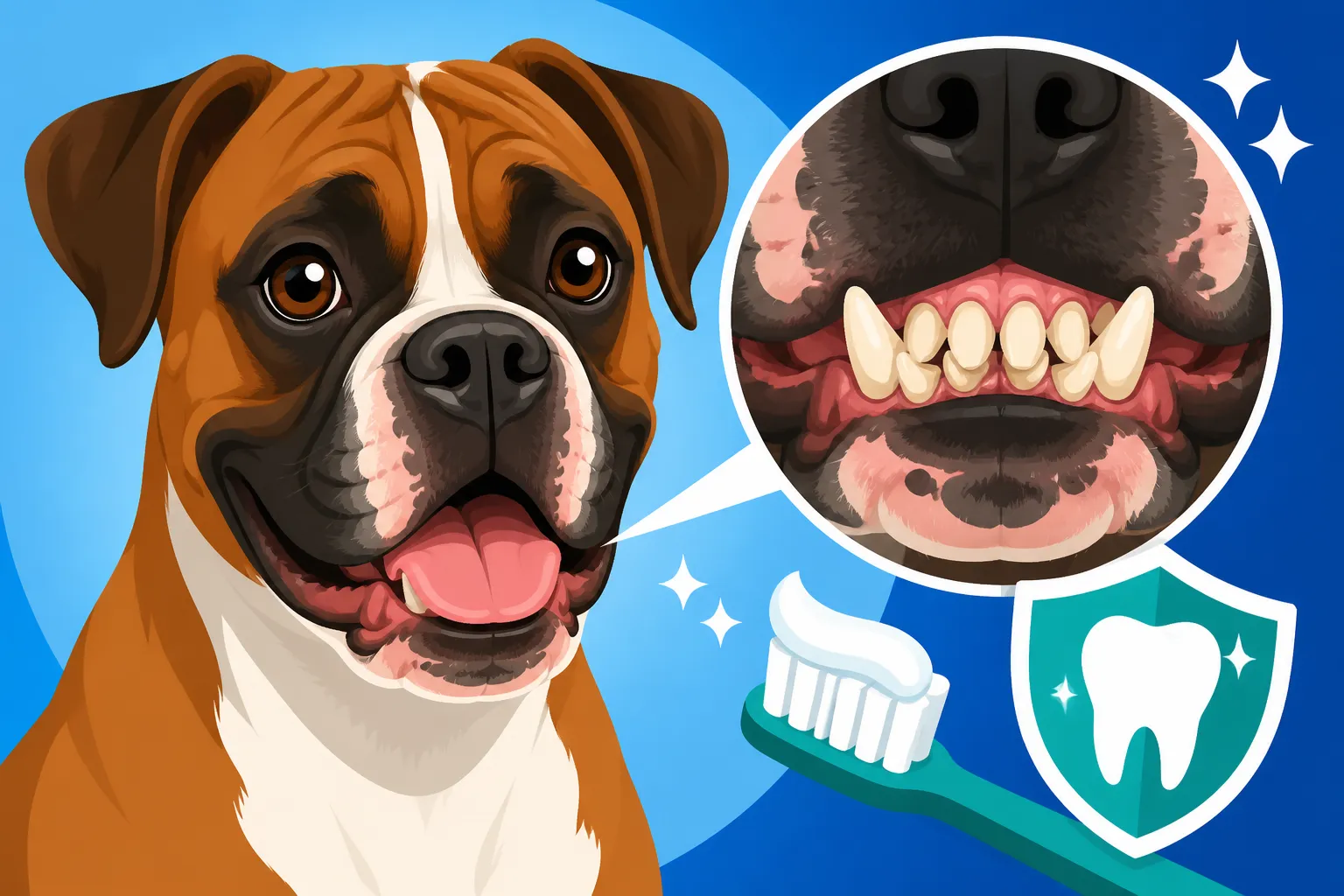
An undershot bite, sometimes called a reverse scissor bite, means that your Boxer's lower jaw extends slightly beyond the upper jaw, causing the lower incisors to protrude in front of the upper ones. It's a breed standard, a hallmark of the Boxer, and it gives them that strong, determined look. This isn't a flaw; it's simply how their bite is structured, designed to give them a firm grip as their ancestors hunted. However, this unique alignment often means the teeth within that lower jaw are packed much more tightly than in breeds with a more conventional scissor bite.
Think about it: the same number of teeth trying to fit into a slightly shorter or different-shaped space. It’s like trying to fit too many books onto a shelf that's just a little too small. Those teeth jostle for position, often rotating slightly or overlapping, creating little nooks and crannies. While it looks charming, these tight spots are prime real estate for plaque and tartar to set up shop, making them incredibly difficult to clean effectively with just chewing alone. You might notice some of these tightly packed teeth on a puppy, and it's something that often becomes more pronounced as they mature. What an Undershot Boxer Bite Means is something every Boxer owner eventually learns to appreciate and manage.
Consequences of Jaw Structure: How Teeth Are Affected
The crowded nature of the lower jaw, combined with the undershot bite, creates several challenges for your Boxer's oral health. Firstly, those overlapping or rotated teeth don't have the natural "self-cleaning" action that straighter teeth get from chewing kibble or toys. Food particles and plaque get lodged in those tight spaces, and without mechanical action to dislodge them, they quickly turn into tartar. Secondly, the gums around these crowded teeth can be more susceptible to inflammation because they're harder to keep clean and might even experience constant, subtle irritation from the misaligned teeth.
Imagine trying to floss between two teeth that are almost touching – it’s tricky, right? Your Boxer faces a similar challenge, but they can't manage it themselves. This can lead to localized areas of gingivitis, which, if left unaddressed, can escalate into more serious periodontal disease. It's not uncommon to see one or two lower incisors that seem to gather more grime than the rest, precisely because of their awkward positioning. This anatomical reality means that Boxer owners need to be more proactive and intentional about dental care than perhaps owners of other breeds. You can't just rely on good genes or diet alone; direct intervention is usually necessary.
The Silent Threat: Plaque, Tartar, and Periodontal Disease
It's easy to overlook what's going on inside your Boxer's mouth until a noticeable problem arises. But dental disease is often a silent progression, building up over time until it reaches a point where it causes pain and potentially systemic health issues. For Boxers, with their unique jaw structure, this progression can sometimes be faster or more pronounced in certain areas.
Plaque and Tartar Buildup: How It Forms, Where It's Worst
Every time your Boxer eats, microscopic food particles and bacteria combine to form a sticky film called plaque on their teeth. This plaque is relentless, forming within hours of a meal. If not removed, minerals in your Boxer's saliva cause the plaque to harden into tartar, also known as calculus. Tartar is rough and porous, acting like a magnet for more plaque, creating a vicious cycle. The problem is, tartar can't be brushed away; it requires professional scaling by a vet.
For Boxers, the lower front teeth are often the first and worst affected. Those crowded incisors and canines in the lower jaw, which might even show slightly when your Boxer is panting, are particularly prone to rapid plaque and tartar accumulation. The natural chewing action of kibble or toys might help scrape some plaque off the flatter surfaces of molars, but it often misses the tight, often overlapping, areas of the lower incisors. Plus, the constant moisture and warmth in their mouth, combined with these tight spaces, create an ideal breeding ground for bacteria. You might even notice a yellowish-brown crust forming on these teeth, especially on the inner surfaces where the tongue can't reach effectively. This visual cue is a strong indicator that plaque has progressed to tartar. Tartar on a Boxer's Undershot Jaw is a common sight for many Boxer owners.
Periodontal Disease: The Serious Implications
When plaque and tartar aren't removed, the bacteria they harbor start to wreak havoc on the gums and the structures supporting the teeth. Initially, this leads to gingivitis – inflammation of the gums, which often looks like red, swollen gum lines that might even bleed if you touch them. You might notice bad breath, a common early sign. If gingivitis isn't treated, it progresses to periodontal disease. This is where things get serious. The bacteria begin to destroy the connective tissues and bone that hold the teeth in place. Pockets form between the gums and teeth, collecting even more bacteria and debris, leading to infections and abscesses.
The implications of periodontal disease go far beyond just bad breath or lost teeth. The chronic inflammation and bacterial load in the mouth can affect other parts of the body. Bacteria from severe dental infections can enter the bloodstream and travel to major organs like the heart, kidneys, and liver, potentially causing serious systemic health problems. A Boxer with advanced periodontal disease might experience significant pain, making eating difficult, and leading to weight loss or changes in behavior. Imagine having a constant toothache; that's what many dogs silently endure. It's a preventable disease, but it requires diligent attention. If left untreated, it can lead to teeth loosening and eventually falling out, or requiring costly extractions, as discussed in Pulling Teeth From a Boxer's Undershot Jaw.
Daily Dental Care: Your Boxer's Best Defense
Given the Boxer's predisposition to dental issues, daily home care isn't just a good idea; it's practically essential. While it might seem daunting at first, establishing a routine can make a huge difference in preventing plaque and tartar buildup, especially in that crowded lower jaw.
Brushing Techniques: Specifics for the Lower Jaw
Brushing your Boxer's teeth is the gold standard for home dental care. The key is consistency and technique, especially when tackling those tricky lower front teeth. Start slow and make it a positive experience with plenty of praise and treats. Use a pet-specific toothpaste (never human toothpaste, which contains xylitol that is toxic to dogs). A finger brush can be a good starting point for puppies or hesitant adults, but a small, soft-bristled toothbrush designed for dogs is usually more effective for reaching all surfaces.
To specifically target the crowded lower jaw, gently lift your Boxer's upper lip with one hand to expose the outer surfaces of the lower teeth. Use the brush at a 45-degree angle to the gum line, focusing on small, circular motions. Pay extra attention to those tightly packed incisors and the canine teeth. Many owners find it helpful to slightly angle the brush head to clean the inner surfaces of the lower front teeth, too, as these are often overlooked and accumulate a lot of tartar. Don't scrub hard; gentle but thorough is the goal. The entire process only needs to take a minute or two, but doing it daily or every other day can dramatically reduce plaque accumulation. Consistency is more important than duration. Remember, even if you can only get a few seconds in on the lower front teeth, it's better than nothing! You can find a wide range of brushes and toothpastes on sites like Chewy or Amazon.
Tools and Products: What Works Best
Beyond the basic toothbrush and pet-specific toothpaste, there's a whole array of tools and products designed to support your Boxer's dental health. Knowing which ones are genuinely effective can save you time and money.
One crucial consideration is the VOHC (Veterinary Oral Health Council) seal of approval. This seal indicates that a product has met specific standards for reducing plaque and/or tartar. Look for it on dental chews, water additives, and specialized diets.
- Dental Chews: These can be a great adjunct to brushing. They are designed with textures and ingredients that help scrape plaque off teeth as your Boxer chews. Choose chews appropriate for your Boxer's size and chewing style to prevent choking hazards or excessive wear on their teeth. We'll dive deeper into these later, but remember, they are supplements to brushing, not replacements. Dental Chews That Suit a Boxer can be very effective if chosen correctly.
- Water Additives: Some products can be added to your Boxer's drinking water to help reduce bacteria or mineralize plaque. These generally contain ingredients that inhibit bacterial growth or prevent tartar formation. They are usually flavorless and easy to administer, but effectiveness varies, and they should never be the sole method of dental care.
- Oral Gels/Sprays: These often contain enzymes or antibacterial agents that can be applied directly to the teeth and gums. They can be particularly useful for Boxers who resist brushing, though they won't provide the mechanical cleaning action of a brush. They can help soften plaque and reduce bacterial load.
- Wipes: Dental wipes are another option for Boxers who aren't keen on a toothbrush. While they won't clean as thoroughly as a brush, they can help physically remove plaque from the outer surfaces of teeth and can be a good stepping stone towards brushing.
Always introduce new products slowly and monitor your Boxer for any adverse reactions. The best tool is the one you can use consistently and effectively with your individual Boxer.
Making It a Habit: Overcoming Resistance
Let's be real: trying to brush a wiggling, strong Boxer's teeth isn't always a walk in the park. Many owners find their Boxers resistant to having their mouths handled, especially if they weren't introduced to it as puppies. But with patience, positive reinforcement, and a bit of creativity, you can turn dental care into a routine that your Boxer tolerates, if not enjoys.
Start small. Don't expect to accomplish a full brush on day one. Begin by simply touching your Boxer's muzzle, then lifting their lip, gradually introducing the toothpaste on your finger. Reward heavily after each step. Keep sessions short and positive, ending on a good note even if you've only managed a quick swipe. Incorporate it into an existing routine, like after their evening meal or before a favorite walk. Some Boxers respond well to novelty, while others prefer strict predictability. Find what works for your dog. For instance, if your Boxer is highly food-motivated, a smear of peanut butter (xylitol-free!) on the brush handle might distract them long enough for you to get to work. If they hate the brush, try a dental wipe or an enzymatic gel applied with your finger for a while, slowly reintroducing the brush later. The key is persistence and understanding your Boxer's boundaries while gently pushing them. A consistent routine is far more effective than sporadic, stressful attempts.
Professional Dental Care: When Your Vet Steps In
While home care is incredibly important, it's usually not enough on its own, especially for a breed like the Boxer. Professional dental cleanings performed by your veterinarian are a critical part of a comprehensive oral health plan. These procedures go beyond what you can achieve at home.
Regular Vet Checks: Importance of Oral Exams
Every annual wellness exam for your Boxer should include a thorough oral examination by your veterinarian. This isn't just a quick glance; your vet will check for signs of gingivitis, plaque, tartar, fractured teeth, and any abnormalities in the gums, tongue, or roof of the mouth. They'll also be looking for any signs of pain or discomfort. Because so much of dental disease happens below the gum line, a conscious oral exam is a good starting point, but it won't tell the whole story. It helps your vet identify areas of concern and recommend when a professional cleaning might be necessary.
During these checks, your vet can also answer questions about your home care routine, recommend specific products that might benefit your Boxer, and discuss any changes they've noticed. For example, if they see significant tartar buildup on those crowded lower incisors despite your best brushing efforts, they might explain that a professional cleaning is warranted before the problem escalates to periodontal disease. These regular check-ups are also a chance to discuss Anesthesia Risk in a Flat-Faced Boxer, which is a valid concern for any professional procedure, including dental cleanings. Being proactive and having these conversations regularly means you're addressing issues before they become emergencies.
Professional Cleanings: What They Involve
A professional dental cleaning for a Boxer is a significant procedure that requires general anesthesia. This is because a thorough cleaning involves much more than just scraping off visible tartar. Once under anesthesia, your vet or a trained veterinary technician will perform a comprehensive oral exam, which includes probing the gum line for pockets and evaluating each tooth individually. Dental X-rays are crucial, as approximately two-thirds of the tooth structure lies beneath the gum line, and many problems like bone loss, root abscesses, or unerupted teeth are only visible on X-rays.
Following the assessment, all visible plaque and tartar are removed using specialized ultrasonic and hand scalers, similar to what a human dentist uses. The teeth are then polished to smooth the enamel, making it harder for plaque to adhere. If any diseased or fractured teeth are found, extractions may be performed at this time. The entire process ensures that your Boxer's mouth is not just superficially clean, but truly healthy from the roots up. This is a critical step, especially for those hard-to-reach, crowded lower teeth, where tartar can hide and cause silent damage. While the cost is a consideration, as outlined in Dental Cleaning Prices for a Boxer, the investment in their oral health can prevent more expensive and painful problems down the line.
Addressing Specific Issues: Extractions, Gum Disease
Sometimes, even with diligent home care and regular professional cleanings, specific dental issues might arise in your Boxer, particularly if periodontal disease has progressed. When teeth are severely affected, loose, or causing pain, extraction might be the most humane and necessary course of action. This is often the case with teeth that have deep periodontal pockets, extensive bone loss, or are fractured below the gum line. Your vet will perform these extractions carefully, ensuring proper pain management and post-operative care.
For more generalized gum disease, your vet might prescribe oral antibiotics or anti-inflammatory medications. In some cases, advanced procedures such as root canal therapy or vital pulpotomies might be considered for specific teeth if their structure allows it and the disease isn't too severe. The goal is always to eliminate pain, stop the progression of disease, and restore your Boxer's oral health and comfort. It's tough to see your Boxer lose a tooth, but relieving them of chronic pain and infection is always the priority. After such procedures, your vet will provide detailed instructions for home care, which might include temporary dietary changes, such as feeding softer foods, which can be found from brands like Ollie or other fresh food providers.
Dietary Choices and Chews: Supporting Oral Hygiene
Beyond brushing and vet visits, what your Boxer eats and chews on can also play a supporting role in maintaining a clean and healthy mouth, particularly for that crowded lower jaw. It's not a substitute for active cleaning, but it can certainly help.
Dental Diets: Foods Designed for Oral Health
Some dog food manufacturers offer "dental diets" specifically formulated to help reduce plaque and tartar buildup. These diets typically feature larger kibble pieces with a unique texture that encourages more chewing and creates a scrubbing action against the tooth surface as your Boxer crunches down. The fibers within these kibbles can also help to mechanically clean the teeth. Additionally, some dental diets contain ingredients that help prevent minerals from binding to plaque, thereby inhibiting tartar formation.
It's important to remember that not all kibble is created equal when it comes to dental benefits. A standard kibble might offer some abrasive action, but a specifically designed dental diet takes this a step further. While these diets can be beneficial, they are generally most effective on the larger chewing surfaces of the molars and pre-molars. They may offer less impact on the tightly packed, often overlapping, lower incisors where plaque and tartar tend to accumulate quickly in Boxers. Therefore, while a dental diet can be a valuable part of your overall strategy, it should complement, not replace, regular brushing and professional cleanings.
Safe Chews: What Helps Clean Without Harm
Choosing the right chews for your Boxer is crucial. The market is flooded with dental chews and toys, but not all are safe or effective. The best chews for dental health typically have some flexibility; if you can't indent it with your thumbnail, it's likely too hard and could risk fracturing your Boxer's teeth, especially those already crowded and potentially weakened lower incisors. Avoid natural bones, antlers, hooves, and nylon chews that are rock-hard.
Look for VOHC-approved dental chews that are specifically designed to reduce plaque and tartar. These often have a pliable, abrasive texture that works as your Boxer chews. Different shapes and textures can target different areas of the mouth. For instance, some chews might have ridges or nubs that can reach into those tighter spaces on the lower jaw. Supervision is always essential with any chew to prevent choking hazards, especially with Boxers who can be enthusiastic chewers. Providing a variety of safe, appropriate chews can provide mental stimulation while offering some dental benefits. Just remember, chews are a supplement to, not a replacement for, direct cleaning. You can often find VOHC-approved chews readily available at pet stores or online retailers like Chewy. Always consider Chews Safe for a Boxer's Jaw before introducing anything new.
Table: Comparison of Boxer Dental Care Methods
Here's a quick look at the main methods for keeping your Boxer's crowded lower jaw clean:
| Method | Frequency | Benefits | Challenges | Best For |
|---|---|---|---|---|
| Daily Brushing | Daily or Every Other Day | Most effective at removing plaque; targets all tooth surfaces directly | Requires patience, training, and cooperation from your Boxer; time commitment | Preventing plaque buildup, especially on crowded lower incisors |
| VOHC Dental Chews | Daily | Reduces plaque/tartar via mechanical action; provides enrichment | Less effective than brushing; must be size-appropriate; not a full cleaning | Supplemental cleaning; maintaining oral health between brushings |
| Water Additives/Gels | Daily | Reduces bacteria/plaque minerals; easy to administer | Minimal mechanical cleaning; variable effectiveness; not a standalone solution | Boxers resistant to brushing; enhancing overall oral hygiene |
| Professional Cleaning | Annually/Bi-annually | Removes all tartar; addresses sub-gingival disease; includes X-rays | Requires general anesthesia; cost consideration; not a frequent procedure | Deep cleaning; addressing existing tartar/periodontal disease; critical care |
Recognizing Dental Problems Early
Being proactive about your Boxer's dental health means knowing what to look for. While some signs are obvious, others can be subtle indicators of pain or infection. Early detection can make a world of difference in treatment outcomes and your Boxer's comfort.
Signs to Watch For: Bad Breath, Pain, Reluctance to Eat
Your Boxer can't tell you in words when their mouth hurts, so it's up to us to be observant. Here are some key signs that might indicate a dental problem, especially affecting that vulnerable lower jaw:
- Bad Breath (Halitosis): This is one of the most common and often earliest signs of dental disease. While no dog's breath is minty fresh, a truly foul, strong odor indicates a significant bacterial presence. If your Boxer's breath clears a room, it's time for a vet check.
- Red, Swollen, or Bleeding Gums: Healthy gums are pink and firm. Inflamed gums (gingivitis) will appear red, swollen, and might bleed easily when touched or when your Boxer chews. Pay close attention to the gum line around those crowded lower teeth.
- Visible Tartar Buildup: Look for yellowish or brownish crusts on the teeth, particularly on the lower incisors and canines. This indicates hardened plaque that brushing alone cannot remove.
- Changes in Eating Habits: A Boxer experiencing dental pain might chew on one side of their mouth, drop food, refuse hard kibble, or show a decreased appetite. They might approach their food bowl eagerly but then hesitate or cry out when they try to eat. Softer Meals for an Aging Boxer can become a necessity if dental pain isn't addressed.
- Pawing at the Mouth or Face Rubbing: If your Boxer is repeatedly pawing at their mouth, rubbing their face on the carpet or furniture, or frequently licking their lips, they might be experiencing oral discomfort.
- Drooling or Dropping Food: Excessive drooling, sometimes mixed with blood, or frequently dropping food while eating, can also be signs of pain or difficulty chewing.
- Lumps or Swellings: Check their face and jawline for any swelling, which could indicate an abscess or infection.
- Behavioral Changes: Pain can make a normally playful Boxer more withdrawn, irritable, or less tolerant of being touched around the head.
Don't dismiss these signs. Your Boxer is likely trying to tell you something important.
When to See the Vet: Emergency vs. Routine
Understanding when to seek veterinary attention for dental concerns can help you provide timely care.
- Routine Checks: As mentioned, annual vet visits should always include an oral exam. This is your routine checkpoint to monitor overall oral health and discuss preventive strategies.
- Persistent Bad Breath: If your Boxer develops noticeably foul breath that persists despite home brushing, it's a strong indicator that plaque has progressed to tartar and likely gingivitis, necessitating a vet visit for assessment and possibly a professional cleaning.
- Visible Tartar or Red Gums: If you notice significant tartar buildup or consistently red, swollen gums, especially around the crowded lower teeth, schedule a non-emergency vet appointment. These are clear signs that home care isn't enough to manage the problem.
- Signs of Pain or Infection (Emergency): Any sudden or severe signs like refusal to eat, excessive drooling, facial swelling, bleeding from the mouth, or extreme sensitivity around the mouth warrant a prompt veterinary visit. These could indicate an abscess, a fractured tooth, or advanced periodontal disease requiring immediate intervention. Ignoring these symptoms can lead to worsening pain, spreading infection, and more complex treatments.
Remember, dental disease is progressive. The sooner it's caught and addressed, the better the outcome for your beloved Boxer. Your vet is your best partner in navigating these challenges and ensuring your Boxer's iconic smile stays healthy and pain-free for years to come.
Disclaimer
This article is for general informational purposes only and does not constitute professional advice. Laws, prices and regulations vary by location and change over time. Consult a qualified professional for guidance on your specific situation.