Dental Chews That Suit a Boxer
If you're a Boxer owner, you already know the joys and challenges of living with these affectionate, energetic clowns. One area that often gets overlooked until there's a problem is their dental health. With their distinctive undershot jaw and penchant for putting everything in their mouths, choosing the right dental chews can feel like a minefield. This guide will help you navigate the options, understand what truly benefits your Boxer's oral hygiene, and ensure you're making safe, effective choices for their pearly whites.
Why Your Boxer's Dental Health is a Unique Challenge
Boxers have such expressive faces, and their undershot jaw, while part of their charm, actually presents some specific dental challenges. It’s not just about looking cute; it means their teeth don't always meet in the way other breeds' do, leading to unique areas where plaque and tartar love to build up. You might think a chew is just a chew, but for a Boxer, the wrong one can be ineffective or even harmful.
The Undershot Jaw and Its Dental Implications
That signature Boxer "smush face" and underbite, formally known as prognathism, isn't just a physical trait; it significantly impacts their oral cavity. Because their lower jaw extends beyond the upper, their teeth often don't align perfectly. This creates irregular contact points and even gaps where food particles can easily get trapped. These trapped bits of kibble, combined with saliva, form plaque, which then hardens into tartar. Over time, this can lead to gingivitis, periodontal disease, and even tooth loss if not properly managed. It's a frustrating reality when you're just trying to love on your dog, knowing their unique anatomy works against them in this way. We often talk about Boxer Dental Care and the Undershot Bite as a core concern for the breed.
The Problem of Plaque and Tartar Buildup
Plaque is a sticky film of bacteria that constantly forms on your Boxer's teeth. If you've ever run your finger along your dog's teeth and felt that slightly fuzzy coating, that's plaque. If it’s not removed regularly through brushing or appropriate chewing, minerals in your dog's saliva cause it to harden into tartar (also called calculus). Tartar is rough, off-white to brownish, and clings tenaciously to the teeth. Once tartar forms, it provides an even rougher surface for more plaque to adhere to, creating a vicious cycle. Unlike plaque, tartar cannot be brushed away; it usually requires a professional dental cleaning under anesthesia to remove. This is why preventative measures, including effective dental chews, are so crucial. Without them, you're looking at increased risks of infection, pain, and much higher vet bills down the line. We dive deeper into these issues in Tartar on a Boxer's Undershot Jaw.
Beyond Bad Breath: The Systemic Risks of Poor Oral Health
While "dog breath" is often the first sign most owners notice, poor oral hygiene in your Boxer goes far beyond just stinky kisses. The bacteria from severe periodontal disease can enter your dog's bloodstream, traveling to major organs like the heart, kidneys, and liver. This can lead to serious, life-threatening systemic infections and damage. Imagine your vibrant, playful Boxer suddenly slowing down, not wanting to eat, or acting lethargic – all potentially stemming from an infection that started in their mouth. It’s a silent threat that emphasizes why we need to be proactive with their dental care, integrating dental chews as part of a comprehensive routine.
What to Look for in a Boxer-Friendly Dental Chew
Choosing a dental chew for your Boxer isn't like picking up a random treat from the store shelf. Their powerful jaws, enthusiastic chewing style, and sensitive digestive systems mean you need to be selective. It's about finding a chew that works with their unique mouth structure, rather than against it.
Size, Shape, and Texture for Effective Cleaning
When it comes to dental chews for Boxers, size absolutely matters. A chew that's too small can be a choking hazard or swallowed too quickly, offering no dental benefit. You need something substantial enough that your Boxer has to work at it, engaging all their teeth. Look for chews that are sized for large breeds, designed to withstand a Boxer's strong bite.
The shape is also important. Chews with ridges, nubs, or an unusual design can help mechanically scrape plaque from tooth surfaces and massage gums. A flat, smooth chew won't be as effective. The texture needs to be firm enough to provide abrasive action against the teeth, but not so hard that it risks breaking teeth. Boxers are prone to Pulling Teeth From a Boxer's Undershot Jaw if they chew on things that are too hard, like antlers or bones. Avoid anything that feels like it could snap a molar. It should have some give, allowing it to conform slightly to the contours of their teeth as they chew. This combination of size, shape, and texture helps get into those nooks and crannies created by their undershot bite, contributing to Keeping a Boxer's Crowded Lower Jaw Clean.
Key Ingredients for Oral Health Benefits
Beyond the mechanical action, the ingredients in a dental chew can also contribute to oral health. Many reputable brands include active ingredients that work to inhibit plaque formation, freshen breath, or support gum health.
Look for:
- Enzymes: Ingredients like glucose oxidase and lactoperoxidase can help reduce bacteria in the mouth.
- Hexametaphosphate (HMP) or Sodium Tripolyphosphate (STPP): These compounds can help bind with calcium in saliva, preventing it from hardening plaque into tartar.
- Chlorophyll or Peppermint: These are often added for breath-freshening qualities, though they don't tackle the root cause of bad breath like plaque and tartar do.
- Natural Abrasives: Some chews use ingredients like alfalfa, parsley, or even specific fibers to aid in the mechanical scrubbing action.
Always check the ingredient list for anything your Boxer might be sensitive to. Some Boxers have delicate stomachs, and novelty proteins or certain grains in chews can cause an upset. We talk about this in Prescription Diets for a Boxer With Colitis. For example, if your Boxer is on a special diet due to sensitivities, you'll want to ensure the chew aligns with those dietary needs. Many owners find a wide variety of options that list their ingredients clearly on platforms like Chewy or Amazon, allowing them to make informed choices.
Safety Considerations: Digestibility and Choking Hazards
Safety is paramount when choosing dental chews. Boxers are powerful chewers, and anything they put in their mouths needs to be safe for ingestion and won't splinter or break off into sharp pieces.
- Digestibility: Ensure the chew is digestible. Rawhide, for instance, can be problematic for some Boxers as it doesn't always break down easily and can cause blockages. Look for chews made from highly digestible starches or proteins.
- Hardness: As mentioned, avoid chews that are rock-hard. If you can't indent it with your thumbnail, it's likely too hard for your Boxer's teeth. This includes things like natural bones (cooked or uncooked), antlers, and some nylon chews, which can easily lead to slab fractures or chipped teeth. These are incredibly painful and expensive to fix.
- Choking Risk: Boxers can be enthusiastic swallowers. A chew should be large enough that it cannot be easily gulped down whole, but also designed to gradually break down into smaller, safe-to-swallow pieces. Always supervise your Boxer when they are enjoying a dental chew, especially with new types. This allows you to intervene if a piece breaks off that is too large, or if they start to struggle. The goal is a chew that encourages sustained, safe chewing. We've seen Boxers get into all sorts of mischief, so vigilance is key.
Types of Dental Chews: Pros and Cons for Boxers
With so many dental chews on the market, it’s easy to feel overwhelmed. Understanding the different categories and how they apply to a Boxer's specific needs can help you narrow down your choices. Each type has its own set of advantages and potential drawbacks.
Enzymatic Dental Chews
These chews are formulated with enzymes that work biochemically to reduce plaque and tartar buildup. They're often made from starch, protein, or plant-based ingredients, designed to be palatable and digestible.
Pros for Boxers:
- Targeted Action: The enzymes actively work to break down bacterial film and prevent mineral deposits.
- Digestibility: Many enzymatic chews are highly digestible, minimizing the risk of stomach upset or blockages, which is great for Boxers with sensitive guts.
- Variety of Shapes/Sizes: You can usually find these in shapes and sizes specifically designed for large breeds, ensuring they last long enough to be effective.
Cons for Boxers:
- Cost: They can be a bit more expensive than basic chews.
- Palatability: While most Boxers love them, some pickier eaters might turn up their nose at certain flavors or textures.
- Not a Standalone Solution: While effective, they work best as part of a comprehensive dental routine, not as a replacement for brushing or professional cleanings.
Brands like Greenies or certain vet-recommended chews fall into this category. You might find a good selection on Chewy, often with detailed ingredient lists and customer reviews that can help you decide.
Mechanical Abrasive Chews
These chews primarily rely on their physical structure and texture to scrape plaque and massage gums. Think of them as a gentle scrubbing brush for your Boxer's teeth. They are typically made from harder, denser materials than enzymatic chews, but still designed to be safe.
Pros for Boxers:
- Physical Cleaning: The rougher texture provides excellent abrasive action, which is particularly helpful for Getting a Toothbrush Behind a Boxer's Jowls – something many owners struggle with.
- Gum Stimulation: They can help improve blood circulation in the gums, contributing to overall gum health.
- Satisfying Chew: Boxers love to chew, and these provide a good, extended chewing experience, helping to satisfy their natural instincts. This can also be good for Chews That Redirect a Mouthy Boxer.
Cons for Boxers:
- Hardness Risk: Some can be too hard, posing a risk of tooth fracture. Always check the flexibility before offering.
- Digestibility Varies: Depending on the material, some might be less digestible than enzymatic options.
- Limited Active Ingredients: They generally don't contain plaque-inhibiting enzymes, relying solely on mechanical action.
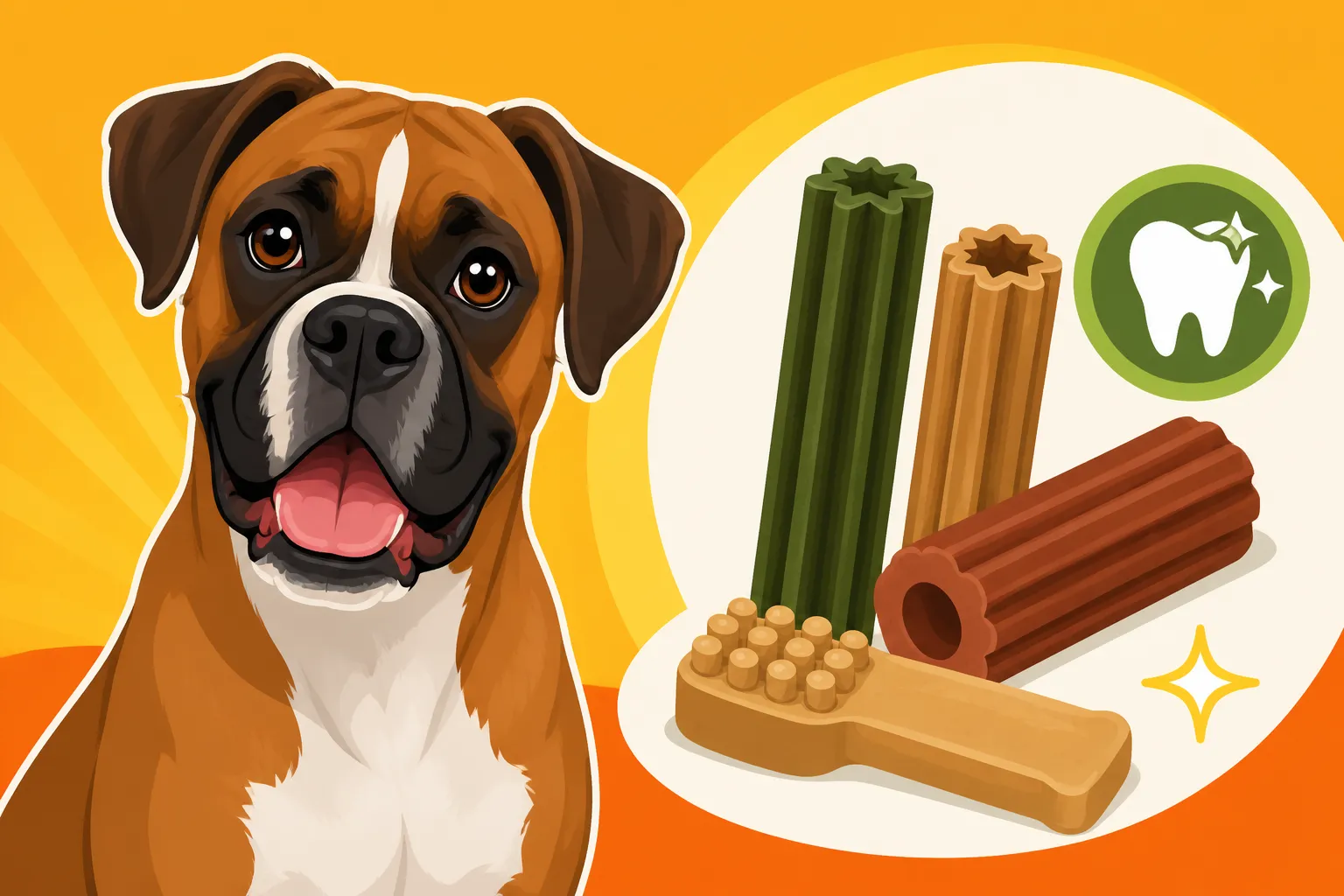
Examples include certain hard rubber toys with nubs or specific dental sticks made from tougher vegetable starches. Again, ensuring the chew is appropriate for a powerful chewer like a Boxer is essential.
Chews with Breath-Freshening Ingredients
While not strictly "dental" in their primary plaque-fighting action, many chews include ingredients specifically to combat bad breath. These often overlap with enzymatic or mechanical chews.
Pros for Boxers:
- Improved Breath: The most obvious benefit is a more pleasant aroma from your Boxer’s mouth! This is often a significant frustration for owners.
- Palatability: Ingredients like mint or parsley can make the chews more appealing.
Cons for Boxers:
- Masking, Not Curing: They often mask bad breath rather than addressing the underlying cause of plaque and tartar. If your Boxer has really foul breath, it usually signals a deeper dental issue that needs vet attention, not just a breath mint.
- Potential Allergens: Some added flavors or ingredients might trigger sensitivities in particular Boxers.
These are best used as a secondary benefit to a chew that also offers enzymatic or mechanical plaque reduction. It's nice to have fresh breath, but true oral health is the priority.
A Comparative Look at Chew Types for Boxers
Here's a quick overview to help you compare:
| Chew Type | Primary Benefit | Key Considerations for Boxers | Best For |
|---|---|---|---|
| Enzymatic Chews | Biochemical plaque reduction | Highly digestible, effective, but can be pricier. | Daily preventative care, sensitive stomachs |
| Mechanical Chews | Physical plaque scraping | Hardness must be safe, good for strong chewers, durable. | Satisfying chew instinct, physical cleaning |
| Breath-Freshening | Fresher breath | Often a secondary benefit, doesn't address underlying issues. | Complementing other dental care, bad breath |
Remember, no single chew is a magic bullet. The best approach often involves a combination of strategies, tailored to your Boxer's specific needs and preferences.
How to Incorporate Dental Chews Safely and Effectively
Bringing dental chews into your Boxer’s routine isn't just about handing them one and walking away. To maximize their benefits and ensure your dog's safety, a thoughtful approach is key. This includes proper supervision, understanding frequency, and knowing when to consult your vet.
Supervision and Frequency: Finding the Right Balance
Even the safest dental chew still requires supervision. Boxers are known for their enthusiastic chewing and their ability to devour things surprisingly quickly. A chew intended to last 10-15 minutes might be gone in 5 if you’re not watching.
Supervision:
- Always be present: When introducing a new type of chew, or any chew for that matter, make sure you're in the same room. This allows you to monitor for choking hazards, ensure they aren't trying to swallow large pieces, and confirm they're chewing appropriately.
- Check for damage: Inspect the chew periodically as your Boxer uses it. If it starts to break into sharp pieces, or if your Boxer is trying to swallow a piece that's too big, it's time to take it away.
- Assess durability: Pay attention to how quickly your Boxer goes through a chew. If a chew disappears in less than five minutes, it's probably not providing adequate dental benefits and might even pose a choking risk. You might need a more durable option for your strong chewer.
Frequency:
- Daily use: For many Boxer owners, a daily dental chew is ideal. Consistency is what truly makes a difference in preventing plaque and tartar buildup. Think of it like brushing your own teeth – a daily effort yields the best results.
- Manufacturer guidelines: Always follow the manufacturer's recommendations for frequency and portion size, as dental chews contribute to your Boxer's daily caloric intake. This is especially important for Feeding a Boxer to Stay Lean and Muscled.
- Part of a routine: Integrate the chew into a routine, perhaps after their evening meal, or as a special treat during a quiet time.
Combining Chews with Other Dental Care Practices
While dental chews are a fantastic tool, they are only one part of a comprehensive oral hygiene plan for your Boxer. They complement, rather than replace, other crucial practices.
- Regular Brushing: Nothing beats a good old-fashioned toothbrush and dog-specific toothpaste for cleaning teeth. Aim for daily brushing if possible, or at least several times a week. It’s the most effective way to remove plaque before it hardens. It can be a challenge with a Boxer's undershot jaw and jowls, but even a quick brush can help. We have a whole article dedicated to Getting a Toothbrush Behind a Boxer's Jowls.
- Professional Dental Cleanings: Even with the best home care, most Boxers will need periodic professional dental cleanings under anesthesia. Your vet can assess the severity of any existing plaque and tartar, and scale and polish the teeth, reaching areas that home care simply cannot. These cleanings are vital for addressing issues like Tartar on a Boxer's Undershot Jaw that have already formed. Your vet will advise you on how often this is needed, which is often an annual expense you'll factor into The Yearly Bill for a Seventy-Pound Boxer.
- Veterinary Check-ups: During your Boxer's annual wellness exams, your vet will perform an oral examination. They can spot early signs of dental disease or other issues, like Boxer Skin Tumors That Are Not Cancer or growths in the mouth, that you might miss. Never skip these check-ups.
By combining dental chews with brushing and regular vet visits, you're giving your Boxer the best possible chance at a healthy, pain-free mouth for years to come. It’s an investment in their overall health and happiness, and it helps you avoid the difficult decision of Deciding Against Treatment for a Boxer if dental issues become too severe.
When to Consult Your Veterinarian About Dental Chews
Sometimes, despite your best efforts, your Boxer's dental health might not be improving, or you might notice new concerns. Knowing when to reach out to your vet is critical.
- Persistent Bad Breath: If your Boxer's breath remains foul even with consistent use of dental chews and brushing, it's a strong indicator of underlying dental disease that needs professional attention. It could be severe tartar, gum infection, or even a decaying tooth.
- Difficulty Chewing or Eating: If your Boxer suddenly becomes reluctant to eat, drops food, chews on one side of their mouth, or seems to be in pain when chewing, this warrants an immediate vet visit. They might have a broken tooth, an abscess, or advanced periodontal disease.
- Bleeding Gums or Swelling: Any bleeding from the gums, redness, inflammation, or swelling around the mouth or jaw is a red flag. These are signs of infection or injury that cannot be fixed by dental chews alone.
- Changes in Chew Behavior: If your Boxer, previously an enthusiastic chewer, suddenly loses interest in dental chews or seems to chew more cautiously, it could be a sign of oral pain.
- Concerns about a Chew: If you're ever unsure if a particular dental chew is safe or appropriate for your Boxer, or if they've ingested something concerning, don't hesitate to call your vet. They can offer guidance on Chews Safe for a Boxer's Jaw and whether a particular product is suitable.
Your veterinarian is your best partner in your Boxer's dental health journey. They can provide personalized recommendations for dental chews, demonstrate proper brushing techniques, and perform the necessary professional cleanings to keep your Boxer smiling bright.
Disclaimer
This article is for general informational purposes only and does not constitute professional advice. Laws, prices and regulations vary by location and change over time. Consult a qualified professional for guidance on your specific situation.