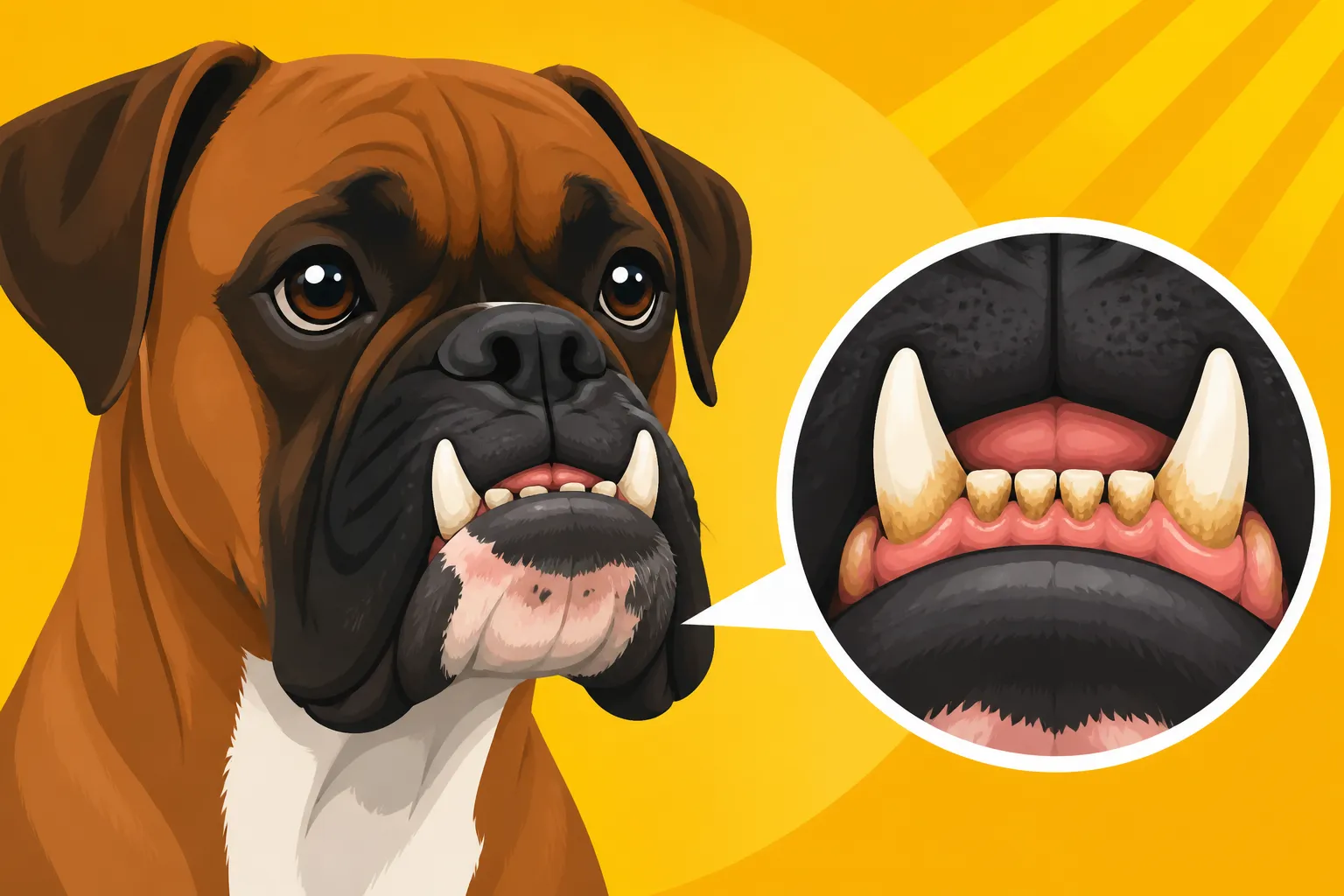
Tartar on a Boxer’s Undershot Jaw
If you're a Boxer owner, you've probably noticed that beautiful, squishy face often comes with a bit of a challenge when it comes to oral hygiene. Peeking into your beloved Boxer's mouth, especially at those prominent lower teeth, and seeing that tell-tale yellow-brown buildup can be a real worry. This guide is all about understanding why tartar builds up so readily on a Boxer's unique undershot jaw and, more importantly, what practical steps you can take to keep their teeth cleaner and their breath fresher.
Understanding the Boxer's Unique Jaw and Tartar Buildup
Our Boxers are known for their distinctive brachycephalic (flat-faced) features, and a hallmark of the breed is their undershot jaw, where the lower jaw extends beyond the upper jaw. While this gives them their charming, determined expression, it also creates a perfect storm for dental problems, particularly tartar accumulation. It’s not just an aesthetic issue; chronic tartar can lead to serious health concerns.
The Anatomy of an Undershot Jaw
Imagine trying to keep a perfectly straight line of dominoes clean, versus trying to clean a zig-zagged, uneven line. That's a bit like the difference between a dog with a scissor bite and our Boxers. With their undershot jaw, the alignment of the teeth isn't always ideal. The lower incisors often protrude, and sometimes the upper and lower teeth don't meet in a way that allows for natural self-cleaning during chewing. This misalignment can mean certain teeth, especially those lower front teeth and some molars, don't get the friction they need from chewing kibble or toys. Instead, food particles and bacteria can easily become trapped in crevices, between teeth, and along the gum line, setting the stage for plaque to form. If you've ever felt around your Boxer's mouth, you'll know those lower teeth are often the first to show visible signs of buildup. It's just the nature of their adorable, but sometimes challenging, oral structure. You can read more about Whether a Boxer's Bite Traps Food.
How Plaque Becomes Tartar
It all starts innocently enough with plaque. Plaque is that soft, sticky film of bacteria, saliva, and food particles that constantly forms on teeth. If it's not removed regularly, within a day or two, plaque begins to mineralize and harden. This hardened substance is what we call tartar, or calculus. Once plaque turns into tartar, it's virtually impossible to remove with just brushing at home. It acts like a rough surface, inviting even more plaque to adhere, creating a vicious cycle. The problem with tartar isn't just cosmetic; it's a breeding ground for bacteria that can lead to gingivitis (inflamed gums) and eventually periodontal disease, which is painful and can lead to tooth loss. You might notice your Boxer's breath getting a bit…ripe. That's a classic sign that something is brewing, and it’s likely tartar contributing to the odor.
Preventing Tartar: Daily Care and Diet Considerations
The good news is that while Boxers are prone to tartar, there's a lot we can do at home to slow its progression and keep those pearly whites as clean as possible. It takes consistency and patience, but the payoff for your Boxer's long-term health is immense.
The Power of Daily Brushing
This is the gold standard for preventing tartar buildup, and yes, it's often the most challenging! Many Boxer owners groan at the thought, picturing a wrestling match. But just like with people, mechanical abrasion is the best way to remove plaque before it hardens. You'll need a dog-specific toothbrush (or a finger brush) and dog-safe toothpaste – never use human toothpaste, as it contains ingredients toxic to dogs.
Start slowly. Don't expect perfection on day one. Let your Boxer lick the toothpaste off your finger, then introduce the brush for just a few seconds. Focus on the outside surfaces of the teeth, especially the canines and molars, as these are often where tartar builds up most. Don't forget those prominent lower incisors, which are constantly exposed. Regularity is key here. Aim for daily, but even a few times a week is better than nothing. Make it a positive experience with praise and treats. You can explore techniques for Getting a Toothbrush Behind a Boxer's Jowls. It's a journey, not a sprint!
Dental Chews and Appropriate Toys
While not a substitute for brushing, dental chews can play a valuable role in mechanical cleaning, especially for those hard-to-reach areas or if daily brushing is a struggle. Look for chews that are specifically designed to reduce plaque and tartar, often carrying a Veterinary Oral Health Council (VOHC) seal of approval. These chews typically have unique shapes or textures that help scrape away plaque as your Boxer chews.
However, a word of caution: not all chews are created equal. Some can be too hard and risk breaking teeth, especially if your Boxer is an aggressive chewer. Always supervise your Boxer with any chew toy to prevent choking or accidental ingestion of large pieces. For softer options that are still effective, you might find a great selection on platforms like Chewy or Amazon, offering everything from softer dental sticks to more durable rubber toys designed for dental health. Harder rubber toys can also provide beneficial friction. Just make sure they're not so hard they damage teeth or gums.
Diet and Water Additives
What your Boxer eats can also impact dental health. While kibble is often touted for its "scrubbing" action, many vets agree its effect is minimal unless it's a specially formulated dental diet. These prescription dental diets are designed with specific fiber matrices or ingredients that help clean teeth as the dog chews. If your Boxer has chronic tartar issues, discussing a dental-specific food with your vet might be worthwhile.
Beyond food, certain water additives can help reduce bacteria in the mouth and slow plaque formation. These typically contain ingredients that target bacteria or help dissolve plaque. Just add them to your Boxer's drinking water daily. Always check with your vet before introducing any new supplement or additive to ensure it's appropriate for your individual dog. Some owners find brands like those available on Chewy offer a good range of options, from dental chews to water additives. When considering a fresh food diet like Ollie, remember to still prioritize dental hygiene, as even high-quality food won't replace brushing. A balanced diet, as discussed in Feeding a Boxer to Stay Lean and Muscled, is crucial for overall health, including oral health.
When to See the Vet: Professional Cleaning and Advanced Issues
Despite our best efforts at home, professional veterinary dental cleaning is often inevitable for Boxers due to their genetic predisposition to tartar. It's not a failure on your part; it's simply a necessary step to maintain their health.
Signs Your Boxer Needs a Professional Cleaning
How do you know when it's time for a professional cleaning? Here are some red flags to look for:
- Visible Tartar: If you see significant yellow, brown, or even greenish buildup on the teeth, especially those lower incisors, it's definitely time. As mentioned, this can't be brushed off once it's hardened.
- Bad Breath (Halitosis): While "dog breath" is a cliché, truly foul odor indicates a bacterial overload in the mouth, often due to plaque and tartar.
- Red, Swollen, or Bleeding Gums: These are classic signs of gingivitis, the early stage of periodontal disease. Healthy gums should be a pale pink.
- Difficulty Eating or Chewing: If your Boxer suddenly becomes pickier about food, drops kibble, or avoids hard chews, it could be due to mouth pain.
- Pawing at the Mouth or Rubbing Face: These behaviors can signal discomfort or pain in the oral cavity.
- Loose Teeth: In advanced cases, teeth may become loose due to bone loss around the roots. This is very painful.
- Excessive Drooling: While Boxers are known for their drool, a sudden increase could indicate dental pain or infection.
If you notice any of these signs, it's crucial to schedule a dental check-up with your veterinarian. They can assess the severity and recommend the appropriate course of action.
The Professional Dental Cleaning Process
A professional dental cleaning for a dog is not like a human dental visit. It requires general anesthesia. This is because we can't ask our dogs to "open wide" or "rinse and spit." Anesthesia allows the vet to thoroughly examine the entire mouth, including under the gum line, and perform a deep cleaning without causing stress or pain to your Boxer.
The procedure typically involves:
- Pre-anesthetic Bloodwork: To ensure your Boxer is healthy enough for anesthesia.
- Anesthesia: Administered and carefully monitored throughout the procedure. Boxers, being a brachycephalic breed, can have higher anesthesia risks, so discussing this thoroughly with your vet is important. You can find out more about Anesthesia Risk in a Flat-Faced Boxer.
- Oral Examination and X-rays: The vet will meticulously check each tooth and gum for issues, and dental X-rays are crucial to assess the health of the tooth roots and bone beneath the gum line, where many problems hide.
- Scaling: Using ultrasonic and hand scalers, the vet removes all plaque and tartar from above and below the gum line.
- Polishing: The teeth are polished to smooth the enamel, making it harder for plaque to adhere.
- Fluoride Treatment: Often applied to strengthen enamel and reduce sensitivity.
- Extractions: If severe periodontal disease or damaged teeth are found, extractions may be necessary.
While the cost of dental cleanings can feel daunting, especially if extractions are needed, it's an investment in your Boxer's overall health and comfort. You can learn more about Dental Cleaning Prices for a Boxer and what's involved.
Long-term Management: Maintaining Oral Health for Your Boxer
Once your Boxer's teeth are professionally cleaned, the real work of long-term maintenance begins. This is where your consistent home care routine becomes absolutely vital in preventing rapid re-accumulation of tartar. Think of it as protecting that investment in their dental health.
Establishing a Routine That Sticks
The key to long-term success is integrating dental care into your daily or weekly routine. This might mean brushing after their last meal of the day, offering a dental chew while you watch TV, or adding a water additive during their morning water refill. The goal is to make it as normal and unremarkable as feeding time.
Here’s a sample routine idea:
| Time of Day | Dental Care Activity | Notes |
|---|---|---|
| Morning | Water Additive | Add to your Boxer's fresh drinking water daily. |
| After Dinner | Tooth Brushing | Aim for daily. Even 30-60 seconds of gentle brushing on the outside surfaces makes a difference. |
| Anytime | Dental Chew/Toy | Offer a VOHC-approved dental chew or a durable dental toy as a reward or entertainment. Supervise to ensure safe chewing. |
| Weekly | Full Mouth Check | Lift lips, visually inspect gums for redness, teeth for new buildup. Get familiar with what a healthy mouth looks like. |
Remember to keep it positive! A quick brushing session followed by a favorite treat or a few minutes of play can make your Boxer look forward to it. If you struggle, consider consulting a professional dog trainer or your vet for tips on desensitization and positive reinforcement techniques for oral care.
Regular Vet Check-ups and Monitoring
Even with excellent home care, regular veterinary check-ups are non-negotiable. Your vet can monitor your Boxer's oral health, identify any new issues early, and advise on when another professional cleaning might be due. They can also recommend specific products or strategies tailored to your Boxer's individual needs.
For Boxers, given their breed-specific dental challenges, maintaining excellent oral health can even indirectly impact other areas of their well-being. For example, chronic inflammation from periodontal disease can have systemic effects on other organs. By being proactive, you're not just preventing bad breath or tooth loss; you're contributing to your Boxer's overall quality of life and potentially even their lifespan. It's one of the many responsibilities we happily take on as Boxer parents. So keep those kisses coming, and let's work on keeping those Boxer smiles healthy and bright!
Disclaimer
This article is for general informational purposes only and does not constitute professional advice. Laws, prices and regulations vary by location and change over time. Consult a qualified professional for guidance on your specific situation.