Surgery Margins on a Boxer Mast Cell Tumor
Finding out your beloved Boxer has a mast cell tumor is, without a doubt, one of the most heart-stopping moments a pet parent can face. The worry about what it means for their future, how aggressive it might be, and what treatment involves can be overwhelming. This guide is here to walk you through one of the most crucial aspects of treating these tumors: surgical margins, helping you understand why they matter so much for your Boxer's health and prognosis.
Understanding the Threat of Boxer Mast Cell Tumors
Boxers, bless their goofy, loving hearts, have a higher predisposition to certain types of cancer than many other breeds, and mast cell tumors are unfortunately high on that list. It feels unfair, doesn't it, when all you want is for them to live a long, healthy life by your side? But understanding what we're up against is the first step in fighting back effectively.
Why Mast Cells Are a Problem for Boxers
Mast cells are a normal part of your dog's immune system, playing a vital role in allergic reactions and inflammation. They contain granules packed with histamine and other chemicals that get released when the body encounters an allergen or injury. Think of them as tiny alarm bells for the immune system. However, when these cells start to grow abnormally and uncontrollably, they form a tumor. These tumors can be incredibly sneaky, sometimes looking like a benign wart or a fatty lump on the surface, but potentially hiding a much more aggressive reality underneath. For Boxers, this genetic susceptibility is a painful truth, making careful monitoring and prompt veterinary attention absolutely essential. You might find yourself doing Weekly Lump Checks on a Boxer more often than you ever imagined.
The Unpredictable Nature of Mast Cell Tumors
What makes mast cell tumors particularly challenging for Boxer owners and veterinarians alike is their sheer unpredictability. They can appear almost anywhere on the body—on the skin, under the skin, or even internally in organs like the spleen or intestines. Even two tumors that look identical on the surface might behave completely differently. One could be a low-grade, slow-growing nuisance, easily removed with a good prognosis. The other could be a high-grade, aggressive monster that has already started to spread before you even noticed it. This variability is why every single lump found on a Boxer should be considered suspicious and biopsied without delay. The frustration of not knowing, of watching that little bump and wondering, is something every Boxer owner facing this situation understands deeply. This is also why understanding The Lumps a Boxer Owner Has to Check For is so important.
The Critical Role of Surgical Margins
When your vet suggests surgery to remove a mast cell tumor, they're not just aiming to take out the visible mass. They're going for something far more comprehensive, and that's where surgical margins come into play. It's a concept that can feel a bit clinical when you're just focused on your dog getting better, but it's absolutely vital for long-term success.
Defining "Clean" Margins in Mast Cell Surgery
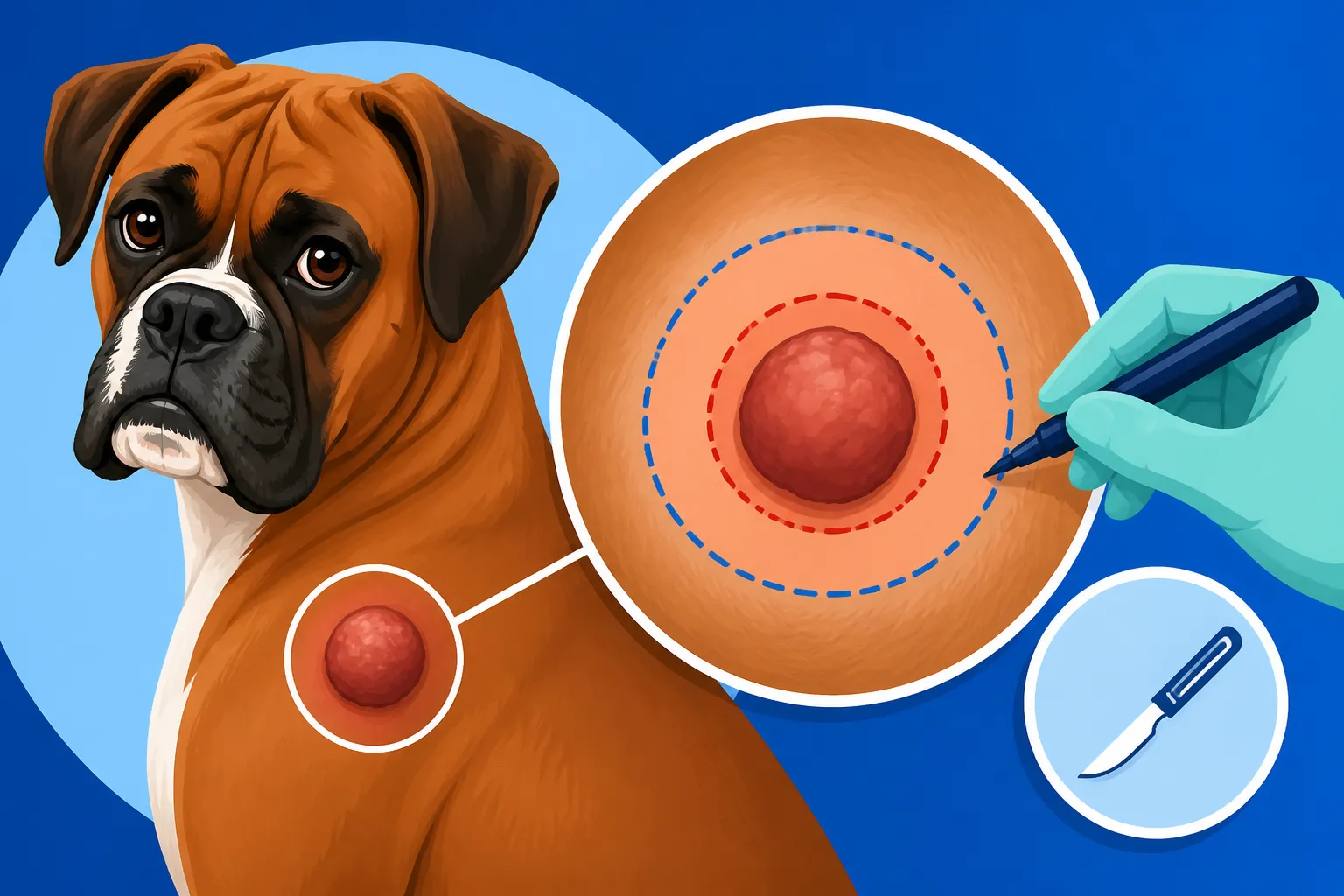
"Clean margins" is the golden standard in mast cell tumor surgery. It means that when the pathologist examines the removed tissue under a microscope, they find no tumor cells at the edges of the excised sample. In simpler terms, the surgeon has managed to remove the entire visible tumor, plus a border of healthy tissue all around it, leaving no cancerous cells behind. For mast cell tumors, which have a nasty habit of sending out microscopic tendrils into surrounding tissue, this "healthy border" is often more extensive than for other types of growths. A common recommendation for mast cell tumors is a "3-cm lateral and one fascial plane" margin. This means taking out 3 centimeters of seemingly healthy skin and tissue around the visible edge of the tumor, and ensuring the cut goes deep enough to include the fascial plane (a layer of connective tissue) beneath the tumor. Achieving this is a delicate balance, especially if the tumor is in a tricky spot like a limb or near a joint.
The "Three-Dimensional" Challenge of Tumor Removal
Imagine a tumor isn't just a flat spot on the skin, but an iceberg. What you see on the surface is only a fraction of what's beneath. This is especially true for mast cell tumors, which can extend deeper than they appear and send out microscopic fingers in multiple directions. This is why surgeons talk about three-dimensional margins. It's not just about getting enough width around the tumor, but also enough depth. If a tumor is on your Boxer's leg, for example, the surgeon needs to ensure they go deep enough to get under it, often removing some muscle or fascia, to prevent those unseen cells from being left behind. If they don't go deep enough, or wide enough, even if the visible tumor is gone, microscopic disease might remain, ready to grow back. This thoroughness is paramount for achieving the best possible outcome for your furry family member.
Factors Influencing Margin Size and Strategy
Deciding how wide and deep the surgical margins need to be isn't a one-size-fits-all decision. It's a complex calculation that involves several critical factors, each playing a significant role in tailoring the surgical approach to your Boxer's specific situation. This individualized strategy is what gives your dog the best chance against this challenging cancer.
Tumor Grade, Location, and Aggressiveness
The most significant factor influencing margin size is the grade of the mast cell tumor. Once a biopsy has been taken (often a fine needle aspirate or a small incisional biopsy), a pathologist will classify the tumor, typically using a two-tier grading system (low or high grade) or a three-tier system (Grade I, II, or III). Higher-grade tumors are known to be far more aggressive, spread more readily, and have a greater chance of recurrence, demanding much wider and deeper margins. For a low-grade tumor, a 2 cm margin might be sufficient, whereas a high-grade tumor often warrants a 3 cm (or even wider) margin, along with a deeper fascial plane.
The location of the tumor also heavily influences what's surgically achievable. A tumor on the trunk of the body, where there's plenty of loose skin, allows for more generous margins without severely impacting movement or requiring complex reconstructive surgery. However, if the tumor is on a limb, near an eye, or on the face, achieving those ideal margins becomes much more challenging. In such cases, the surgeon might need to get creative, perhaps opting for a slightly narrower margin combined with other therapies like radiation, or even considering amputation in severe cases on a limb to ensure complete removal. The aggressive nature of the tumor, as assessed by its grade and other diagnostic findings like lymph node involvement, will drive these decisions. If you're looking into Grading a Boxer's Mast Cell Tumor, you'll quickly see how much this influences the entire treatment plan.
Balancing Aggressive Removal with Functional Outcomes
This is where the art and science of veterinary surgery truly come together. The goal is always to remove every last cancerous cell, but not at the expense of your Boxer's quality of life. Imagine a tumor on your Boxer's wrist. While a 3 cm margin might be ideal for cancer control, it could mean removing so much tissue that the dog loses function of the limb, or requires extensive skin grafts and rehabilitation. In such scenarios, the veterinary oncologist and surgeon will work with you to weigh the benefits of ultra-aggressive surgery against the potential impact on your dog's ability to run, play, and live comfortably.
Sometimes, this balance means accepting slightly less aggressive margins than ideal and then supplementing with adjunctive therapies. For instance, if wide margins aren't feasible due to anatomical constraints, your vet might recommend follow-up radiation therapy to target any microscopic cells that might have been left behind. This decision-making process is a heavy one for pet owners, requiring open and honest discussions with your veterinary team about prognosis, quality of life, and what you're willing and able to pursue. It's a heartbreaking situation to be in, and it’s important to remember that your vet will guide you through these tough choices.
Here's a simplified table illustrating how margin recommendations often vary:
| Tumor Grade (Patnaik/Kiupel) | Lateral Margin Recommendation | Deep Margin Recommendation | Typical Prognosis (with clean margins) |
|---|---|---|---|
| Low Grade / Grade I | 2 cm | 1 fascial plane | Excellent, often curative |
| Intermediate / Grade II | 2-3 cm | 1-2 fascial planes | Good, may require further monitoring |
| High Grade / Grade III | 3 cm+ | 2+ fascial planes | Guarded, often requires adjunctive Rx |
Note: These are general guidelines. Individual cases may vary based on location, invasiveness, and surgeon's discretion.
What Happens When Margins Are Not Clean
The hope with any cancer surgery is always to achieve those coveted clean margins. But sometimes, despite the surgeon's best efforts, the pathology report comes back with the devastating news: "dirty margins." This means that tumor cells were found at the edge of the removed tissue, indicating that some cancer cells were likely left behind in your Boxer's body. It's a gut punch, no doubt, and it immediately raises new anxieties and tough decisions.
The Risk of Recurrence and Metastasis
When surgical margins are incomplete, the primary concern is local recurrence. The cells left behind can quickly regrow, forming a new tumor in the same spot, sometimes even more aggressively than the original. This often happens within a few months, but can vary. Beyond local recurrence, especially with higher-grade tumors, dirty margins also increase the risk of metastasis—the spread of cancer to other parts of the body, such as lymph nodes, spleen, liver, or bone marrow. This is the ultimate fear for any cancer patient, human or canine.
The grade of the tumor plays a huge role here. A low-grade tumor with incomplete margins might still have a decent prognosis, and watchful waiting or a second surgery could be options. However, a high-grade tumor with dirty margins signals a much more serious situation, often prompting aggressive follow-up treatments. This is why post-surgical pathology is so critically important; it dictates the next steps in your Boxer's fight.
Follow-Up Options for Incomplete Excisions
Receiving a "dirty margin" report doesn't mean the fight is over; it simply means the strategy needs to shift. You and your veterinary oncologist will discuss several options:
-
Second Surgery: If feasible, a second "re-excision" surgery to remove more tissue from the area is often the first line of defense. This aims to get those clean margins that were missed the first time. The success of this depends on the location of the tumor and how much healthy tissue is available for removal.
-
Radiation Therapy: For tumors in tricky locations where wide surgical margins aren't possible, or if a second surgery isn't an option, radiation therapy is a powerful tool. It uses high-energy beams to kill remaining cancer cells in a targeted area. It's often very effective for local control but can be costly and requires multiple trips for treatment.
-
Chemotherapy: If the tumor is high-grade or has shown signs of spreading (or is highly likely to spread due to dirty margins), systemic chemotherapy might be recommended. This is given orally or intravenously to target cancer cells throughout the body, reducing the risk of metastasis. Chemotherapy for a Boxer With Cancer can be a daunting prospect, but it can significantly extend their quality of life.
-
Electrochemotherapy or Cryosurgery: These are less common but can be options for superficial tumors in certain locations. Electrochemotherapy uses electrical pulses to enhance the uptake of chemotherapy drugs into tumor cells, while cryosurgery freezes and destroys tumor tissue.
-
Watchful Waiting: For very low-grade tumors with microscopically dirty margins, and in cases where aggressive intervention isn't possible or desired, some owners opt for watchful waiting. This means carefully monitoring the area for recurrence and intervening if and when it happens. This approach carries higher risk and isn't usually recommended for higher-grade tumors.
No matter the path forward, it's a decision made with heavy hearts, but armed with information and the guidance of your veterinary team, you can make the best choice for your beloved Boxer. This journey can also bring significant financial stress. Having pet insurance, like a policy from a provider such as Healthy Paws, can be incredibly beneficial in mitigating these unforeseen costs, especially when dealing with complex follow-up treatments.
Preparing for Your Boxer's Mast Cell Surgery
The period leading up to surgery is often filled with anxiety. You're waiting for test results, making difficult decisions, and bracing yourself for what's to come. But being prepared and understanding the process can help you feel more in control during this challenging time.
Pre-Surgical Diagnostics and Staging
Before your Boxer goes under the knife, a thorough diagnostic workup is essential. This isn't just about confirming the lump is a mast cell tumor, but about "staging" the cancer – determining if it has spread beyond the primary site. This typically involves:
- Fine Needle Aspirate (FNA) or Biopsy: This is usually the first step to get a preliminary diagnosis and grade the tumor, allowing the veterinary team to plan appropriate surgical margins. Needle Biopsy on a Boxer Lump is a common and relatively non-invasive procedure.
- Blood Work (CBC and Chemistry Panel): To ensure your Boxer is healthy enough for anesthesia and surgery, and to check for any underlying conditions.
- Urinalysis: Another routine check of overall health.
- Lymph Node Aspirates: Regional lymph nodes (the ones closest to the tumor) will often be aspirated to check for the presence of mast cell cancer cells. If the lymph nodes are involved, it indicates the cancer has started to spread and impacts prognosis and treatment.
- Abdominal Ultrasound: To check internal organs like the spleen and liver, which are common sites for mast cell tumor metastasis.
- Chest X-rays: To check the lungs for any signs of spread, though mast cell tumors rarely metastasize to the lungs.
- Bone Marrow Aspirate: In rare, very high-grade cases or if other signs suggest widespread disease, this might be performed.
All these diagnostics help your veterinary oncologist formulate the most effective and aggressive treatment plan possible. It’s a lot of tests, and a lot of waiting, but each piece of information is critical. Remember that pet insurance can help cover these diagnostic costs too. Many providers, including Healthy Paws, offer comprehensive plans that can ease the burden of an unexpected diagnosis.
Discussing Margins and Prognosis with Your Vet
This is your opportunity to get all your questions answered and truly understand what the surgery entails. Don't be afraid to ask for clarification on anything you don't understand. Key questions you should discuss with your veterinary surgeon and oncologist include:
- What are the recommended margins for this specific tumor? Based on the grade and location, what is their ideal plan?
- Are those ideal margins achievable given the tumor's location? If not, what compromises might need to be made?
- What are the potential cosmetic or functional impacts of the surgery? Will it affect movement, or leave a very large scar?
- What is the anticipated healing time? How will you need to care for the surgical site?
- What is the general prognosis for my Boxer given the tumor type, grade, and planned margins? Be prepared for an honest, but sometimes tough, conversation about outcomes and potential timelines.
- What are the next steps if the margins aren't clean? It's good to have a preliminary understanding of the "what ifs."
- What are the costs involved, both for surgery and potential follow-up treatments? This is where having a discussion about What a Boxer Lump Removal Costs and exploring financial options, like pet insurance plans from Healthy Paws, becomes crucial. Knowing this upfront helps you budget and make informed decisions.
Remember, you are your Boxer's strongest advocate. Your veterinary team is there to support you, but it’s okay to ask tough questions and seek a full understanding of the journey ahead.
Post-Surgical Care and Monitoring
The surgery is over, and your Boxer is home, recovering. This phase is just as important as the surgery itself. Proper post-operative care and vigilant monitoring can significantly impact their recovery and long-term prognosis.
Healing from Extensive Surgery
Depending on the size and location of the margins, your Boxer's surgical incision might be quite large. It's not uncommon for these sites to look a bit gnarly, or even require drains if there was a lot of dead space created by removing tissue. Here’s what you can generally expect:
- Pain Management: Your Boxer will be sent home with pain medication, which is crucial for their comfort and to prevent them from licking or bothering the incision site. Administer it exactly as prescribed.
- Incision Site Care: You'll need to monitor the incision daily for any signs of swelling, redness, discharge, or separation. Keep it clean and dry. An E-collar (the "cone of shame") will be absolutely non-negotiable to prevent licking, chewing, or scratching, which can lead to infection or dehiscence (the incision opening up).
- Restricted Activity: Your vet will advise strict rest for several weeks. No running, jumping, stairs, or rough play. Leash walks only, and sometimes even shorter ones, to prevent tension on the incision. This can be tough with a high-energy Boxer, but it's vital for proper healing. Too much activity can pull stitches, cause swelling, or delay recovery.
- Follow-Up Appointments: Regular vet checks will be scheduled to monitor healing and eventually remove stitches or staples, typically around 10-14 days post-op. This is also when you'll usually get the final pathology report on the margins.
The healing process can be slow and requires patience, especially after aggressive wide-margin surgery. It's a testament to your love for your Boxer that you're willing to go through this alongside them.
Long-Term Vigilance for New Lumps and Signs
Even with clean margins, the battle against cancer isn't necessarily over. Boxers are prone to mast cell tumors, so vigilance is a lifelong commitment. You need to remain diligent in your Weekly Lump Checks on a Boxer, not just at the original surgery site, but all over their body. Keep a mental (or even written) map of any benign lumps or bumps your Boxer already has, so you can quickly identify anything new or suspicious.
Beyond physical checks, be aware of any changes in your Boxer's overall health and behavior. This includes:
- Changes in appetite or weight loss: Unexplained weight loss can be a sign of internal cancer.
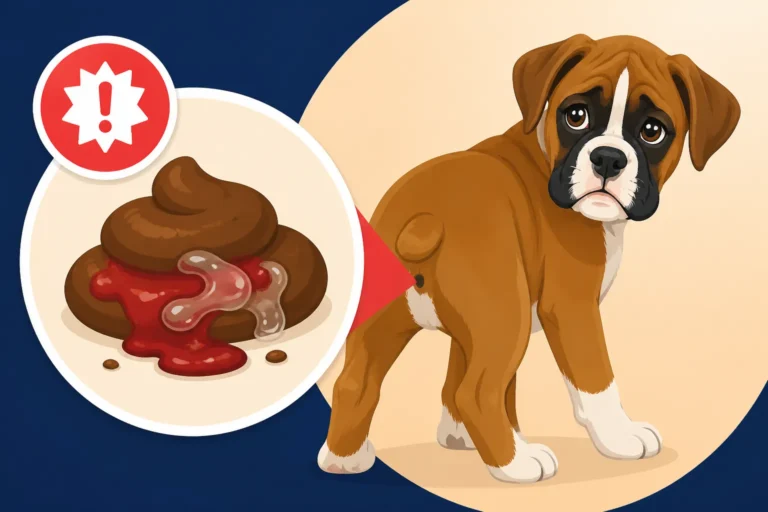
- Vomiting, diarrhea, or dark, tarry stools: These could indicate internal mast cell tumors, particularly in the GI tract.
- Lethargy or decreased energy: A general decline in activity levels can be a red flag.
- Swelling of lymph nodes: Check the lymph nodes under their jaw, in their armpits, and behind their knees regularly.
- Any new skin lesions: Don't dismiss any new bumps, even small ones, as just "nothing."
If you notice anything new or concerning, contact your vet immediately. Early detection of recurrence or new tumors is critical for the best possible outcome. This ongoing vigilance is part of being a Boxer parent, and while it adds to the mental load, it's how we give them the longest, happiest lives possible. Remember, too, that even after a cancer diagnosis, it is possible to maintain pet insurance, though the specific tumor that was removed will become a pre-existing condition. However, a good policy through companies like Healthy Paws can still cover future unrelated conditions or new lumps that appear on different parts of the body. Building The Cancer Fund a Boxer Owner Should Build is a prudent step for any Boxer parent.
Disclaimer
This information is intended for educational purposes only and is not a substitute for professional veterinary advice. Always consult with a qualified veterinarian regarding any medical concerns or before making any decisions about your Boxer's health or treatment plan.