When the Boxer’s Ancestor Disappeared
It can be confusing to trace the lineage of a beloved breed like the Boxer, especially when you hear whispers of ancient ancestors that seem to have vanished into the mists of time. You might wonder how a dog so distinctly modern has such deep historical roots, and exactly when that foundational ancestor, the Bullenbeisser, truly ceased to exist. This guide will clarify the historical forces and breeding practices that led to the Bullenbeisser's gradual disappearance, paving the way for the Boxer we know and love today.
Tracing the Boxer's Ancient Roots: The Bullenbeisser Legacy
When we talk about the Boxer's origins, we inevitably come back to the Bullenbeisser. This wasn't just a distant relative; it was the direct progenitor, the very foundation upon which the Boxer breed was meticulously built. Understanding the Bullenbeisser is crucial to appreciating the Boxer's inherent traits and its journey through history.
The Mighty Bullenbeisser: A Glimpse into the Past
Imagine a time when dense forests covered much of Europe, and wild boar, bear, and deer roamed freely. Hunters needed dogs of immense courage, strength, and tenacity to assist them in capturing these large, often dangerous, animals. This is where the Bullenbeisser, translating literally to "bull-biter," earned its name and its formidable reputation. These dogs were powerful, with broad heads, strong jaws, and an unyielding grip. Their primary role was to seize and hold large game, often by the nose or ear, allowing hunters to approach and dispatch the animal safely. This was no small feat; it required incredible physical prowess and an equally strong will. The Bullenbeisser wasn't just a dog; it was an indispensable hunting tool, a canine equivalent of a grappling hook and a vise grip all rolled into one. They were prized for their fearlessness and their ability to stay latched onto an animal, even one thrashing violently. For centuries, these dogs were bred for functionality, rather than aesthetics, ensuring that the traits essential for their demanding work were passed down through generations. To learn more about their specific quarry, you might be interested in reading What the Boxer's Bullenbeisser Ancestor Hunted.
The Shifting Landscape of European Hunting
However, as centuries passed, Europe began to change. The vast, untamed wilderness slowly receded, replaced by farmlands, villages, and towns. Large game hunting, once a necessity and a popular sport, began to decline. Bears became rare, and wild boar populations were managed differently. The need for a dog specifically bred to grapple with massive, dangerous animals lessened considerably. Hunters started to favor dogs that were quicker, more agile, and better suited to tracking smaller game or driving livestock. This shift had a profound impact on the Bullenbeisser. Without its traditional role, the pure, unadulterated form of the Bullenbeisser began to lose its clear purpose.
As populations grew and society became more refined, the brute strength and specialized role of the Bullenbeisser became less universally applicable. People still needed dogs, of course, but their needs evolved. They wanted companions, guardians for their property, or dogs that could assist with less dangerous, more common tasks. This gradual change in societal needs laid the groundwork for the Bullenbeisser's transformation, as breeders started looking for ways to adapt their powerful dogs to a new world.
The Blurring Lines: Bullenbeisser and the Emergence of New Breeds
The decline in large game hunting didn't mean the Bullenbeisser simply disappeared overnight. Instead, it embarked on a journey of transformation, driven by crossbreeding and regional specialization. This period marked the critical transition from the ancient Bullenbeisser to the distinct breeds that would eventually lead to the Boxer.
Crossbreeding and the Desire for New Traits
With the traditional hunting roles diminishing, Bullenbeisser owners and breeders began to experiment. They started crossbreeding their formidable dogs with other breeds to develop new traits that better suited the changing times. One of the most significant crosses was with Bulldogs, which were gaining popularity in England. The English Bulldog, at the time, was quite different from the short, squat dog we know today; it was more athletic and still retained some of its fighting heritage. The infusion of Bulldog blood into the Bullenbeisser line was aimed at reducing the dog's overall size, increasing its agility, and perhaps even tempering some of its sheer ferocity, making it more adaptable for roles beyond just holding dangerous game. These crosses often produced dogs that were still powerful but had a different, often more compact, physique and a slightly altered temperament. This blending of bloodlines was a conscious effort to create a more versatile dog, one that could still be a capable guardian or helper but wasn't solely defined by its ability to take down a boar. The impact of this cross is a fascinating part of the Boxer's story, which you can explore further in Bulldog Blood in the Early Boxer.
The goal was to retain the Bullenbeisser's strength and courage but infuse it with a bit more speed and a temperament that was perhaps a little less purely driven by "hold and bite." These crossbred dogs were often smaller, faster, and sometimes even more amenable to general companionship, a trait that would become increasingly important for dogs living alongside humans in more domestic settings. It was a time of canine innovation, driven by practical necessity and a changing social landscape.
Regional Variations and the Loss of a Uniform Type
As these crossbreeding efforts took hold across different regions of Europe, the once relatively uniform Bullenbeisser type began to fragment. Different areas, based on local needs and available breeds, developed their own specific variations. For instance, the "Brabant Bullenbeisser" emerged in what is now Belgium and the Netherlands. These were often smaller than the original German Bullenbeisser, more compact, and increasingly valued for their guarding abilities and use in cattle driving rather than just big-game hunting.
This regional diversification meant that the term "Bullenbeisser" started to encompass a range of dogs rather than a single, distinct type. There wasn't a unified breed standard or a central registry to maintain the purity of the original line. Instead, various local populations developed, each with slightly different characteristics. This natural evolution, while creating dogs better suited to their immediate environments, simultaneously diluted the original Bullenbeisser identity. The concept of a singular Bullenbeisser breed began to fade as its descendants branched out into many different forms, some of which would eventually become the ancestors of several modern breeds, including, most famously, the Boxer.
This period of diverse development was crucial because it showed the adaptability of the Bullenbeisser's core genetics. While the original type was vanishing, its essential traits were being preserved and refined in these new, regional variations, which would eventually be pulled together to form the modern Boxer.
The Official Disappearance: When the Bullenbeisser Ceased to Exist as a Distinct Breed
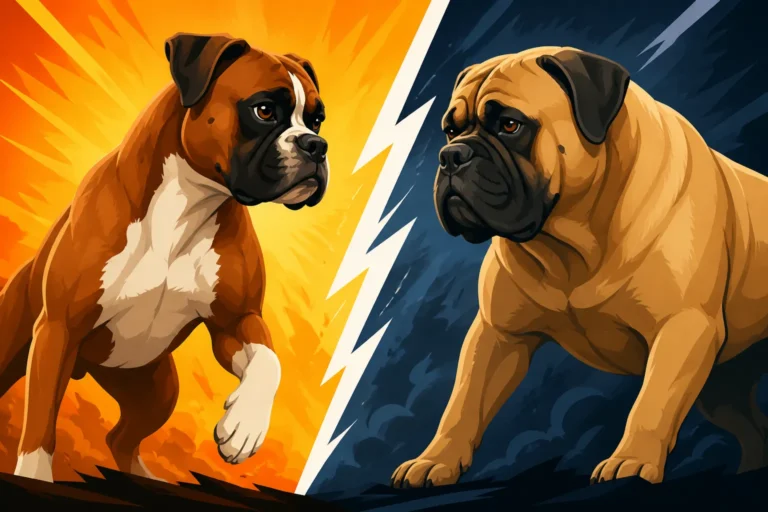
The disappearance of the Bullenbeisser wasn't an abrupt event like an extinction, but rather a gradual absorption and transformation into new breeds. It's more accurate to say that the distinct type of Bullenbeisser faded as the modern Boxer emerged and took its place.
The Rise of the Modern Boxer
The late 19th century was a pivotal time for dog breeding in Germany. There was a concerted effort by a group of dedicated German breeders to standardize and refine certain dog types. For the Bullenbeisser, this meant taking the various regional forms, particularly the smaller Brabant Bullenbeisser, and intentionally crossing them with the English Bulldog. Their goal was to create a new, distinct breed that retained the Bullenbeisser's courage and strong physique but was also more agile, intelligent, and suitable for both companionship and protection work.
Key figures like Friedrich Robert, Elard König, and R. Höpner are credited with being instrumental in this process. They meticulously selected dogs, focusing on specific traits and breeding them to a developing standard. The result was a dog that began to look much like the Boxer we recognize today: powerful, muscular, with a distinctive undershot jaw, and a lively, intelligent expression. The establishment of the first Boxer Club in Munich in 1895 and the subsequent drafting of the first breed standard in 1902 marked the official birth of the Boxer breed. This formalization meant that breeders now had a clear blueprint to follow, ensuring consistency and solidifying the Boxer's identity. This period is a fascinating read, and you can learn more about it in The Three Germans Who Fixed the Boxer Type and The German Origins of the Boxer.
The Final Phasing Out
With the formal establishment and growing popularity of the Boxer, the specific type known as the Bullenbeisser slowly but surely faded from existence. It wasn't that the dogs all died out; rather, they were bred into the new Boxer standard. Any dogs that still strongly resembled the old Bullenbeisser type, or its regional variations like the Brabant, either contributed their genetics to the new Boxer breed or were simply no longer actively bred as a distinct entity. By the early 20th century, certainly by the 1920s and 30s, the Bullenbeisser as a standalone, recognizable breed or even a consistent regional type was essentially gone. It had been fully assimilated into the Boxer.
Think of it less as a disappearance and more as a metamorphosis. The Bullenbeisser didn't just vanish; it evolved, its essence becoming the core of the modern Boxer. The original form was no longer necessary, as the new Boxer was deemed superior for the needs of the era. So, while you won't find a pure Bullenbeisser roaming the earth today, its legacy lives on in every Boxer.
More Than Just a Name: The Enduring Spirit of the Bullenbeisser in the Boxer
Even though the Bullenbeisser as a distinct breed is a thing of the past, its influence is profoundly evident in every Boxer. Understanding this connection helps us appreciate the unique characteristics of our modern companions.
Physical Traits and Temperament Handed Down
When you look at a Boxer today, you are seeing a living echo of its Bullenbeisser ancestors. Many of the physical traits that made the Bullenbeisser so effective in its hunting role are still present. The strong, muscular build, the broad chest, and especially the powerful, undershot jaw are direct inheritances. That characteristic "Boxer bite," which allows for a firm, tenacious grip, is a refined version of the Bullenbeisser's ability to hold onto large prey. Even the shape of the muzzle, with its distinctive turn-up, can be traced back to what was advantageous for breathing while gripping. You can dive deeper into these physical traits in Why the Boxer Was Given a Turned-Up Muzzle and The Boxer the Breed Standard Describes.
Beyond the physical, the Boxer's temperament also carries the torch of its ancestor. The Bullenbeisser's inherent courage, loyalty, and protective instincts are clearly visible in the modern Boxer. They are known for their fearlessness when it comes to defending their family, their unwavering devotion, and that incredible zest for life. While the "clown" persona of the Boxer is often highlighted, underneath that playful exterior lies the heart of a brave and loyal guardian, a direct link to its formidable past. This dual nature — playful yet protective — is a hallmark of the breed and a testament to its ancient heritage.
Why Understanding Ancestry Matters for Today's Boxer Owners
Knowing the history of your Boxer's ancestors, particularly the Bullenbeisser, isn't just a fun fact; it provides valuable insight into your dog's behaviors, instincts, and needs. When your Boxer displays incredible athleticism, a deep bond with its family, or that strong protective urge, you're witnessing the echoes of generations of selective breeding for specific traits. It helps you understand why your Boxer has so much energy, why they can be so persistent, and why they bond so strongly with their human companions.
This understanding can inform your training methods, exercise routines, and even how you interpret their quirky behaviors. For example, their need for robust exercise and mental stimulation makes perfect sense when you consider their working heritage. It's a reminder that beneath the loving family companion, there's a powerful, intelligent dog with a rich history. You can find many products, from durable toys to educational books about dog breeds, at places like Chewy, which can help you cater to your Boxer's intrinsic needs and learn even more about their fascinating lineage. Celebrating this ancestry means appreciating the full scope of your Boxer's capabilities and ensuring you provide an environment that honors their past while supporting their happy present. You could even look for historical dog art or themed merchandise on Chewy to connect with the breed's storied past!
| Characteristic | Original Bullenbeisser (Approx. 16th-19th Century) | Early Boxer (Late 19th Century) | Modern Boxer (20th-21st Century) |
|---|---|---|---|
| Primary Role | Large game hunter (boar, bear), holding prey | Versatile (guarding, companion, some hunting) | Companion, protection, dog sports |
| Size | Variable, generally larger, robust, heavy-boned | More standardized, often smaller than pure Bullenbeisser | Standardized medium-large, muscular and agile |
| Head/Muzzle | Broad, powerful jaw, often long muzzle for grip | Broad head, distinct undershot jaw emerging, shorter muzzle | Characteristic brachycephalic (flat-faced), undershot jaw, strong square muzzle |
| Temperament | Fearless, tenacious, powerful, game-focused | Courageous, intelligent, developing loyalty, some playfulness | Energetic, loyal, intelligent, playful, protective |
| Coat/Color | Variable, often brindle or fawn | Fawn and brindle colors becoming dominant | Fawn and brindle, with white markings (flashy) |
| Existence as Breed | Distinct type, but regional variations | New breed being established, distinct from Bullenbeisser | Fully established and recognized worldwide |
Disclaimer
This article is for general informational purposes only and does not constitute professional advice. Laws, prices and regulations vary by location and change over time. Consult a qualified professional for guidance on your specific situation.