Boxers as Messenger Dogs in the World Wars
It’s easy to picture our beloved Boxers as goofy, affectionate clowns, bouncing around the living room, vying for attention and belly rubs. But beneath that playful exterior lies a history of remarkable bravery and intelligence that saw these dogs take on crucial roles during some of humanity’s darkest hours. Many might not realize that Boxers served with incredible distinction as messenger dogs in both World Wars, facing unimaginable dangers to deliver vital communications. This guide will explore how these incredible dogs contributed to the war effort, the demanding training they underwent, and the lasting legacy of their quiet heroism.
The Boxer's Inherent Qualities for Military Service
When you think of a military dog, perhaps a German Shepherd or a Doberman Pinscher comes to mind first. However, the Boxer, with its unique blend of physical and mental attributes, proved to be an exceptional candidate for the intense demands of the battlefield, particularly as a messenger. Their combination of intelligence, boundless energy, innate loyalty, and impressive athleticism made them far more than just companions; they were reliable, driven, and adaptable assets.
Intelligence and Trainability
Boxers are known for their sharp minds, a trait that was absolutely indispensable for a messenger dog. They needed to understand complex commands, remember routes, and perform their duties even amidst chaos and confusion. While they can be famously stubborn, a well-motivated Boxer is eager to please and learns quickly. This trainability meant they could be taught to navigate treacherous terrain, ignore distractions like explosions and gunfire, and focus solely on their mission. A dog that could not quickly grasp and retain commands would be a liability, but the Boxer's mental agility allowed them to rise to the challenge. They could be trained to distinguish friend from foe, avoid detection, and rely on their handler's instructions even when instincts might scream otherwise.
Stamina and Agility
The physical demands placed on messenger dogs were immense. They needed to cover significant distances quickly, often over uneven, crater-pocked ground, carrying messages in small pouches attached to their collars. Boxers possess a compact, muscular build that grants them both power and agility. They are quick on their feet, capable of bursts of speed, and possess remarkable endurance, allowing them to traverse battlefields where vehicles couldn't go and human runners were too vulnerable. Their strong, lean bodies were built for work, a direct inheritance from their The German Origins of the Boxer ancestors, the Bullenbeisser, bred for holding large game. This physical prowess meant they could outrun danger and push through exhaustion to complete their mission.
Loyalty and Fearlessness
One of the most defining characteristics of a Boxer is their unwavering loyalty to their human companions. This deep bond translated into immense dedication on the battlefield. A Boxer, once bonded with its handler, would go to extraordinary lengths to fulfill its duty. This loyalty, combined with a remarkable degree of fearlessness when properly trained, meant they could push past natural instincts of self-preservation to deliver critical messages. They weren't easily intimidated by loud noises or the general pandemonium of war. While not inherently aggressive, their protective nature meant they were fiercely devoted to their task and their human team. For more on their natural protective instincts, you might read about Boxer Watchdog Instinct Without Aggression.
Training and Deployment as Battlefield Messengers
The journey from a boisterous puppy to a disciplined war dog was rigorous and demanding, focusing on honing natural instincts into precise, life-saving skills. These dogs weren't just running errands; they were critical links in the communication chain, often the only way to get intelligence or orders from one trench to another under heavy fire.
Specialized Training Regimens
Training for messenger dogs was incredibly intensive and began at a young age, often involving techniques that focused on motivation through reward and building an unbreakable bond with a primary handler. The goal was to create a dog that could operate independently, yet remain completely focused on its mission. They were taught to respond to specific whistle commands and hand signals, crucial in environments where verbal commands were impossible or would give away their position. A significant part of their training involved desensitization to the sounds and sights of war. Puppies were gradually exposed to loud noises – gunshots, explosions, shouting – so that the real battlefield environment wouldn't send them cowering. They learned to navigate mazes and simulated trenches, overcoming obstacles and finding specific locations. For a Boxer, which Keeps Boxer Training Sessions Interesting can be a challenge, this repetitive, high-stakes work required dedicated, skilled trainers.
| Training Aspect | Purpose | Boxer Advantage |
|---|---|---|
| Route Learning | Memorizing paths between command posts, often complex. | High intelligence, good memory, keen sense of smell. |
| Noise Desensitization | Ignoring gunfire, explosions, and battlefield chaos. | Fearless temperament, trainability to focus. |
| Obstacle Navigation | Traversing trenches, barbed wire, rough terrain. | Agility, muscular build, determination. |
| Stealth & Evasion | Avoiding detection by enemy patrols and snipers. | Speed, ability to move quietly, obedience. |
| Message Carrying | Retrieving and delivering messages securely in pouches. | Loyalty to handler, understanding of task. |
| Water Crossings | Swimming rivers or ditches if required. | Athleticism, natural ability, resilience. |
The Mechanics of Message Delivery
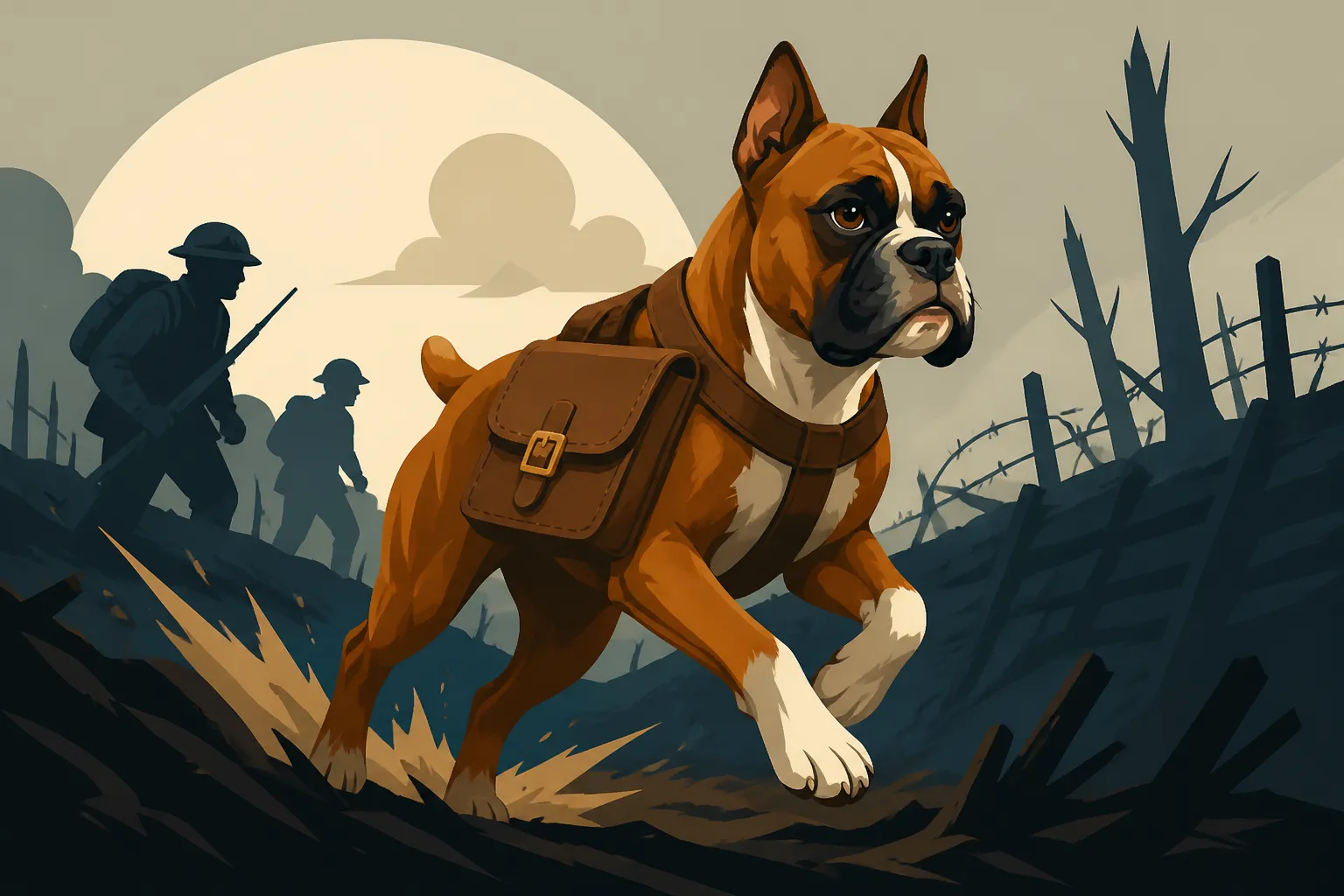
A Boxer messenger dog would typically wear a specially designed harness or collar with a small, secure pouch. Inside this pouch would be written messages, maps, or even small photographic films. The dog was trained to run between two specific points – for example, from a forward observation post back to headquarters, or between two different companies in the trenches. One handler would release the dog with the message, and another handler at the receiving end would call the dog to them. The urgency of these missions cannot be overstated; delays in communication could cost lives or even change the outcome of a skirmish. These dogs were literally lifelines, connecting isolated units with their command structure. Imagine the relief when a panting Boxer would arrive, a precious message tucked safely away, sometimes the only proof that help was on the way or that a planned maneuver was still on track.
Overcoming Battlefield Conditions
The environments these dogs operated in were incredibly harsh. The battlefields of the World Wars were mud-soaked, riddled with shrapnel, choked with gas, and constantly under bombardment. A Boxer's short coat, while easy to groom, offered little protection against the elements, and their brachycephalic (flat) faces meant they were susceptible to overheating, especially during strenuous activity. Yet, they pressed on. Their resilience in the face of such adversity is a testament to their spirit and the bond they shared with their human handlers. These were not luxury pets; these were hardened, dedicated workers, performing a critical service, much like Boxers Working in Search and Rescue do today in different contexts.
The Perils and Valor of War Dogs
The bravery of these Boxer messenger dogs cannot be overstated. Every single mission was a life-or-death gamble, not just for the men relying on the message, but for the dog itself. They faced a myriad of dangers, enduring conditions that would break most animals, and many paid the ultimate price.
Direct Enemy Fire and Environmental Hazards
Once a messenger dog was released, it became a target. Enemy snipers were always on the lookout for any movement between lines, and a dog running across open ground was an obvious, albeit fast-moving, target. Artillery bombardments were another constant threat; a shell could land anywhere, anytime, indiscriminately taking lives. Beyond direct attacks, the environment itself was deadly. Barbed wire fences, sharp debris, unexploded ordnance, and treacherous shell craters all posed significant physical risks. Many dogs suffered grievous injuries, and those that made it back often bore the scars, both physical and psychological, of their harrowing journeys. The noise alone was enough to induce severe stress, known as 'shell shock', in both humans and animals.
Gas Attacks and Disease
Chemical warfare, particularly during World War I, introduced another horrific layer of danger. Dogs, with their heightened sense of smell and lower stature, were often more vulnerable to gas attacks, as many gases would settle closer to the ground. While efforts were made to create gas masks for dogs, their effectiveness and availability were often limited. Beyond the immediate dangers of combat, disease ran rampant in the unsanitary conditions of the trenches. Infections from wounds, parasites, and poor nutrition were constant threats. Veterinary care on the front lines was minimal at best, meaning many injured or sick dogs did not recover. Despite these overwhelming odds, Boxers continued their work, driven by their training and their inherent desire to fulfill their role. This is a far cry from the modern care we provide, where we worry about Anesthesia Risk in a Flat-Faced Boxer for routine procedures, let alone open battlefield surgery.
The Unsung Heroes and Their Bonds
While we often hear of human soldiers' valor, the stories of these canine heroes are less widely known. Yet, their actions were often just as impactful. Each successful message delivery saved lives, coordinated attacks, or prevented disasters. The bond between a messenger dog and its handler was incredibly strong, forged in the crucible of war. These dogs weren't just tools; they were comrades. Handlers depended on them with their lives, and the dogs, in turn, offered not just service, but also moments of comfort and companionship in an otherwise bleak existence. After enduring such shared trauma, many of these dogs were recognized for their bravery, even if formal medals were often reserved for their human counterparts.
The Enduring Legacy of Boxer War Dogs
The contributions of Boxers as messenger dogs in the World Wars played a vital role in military operations and helped shape the perception of dogs in service roles. Their legacy extends beyond the battlefield, influencing how we view working breeds and the incredible capabilities of our canine companions.
Paving the Way for Future Military Dogs
The demonstrated success of Boxers and other breeds in messenger, guard, and patrol duties during the World Wars solidified the understanding that dogs could be indispensable assets in military and civil service. Their performance directly contributed to the formalization and expansion of military working dog programs in subsequent conflicts and peacetime. The lessons learned from training and deploying Boxers in such extreme conditions informed protocols for generations of service dogs that followed, including police dogs, detection dogs, and modern military working dogs. It underscored the importance of breed-specific aptitudes, rigorous training, and the strong human-animal bond.
Influencing Breed Recognition and Appreciation
The visibility of Boxers as working dogs, even if their specific messenger roles weren't always widely publicized, undoubtedly contributed to their growing popularity and recognition as a versatile and capable breed. It highlighted their intelligence, courage, and reliability, traits that resonated with a public looking for more than just a decorative pet. While their physical appearance and playful nature are often what first attract people, their working history provided a depth of character and purpose. This historical context enriches our understanding of the breed today. When you see a Boxer bounding around, full of life, it's worth remembering that this breed has a history of serious work, too. This history, along with their distinctive Boxer Temperament in the Standard and in Life, contributes to their unique charm.
Modern-Day Connections to Their Legacy
Today, Boxers are cherished family pets, but their innate drive and intelligence still make them excel in various dog sports and activities. From agility to obedience and even therapy work, the underlying traits that made them excellent messenger dogs – focus, drive, athleticism, and a desire to please – are still very much present. Many Boxer owners find that their dogs thrive when given a "job" to do, whether it's retrieving toys or mastering complex tricks. Providing them with engaging, stimulating activities is crucial for their well-being. Even simple things, like using puzzle toys or durable chew items available from retailers like Chewy, can tap into their natural intelligence and drive. This historical context also makes us appreciate their needs even more, understanding that a Boxer is a working dog at heart, even if its current job is to be the best companion it can be.
Disclaimer
This article is for general informational purposes only and does not constitute professional advice. Laws, prices and regulations vary by location and change over time. Consult a qualified professional for guidance on your specific situation.