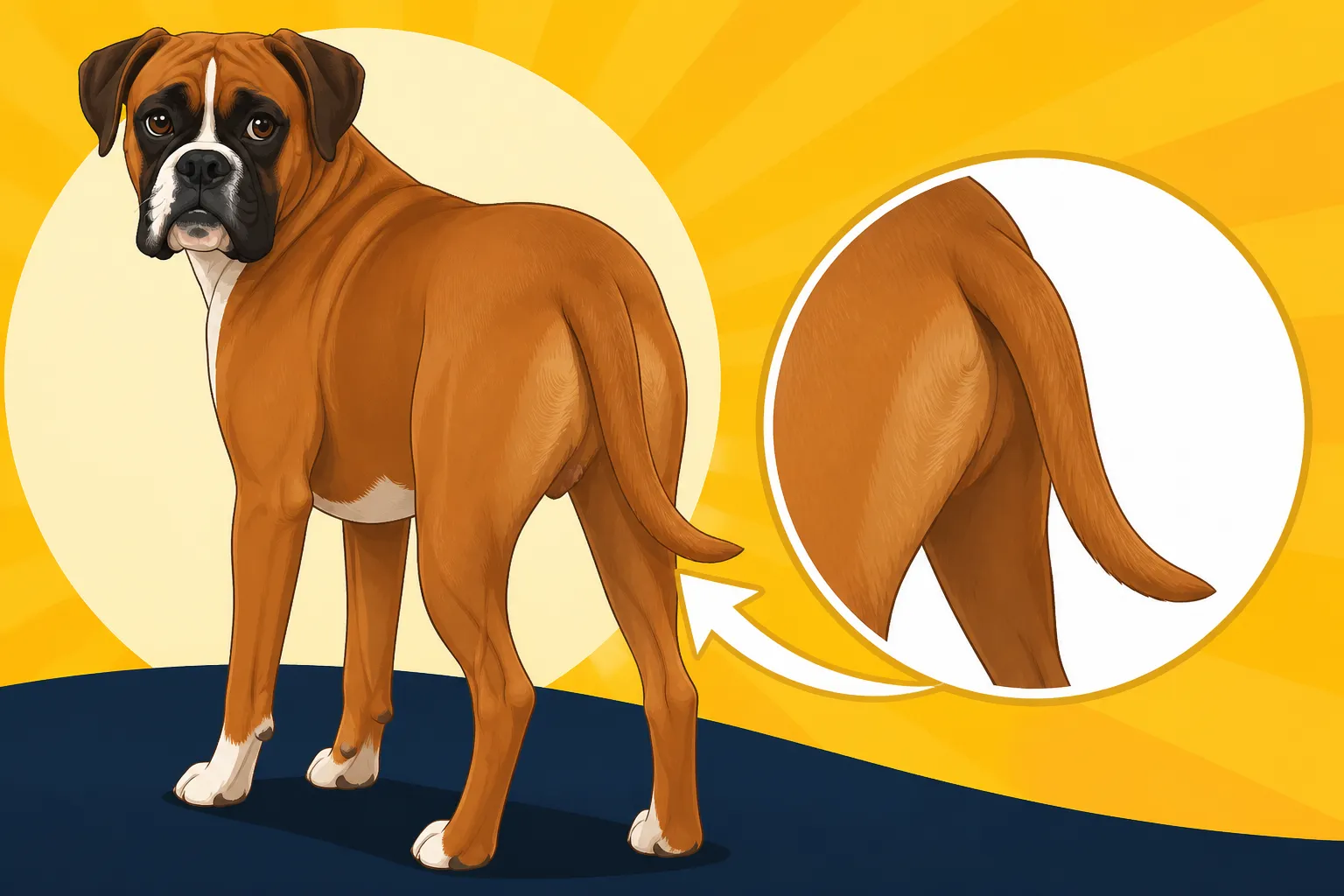
How a Natural Boxer Tail Looks
It’s a common experience for new Boxer owners, or even just admirers, to have only ever seen Boxers with short, upright tails. This long-standing tradition of tail docking has shaped our collective image of the breed, often leaving folks wondering what a Boxer's natural tail actually looks like, and how it truly impacts their personality and movement. This guide is here to paint a vivid picture of the undocked Boxer tail, exploring its appearance, function, and the beauty it brings to this wonderful breed.
The Traditional Image of a Boxer's Tail vs. Reality
For generations, the image of a Boxer in people's minds, especially those familiar with dog shows or older breed depictions, has almost exclusively featured a docked tail. This isn't just an aesthetic choice; it was rooted in historical practices and breed standards that evolved over time.
Where the Perception of a Docked Tail Comes From
Tail docking in Boxers, like in many working breeds, originated from practical purposes. Historically, it was believed to prevent injury to working dogs in the field, reduce the risk of rabies (a misconception), or simply to conform to a specific look that was thought to be more "clean" or "fierce." As the breed moved from working roles to companion animals and show dogs, the practice persisted, largely driven by breed standards set by kennel clubs. For decades, the Boxer breed standard, particularly in North America, explicitly called for a docked tail, cementing this image in the public consciousness and among breeders. Many breeders would perform this procedure on puppies just a few days old, before their eyes were even open, making a natural tail a rare sight for most people. This created a visual expectation, where an undocked tail might even be seen as "incorrect" by those unfamiliar with the changing landscape of breed practices.
The Growing Trend Towards Natural Tails
However, times are changing, and there's a significant shift in perspective regarding tail docking. In many parts of the world, particularly across Europe, tail docking for cosmetic reasons is now illegal, driven by animal welfare concerns. This has led to a natural resurgence of Boxers with their full, natural tails. Even in regions where it's still permitted, a growing number of ethical breeders and owners are choosing to leave their Boxers undocked, prioritizing their dog's natural form and acknowledging the tail's important role in communication and balance. This movement is also influenced by veterinarians advocating against non-therapeutic procedures and a greater understanding of canine welfare. As a result, you're increasingly likely to encounter Boxers with long, expressive tails at the dog park, in pet stores, or through rescues. It's a wonderful development that allows us to appreciate the Boxer in its complete, natural form. You can read more about Boxer Ear Cropping and Tail Docking, which often went hand-in-hand with tail docking.
Describing a Natural Boxer Tail
So, what does an undocked Boxer tail actually look like? If you've only seen the short, stubby version, prepare to be charmed by the real deal. It’s quite different from what many people imagine.
Shape, Set, and Carriage
A natural Boxer tail is typically quite strong and sturdy at its base, tapering gracefully to a point. It's not a thin, whip-like tail, but rather has a good amount of muscle and substance. When a Boxer is relaxed and at ease, their tail usually hangs down, reaching roughly to their hocks (the joint on their back leg that looks like a knee). It often has a slight natural curve to it, rather than being perfectly straight.
But the real magic happens when a Boxer is happy, excited, or alert. That's when the tail springs into action! It will usually rise up, often curving gently over their back in a happy arc, sometimes even touching their back or side. It can be held high and proud, signaling excitement or curiosity. When they're really happy, you'll see the famous "Boxer wiggle" extend right through their whole body, with that tail wagging vigorously from side to side. It’s not uncommon for their entire hindquarters to join in the joyful dance. This natural set and carriage allow for a huge range of expression, much more nuanced than a short, docked tail can convey.
Coat and Texture
Just like the rest of their body, a Boxer's natural tail is covered in their signature short, smooth, and typically very glossy coat. The hair is dense and lies flat, making the tail look sleek and well-defined. There are no long feathering hairs or bushy tufts; it's a seamless extension of their fawn or brindle coloring. The texture is the same soft, plush feel you get when petting their body, which means it’s a pleasure to stroke. The coat can be quite fine, but dense enough to protect the underlying skin. You won't find any dramatic changes in hair length or texture from the base to the tip; it's consistently short and neat, maintaining the breed's streamlined appearance. Maintaining this beautiful coat involves minimal grooming, much like the rest of their body. For tips on keeping it shiny, explore Boxer Grooming on a Coat That Looks Like No Work.
Size and Length
The length of a natural Boxer tail can vary somewhat between individuals, but generally, it's proportionate to their body size. As mentioned, it typically reaches to their hocks when hanging down. For a seventy-pound Boxer, this could mean a tail length of anywhere from 12 to 18 inches, sometimes a bit more or less. It's a significant length that adds to their overall silhouette and balance.
When you see a Boxer with a natural tail, it suddenly feels like a "complete" dog, rather than one that's had a part of its body removed. The tail adds to their muscular, athletic appearance, providing an elegant counterbalance to their powerful chest and body. It's a substantial appendage, not merely a decorative flourish. This length is crucial for its function, as we'll delve into next, but from a purely aesthetic standpoint, it gives the Boxer a more fluid and less truncated look, enhancing their inherent grace and power.
The Function and Expression of a Natural Boxer Tail
Beyond just looking different, a natural Boxer tail serves vital functions that many people don't consider when they've only seen docked tails. It's a tool for communication and an aid for movement.
Communication Through Tail Movement
Think about how much information we glean from a dog's tail wag. For Boxers, with their incredible exuberance and expressive faces, a natural tail amplifies their ability to communicate with both humans and other dogs. A high, fast wag often signals pure joy and excitement, especially when accompanied by the famous full-body wiggle. A tail held lower, perhaps with a gentle sway, might indicate a more relaxed or curious mood. A tucked tail, pulled tight between the legs, is a clear sign of fear, anxiety, or submission.
A stiff, high tail wag, perhaps with a slight quiver, could signal alertness or even uncertainty. Boxers are incredibly perceptive, and their tails are an extension of their emotional state. Without that full range of motion, a Boxer's communication can be somewhat hindered. For instance, another dog might misinterpret the subtle cues from a docked tail, leading to misunderstandings during interactions. A natural tail allows for clearer, more nuanced messages, helping the Boxer navigate social situations and express their rich inner world. This expressive nature is part of what makes Boxer Temperament in the Standard and in Life so unique.
Balance and Agility
Boxers are athletic, powerful dogs, known for their springy gait and impressive agility. While they might not be chasing gazelles, their natural athleticism is evident in their play, their quick turns, and their ability to jump and maneuver. The tail plays a crucial role in all of this. It acts like a counterbalance, a rudder that helps them maintain equilibrium, especially during rapid changes in direction or when navigating uneven terrain.
Imagine a Boxer making a sharp turn during a game of fetch; their tail whips around to help stabilize their body, much like a tightrope walker uses a pole. When they jump, the tail can aid in propulsion and landing stability. This balance is particularly important for a breed that can be prone to certain orthopedic issues like Boxer Hip Dysplasia and Spondylosis later in life, as maintaining good posture and agility can help reduce strain. A Boxer's working history, from their German origins as The Bullenbeisser the Boxer Came From to their use as police dogs, highlights their need for dynamic movement, and the tail is an integral part of that physical prowess. Denying them this natural tool for balance can subtly impact their athletic capabilities and overall body mechanics.
Living with a Natural-Tailed Boxer
Embracing a Boxer with its natural tail isn't just about aesthetics or function; it also comes with a few practical considerations, primarily related to their enthusiastic nature!
Practical Considerations and Care
One of the most common things you’ll hear about Boxers with natural tails is the phenomenon of "happy tail" syndrome. Because their tails are so powerful and they wag with such gusto, they can sometimes smack their tails against hard surfaces (walls, furniture, kennel bars) with enough force to cause injury. The tips can get cuts, scrapes, or even bleed, especially if they hit the same spot repeatedly. This can be painful and messy. Owners often find themselves needing to protect the tail during periods of extreme wagging, sometimes with bandages or protective wraps.
Despite this, care for a natural tail is generally straightforward. Regular weekly checks, as you would do for Weekly Lump Checks on a Boxer, should include the tail for any signs of injury or irritation. If they do get a minor scrape, a gentle cleaning and perhaps a protective bandage (from, say, Chewy, which offers a range of pet-safe bandages and wraps) can help it heal. Keeping the tail clean is important, especially if it gets muddy during outdoor adventures. Other than that, the short coat on the tail requires no special grooming beyond a good brush, which you'd be doing for their whole body anyway.
The Beauty of an Undocked Boxer
Ultimately, there is a distinct beauty in seeing a Boxer with its natural tail. It’s a fuller, more complete picture of the animal as nature intended. The tail adds to their majestic presence, allowing for a broader spectrum of expressions and movements. It’s a visual celebration of their natural form and their rich heritage. For those who appreciate the Boxer breed standard, which describes The Boxer the Breed Standard Describes as a powerfully built, agile dog, the natural tail adds to this description, showcasing their athleticism and grace without alteration.
Owners of undocked Boxers often speak of the joy of watching their dog communicate so clearly with their tail – the joyous helicopter wag when they greet you, the curious twitch as they investigate a new smell, or the gentle swish when they’re simply happy to be by your side. It’s a profound connection to their dog's emotional life that might be less obvious with a docked tail.
To summarize the differences, here's a quick comparison:
| Feature | Docked Boxer Tail | Natural Boxer Tail |
|---|---|---|
| Appearance | Short, stubby, upright, often blunt | Long, tapers to a point, often with a natural curve |
| Length | Very short, typically only a few inches | Reaches to hocks when relaxed (12-18+ inches) |
| Set/Carriage | Held high, often erect; less variation | Varies widely: relaxed down, happy arc over back, tucked |
| Communication | Limited range of expression; harder to read | Highly expressive; clear communication of mood |
| Function | Primarily cosmetic, some protection from injury | Aids balance, agility, and communication |
| Risks | Surgical complications, phantom pain (rare) | "Happy tail" injuries from enthusiastic wagging |
| Perception | Traditionally accepted, "classic" Boxer look | Increasingly common, seen as natural and complete |
The decision to have a Boxer with a natural tail or a docked one often comes down to personal choice, local laws, and the practices of your chosen breeder. However, understanding what a natural Boxer tail looks like, how it functions, and the beauty it adds to the dog, offers a much richer appreciation for this remarkable breed. You might even find that once you’ve spent time with a natural-tailed Boxer, you can’t imagine them any other way!
Disclaimer
This article is for general informational purposes only and does not constitute professional advice. Laws, prices and regulations vary by location and change over time. Consult a qualified professional for guidance on your specific situation.