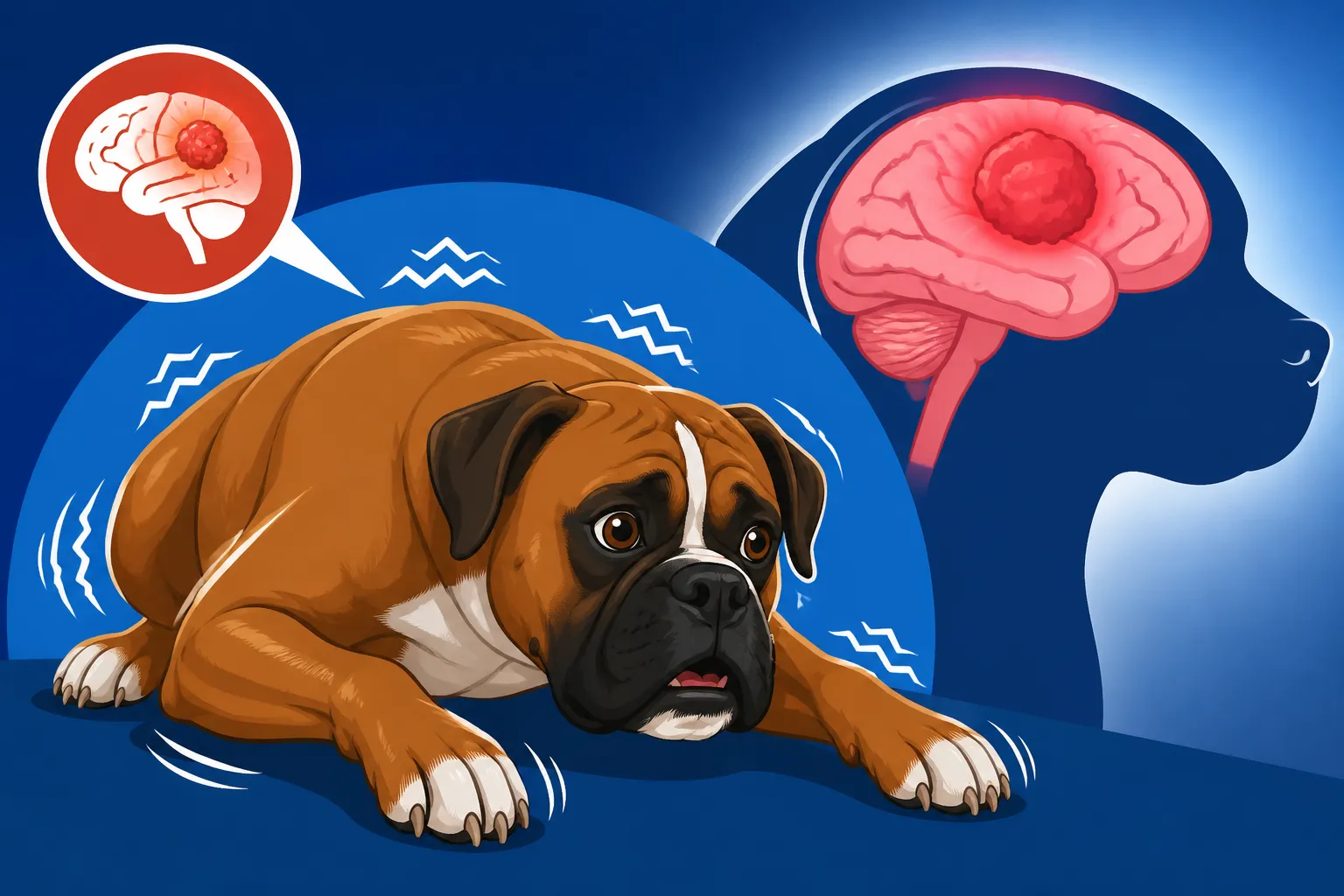
Seizures That Signal a Boxer Brain Tumor
There’s almost nothing more terrifying than watching your beloved Boxer suddenly lose control, collapsing into a seizure. That moment of helplessness, seeing them twitch and convulse, can make your heart plummet right into your stomach. It’s a fear-inducing experience for any dog owner, but when these episodes begin to happen, especially as your Boxer gets a bit older, a nagging worry often creeps in: could this be a brain tumor? This guide is here to walk you through understanding different types of seizures, how to recognize the signs that might point to a brain tumor, and what steps you can take with your vet to get answers and provide the best possible care for your furry family member.
Understanding Seizures in Boxers: More Than Just a Brain Tumor Symptom
Seizures are a symptom, not a disease itself. They’re essentially a temporary, uncontrolled burst of electrical activity in the brain that disrupts normal brain function. For Boxer owners, the sudden onset of a seizure can be particularly alarming because of the breed's known predispositions to certain health issues, including some neurological conditions. While brain tumors are a serious concern, it’s important to remember that many other things can cause seizures in our Boxers.
Different Kinds of Seizures in Boxers
Just like in people, seizures in dogs aren't a one-size-fits-all event. They can manifest in various ways, from dramatic full-body convulsions to subtle, almost unnoticeable quirks. Understanding these different types can help you describe what you're seeing to your veterinarian, which is a crucial first step in diagnosis.
-
Generalized (Grand Mal) Seizures
These are probably what most people picture when they think of a seizure. A generalized seizure involves both sides of the brain and usually affects the whole body. Your Boxer might suddenly fall to the ground, stiffen, then start paddling their legs uncontrollably. They might drool excessively, chew the air, vocalize (whimper or cry), and often lose bladder or bowel control. Their eyes can be open but unseeing, darting rapidly. These episodes are usually followed by a "post-ictal" phase, where your Boxer might be disoriented, confused, restless, or even temporarily blind. This post-ictal period can last anywhere from a few minutes to several hours, and it's just as important to observe as the seizure itself. For a large, powerful dog like a Boxer, these can be especially frightening to witness and manage. -
Focal (Partial) Seizures
Focal seizures involve electrical activity in only one part of the brain, leading to localized symptoms. This means you might see effects in just one part of your Boxer's body. For instance, one side of their face might twitch, or they might repeatedly chew or lick at nothing. Sometimes, a limb on one side of the body will uncontrollably paddle or stiffen. These can be much harder to spot than generalized seizures because they're less dramatic. A subtle eye twitch, an unusual head turn, or a repetitive licking behavior that seems out of place could all be signs of a focal seizure. They can also sometimes progress into a generalized seizure, starting small and then spreading to involve the whole brain. -
Psychomotor Seizures
These seizures are even more elusive and often get mistaken for behavioral quirks. They involve complex, repetitive behaviors that seem purposeful but are actually involuntary. Imagine your Boxer suddenly chasing its tail repeatedly for no apparent reason, snapping at invisible flies, or suddenly becoming intensely fearful or aggressive for a few minutes. They might seem "zoned out" or unresponsive during these episodes. Because Boxers are known for their playful, sometimes goofy antics, it can be incredibly challenging to differentiate a true psychomotor seizure from typical Boxer behavior, especially if you haven't seen one before. Keeping a detailed log of unusual behaviors is key here.
Common Causes of Seizures Beyond Tumors
It’s easy to jump to the worst conclusion when seizures start, but thankfully, there are many other causes of seizures in Boxers that aren't brain tumors. Your vet will work systematically to rule these out, which often involves a battery of tests.
-
Idiopathic Epilepsy
This is perhaps the most common cause of recurrent seizures in dogs, and Boxers are one of the breeds predisposed to it. "Idiopathic" simply means there's no identifiable cause; the brain itself is structurally normal, but it has an inherited tendency to seizure. These seizures usually begin in Boxers between six months and five years of age. They tend to follow a similar pattern each time and occur in clusters or at fairly regular intervals. While a diagnosis of idiopathic epilepsy can be scary, it's often manageable with medication, allowing your Boxer to live a full and happy life. Regular monitoring and medication adjustments are often required to keep seizures under control. -
Metabolic Issues
Sometimes, a seizure is a symptom of an underlying problem elsewhere in the body affecting brain function. Conditions like severe hypoglycemia (low blood sugar), liver disease (portosystemic shunt or liver failure), kidney disease, or even electrolyte imbalances can trigger seizures. For example, a Boxer with undiagnosed liver issues might accumulate toxins in their bloodstream that then affect the brain. These causes are often identified through routine blood tests, which is why your vet will almost always recommend a full blood panel when seizures first appear. Addressing the underlying metabolic issue can often resolve or significantly reduce seizure activity. -
Toxins or Head Trauma
Boxers are curious dogs, and sometimes that curiosity can lead them into trouble. Ingesting certain toxins, such as pesticides, lead, certain human medications, or even some plants, can cause seizures. Similarly, a severe head injury—perhaps from being hit by a car, falling, or a rough play incident—could lead to seizures, either immediately or much later as scar tissue forms in the brain. If you suspect your Boxer has been exposed to a toxin or suffered head trauma, immediate veterinary attention is crucial. Always be vigilant about what your Boxer has access to, both inside and outside the home.
Identifying Brain Tumor-Related Seizures: What to Look For
While any seizure is serious, certain characteristics can raise a red flag for a brain tumor in your Boxer. It's about looking at the whole picture—the dog's age, the nature of the seizures, and any other symptoms that might be present. This is where your detailed observations become incredibly valuable to your vet.
Key Characteristics of Tumor-Induced Seizures
When considering a brain tumor as the cause, certain patterns and presentations of seizures stand out. It’s rarely just a single seizure event; it’s often about how these events evolve and what else is happening with your Boxer.
-
Sudden Onset in Older Boxers
This is one of the biggest indicators. If your Boxer is suddenly experiencing their first seizure when they're past the typical age range for idiopathic epilepsy—say, six, seven, or even eight years old or more—a brain tumor becomes a much stronger possibility. While a Boxer's life span is often 10 to 12 years, the later years can bring new health challenges. Tumors don't usually appear in young, otherwise healthy dogs. If your older Boxer has never had seizures before and suddenly starts, especially out of the blue, your vet will immediately start considering deeper neurological causes. This is a common age for conditions like The Age Boxer Cancer Usually Appears to start becoming a concern. -
Progressive Worsening or Increasing Frequency
Brain tumors are typically progressive, meaning they grow over time. As the tumor expands, it puts more pressure on the brain or interferes more significantly with brain function, leading to seizures that become more frequent, more severe, or last longer. You might notice your Boxer initially having seizures every few months, then every few weeks, and eventually, perhaps, multiple times a week or even day. This escalating pattern is a worrying sign that something is actively changing within the brain, unlike the more stable pattern often seen with idiopathic epilepsy. Keeping a seizure diary is incredibly important here to track these changes. -
Focal Seizures
While generalized seizures can also be caused by tumors, focal seizures are particularly suggestive of a localized lesion like a tumor. If the tumor is situated in a specific area of the brain, it can disrupt the electrical activity in just that region, leading to localized twitching, odd behaviors, or weakness on one side of the body. For example, consistent twitching of one eyelid, a constant chewing motion on one side of the mouth, or a unilateral limb weakness that appears just before or after a seizure could all point to a focal point of irritation in the brain, often caused by a growing mass.
Accompanying Neurological Signs
Seizures caused by a brain tumor are rarely the only symptom. The tumor's presence and growth often affect other brain functions, leading to a host of other neurological signs that develop alongside or even before the seizures start. These additional symptoms provide critical clues to your veterinarian.
-
Behavioral Changes
A tumor can alter your Boxer's personality and behavior in noticeable ways. You might observe new onset aggression, increased anxiety, disorientation, or a general dullness. They might stare blankly, get stuck in corners, or seem to forget familiar people or commands. A Boxer known for being goofy and affectionate might become withdrawn or irritable. These changes aren't always dramatic; sometimes it's a subtle shift, like less enthusiasm for walks or a decreased interest in toys. Any uncharacteristic change in temperament or cognitive function in an older Boxer warrants investigation. -
Vision or Balance Problems
Depending on where the tumor is located, it can interfere with sensory processing or motor control. Your Boxer might start bumping into furniture, seem hesitant on stairs, or misjudge distances. They might develop an uncoordinated gait, stumble more frequently, or circle endlessly in one direction. Head tilting or a noticeable loss of balance are also significant signs. You might also notice abnormal eye movements (nystagmus) or a lack of response to visual cues, even if their eyes appear open and clear. These signs are often linked to the cerebellum or brainstem, where tumors can greatly impact coordination. -
Weakness or Paralysis on one side
If a brain tumor affects the motor cortex or specific neural pathways, it can cause weakness (paresis) or even paralysis (plegia) on one side of your Boxer's body. This might manifest as a leg dragging, difficulty standing up, or a general reluctance to use one side of their body. For instance, they might consistently favor one front leg, or one side of their mouth might droop. This unilateral weakness is a strong indicator of a localized problem in the brain, potentially a tumor, as opposed to a more diffuse issue. -
Changes in Appetite/Thirst
While less specific, changes in appetite or thirst can also be subtle indicators of underlying health problems, including brain tumors. A sudden loss of appetite, or conversely, an insatiable hunger or thirst, could be related to hormonal imbalances caused by a tumor affecting the pituitary gland or hypothalamus. While these changes are often also linked to kidney disease or diabetes, in the context of other neurological signs and seizures, they add another piece to the diagnostic puzzle.
The Diagnostic Journey: Confirming a Brain Tumor
Once your vet suspects a brain tumor, the diagnostic process becomes more focused and involves specialized tests. This journey can feel overwhelming, but each step brings you closer to understanding what's happening and making informed decisions about your Boxer's care. Organizations like Healthy Paws pet insurance can be a real lifesaver when facing these kinds of diagnostic and treatment costs.
Initial Vet Visit and Neurological Exam
The first step is always a thorough evaluation by your primary veterinarian. They will be the first line of defense, gathering information and performing initial assessments.
-
Detailed History (Seizure Diary)
Your input is absolutely invaluable here. Before your appointment, try to write down everything you can recall about the seizures: when they started, how long they last, what they look like (generalized, focal, psychomotor), how frequently they occur, and what happens before and after. Did your Boxer seem confused or wobbly? Did they lose bladder control? Any unusual behaviors or changes in personality you've observed? The more detail you can provide, the better. This "seizure diary" helps your vet pinpoint patterns and rule out or confirm suspicions. For instance, if the seizures are random and short with quick recovery, it might suggest idiopathic epilepsy, whereas progressive, focal seizures with other neurological signs point elsewhere. -
Physical and Neurological Assessment
Your vet will perform a comprehensive physical exam to check your Boxer's overall health. They'll listen to their heart and lungs, check their weight and body condition (are you tracking your Feeding a Boxer to Stay Lean and Muscled goals?), and palpate their abdomen. The neurological exam is much more detailed, assessing reflexes, balance, coordination, gait, vision, and sensation. They'll look for any asymmetries in muscle tone, pupillary responses, or facial expressions. Observing any head tilt, circling, or unusual eye movements can offer clues as to which part of the brain might be affected. -
Bloodwork and Urinalysis (Ruling Out Other Causes)
Before jumping to advanced imaging, your vet will almost certainly recommend a full blood panel and urinalysis. This is to rule out those other common causes of seizures we discussed, like metabolic issues (liver or kidney disease, low blood sugar) or infections. These tests are relatively inexpensive and can provide a lot of information. For example, elevated liver enzymes or abnormal kidney values could indicate an underlying systemic problem causing the seizures, which would change the diagnostic and treatment plan significantly. If these tests come back normal, it strengthens the suspicion of a primary brain issue, like a tumor.
Advanced Imaging: The Gold Standard
Once metabolic and systemic causes have been ruled out, and if the neurological exam points towards a brain lesion, your vet will likely recommend advanced imaging. This is where you start to get definitive answers.
-
MRI vs. CT Scan (Pros and Cons for Brain Tumors)
Magnetic Resonance Imaging (MRI) is considered the gold standard for diagnosing brain tumors in dogs. It provides incredibly detailed images of soft tissues, allowing the vet to see the size, location, and characteristics of a tumor with high precision. It can often differentiate between different types of masses (tumor, cyst, inflammation). The downside? MRIs are expensive and require general anesthesia, which carries some risk for Boxers, a breed known for Anesthesia Risk in a Flat-Faced Boxer.
Computed Tomography (CT) scans are another option. While generally less detailed for soft tissues compared to MRI, CT scans are faster, often more readily available, and can be less expensive. They are excellent for identifying bone involvement or large masses. For a Boxer with seizures, an MRI is usually preferred if available, but a CT scan can still provide critical information if an MRI isn't an option. Your vet will discuss which is most appropriate for your Boxer's specific situation. This is a big expense, and having pet insurance like Healthy Paws can significantly ease the financial burden of these crucial diagnostic tools. -
Spinal Tap (CSF Analysis)
In some cases, especially if inflammation or infection is suspected in addition to or instead of a tumor, your vet might recommend a cerebrospinal fluid (CSF) analysis, often referred to as a spinal tap. This involves collecting a small sample of fluid that surrounds the brain and spinal cord. The fluid is then analyzed for abnormal cells, proteins, or infectious agents. While it doesn't directly diagnose a tumor, it can provide supporting evidence (e.g., certain cell types might suggest a tumor, or it can rule out inflammatory conditions that mimic tumors). This procedure also requires general anesthesia.
Managing Seizures and Treatment Options: What Comes Next
Getting a diagnosis, especially one as serious as a brain tumor, is incredibly challenging. But knowing means you can act. The next steps involve managing the seizures to improve your Boxer's quality of life and exploring potential treatments for the tumor itself. It's a journey that focuses on comfort and care.
Immediate Seizure Management at Home
When a seizure strikes, it's natural to panic. But knowing how to react calmly and effectively can make a huge difference in keeping your Boxer safe.
-
Safety Measures During a Seizure
The most important thing during a seizure is to keep your Boxer safe and prevent them from injuring themselves. First, don't try to move them unless they are in a dangerous spot (e.g., near stairs, sharp furniture, or water). If you must move them, do so carefully by dragging them on a blanket. Never put your hands in their mouth; they cannot swallow their tongue, and you risk being bitten accidentally. Clear the area around them of any objects they could hit. Speak to them calmly and softly; loud noises or bright lights can sometimes prolong or worsen a seizure. Keep other pets and children away. Time the seizure if you can; knowing its duration is important for your vet. Many Boxer owners find it helpful to have a small, soft blanket or cushion nearby that they can gently place under their dog's head to prevent injury. -
Post-Seizure Care and Observation
After the seizure, your Boxer will enter the post-ictal phase. They might be disoriented, confused, restless, or temporarily blind. They might wander aimlessly, bump into things, or be unusually hungry or thirsty. Some Boxers might be aggressive or fearful during this time. Continue to speak softly and reassuringly. Offer a small amount of water or a bland treat if they are able to eat and drink normally. Lead them to a safe, quiet place to rest. Avoid over-stimulation. Continue to observe them closely for several hours. Note how long the post-ictal phase lasts and any specific behaviors you see. Your vet will ask about this. This period can sometimes be just as distressing as the seizure itself, for both you and your Boxer.
Medical Management of Seizures
Even with a brain tumor, medication can often help control the seizures, improving your Boxer's comfort and quality of life. This is often the first line of treatment while other options are considered.
-
Anticonvulsant Medications
There are several effective anticonvulsant medications available for dogs. Common choices include phenobarbital, potassium bromide, and newer drugs like Levetiracetam (Keppra), Zonisamide, or Gabapentin. The choice of medication, dosage, and whether to use one or a combination will depend on your Boxer's specific case, the frequency and severity of seizures, and any other health conditions they might have. For example, phenobarbital can affect the liver, so your vet might choose a different drug if your Boxer has pre-existing liver issues. Levetiracetam is often favored for its rapid action and fewer side effects, especially as a rescue medication or initially. -
Dosage and Monitoring
Finding the right medication and dosage is often a process of trial and error. Your vet will start with a specific dose and monitor your Boxer's response. Blood tests will be needed periodically to check drug levels (especially for phenobarbital and potassium bromide) to ensure they are in the therapeutic range and to monitor for any side effects on organs like the liver or kidneys. It’s crucial to administer these medications exactly as prescribed and not to stop them abruptly, as this can trigger severe rebound seizures. This ongoing management requires commitment and can be costly over time, making a good pet insurance plan like Healthy Paws incredibly valuable for covering these recurring medication expenses.
Specific Brain Tumor Treatments
If a brain tumor is confirmed, discussing treatment options with a veterinary oncologist or neurologist is the next crucial step. These discussions will be highly personalized, considering the tumor type, location, your Boxer's overall health, and your family's circumstances.
-
Surgery (When Possible)
Surgical removal of a brain tumor offers the best chance for a cure or long-term control, but it's not always feasible. Brain surgery is highly specialized, expensive, and complex. It depends heavily on the tumor's location; some areas of the brain are simply too delicate or inaccessible to operate on safely. Even if surgery is possible, there's a risk of complications, including neurological deficits. A veterinary neurologist will assess the risks and potential benefits thoroughly. After surgery, your Boxer would need intensive post-operative care and rehabilitation. If surgery isn't possible, don't despair; other options exist. -
Radiation Therapy
Radiation therapy is a very common and often effective treatment for canine brain tumors, even if surgery isn't an option or wasn't fully successful. It involves using high-energy radiation to target and destroy tumor cells while minimizing damage to surrounding healthy tissue. This treatment typically involves multiple short sessions over several weeks, with your Boxer requiring anesthesia for each session to ensure they remain perfectly still. Radiation can significantly reduce tumor size, alleviate symptoms, and extend lifespan. It can be particularly effective for certain types of tumors, such as meningiomas. Like surgery, radiation therapy is expensive and requires a referral to a specialty oncology center. Again, a comprehensive pet insurance plan from providers like Healthy Paws can help manage the substantial costs associated with this advanced treatment. You can read more about Chemotherapy for a Boxer With Cancer and radiation options in other resources. -
Chemotherapy (Less Common for Primary Brain Tumors)
Chemotherapy is less frequently used as a primary treatment for brain tumors in dogs compared to radiation or surgery. This is partly because many chemotherapy drugs struggle to cross the blood-brain barrier effectively, limiting their reach to the tumor. However, certain types of tumors or specific situations might benefit from chemotherapy, often in conjunction with radiation. Your veterinary oncologist will determine if chemotherapy is a viable option for your Boxer based on the tumor type and grade. -
Palliative Care and Quality of Life Considerations
Sometimes, despite all efforts, or if advanced treatments aren't feasible or desired, the focus shifts to palliative care. This means managing symptoms, controlling pain, and ensuring your Boxer's comfort and quality of life for as long as possible. This often involves ongoing seizure medication, pain management (if the tumor is causing headaches or discomfort), anti-inflammatory drugs, and supportive care at home. This is an incredibly difficult time, and making the decision to prioritize comfort over aggressive treatment is a valid and loving choice. Resources on Hospice Care for a Boxer can provide invaluable guidance during this period, focusing on how to make your Boxer's remaining time as comfortable and joyful as possible. Understanding Knowing When a Boxer With Cancer Has Had Enough is also a crucial, heartbreaking part of this journey.
| Seizure Type | Typical Onset Age | Common Causes | Key Characteristics |
|---|---|---|---|
| Idiopathic Epilepsy | 6 months – 5 years | Genetic predisposition, unknown | Recurrent, similar pattern, often generalized; normal between episodes; no other neurological signs; bloodwork usually normal |
| Brain Tumor-Related | 6+ years | Mass/lesion in the brain | New onset in older dogs; progressive worsening, increasing frequency; often focal; accompanied by other neurological deficits |
| Metabolic Seizures | Any age | Liver/kidney disease, low blood sugar, toxins | Often generalized; other systemic illness signs (vomiting, lethargy, increased thirst/urination); abnormal bloodwork |
| Head Trauma-Induced | Any age | Injury to the head | Can be immediate or delayed; often a history of trauma; variable presentation; may have other signs of injury |
Disclaimer
This guide is for informational purposes only and is not a substitute for professional veterinary advice. If your Boxer is experiencing seizures or any other concerning symptoms, please consult your veterinarian immediately for an accurate diagnosis and personalized treatment plan.