Telling a Boxer Fatty Lump From a Tumor
Finding a new lump or bump on your beloved Boxer can send a chill down any dog owner's spine. We all know the statistics surrounding this wonderful breed and their susceptibility to certain health challenges, and that little discovery can immediately trigger a wave of anxiety: "Is it serious? Is it just a fatty lump, or something much worse?" This guide is here to walk you through the differences between benign fatty lumps and potentially malignant tumors in Boxers, helping you understand what to look for and, most importantly, when to consult your veterinarian for expert advice.
The Initial Panic of Finding a Lump on Your Boxer
It’s a universal feeling among Boxer owners: that moment your hand glides over their short, sleek coat during a cuddle, and you feel something new, something different. Your heart skips a beat. Is it just a bug bite? A bruised muscle? Or is it that dreaded 'C' word? This immediate leap to the worst-case scenario isn't an overreaction; it's a testament to how deeply we love our dogs and how aware we are of their breed-specific vulnerabilities.
Why Lumps are Such a Big Deal for Boxer Owners
Boxers, bless their goofy, loving hearts, are unfortunately prone to certain types of cancers. It’s a sad reality that every Boxer parent lives with. This genetic predisposition means that any new growth, no matter how small or seemingly insignificant, carries a weight of concern that might not be present with other breeds. We know that conditions like mast cell tumors, lymphoma, and various sarcomas are more prevalent in Boxers. This knowledge, while crucial for early detection, also means that every routine petting session can turn into a frantic search for the smallest abnormality. The stress of this constant vigilance is real, and it’s a burden unique to owning certain breeds. If you’ve ever found yourself meticulously checking your Boxer for new bumps, you’re not alone in that concern. It’s a vital part of responsible Boxer ownership, but it doesn’t make it any less nerve-wracking. For more on this, you might find our article on Why Cancer Kills More Boxers Than Anything Else a sobering but informative read.
The Importance of Early Detection
The single most powerful tool we have against canine cancer is early detection. Catching a lump when it's small, before it has the chance to grow, spread, or cause significant problems, dramatically improves the prognosis for many types of cancer. This is why those weekly lump checks on a Boxer are so critical. It's not about being paranoid; it's about being proactive. Imagine you find a pea-sized lump on your Boxer's side. If it's a benign fatty lump (a lipoma), it's nothing to worry about beyond monitoring. But if it's an aggressive mast cell tumor, that small size offers a much better chance for successful removal and treatment compared to a larger, more entrenched tumor. This proactive approach can make all the difference in the world, potentially extending your Boxer’s healthy years with you.
Understanding Benign Fatty Lumps: Lipomas
Among the various lumps and bumps that can appear on your Boxer, the benign fatty lump, or lipoma, is probably the most common and, thankfully, the least concerning. While finding any lump is scary, recognizing the typical characteristics of a lipoma can provide some initial peace of mind.
What Exactly is a Lipoma
A lipoma is essentially a benign (non-cancerous) tumor made up of fat cells. Think of it as a small, contained collection of fat that develops just under the skin. They are extremely common in older dogs, and Boxers are no exception, though they can appear at any age. These lumps don't typically cause any pain or discomfort unless they grow very large and interfere with movement, or if they are in an awkward location where they get rubbed or irritated. You'll often find them on the trunk, abdomen, and upper legs. When you feel a lipoma, it usually has a distinct texture. It's often soft or slightly rubbery, and the key characteristic is that it generally feels unattached to the underlying muscle or bone. You can often move it freely under the skin with your fingers, almost like a small, movable cushion. It's a completely different sensation from a lump that feels firmly anchored.
Characteristics of a Lipoma vs. a Suspicious Lump
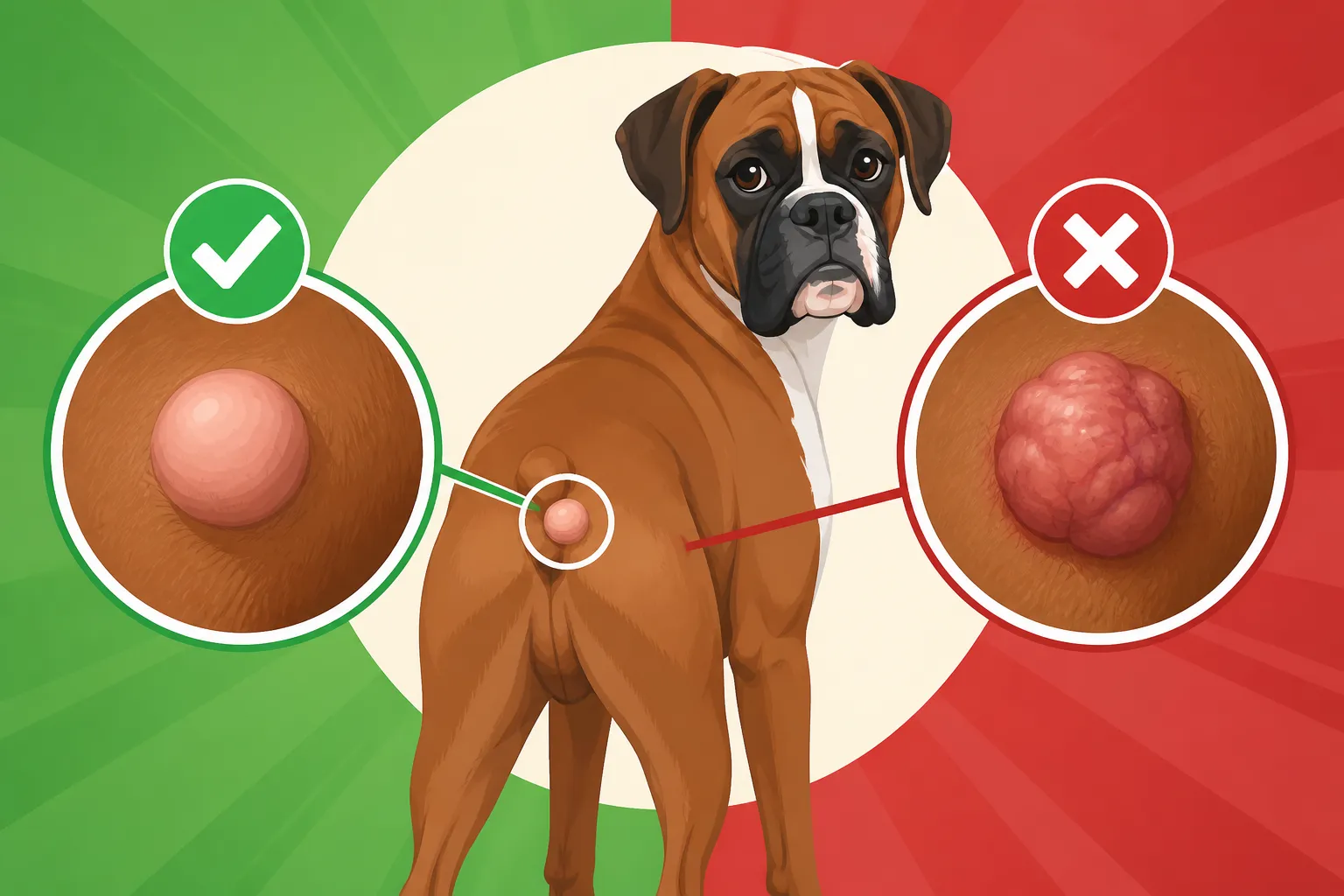
Distinguishing a lipoma from something more sinister without veterinary expertise can be challenging, but there are some general characteristics that can offer clues. A lipoma typically feels soft and doughy, almost like soft rubber or a bag of marbles if it's a larger one. Crucially, it should be freely movable under the skin, not firmly attached to deeper tissues. The growth rate of a lipoma is usually slow, or it might not grow at all once it appears. If you feel a lump and it's been there for a while, hasn't changed much, and moves easily, there's a good chance it's a lipoma.
On the other hand, a lump that feels hard, firm, or fixed to the underlying tissue is immediately more concerning. Lumps that grow rapidly, change shape, become red, inflamed, or ulcerated (meaning the skin over them breaks open) are red flags that warrant immediate veterinary attention. Imagine finding a small, soft, movable lump on your Boxer's rib cage, and then a few months later, discovering another one that feels rock-hard and seems "stuck" to the bone. The latter would be far more worrying. Our guide on Weekly Lump Checks on a Boxer provides great practical advice on regular monitoring.
Recognizing Potentially Malignant Tumors
While we all hope every lump is just a harmless fatty growth, the reality for Boxer owners is that we must be vigilant for malignant tumors. These can be aggressive and require prompt medical intervention.
Common Cancerous Lumps in Boxers
Boxers are genetically predisposed to several types of cancer that can present as lumps or masses. The most notorious among these is the mast cell tumor. These tumors are incredibly unpredictable; they can appear as a benign-looking wart, a soft lump, or a firm, aggressive mass. They can also change in size and appearance, sometimes seeming to shrink before rapidly growing again, a phenomenon known as Darier's sign. They can occur anywhere on the body, both internally and externally. This unpredictability is precisely why every new lump in a Boxer needs to be checked. For a deeper dive into these, consider reading about Grading a Boxer's Mast Cell Tumor.
Another common concern is lymphoma, which can sometimes manifest as visibly swollen lymph nodes, often felt as firm, movable lumps under the jaw, in the armpits, or behind the knees. While not a "lump under the skin" in the same way a mast cell tumor is, enlarged lymph nodes are a significant sign of this pervasive cancer. We have a detailed resource on Boxer Lymphoma and How It Presents that can help you understand this condition better. Other potential malignant lumps include various sarcomas (tumors of connective tissue), which tend to be firm and fixed, and even some types of melanomas, though less common in the skin than mast cell tumors. Brain tumors in Boxers, while not presenting as external lumps, also highlight the breed's cancer risks.
Key Red Flags to Watch For
When you're doing your regular checks, there are specific characteristics that should make you pick up the phone to your vet immediately, regardless of the lump's size. These are the "red flags" that strongly suggest a tumor might be malignant:
- Rapid Growth: If a lump appears and seems to double in size within a matter of days or weeks, that's a serious concern. Benign lumps rarely grow this fast.
- Firmness and Fixation: A lump that feels hard, unyielding, and firmly attached to the underlying muscle, bone, or other tissue is more suspicious than one that feels soft and movable.
- Irregular Shape or Borders: While lipomas are usually round or oval with smooth borders, malignant tumors can often have irregular shapes and less defined edges.
- Ulceration or Skin Changes: If the skin over the lump becomes red, inflamed, hairless, crusty, or breaks open to form a sore, this is a very strong indicator of a problem. Mast cell tumors, in particular, can be quite irritating and cause these skin changes.
- Pain or Discomfort: If your Boxer reacts negatively when you touch the lump, or if they start licking, chewing, or bothering the area, it could be painful or itchy, which can be a sign of a more aggressive tumor.
- Warmth to the Touch: An area that feels warmer than the surrounding skin can indicate inflammation or a rapidly growing mass.
Here’s a quick comparison table to help visualize the general differences, though remember, these are just guidelines, and a vet check is always best:
| Characteristic | Typical Fatty Lump (Lipoma) | Potentially Malignant Tumor |
|---|---|---|
| Texture | Soft, doughy, rubbery | Firm, hard, unyielding, sometimes spongy |
| Mobility | Freely movable under the skin, unattached | Fixed to underlying tissue, difficult to move |
| Growth Rate | Slow, stable, or non-growing | Rapid, noticeable growth in days/weeks |
| Shape/Borders | Generally round or oval, smooth borders | Irregular, undefined edges |
| Skin Appearance | Normal skin color and texture | Red, inflamed, hairless, ulcerated, discolored |
| Pain/Discomfort | Usually none, unless very large or irritated | Often painful, itchy, or bothered by the dog |
| Warmth | Usually no significant warmth | Can feel warm to the touch due to inflammation |
| Age of Dog | More common in older dogs | Can appear at any age, including young adults |
The Crucial Role of Your Veterinarian
There's no substitute for professional veterinary examination and diagnosis. As a responsible Boxer owner, your job is to detect the lump; your vet's job is to figure out what it is. Never try to self-diagnose based on internet searches or anecdotes from other owners. Each lump is unique, and each dog's health situation is individual.
When to Seek Veterinary Attention
The short answer is: always for a new lump. Even if you suspect it's just a fatty lump, getting a professional opinion is the safest course of action. It's far better to have a vet confirm it's benign than to wait and discover it was something serious that has now progressed. If you find a new lump on your Boxer, call your vet. Don't delay. Mention that you have a Boxer and have found a lump, as they may want to schedule you in sooner given the breed's predispositions. If you notice any of the "red flags" mentioned above – rapid growth, ulceration, pain, or fixation – that appointment becomes even more urgent. It's always best to be proactive, even if it feels like you're being overly cautious.
Diagnostic Tools
When you bring your Boxer in for a lump check, your veterinarian has several tools at their disposal to determine the nature of the growth. These range from simple, non-invasive procedures to more involved diagnostics.
-
Fine Needle Aspirate (FNA): This is often the first step. The vet will use a very thin needle (similar to a vaccination needle) to extract a small sample of cells from the lump. This procedure is usually quick, well-tolerated by most Boxers, and often doesn't even require sedation. The cells are then spread on a slide and examined under a microscope by your vet or sent to a veterinary pathologist. This can often differentiate between a lipoma, a cyst, an inflammatory reaction, or some types of tumors like mast cell tumors. It's a fantastic first-line diagnostic because it's minimally invasive and provides quick preliminary results. Our article on Needle Biopsy on a Boxer Lump elaborates on this procedure.
-
Surgical Biopsy: If the FNA is inconclusive, or if the vet strongly suspects a malignant tumor, a surgical biopsy might be recommended. This involves surgically removing a small piece of the lump (incisional biopsy) or the entire lump (excisional biopsy) for histopathological examination. This provides a more definitive diagnosis, including the type of cancer, its grade (how aggressive it is), and whether clear margins were achieved if the entire lump was removed. This procedure requires general anesthesia, so it's a bigger step, but often necessary for accurate diagnosis and treatment planning.
-
Imaging (X-rays, Ultrasound, CT/MRI): While less common for initial lump diagnosis, imaging can be crucial if the lump is deep within the body, if the vet suspects it has spread, or if they need to assess the extent of a tumor before surgery. For example, an ultrasound might be used to examine an internal abdominal mass, or X-rays to check for lung metastasis if cancer is suspected. Brain tumors in Boxers, for instance, would require an MRI or CT scan for diagnosis. These tools provide a visual roadmap of the internal structures, helping the vet understand the scope of the problem.
What to Expect During a Vet Visit
Visiting the vet for a lump can be stressful, but knowing what to expect can ease some of that anxiety. Your vet's goal is to accurately diagnose the lump and provide the best possible plan for your Boxer.
The Physical Examination
When you first arrive, your veterinarian will take a thorough history from you. They'll ask when you first noticed the lump, if it's changed in size or appearance, if your Boxer is bothered by it, and any other symptoms you've observed. This information is critical. Then, they'll perform a complete physical examination of your Boxer, paying special attention to the lump itself. They'll palpate it (feel it), assessing its size, shape, consistency (soft, firm, hard), mobility (is it fixed or does it move freely?), and whether it appears painful to your dog. They’ll also check other areas, like lymph nodes, to see if there are other signs of systemic disease. This initial hands-on assessment helps them form an initial impression and guide the next steps. They might even draw a little diagram in your Boxer’s medical chart to map the location and size of the lump, which is super helpful for tracking changes later on. This thoroughness is important for catching any abnormalities, like those covered in our article, The Lumps a Boxer Owner Has to Check For.
Explaining the Fine Needle Aspirate (FNA)
As mentioned, the FNA is a common diagnostic step. Your vet will explain the procedure to you, emphasizing that it's usually quick and relatively painless for your Boxer. They'll use a sterile, small-gauge needle attached to a syringe to penetrate the lump and collect cells. Sometimes, they'll do this several times from different areas of the lump to get a representative sample. Your Boxer might flinch or whine briefly, but most handle it well without sedation.
The cells collected might be examined right there in the clinic if your vet has the equipment and expertise, or they will be prepared and sent off to a specialized veterinary cytologist or pathologist. While FNA is excellent for identifying fat cells (indicating a lipoma) or inflammatory cells, and often for mast cell tumors, it's not always 100% definitive. Some tumors don't exfoliate cells well, meaning the needle might not pick up enough diagnostic material. Also, some benign and malignant cells can look similar under the microscope. If the results are inconclusive, or if the findings suggest something serious, your vet will discuss the next steps, which usually involves a biopsy.
When a Surgical Biopsy is Necessary
A surgical biopsy is a more invasive procedure, but it provides the most definitive diagnosis. Your vet might recommend this if:
- The FNA was inconclusive, providing insufficient cells or ambiguous results.
- The FNA results suggest a type of cancer that requires more detailed grading or specific identification (e.g., some sarcomas).
- The lump has concerning characteristics (rapid growth, fixation, ulceration) even if an FNA didn't yield clear malignant cells.
- The lump is easily removable, and the vet can take it all out at once (excisional biopsy), providing both diagnosis and treatment in one go.
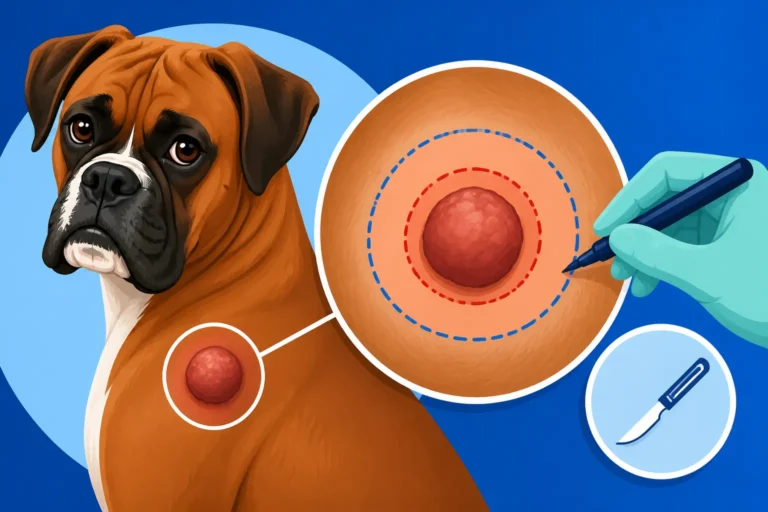
During a surgical biopsy, your Boxer will be placed under general anesthesia. The vet will either remove a portion of the mass (incisional biopsy) or the entire mass (excisional biopsy) along with a margin of healthy tissue around it. The tissue sample is then sent to a veterinary pathologist who will examine it in detail, allowing for a precise diagnosis, tumor type, grade, and assessment of surgical margins (which is critical for cancers like mast cell tumors). This detailed report is essential for determining the best course of action, whether it's further surgery, chemotherapy, or radiation therapy. This is also where pet insurance providers like Healthy Paws can be incredibly helpful in easing the financial burden of these significant diagnostic and treatment costs.
Living with Lumps: Monitoring and Management
Once you have a diagnosis, whether it's benign or malignant, the journey doesn't end there. Ongoing monitoring and management are crucial for your Boxer's long-term health.
Tracking Benign Lumps
If your Boxer has been diagnosed with a benign lipoma or other harmless lump, your vet will likely advise you to simply monitor it. This means you should continue your weekly lump checks, paying close attention to that specific lump. Keep an eye on its size, shape, and consistency. A great tip is to measure the lump every few weeks with a soft measuring tape and note it down, perhaps even taking a photo for visual comparison. This helps you track any subtle changes. If you ever notice the lipoma starting to grow rapidly, becoming firm, or causing your Boxer discomfort, it’s time for another vet visit. Even benign lumps can sometimes transform or grow to a size where they interfere with movement or get irritated, necessitating removal. It's a good practice to keep a little "lump map" in your Boxer's health journal.
The Emotional Toll on Owners
Let’s be honest, living with a Boxer and their propensity for lumps can be emotionally exhausting. Every time you find a new bump, that familiar knot of anxiety tightens in your stomach. It’s hard not to worry, especially when you know the statistics. The constant vigilance, the trips to the vet for FNAs, waiting for results – it all takes a toll. It’s okay to feel stressed, to feel scared. You're not alone. Many Boxer owners find themselves building up a "cancer fund a Boxer owner should build" to prepare for potential treatment costs, or wisely investing in pet insurance early, before any lumps appear. A reliable provider like Healthy Paws can offer significant peace of mind, knowing that if a lump does turn out to be malignant, you’ll have support for the financial strain of What Boxer Cancer Treatment Actually Costs. Remember, your Boxer relies on you, and taking care of your own mental well-being is part of being a great pet parent. Lean on your support network, whether it’s your vet, fellow Boxer enthusiasts, or your family, and celebrate every healthy day with your wonderful companion.
Disclaimer
This article is intended for informational purposes only and does not constitute veterinary advice. Always consult with a qualified veterinarian for any health concerns or before making any decisions about your pet's health or treatment.