Giardia Against Colitis in a Boxer
It’s truly unsettling when your usually vibrant Boxer starts showing signs of an upset stomach. That tail-wagging exuberance can quickly diminish, replaced by lethargy, discomfort, and those dreaded messy stools that no dog owner wants to see. Distinguishing between a simple tummy ache and something more serious, like Giardia or Colitis, can be a real head-scratcher, leaving you worried about your beloved companion. This comprehensive guide aims to clear up the confusion surrounding Giardia and Colitis in Boxers, helping you understand their differences, recognize the signs, and know what steps to take.
Understanding Giardia in Boxers
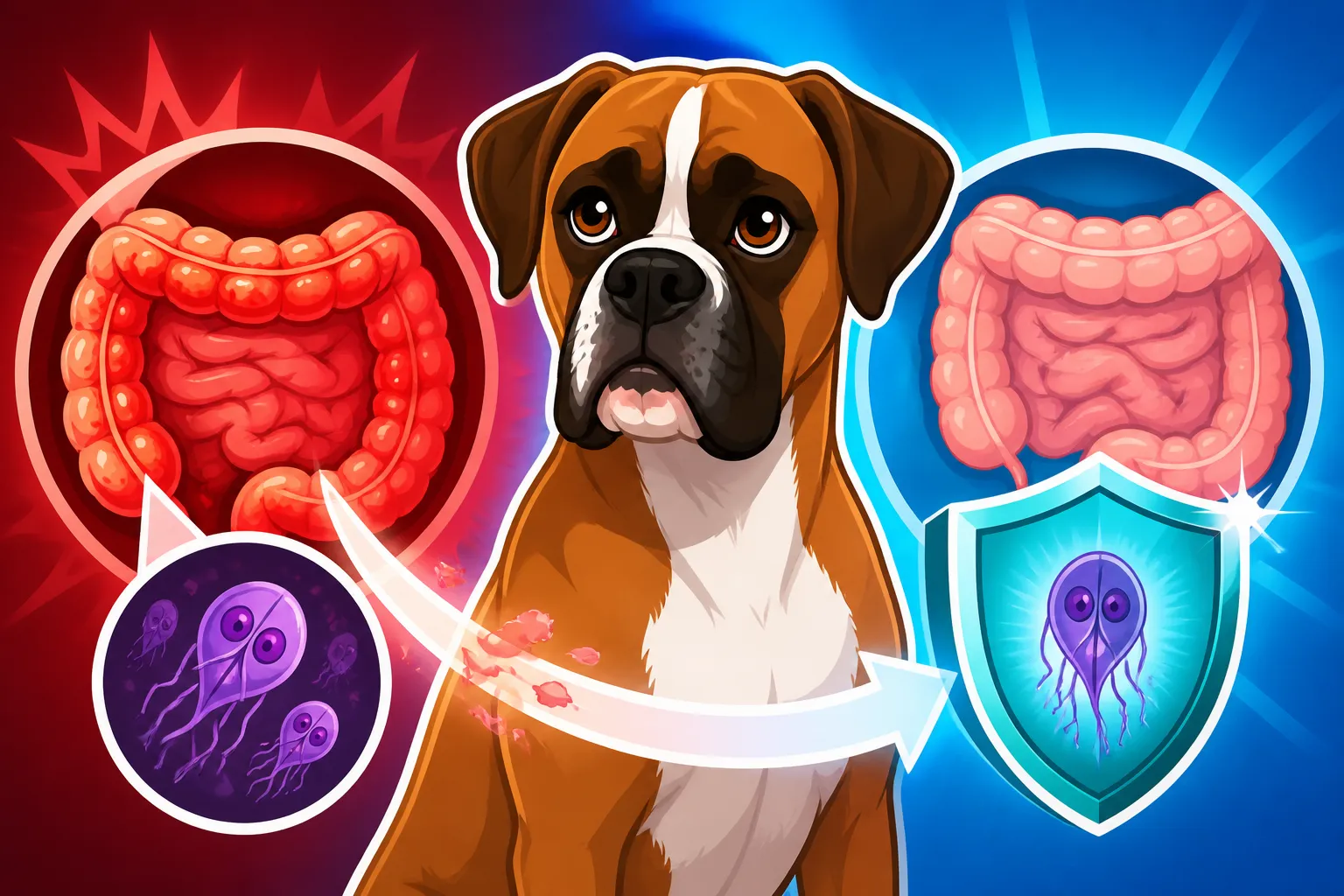
Giardia is a tiny, single-celled parasite that can set up shop in your Boxer's intestines. It’s a common culprit behind a whole host of gastrointestinal woes, particularly in puppies and dogs with compromised immune systems. When your Boxer picks up Giardia, it’s usually from ingesting contaminated water, food, or feces that contain the hardy cysts of the parasite. Think about those shared water bowls at the dog park, a puddle on a trail, or even just sniffing around where an infected animal has relieved itself – these are prime opportunities for exposure.
How Boxers Contract Giardia
Our Boxers, with their curious noses and love for exploring, are often at risk of encountering Giardia cysts in their environment. These microscopic cysts are incredibly resilient and can survive for extended periods in cool, moist conditions. Imagine your Boxer taking a refreshing drink from a stagnant puddle on a warm day, or perhaps investigating a patch of grass where another dog, unknowingly infected, has recently left a deposit. These seemingly innocent actions are often how the parasite makes its way into your dog's system. Once ingested, the cysts transform into active trophozoites within the small intestine, attaching to the intestinal lining and disrupting its normal function, leading to inflammation and malabsorption.
The prevalence of Giardia means that even well-cared-for dogs can sometimes pick it up. Daycare facilities, kennels, and even routine walks in popular dog areas can expose your Boxer to the parasite. It’s not a reflection of your care; it's just one of those frustrating realities of having a dog who interacts with the world. Sometimes, the stress of a new environment, like a recent boarding stay, can even weaken a Boxer's immune system, making them more susceptible to an infection taking hold.
Common Symptoms and What to Watch For
The most common sign of Giardia in Boxers, and indeed most dogs, is diarrhea. But it’s not always your typical watery explosion. Often, Giardia-related diarrhea is characterized by soft, pale, foul-smelling stools that might appear greasy or foamy. This greasy appearance is due to malabsorption of fats, a direct result of the parasite messing with the intestinal lining. Your Boxer might also exhibit a noticeable increase in gas, making an already unpleasant situation even more… aromatic.
Beyond the obvious stool changes, you might observe your Boxer having a general lack of energy or even a slight loss of appetite. In more severe or chronic cases, especially in younger Boxers or those already battling other health issues, weight loss can become a concern. They just aren't absorbing nutrients properly. It's important to remember that some dogs can be asymptomatic carriers, shedding cysts intermittently without showing any signs, which makes control in multi-dog households or communal spaces even trickier. If you've got a Boxer puppy with seemingly unending loose stools, even if they appear otherwise bright, Giardia should always be on your vet's radar. This is often an issue that parents ask about, wondering if their Boxer puppy outgrows loose stools, but with Giardia, it's a persistent problem.
Deciphering Boxer Colitis
Colitis, on the other hand, isn't a parasite; it's an inflammation of the colon, the large intestine. While it can affect any dog breed, Boxers seem to have a particular predisposition to certain forms of colitis, notably "Boxer Colitis" or "Histiocytic Ulcerative Colitis (HUC)," which is now often referred to as Granulomatous Colitis. This specific type is believed to be an immune-mediated or genetic condition where a particular strain of E. coli invades the colon lining, leading to severe, chronic inflammation.
Causes and Boxer Predisposition
Beyond the specific Boxer Colitis, more general forms of colitis can stem from a variety of causes. Dietary indiscretion, meaning your Boxer ate something they shouldn't have – a classic Boxer move, right? – is a big one. Sudden changes in diet, food allergies or sensitivities, stress, bacterial infections (other than the specific E. coli in HUC), or even other intestinal parasites can all trigger colitis. Our Boxers are often sensitive souls, and sometimes, even psychological stress can manifest as gastrointestinal upset.
The "Boxer Colitis" or HUC mentioned above is a serious condition that historically affected Boxers disproportionately, often young ones. It’s an interesting and frustrating condition where "Why E Coli Sits Inside a Boxer's Colon Wall" is a key question scientists have explored, finding that the specific E. coli strain is able to invade and live within the colon cells, causing profound inflammation and ulceration. Thankfully, treatment advancements have made a huge difference for these dogs, but the breed’s overall sensitivity to colon issues remains. This predisposition is why many Boxer owners are so tuned into their dog’s stool quality.
Distinguishing Symptoms of Colitis
When a Boxer has colitis, the symptoms often center around the act of defecation and the appearance of the stool. You'll frequently see your Boxer straining to pass stool, often making multiple attempts in a short period, which is called tenesmus. Despite all this effort, they often pass only small amounts of stool, or sometimes just mucus and blood. "Straining and Small Stools in a Boxer" are hallmark signs that something is amiss in the large intestine.
The stool itself might be soft or semi-formed, but the most telling signs are often the presence of fresh, bright red blood (hematochezia) and/or mucus coating the stool. This happens because the inflammation in the colon irritates the delicate lining, causing it to bleed and produce excess mucus. The urgency to defecate can also be a significant symptom, with your Boxer suddenly needing to go right now. Unlike the often greasy, foul-smelling stools of Giardia, colitis stools might not always be overly odorous, but the mucus and blood are usually quite distinctive. This is a common concern that ties into topics like "Bloody Mucus in a Young Boxer's Stool."
Key Differences and When to Suspect What
Trying to play detective when your Boxer isn't feeling well is never easy. Both Giardia and Colitis can cause diarrhea, which is where the confusion often begins. However, paying close attention to the details of their symptoms can give your veterinarian a much-needed head start in diagnosis.
Symptom Overlap and Unique Indicators
The biggest overlap, as we've discussed, is the presence of diarrhea or loose stools. Both conditions can make your Boxer feel generally unwell, leading to a dip in their usual playful energy. However, there are some pretty reliable unique indicators.
| Feature | Giardia | Colitis |
|---|---|---|
| Primary Cause | Protozoan parasite (ingested cysts) | Inflammation of the colon (various causes, including specific E. coli in Boxers, diet, stress, allergies) |
| Stool Appearance | Soft, pale, greasy, frothy, very foul-smelling; may be intermittent | Soft, often small amounts, frequent straining, coated with fresh bright red blood and/or mucus |
| Urgency | Can be present, but often less dramatic | Often pronounced; sudden need to defecate |
| Straining | Less common, but can occur with prolonged diarrhea | Very common and often a primary symptom (tenesmus) |
| Gas | Often noticeable and foul-smelling | Can be present, but not always as prominent as with Giardia |
| Weight Loss | More common, especially in chronic cases or puppies, due to malabsorption | Can occur in chronic, severe cases, but less directly due to nutrient malabsorption initially |
| Typical Onset | Often acute after exposure, but can be intermittent or chronic | Can be acute (dietary indiscretion) or chronic/recurrent (IBD, Boxer Colitis) |
When you're dealing with a Boxer puppy, it can be particularly tough because their systems are still developing. It's why questions like "Whether a Boxer Puppy Outgrows Loose Stools" are so common – owners want to know if it's just puppy stuff or something more. Giardia can be especially prevalent in puppies due to their developing immune systems and propensity for putting everything in their mouths. Colitis can also affect younger Boxers, especially the HUC form, which typically manifests in dogs under two years old.
The Importance of Veterinary Diagnosis
It’s crucial not to try and self-diagnose your Boxer. While the table above gives you some good pointers, many gastrointestinal issues can present similarly. What looks like Giardia might be something else entirely, and vice-versa. Attempting to treat your Boxer at home based on assumptions could delay proper treatment and worsen their condition.
Your vet will need a comprehensive history of your Boxer's symptoms, including how long they've been going on, the exact appearance of the stool, any changes in diet or routine, and their overall energy levels. This detailed information is vital for narrowing down the possibilities. This process is where pet insurance, like plans offered by Healthy Paws, can really make a difference, as diagnostics can sometimes add up quickly. Getting your Boxer insured before any issues pop up is always a wise move, as pre-existing conditions typically aren't covered.
Diagnosis, Treatment, and Prevention
Once you’ve noticed your Boxer isn't right, the next step is always a visit to the veterinarian. They have the tools and expertise to accurately diagnose what's going on and get your beloved companion on the road to recovery.
Diagnostic Approaches
For suspected Giardia, the primary diagnostic tool is a fecal test. However, Giardia can be tricky. The cysts aren't always shed consistently, so a single fecal sample might yield a false negative. Your vet might recommend submitting multiple samples over a few days (a "fecal float" or "zinc sulfate float") or using a specific Giardia ELISA test, which detects antigens (proteins) from the parasite in the stool, providing a more reliable diagnosis.
For colitis, the diagnostic path can be a bit more involved, depending on the severity and chronicity of the symptoms. For acute, mild cases, especially if dietary indiscretion is suspected, your vet might start with a deworming regimen and a bland diet trial. However, if symptoms are severe, chronic, or recurrent, or if the classic signs of "Bloody Mucus in a Young Boxer's Stool" are present, further investigation will be needed. This might include:
- Routine fecal tests: To rule out other parasites that can cause similar symptoms.
- Blood work: To check for underlying systemic illness or inflammation.
- Dietary trials: Often a hypoallergenic or novel protein diet, for several weeks, to rule out food allergies or sensitivities.
- Imaging: X-rays or ultrasound may be used to check for foreign bodies or other structural issues.
- Colonoscopy with biopsy: This is often the definitive diagnostic for chronic colitis, especially for diagnosing immune-mediated conditions like Granulomatous Colitis (the old "Boxer Colitis"). This procedure involves your Boxer being sedated so a camera can examine the colon lining and tissue samples can be taken. This can be a significant cost, and this is where comprehensive pet insurance from companies like Healthy Paws can be an invaluable asset.
Treatment Protocols
Treating Giardia typically involves antiparasitic medications. Metronidazole (Flagyl) and fenbendazole (Panacur) are commonly prescribed, often in combination or sequentially, to effectively eliminate the parasite. The course of treatment usually lasts several days to a couple of weeks. Alongside medication, strict hygiene is crucial to prevent reinfection and spread. This means daily cleaning of your Boxer's bedding, food and water bowls, and regularly bathing your dog to remove any cysts from their coat, particularly around the hindquarters. Disinfecting hard surfaces with appropriate cleaners (like bleach solutions) can also help.
Treatment for colitis is highly dependent on the underlying cause. For acute, simple colitis, a bland, easily digestible diet (like boiled chicken and rice or specific prescription gastrointestinal diets) might be sufficient, sometimes paired with a short course of antibiotics if a bacterial component is suspected. "Enrofloxacin for a Boxer With Colitis" has proven to be an effective antibiotic for the specific Granulomatous Colitis due to its ability to penetrate and eliminate the intracellular E. coli.
For chronic or immune-mediated colitis, the approach is more long-term. This often includes:
- Dietary management: This is paramount. Many Boxers with colitis benefit greatly from "Diet Changes for a Boxer With Colitis," often requiring a low-fat, high-fiber, easily digestible, or novel protein diet. Sometimes, even raw diets are explored, though this needs careful consideration with a Boxer's sensitive colon.
- Probiotics: These can help restore a healthy balance of gut flora, especially after antibiotic use, which ties into the importance of "Probiotics for a Boxer After Antibiotics."
- Anti-inflammatory medications: Steroids like prednisone might be used to reduce colon inflammation in immune-mediated cases.
- Immunosuppressants: In severe cases of Granulomatous Colitis or IBD, stronger immunosuppressive drugs might be necessary.
Prevention Strategies
Preventing Giardia largely revolves around minimizing exposure to contaminated sources. Provide your Boxer with fresh, clean drinking water at all times and discourage them from drinking from puddles, ponds, or communal water bowls at dog parks if you're unsure of their cleanliness. Picking up your Boxer's poop promptly helps prevent the spread of cysts to other dogs and environments. Regular deworming, as advised by your vet, can also play a role.
Preventing colitis often focuses on consistent dietary management and minimizing stress. Avoid sudden changes in your Boxer's food. If you need to switch diets, do so gradually over several days to a week. If your Boxer has known food sensitivities, stick rigorously to their prescribed or specialized diet. Managing stress in your Boxer's life, perhaps through consistent routines, adequate exercise, and a calm home environment, can also help. Regularly monitoring your Boxer's stools, even when they're healthy, can help you catch subtle changes early, allowing for quicker intervention. If you're a responsible owner, staying on top of your pet's health and having something like pet insurance with Healthy Paws can really support you through unexpected health challenges.
Being a Boxer owner means being vigilant about their unique health needs, and understanding the nuances between common conditions like Giardia and Colitis is a big part of that. With careful observation, prompt veterinary care, and consistent preventive measures, you can help your Boxer live a comfortable and happy life, free from the discomfort of these challenging gut issues.
Disclaimer
The information provided in this article is for general informational purposes only and is not a substitute for professional veterinary advice. Always consult with a qualified veterinarian for any health concerns or before making any decisions related to your Boxer's health and treatment.