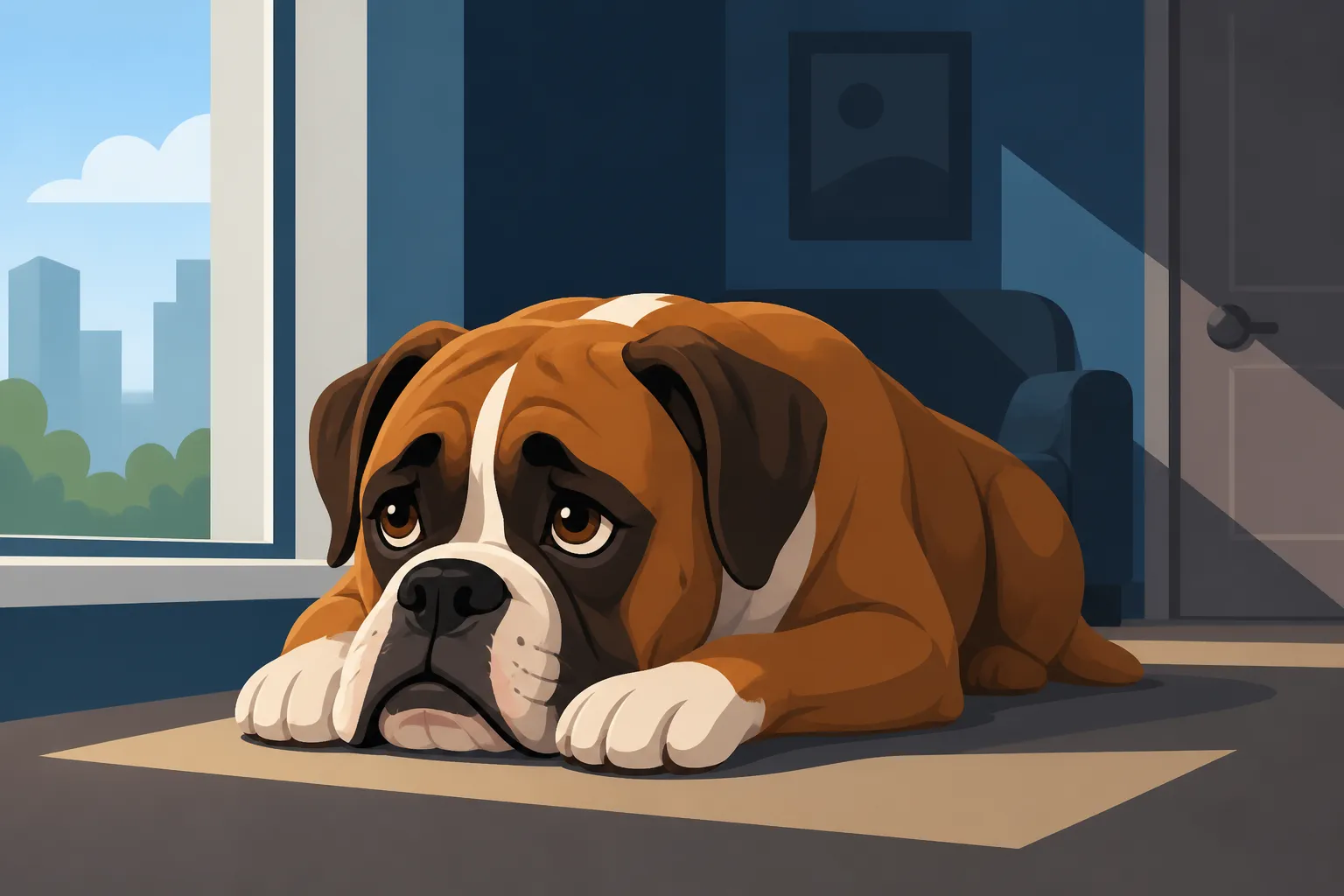
A Boxer Left Alone All Day
It's a common dilemma for so many Boxer owners: you love your energetic, goofy companion, but you also have a job, errands, or a social life that takes you away from home. The guilt can be crushing, picturing your beloved Boxer pacing, barking, or worse, chewing your favorite furniture to splinters. This guide is here to walk you through truly understanding your Boxer's needs when left alone, and how to set them up for success, peace of mind, and a happy, well-adjusted life, even if you can't be home all day.
Understanding the Boxer's Deep Need for Company
Boxers are not just dogs; they're family members with a profound need for connection. They were bred to work closely with humans, and that instinct for companionship runs deep in their genes. When we bring a Boxer into our lives, we often underestimate just how much they crave our presence.
The "Velcro Dog" Phenomenon
If you own a Boxer, you know exactly what I'm talking about when I say "Velcro dog." They are the shadow that follows you from room to room, the warm weight that presses against your leg under the desk, the nose nudging your hand for attention even when you're busy. This isn't just a cute quirk; it's a fundamental part of their breed's temperament. They bond intensely with their people, often choosing one or two primary caregivers to latch onto, though they generally adore everyone in the household.
This strong attachment is wonderful when you're home, creating that deep, loving connection we cherish. However, it's also the very thing that can make alone time particularly challenging for them. A Boxer isn't just "bored" in the way a more independent breed might be; they genuinely miss you. They experience a real sense of separation from their pack, and for some, this can escalate into genuine distress. Ignoring this core aspect of their personality is often where problems begin. They thrive on interaction, play, and mental engagement with their humans, and a lack of that can quickly lead to unhappiness and destructive behaviors.
Why Boxers Thrive on Interaction
Boxers are intelligent, curious, and incredibly playful. They require a significant amount of both physical and mental stimulation, and much of that is ideally provided through interaction with their owners. Think about their history: they were originally developed to be working dogs, assisting with tasks that required their strength, agility, and keen senses, always alongside a human handler. That partnership is ingrained.
Leaving a Boxer alone all day without sufficient outlets for their energy and intelligence is like asking a highly social, active person to sit in an empty room for eight hours with nothing to do. They need engagement, whether it's a game of fetch, a training session, or simply snuggling on the couch. Their jovial, clown-like personalities truly shine when they have an audience to entertain and love to receive. When denied this crucial interaction, their vibrant spirits can dim, or worse, manifest as undesirable behaviors born of frustration and loneliness. We talk a lot about Boxer Exercise Needs and the Heat That Limits Them, but mental exercise is just as vital.
The Risks of Undermanaged Solitude
When a Boxer is left alone for prolonged periods without proper preparation or management, it's not just about them being a little sad. It can lead to a cascade of behavioral issues that are frustrating for you and genuinely distressing for your dog. These aren't spiteful acts; they're often cries for help or expressions of unmet needs.
Destructive Chewing and Barking
One of the most common complaints from owners who leave their Boxers alone for extended periods is destructive chewing. Suddenly, shoes, furniture legs, remote controls, or even doorframes become irresistible targets. This isn't because your Boxer wants to be naughty; it's a coping mechanism. Chewing is a natural canine behavior that can relieve stress, boredom, and even physical discomfort (like teething in puppies). When your Boxer is under-stimulated, anxious, or simply bored out of their mind, chewing offers an outlet. It's a way for them to "do something" with their boundless energy and powerful jaws.
Similarly, incessant barking, howling, or whining can become a major issue. Your neighbors might not appreciate a solo concert echoing from your home all day, and for good reason. For a Boxer, barking can be a way to express loneliness, anxiety, or simply to get attention. If they learn that barking eventually leads to someone coming home, even if it's hours later, that behavior can become reinforced. It’s their attempt to communicate, and if it's the only tool they have, they'll use it relentlessly.
Separation Anxiety vs. Boredom
It's really important to distinguish between a Boxer who is merely bored and one who is suffering from true separation anxiety, because the solutions are quite different. A bored Boxer might chew, pace, or whine because they have nothing else to do and too much energy. They might be eager to greet you when you return, but the house isn't necessarily a wreck every time, and they usually calm down quickly after your arrival. They're looking for stimulation.
Separation anxiety, however, is a much deeper emotional issue. A Boxer with separation anxiety experiences genuine panic and distress when left alone. Their symptoms are more severe and often include frantic attempts to escape (resulting in self-injury or destruction around doors/windows), incessant barking/howling, excessive drooling, trembling, and sometimes even inappropriate urination or defecation, even if they are perfectly house-trained. The behavior starts almost immediately after you leave and doesn't stop. They aren't just looking for something to do; they're genuinely terrified of being alone. If you suspect your Boxer has separation anxiety, it's crucial to consult with a professional dog behaviorist or veterinary behaviorist, as it often requires a structured, gradual desensitization program and sometimes even medication.
Potty Accidents and Regression
There's nothing quite as disheartening as coming home to a puddle on the floor, especially if your Boxer has been reliably house-trained for months or even years. When a Boxer is left alone all day, potty accidents can occur for several reasons. The most obvious is simply that they cannot hold it for eight or ten hours straight, especially puppies or older dogs. Their bladders and bowels have limits, and expecting them to hold it indefinitely is unrealistic and unfair.
However, accidents can also be a symptom of anxiety. Dogs experiencing separation anxiety may urinate or defecate inappropriately as a physiological response to stress, similar to how a human might feel sick to their stomach when extremely nervous. This isn't a deliberate act of spite; it's an involuntary physical reaction to overwhelming fear. If you find your house-trained Boxer having accidents when left alone, it's a strong indicator that their alone time is too long, too stressful, or both. This regression highlights the need for a reevaluation of their routine and environment. For younger Boxers, learning to be alone is part of Getting a Boxer Puppy Reliable in the House.
Setting Up Your Boxer for Success Before You Leave
The key to a Boxer handling alone time well is proactive preparation. You can't just shut the door and hope for the best. What you do before you leave sets the stage for their entire day.
Exhaustion as Your Best Friend
A tired Boxer is a good Boxer. This old adage is particularly true when it comes to managing alone time. Before you leave for the day, make it a priority to thoroughly exercise your Boxer, both physically and mentally. This means more than just a quick trip to the backyard. Aim for a vigorous walk, a solid game of fetch, or a run at the dog park. Get their heart rate up and really burn off some of that boundless Boxer energy. Depending on your Boxer's age and health, this could mean Sixty to Ninety Minutes a Day With a Boxer of focused activity.
Physical exercise helps release pent-up energy and positive endorphins, making them more likely to settle down and rest. Mental exercise is just as crucial. A short training session where they have to think and solve problems can be incredibly tiring. Practicing commands, learning a new trick, or even a quick scent game can engage their minds and leave them feeling more content. When their bodies and minds are pleasantly tired, they are far more likely to spend their alone time napping and recharging rather than pacing, barking, or seeking destructive outlets for their energy.
Mental Stimulation Through Puzzle Toys
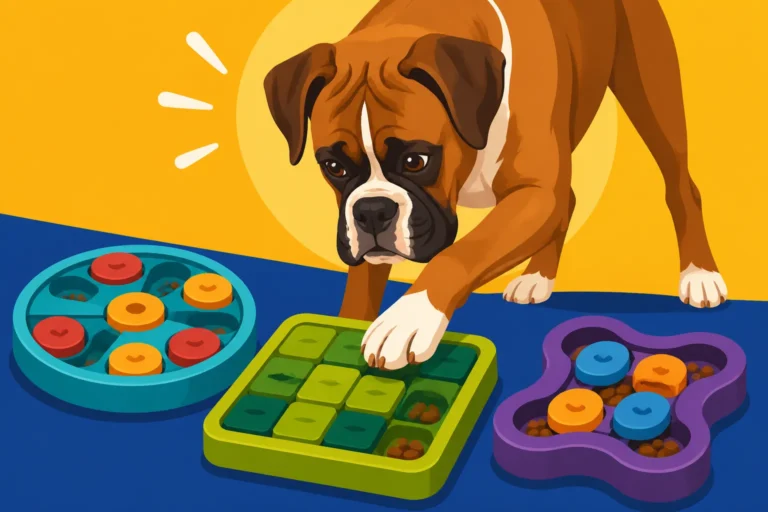
While physical exercise is essential, you can't just rely on it. Your Boxer also needs mental engagement to ward off boredom once you've gone. This is where puzzle toys become your secret weapon. These aren't just ordinary chew toys; they're designed to dispense treats or food as your dog interacts with them, forcing them to problem-solve and work for their reward.
Imagine filling a durable chew toy, like a Kong, with a mixture of wet dog food, peanut butter, or yogurt, and then freezing it overnight. This creates a long-lasting project that can keep your Boxer occupied for a significant period. Other popular options include treat-dispensing balls or snuffle mats, which challenge your dog to sniff out hidden kibble. I’ve found great options for these types of interactive toys on Amazon, and they can make a huge difference. The goal is to make their alone time productive and engaging, rather than passively waiting for your return. These toys can transform boredom into a positive mental workout.
The Power of a Routine
Dogs, and especially Boxers, thrive on routine. They find comfort and security in knowing what to expect throughout their day. Establishing a consistent schedule for feeding, exercise, potty breaks, and alone time can significantly reduce anxiety and help your Boxer cope better with your absence.
For example, if your Boxer knows that every weekday morning starts with a vigorous walk, followed by breakfast in their puzzle toy, and then a quiet period while you leave, they are more likely to accept that sequence of events calmly. An unpredictable schedule, where sometimes you leave right after they wake up and sometimes after a long play session, can create uncertainty and heighten their stress levels. A predictable routine signals to your Boxer that your departure is just another part of the day, not an unexpected event, and that your return is also part of that reliable schedule. This structure provides a sense of control and predictability that can be incredibly soothing for a social breed like the Boxer.
| Activity | Before You Leave | During Alone Time | Upon Your Return |
|---|---|---|---|
| Physical Exercise | High-intensity walk/run | (N/A) | Calm greeting, brief potty break |
| Mental Stimulation | Training session | Puzzle toys, chews | Relaxed play |
| Feeding | Meal in puzzle toy | (N/A) | (N/A) |
| Potty Break | Last thing before leaving | (N/A) | First thing upon return |
| Interaction | Focused attention | Minimal (unless dog walker) | Calm, low-key reunion |
Crate Training and Safe Spaces
For many Boxer owners, a well-implemented crate training strategy or the creation of a dedicated safe space is absolutely essential for managing alone time. This isn't about punishment; it's about providing security and preventing trouble.
Making the Crate a Den, Not a Jail
The crate should never be seen as a place of punishment. Instead, it needs to be introduced as a safe, comfortable, and positive den for your Boxer. Start by making the crate inviting with soft bedding, favorite toys, and high-value treats. Feed meals in the crate, and encourage your Boxer to go in voluntarily with praise and rewards. Choosing a Crate a Boxer Cannot Wreck is key for this powerful breed.
When you begin leaving your Boxer alone, start with very short durations in the crate, gradually increasing the time. Never force your Boxer into the crate or use it as a timeout spot when they've been naughty. This association will only create fear and resentment. A properly crate-trained Boxer will often retreat to their crate voluntarily for naps or when they need a quiet break, viewing it as their personal sanctuary. For Boxers, this secure den can prevent destructive chewing, manage potty training, and provide a sense of safety during your absence, reducing overall stress.
Puppy Pens and Dog-Proofed Rooms
While crate training is excellent, some Boxers may not take to it for long stretches, or you might prefer to give them a bit more space. In these cases, a puppy pen (often called an exercise pen) or a completely dog-proofed room can be a fantastic alternative. A puppy pen gives them more room to stretch, play with toys, and move around, while still containing them in a safe area. Make sure it's tall and sturdy enough for a growing Boxer.
If you opt for a dog-proofed room, it needs to be exactly that: proofed. Remove anything valuable, chewable, or potentially dangerous. Cover electrical cords, secure cabinets, and ensure there are no small objects they could swallow. Consider setting up a camera, like an Amazon Blink or Eufy camera, so you can check in on them. A comfortable bed, fresh water, and a variety of safe, engaging toys (including those puzzle toys we talked about) should be readily available. This method provides freedom within limits and can be particularly useful for older Boxers or those who genuinely dislike being confined to a crate. It’s about creating a safe, boredom-resistant environment where they can't get into trouble, reducing stress for both of you.
Tools and Services to Bridge the Gap
Even with the best preparation, expecting a Boxer to be alone for an entire workday (8-10 hours or more) without a break is often too much. Fortunately, there are many tools and services available to help bridge that gap and ensure your Boxer remains happy and well-adjusted.
Mid-Day Walks and Check-ins
Perhaps the most effective way to break up a long day for your Boxer is a mid-day visit. Hiring a professional dog walker or asking a trusted friend or neighbor to stop by can make all the difference. This isn't just a potty break; it's a chance for your Boxer to get some much-needed physical exercise, mental stimulation, and social interaction.
A 30-minute walk can refresh their senses, allow them to stretch their legs, do their business, and even play a short game of fetch. It breaks the monotony of being alone and helps reset their energy levels, making them more likely to settle down for the remainder of your absence. Many professional dog walkers are experienced with high-energy breeds like Boxers and can provide not just a walk, but also some positive training reinforcement or play. This service is an investment in your Boxer's well-being and can prevent many of the issues associated with prolonged solitude. It's truly vital for The Yearly Bill for a Seventy-Pound Boxer to account for such services.
Doggy Daycare: A Social Outlet
For Boxers who are highly social and energetic, doggy daycare can be a godsend. Instead of spending hours alone at home, they get to spend the day playing with other dogs and interacting with human caregivers in a supervised environment. This provides an incredible amount of physical exercise and mental stimulation, allowing them to burn off energy and satisfy their social needs.
When choosing a doggy daycare, look for one with experienced staff, appropriate play groups (matching Boxers with similar sizes and play styles), and plenty of space for running and playing. Ask about their staff-to-dog ratio, their cleaning protocols, and how they handle conflicts between dogs. While it's an added expense, the benefits of a well-exercised and socially fulfilled Boxer often far outweigh the cost, leading to a much calmer and happier dog at home. It’s an ideal solution for those whose Boxers truly have energy to burn.
Technology for Remote Supervision
In today's connected world, technology offers some fantastic ways to stay connected with your Boxer even when you're not home. Pet cameras, for instance, allow you to remotely monitor your dog, see what they're doing, and sometimes even speak to them. This can be incredibly reassuring, letting you know if they're sleeping peacefully or if they're displaying signs of distress.
There are also smart pet feeders that can dispense meals or treats at scheduled times, providing a distraction or a mid-day snack. Some even have two-way audio so you can interact with your dog. While these tools shouldn't replace physical interaction, they can provide peace of mind and offer additional layers of engagement for your Boxer during your absence. Knowing what your Boxer is up to can help you adjust your routine or interventions as needed. For example, if you see them pacing, you might realize you need to schedule a dog walker for the following day.
Managing the Transition: Building Tolerance Gradually
Teaching your Boxer to be comfortable alone is a process, not an overnight fix. It requires patience, consistency, and a gradual approach to build their tolerance. Rushing this can set you back.
Short Absences, Positive Returns
The key to building tolerance for alone time is to start small and always end on a positive note. Begin by leaving your Boxer alone for just 5-10 minutes, then return calmly. Don't make a big fuss when you leave or when you come back. The goal is to make your departure and return feel like a normal, non-eventful part of the day. You can use cues like "I'll be back," but avoid drawn-out goodbyes.
Gradually increase the duration of your absences. Extend it to 15 minutes, then 30, then an hour, and so on. If your Boxer shows signs of distress at a certain duration, reduce the time slightly and try again, ensuring success before moving forward. During these practice absences, provide them with their special alone-time puzzle toys or chews. This teaches them that being alone means good things happen, and that you always come back. This slow, steady desensitization helps them build confidence and trust.
Ignoring Departure and Arrival Cues
Our human tendency is to make a big deal out of leaving and coming home. We say lengthy goodbyes, give lots of hugs, and upon returning, we might excitedly greet our dog who is jumping and whining. For a Boxer prone to separation anxiety, these dramatic departures and arrivals actually heighten their stress. They learn to associate your pre-departure rituals (grabbing keys, putting on shoes) with impending doom, and your excited return with the relief of their anxiety.
To help your Boxer cope, practice "neutral" departures and arrivals. When you're about to leave, don't make eye contact, talk to them, or give them affection for about 10-15 minutes before you walk out the door. Just calmly leave. When you return, ignore your Boxer for the first few minutes, even if they're jumping and whining. Wait until they've settled down (even just for a moment) before calmly greeting them. This teaches them that your comings and goings are not a major event, reducing the emotional rollercoaster they might otherwise experience. A structured training program, such as the one offered by BAXTER & Bella, often emphasizes these techniques for building independence and reducing over-excitement around departures and arrivals. The calmer you are, the calmer your Boxer will be.
Disclaimer
This article is for general informational purposes only and does not constitute professional advice. Laws, prices and regulations vary by location and change over time. Consult a qualified professional for guidance on your specific situation.