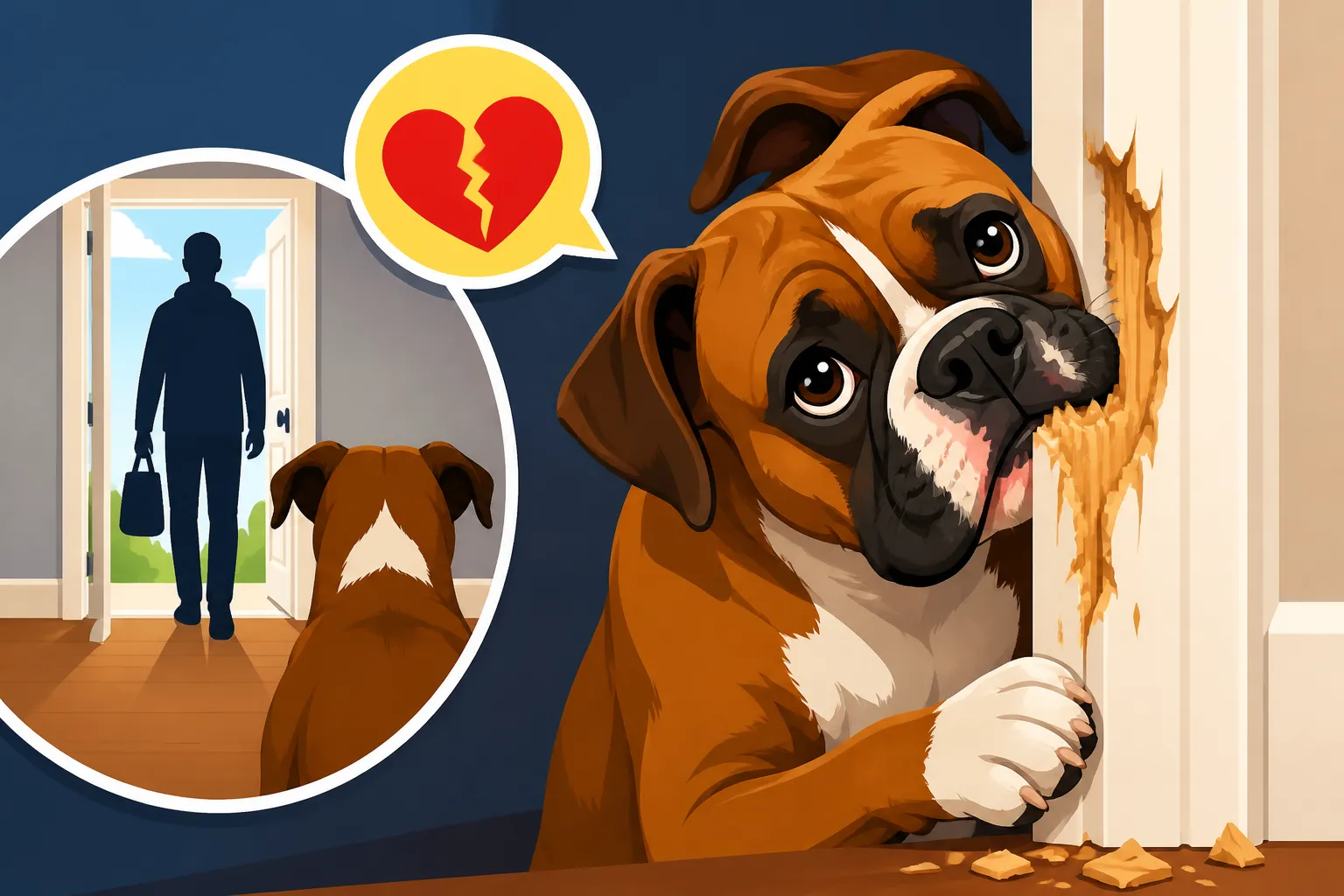
A Boxer That Chews Doorframes When Left
Coming home to discover your beautiful Boxer has turned your doorframe into their personal chew toy can be incredibly frustrating, not to mention costly. This isn't just "bad behavior" for the sake of it; there are often deep-seated reasons why a Boxer might resort to such destructive chewing when left alone. This guide will walk you through understanding why your energetic companion might be targeting your woodwork and provide practical, empathetic strategies to help redirect this behavior and protect your home.
Understanding the "Why": The Roots of Destructive Chewing in Boxers
It's easy to get angry when you see the damage, but it's crucial to remember that your Boxer isn't doing this to spite you. Destructive chewing, especially of fixed objects like doorframes, often stems from underlying emotional or physical needs that aren't being met. For a breed as intelligent, sensitive, and energetic as the Boxer, these needs can be complex. Understanding the root cause is the first step toward finding a lasting solution.
The Overlooked Role of Separation Anxiety
One of the most common culprits behind a Boxer chewing doorframes when left alone is separation anxiety. Boxers are incredibly bonded to their families; they are "velcro dogs" who thrive on companionship. When left by themselves, especially for long periods or without proper preparation, some Boxers can experience genuine panic. This isn't just a dog being dramatic; it's a real fear response.
Think about it from your Boxer's perspective: you, their world, suddenly vanish. They don't understand you'll be back. This distress can manifest in various ways, and destructive chewing is a prominent one. Chewing can be a self-soothing mechanism, an attempt to relieve the overwhelming stress and anxiety. They might also bark incessantly, howl, pace, or even have accidents in the house, even if they're perfectly house-trained. The doorframe, often the last place they saw you, can become a focal point for their desperate attempts to escape or to cope with your absence. If you notice other signs like excessive salivation, panting, or a frantic greeting when you return, separation anxiety is a strong possibility. For more on this, consider exploring resources on A Boxer Left Alone All Day.
Boredom and Unspent Energy: A Destructive Combination
Boxers are not couch potatoes. They were bred as working dogs, combining strength, agility, and intelligence. They have a significant need for physical exercise and mental stimulation. If a Boxer isn't getting enough of both, they can quickly become bored, restless, and, yes, destructive. Imagine a human being stuck in a small room with nothing to do for hours on end – you'd probably start looking for ways to entertain yourself, too!
When a Boxer is under-exercised, that pent-up energy has to go somewhere. Chewing is a natural canine behavior, and if there aren't appropriate outlets, they'll find their own. A doorframe offers interesting textures, splinters, and the satisfaction of breaking something down. This is particularly true for younger Boxers, who possess seemingly endless wells of energy. A quick walk around the block before you leave might not even scratch the surface of their exercise requirements. This is why it's so important to understand Why a Boxer Wrecks Things When Under-Exercised. Without adequate physical and mental engagement, your Boxer will be driven to create their own "work," which unfortunately often involves your belongings.
Developmental Chewing Beyond Puppyhood
While most people associate intense chewing with puppyhood, some Boxers, especially those who mature more slowly, can continue with significant chewing behaviors well into their adolescent and even adult years. Boxers are known for their prolonged "puppyhood" that can extend up to three years. This isn't to say an adult Boxer should be chewing furniture, but it does highlight that some might have an extended period where mouthing and exploring with their teeth is a primary way they interact with their world.
They might have learned that chewing helps them de-stress or simply find it enjoyable. If they haven't been consistently taught appropriate chewing habits, or if their environment hasn't been set up to support good choices, an older Boxer might still target doorframes. Sometimes, dental discomfort can also be a factor, though this is less common for doorframe chewing specifically. It's helpful to understand The Age a Boxer Stops Chewing Furniture to manage expectations, but persistent destructive chewing at any age warrants intervention.
Strategies for Preventing and Managing Doorframe Destruction
Addressing destructive chewing requires a multi-faceted approach that tackles the root causes head-on. It's not about punishing your Boxer after the fact, but about proactive management, enrichment, and consistent training to set them up for success when you're not around.
Building a Solid Foundation: Exercise and Mental Stimulation
Before you even think about leaving your Boxer alone, you need to ensure their core needs for exercise and mental engagement are met. This is non-negotiable for a Boxer. A tired Boxer is a good Boxer, as the saying goes.
- Ample Physical Exercise: Aim for at least 60-90 minutes of vigorous exercise before you leave for the day. This isn't just a leisurely stroll; it means a brisk walk, a good run (if age and health allow), fetch, or a play session in a securely fenced yard. For some Boxers, especially younger ones, this might even need to be split into two sessions. Consider activities like playing with a flirt pole, which can burn a lot of energy in a short time. If you work long hours, look into options like dog walkers or reputable doggy daycare centers. Daycare Prices for a Boxer With Energy to Burn might seem like an added cost, but it can be an invaluable investment in your Boxer's well-being and your peace of mind.
- Mental Enrichment: Physical exercise alone isn't always enough for intelligent breeds like Boxers. Their minds need a workout too. Engage them with puzzle toys, snuffle mats, or interactive feeders. Freeze a Kong stuffed with peanut butter, yogurt, or wet food to give them a long-lasting project. This kind of mental work is incredibly tiring for dogs and can help satisfy their natural urge to "work" or solve problems. Many excellent options are available on platforms like Amazon. Remember, a Boxer that has to "earn" its breakfast or dinner through a puzzle feeder is less likely to be looking for trouble with your doorframes. Explore articles like Puzzle Feeders That Hold a Boxer's Attention for ideas.
Crate Training and Safe Zone Creation
A properly introduced and positive crate experience can be a game-changer for a Boxer prone to destructive chewing. The crate becomes their den, a safe, personal space where they feel secure. It's not a punishment; it's a tool for management and peace of mind.
- Positive Crate Association: Never use the crate as a place of punishment. Instead, make it a positive place where good things happen. Feed meals in the crate, give high-value treats only in the crate, and ensure it's comfortable with soft bedding. Start with short periods and gradually increase the time your Boxer spends in it. The goal is for them to associate the crate with comfort and relaxation. Ensure you get Crates Big Enough for a Grown Boxer so they can stand, turn around, and lie down comfortably.
- Creating a Safe Zone: If a crate isn't feasible or your Boxer isn't fully comfortable with it yet, create a "safe zone" or dog-proofed room. This could be a laundry room or kitchen with durable flooring, cleared of anything chewable or dangerous. Use baby gates to cordon off the area. Ensure this space is also prepped with appropriate chew toys and mental enrichment. This limits their access to high-value chew targets like doorframes and helps break the habit.
Redirecting Chewing to Appropriate Outlets
Your Boxer needs to chew; it's a natural, healthy behavior. The key is to teach them what is acceptable to chew. This involves providing an irresistible array of appropriate chew toys and consistently redirecting them when they choose incorrectly.
- High-Value Chew Toys: Invest in durable, engaging chew toys. Boxers are powerful chewers, so flimsy toys won't last and could even pose a choking hazard. Look for toys made from tough rubber, like Kongs or Nylabones designed for aggressive chewers. Rotate toys to keep them interesting. Some Boxers prefer softer toys for comfort, others want something they can really sink their teeth into. Find what motivates your Boxer. You might also want to explore Toys a Boxer Cannot Destroy in a Day.
- Deterrents and Bitter Sprays: For specific targets like doorframes, use bitter apple sprays or other non-toxic chew deterrents. These sprays make the area taste unpleasant without harming your dog. You'll need to reapply regularly, especially in the beginning. While not a standalone solution, they can provide a temporary barrier while you work on the underlying issues and training. Just make sure the product is safe for your dog and won't damage your woodwork.
- Consistent Redirection: Whenever you catch your Boxer chewing an inappropriate item, calmly interrupt them with a verbal cue like "leave it" or a gentle clap, and immediately offer an appropriate chew toy. Praise them enthusiastically when they take the correct toy. This teaches them, "Not that, this!" This practice is vital for Chews That Redirect a Mouthy Boxer.
Here's a quick comparison of popular chew deterrents:
| Deterrent Type | Pros | Cons | Best Used For |
|---|---|---|---|
| Bitter Apple Spray | Readily available (e.g., on Amazon), safe | Taste varies for dogs, needs reapplication | Specific furniture, doorframes, shoes |
| Cayenne Pepper/Chili | Inexpensive, natural | Can be messy, skin irritant for humans | Areas not easily accessible, outdoor plants |
| Commercial Gels/Pastes | Longer lasting than sprays | Can be sticky, may stain | Persistent chewing spots on furniture |
| Aluminum Foil/Tape | Physical barrier, creates unpleasant sound | Not attractive, temporary solution | Protecting corners or edges temporarily |
Always test any spray or deterrent on an inconspicuous area first to ensure it doesn't stain or damage your surfaces.
When to Seek Professional Help and Advanced Solutions
Sometimes, despite your best efforts, the destructive chewing persists or even worsens. This is not a sign of failure on your part, but an indication that the issue might be more complex and warrants expert intervention. Don't hesitate to reach out for professional guidance.
Recognizing When It's More Than Just a "Bad Habit"
If your Boxer exhibits other signs of distress beyond just chewing when left alone—such as excessive barking or howling, inappropriate urination or defecation, pacing, or frantic greetings upon your return—it's highly likely you're dealing with separation anxiety. This is a behavioral disorder, not simply a "bad habit," and it requires a more targeted approach.
Furthermore, if the chewing is so intense that your Boxer is injuring themselves (e.g., broken teeth, paw abrasions), or if the behavior is sudden in onset and coupled with other changes in appetite or demeanor, a vet visit is imperative. There could be underlying medical issues, pain, or even neurological problems that are contributing to the behavior. A veterinarian can rule out physical causes and then guide you toward behavioral solutions, possibly including medication in severe cases of anxiety.
Consulting with a Certified Professional Dog Trainer or Behaviorist
For persistent or severe destructive chewing, particularly when separation anxiety is suspected, working with a qualified professional is the most effective next step. A certified professional dog trainer or a veterinary behaviorist has the expertise to accurately diagnose the root cause and develop a tailored modification plan.
They can observe your Boxer's behavior, help you identify triggers, and teach you specific techniques to address the anxiety or boredom. This might involve counter-conditioning (changing your dog's emotional response to being left alone), desensitization (gradually exposing them to short periods of alone time), or structured obedience training to build confidence and reinforce good habits. Resources like BAXTER & Bella offer online training programs that cover a wide range of behavioral challenges, including separation anxiety and destructive chewing, providing structured lessons and professional guidance from the comfort of your home. They can help you break down complex training into manageable steps.
Products and Tools to Protect Your Home
While training and addressing the root cause are paramount, there are also practical tools that can help protect your home during the rehabilitation process. These are not substitutes for training, but rather aids to manage the environment and prevent further damage.
- Durable Chews and Toys: As mentioned, robust chew toys are essential. Look for brands known for their durability. Heavy-duty rubber toys, antler chews (ensure they are safe and appropriately sized), or Nylabone varieties specifically for power chewers are good starting points. Rotate them to maintain novelty and interest. Providing a stuffed Kong (maybe two!) when you leave can give your Boxer a productive and enjoyable activity to focus on, keeping their mind and mouth busy.
- Physical Barriers: For very determined chewers, physical barriers might be necessary. This could involve temporarily placing sheets of plywood or sturdy plastic guards along the bottom of doorframes that are repeatedly targeted. While not aesthetically pleasing, these can save your home from further damage while you implement the behavioral changes. You can find various temporary protective measures on Amazon.
- Cameras and Monitoring: Setting up a pet camera (many options are available on Amazon) allows you to monitor your Boxer's behavior when you're not home. This can be invaluable for understanding when the chewing starts, what triggers it, and whether other anxiety-related behaviors are occurring. This information helps your trainer or behaviorist tailor a more effective plan. Observing their behavior can reveal if they settle down after a few minutes or if they are in constant distress. This understanding can make a huge difference in how you approach the problem and manage Hours a Boxer Can Manage Alone.
Remember, resolving destructive chewing, especially if it's anxiety-driven, takes time, patience, and consistency. Celebrate small victories and don't get discouraged by setbacks. With the right approach and perhaps a little professional help, your Boxer can learn to be a calm, confident, and non-destructive member of your household, even when you're not there.
Disclaimer
This article is for general informational purposes only and does not constitute professional advice. Laws, prices and regulations vary by location and change over time. Consult a qualified professional for guidance on your specific situation.