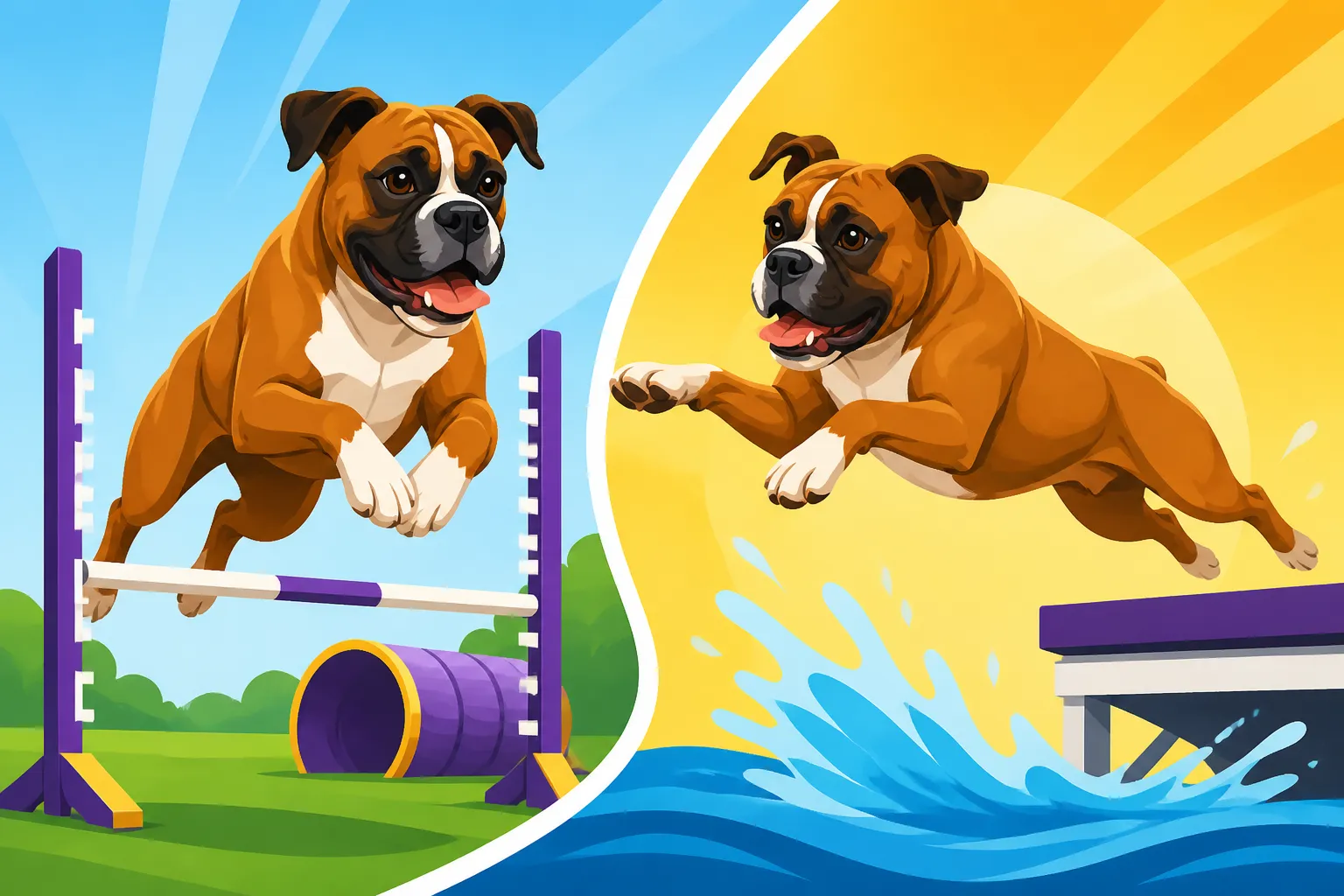
Agility and Dock Diving With a Boxer
It can be incredibly frustrating to have a high-energy Boxer bouncing off the walls, clearly needing an outlet for all that boundless enthusiasm, but feeling like you've run out of ideas beyond the daily walk. You know your Boxer is smart and athletic, capable of so much more, and you're eager to tap into their potential for fun and engagement. This guide will explore how Boxers excel in dog sports like agility and dock diving, helping you understand their natural talents and providing practical steps to get started safely and successfully.
Understanding the Boxer's Natural Aptitude for Dog Sports
Boxers are often described as "the whole package" when it comes to dog sports – they've got the brains, the brawn, and that undeniable goofy charm. However, it’s not always obvious how to channel that boisterous energy into something productive and fun. Many owners find themselves asking if their bouncy, sometimes stubborn, Boxer truly has what it takes. The answer is a resounding yes, but understanding their unique blend of traits is key to unlocking their sporting potential.
The Boxer's Energy and Drive
If you live with a Boxer, you know they are not content to be couch potatoes. They possess a remarkable amount of energy, often retaining a puppy-like exuberance well into their adult years. This high drive, coupled with their inherent playfulness, makes them fantastic candidates for activities that require both stamina and mental focus. They thrive on having a "job" to do, even if that job is simply to chase a frisbee or weave through poles.
However, this energy isn't always neatly packaged. It can manifest as zooming around the house, persistent pawing for attention, or destructive chewing if not properly managed. The beauty of dog sports is that they provide a constructive and exhilarating outlet for this energy, helping to tire out both body and mind. It's about taking that powerful engine and directing it towards a goal, transforming potential chaos into controlled athleticism. When their energy is channeled into an activity like agility, you'll often see a much calmer, happier, and more focused Boxer at home.
Physical Attributes That Help and Hinder
Boxers boast a powerful, athletic build that is well-suited for many physical challenges. Their strong hindquarters provide excellent propulsion for jumps and speed, while their muscular frame gives them durability. Their moderate size means they're not too small to clear larger obstacles, nor too large to navigate tight turns. This physical prowess is a huge advantage in sports like agility, where quick bursts of speed, jumping, and weaving are paramount.
On the flip side, their brachycephalic (flat-faced) skull shape can present challenges, especially in warmer climates or during intense, prolonged exercise. Boxers are prone to overheating because their shorter snouts make it less efficient for them to cool themselves through panting. This means you have to be extra vigilant about temperature, humidity, and the duration of their training sessions. How Fast a Flat-Faced Boxer Overheats is a real concern. Another consideration is their susceptibility to certain orthopedic issues like hip dysplasia or cruciate tears, which means careful conditioning and proper warm-up/cool-down routines are essential to prevent injury. Knowing your Boxer's limits and consulting with your vet before starting any strenuous activity is always a wise move.
Mental Engagement and Trainability
Beyond their physical gifts, Boxers are highly intelligent dogs that genuinely enjoy working with their people. They respond incredibly well to positive reinforcement and thrive on praise and interaction. Their desire to please, combined with their sharp minds, means they can pick up new commands and sequences surprisingly quickly. This makes them ideal for the intricate patterns and obstacle sequences found in agility.
However, their intelligence often comes with a dose of independent thinking and a short attention span, particularly in busy environments. They can get bored with repetitive drills or become easily distracted if something more interesting catches their eye. This isn't stubbornness as much as it is a characteristic of their breed; they need variety and fun to stay engaged. Engaging their minds with problem-solving tasks, like those found in agility courses, keeps them sharp and prevents them from inventing their own, less desirable, forms of entertainment. A good trainer understands how to keep a Boxer motivated and make learning a game rather than a chore. Why Short Sessions Suit a Boxer's Attention Span is a concept well worth embracing.
Getting Started with Agility Training for Your Boxer
Agility is an exhilarating sport that sees dogs navigating an obstacle course, including jumps, tunnels, weave poles, and a seesaw, all guided by their handler. It's a fantastic way to build a strong bond with your Boxer, boost their confidence, and give them an incredible mental and physical workout. The journey from a novice Boxer to a confident agility competitor is incredibly rewarding.
Foundation Skills and Socialization
Before your Boxer ever sets paw on an agility course, a solid foundation of obedience and socialization is crucial. Imagine trying to teach your dog to weave through poles when they can't even sit still on command! Basic cues like "sit," "stay," "come," and a reliable "down" are the building blocks. Moreover, your Boxer will be working in an environment with other dogs and people, so good manners and a comfortable demeanor around distractions are vital.
Puppy classes and basic obedience courses are excellent starting points. These environments not only teach essential commands but also provide valuable socialization opportunities, helping your Boxer learn to focus on you amidst varied sights and sounds. Reputable training centers often offer classes specifically designed to lay the groundwork for dog sports, focusing on body awareness, impulse control, and engagement games. A program like BAXTER & Bella’s online puppy school can be a great resource for at-home foundational training, helping you establish those crucial skills before stepping into a group class setting. Remember, a calm, attentive dog is a much safer and more successful agility dog.
Introducing Agility Obstacles Safely
You wouldn't ask a child to run a marathon without training, and the same applies to your Boxer in agility. Introducing obstacles must be done gradually and safely to build confidence and prevent injury. Start with low-impact obstacles, like walking over a low bar on the ground (to simulate a jump) or running through a short, open tunnel. The goal is to make each new experience positive and fun, associating obstacles with rewards and praise.
Avoid forcing your Boxer into or over anything they seem hesitant about. Many agility instructors start with modified equipment, such as low, wide jumps that are easy to clear, or contact obstacles (like the A-frame or dog walk) that are set at a very shallow angle. This ensures your Boxer learns the correct movement and gains confidence before the equipment is set to competition height. Always use positive reinforcement, lots of treats, and enthusiastic praise. Building a strong bond and trust is far more important than speed in these early stages. Boxer Puppyhood That Lasts Three Years often means they're still physically maturing, so protecting their growing joints is paramount.
The Importance of a Good Instructor and Class Structure
While it might be tempting to set up a few cones in your backyard and try to teach your Boxer yourself, the guidance of an experienced agility instructor is invaluable. A good instructor not only knows how to break down complex maneuvers into manageable steps but can also "read" your Boxer's body language, identifying when they're confused, stressed, or ready for more. They understand the mechanics of each obstacle and can help you develop the precise handling skills needed to guide your Boxer effectively through a course.
Look for classes that prioritize safety, positive reinforcement, and a fun atmosphere. Class sizes should be manageable, allowing for individual attention. An instructor who is familiar with brachycephalic breeds like Boxers will also be aware of their unique needs, such as monitoring for overheating and adjusting exercise levels. Reputable training facilities will also have safe, well-maintained equipment. Joining a structured class not only provides expert guidance but also offers a social outlet for both you and your Boxer, allowing you to learn from others and enjoy the camaraderie of fellow dog sport enthusiasts.
Diving In: Boxer and Dock Diving
Dock diving, often called "big air," is a relatively new but rapidly growing dog sport where dogs run down a 40-foot dock and jump into a pool or body of water, chasing a thrown toy. The distance they jump is measured, and the dog who jumps furthest wins. It's a fantastic high-energy sport that can be incredibly fulfilling for a water-loving Boxer.
Is Your Boxer a Water Lover?
The first and most crucial question for dock diving is simple: does your Boxer actually like water? Not all Boxers are natural swimmers, and some might be quite hesitant around large bodies of water. You can't force a dog to love the water, and attempting to do so will only create a negative experience. Start by introducing them to water gradually and positively. A shallow kiddie pool in the backyard can be a great first step, making it a fun place to splash and retrieve toys.
If your Boxer shows interest and joy in water play, you're off to a great start! If they're a bit more cautious, try encouraging them with toys or by wading in yourself if safe to do so. Never throw them in or pressure them. Observe their natural inclination. Some Boxers might surprise you with their enthusiasm once they realize how much fun retrieving from water can be. If, after several positive attempts, your Boxer still shows no interest, dock diving might not be their sport, and that's perfectly okay. There are many other activities they might enjoy!
Building Confidence and the Retrieve
Once you've established that your Boxer enjoys the water, the next step is to build their confidence in swimming and retrieving from deeper water. Many dock diving facilities offer "splash and dash" sessions or beginner clinics where dogs can get used to jumping off a ramp or shallow edge into the pool. This is far less intimidating than jumping from a height. The goal is to build a strong retrieve drive in the water, making them eager to jump in after their favorite toy.
Practice throwing toys a short distance into the water and praising them enthusiastically when they retrieve. Use a floating toy that is easily visible and appealing to your Boxer. As their confidence grows, you can gradually increase the throwing distance and encourage them to swim further. When they're comfortable swimming and retrieving, you can start introducing them to the dock. Most beginner docks have a ramp, allowing dogs to walk in and out of the water, building their comfort before attempting a jump. A long line can be useful in the initial stages to help guide them back if they wander, though always ensure it's removed before any jumping to prevent entanglement.
Equipment and Safety Considerations for Dock Diving
Safety is paramount in dock diving. The main piece of equipment you'll need is a well-fitting, comfortable harness that allows full range of motion. Never use a collar for dock diving as it can put undue pressure on their neck if you need to guide them or pull them out. A good floating retrieve toy is also essential; ensure it's durable and easy for your Boxer to spot in the water.
Most importantly, a life vest is highly recommended for all beginners and any dog that isn't a strong, confident swimmer. A life vest provides buoyancy, reduces fatigue, and can be easily grabbed if you need to assist your Boxer. Due to their brachycephalic nature, Boxers can tire easily and are susceptible to overheating, so a life vest gives them an extra margin of safety. Always have fresh water available for them to drink, and be mindful of the sun and air temperature. Ensure there's a shaded area for them to rest between jumps. Facilities that host dock diving events usually have specific safety protocols in place, and listening to their staff is critical.
Overcoming Challenges and Maximizing Success
Every dog and handler team will encounter hurdles in their sporting journey. Boxers, with their unique blend of enthusiasm and occasional distraction, are no exception. The key to success is patience, consistency, and a willingness to adapt your training approach to your Boxer's individual personality.
Managing Boxer Enthusiasm and Focus
One of the biggest joys of owning a Boxer is their boundless enthusiasm, but this can also be a challenge in a high-stimulus environment like a dog sport event. Your Boxer might want to greet every person and dog, or get distracted by a blowing leaf. Building focus and impulse control are ongoing processes. Start training in a low-distraction environment and gradually introduce more stimuli as your Boxer becomes more proficient.
High-value rewards are your secret weapon. Whether it's a favorite squeaky toy, a piece of chicken, or exaggerated praise, figure out what truly motivates your Boxer. Keep training sessions short and fun to maintain their interest. Instead of fighting their energy, channel it. Use their natural drive to your advantage by making the sport a high-energy game between you two. Practice engagement exercises, where you play with your Boxer and reward their attention, even when there are distractions present. Consistency is key; regularly reinforce good behavior and focus, and remember that Why Short Sessions Suit a Boxer's Attention Span.
Addressing Physical Limitations and Health Concerns
As mentioned, Boxers can be prone to certain health issues, particularly cardiac conditions like ARVC (Boxer Cardiomyopathy) and joint problems. This makes responsible ownership and proactive health management absolutely crucial for any Boxer participating in dog sports. Before embarking on any strenuous activity, a thorough veterinary check-up is non-negotiable. Discuss your sporting aspirations with your vet, and they can advise on appropriate health screenings.
For Boxers, this might include regular Holter monitoring for heart health, especially after the age of three. The Yearly Heart Screening a Boxer Needs From Three is vital. If your Boxer is diagnosed with a condition like ARVC, you'll need to consult with a veterinary cardiologist to understand safe exercise limits. Joint supplements or specific diets might be recommended to support their skeletal health. Always warm up your Boxer's muscles before activity and cool them down afterward to prevent injury. Pay close attention to any signs of lameness, discomfort, or excessive panting, and always err on the side of caution by resting your dog or seeking veterinary advice. The goal is a long, healthy, and happy sporting career, not to push them beyond their limits.
Sustaining Interest and Preventing Burnout
Boxers, being intelligent and playful, can sometimes "check out" if training becomes too repetitive or demanding. To sustain their interest, variety is essential. Don't always train the same obstacles in the same order. Mix it up! Introduce new challenges, play different games, and incorporate toys and treats generously. End each session on a positive note, even if it's just a simple successful retrieve or a single weave pole.
Preventing burnout isn't just about your dog; it's about you too! Training should be a fun activity for both of you. If you're getting frustrated, your Boxer will sense it. Take breaks when needed, celebrate small victories, and remember the primary goal is to have fun and strengthen your bond. Cross-training with other activities can also keep things fresh. Perhaps a walk in a new park, a sniffari, or a simple game of fetch can break up the intensity of sport-specific training. This ensures that the joy of the activity remains at the forefront, fostering a lifelong love of dog sports for your Boxer.
Choosing the Right Gear and Resources for Your Sporting Boxer
Having the right equipment and access to quality resources can make a significant difference in your Boxer's success and safety in agility and dock diving. It's an investment, but one that pays dividends in enjoyment and peace of mind.
Essential Agility Equipment for Home Practice
While most formal agility training happens at a facility, having some basic equipment at home allows for practice and reinforcement of skills. When purchasing, prioritize safety and durability. You don't need competition-grade equipment initially, but choose items that are stable and appropriate for your Boxer's size.
| Obstacle Type | Description | Key Considerations |
|---|---|---|
| Jumps | Adjustable height bar jumps. | Lightweight, easy to assemble, adjustable height for safety, breakaway bars are ideal. Look for sets on Amazon. |
| Tunnels | Collapsible fabric tunnels, 10-15 ft long. | Durable fabric, good weight to prevent collapsing, easy to store. |
| Weave Poles | Set of 6-12 poles, often on a base. | Spacing should be adjustable for beginners (start wider), sturdy base. |
| Pause Table | Elevated platform for a "stay" command. | Stable, non-slip surface, appropriate height for your Boxer. |
Always ensure any home equipment is used in a safe, clear area. Supervise your Boxer closely, especially when they are learning. For more advanced or technical obstacles like the A-frame or dog walk, it’s best to use professional equipment at a training facility under expert supervision.
Dock Diving Gear for Safety and Performance
For dock diving, the equipment list is a bit simpler but equally important for safety.
- Life Vest: Absolutely crucial for beginners, and a great idea for all Boxers, especially due to their flat-faced structure and propensity to tire easily. Look for a vest with a strong handle on the back for easy retrieval. Many options are available through online retailers like Amazon.
- Floating Toys: Choose durable, brightly colored floating toys that your Boxer loves and can easily spot in the water. Toys designed for water retrieval, often made of rubber or foam, are best. Avoid heavy toys that sink quickly.
- Comfortable Harness: A well-fitting, Y-front harness allows full range of motion and provides a safe way to guide your Boxer without putting pressure on their neck.
- Fresh Water and Bowl: Essential for hydration, especially on hot days.
Remember to inspect all gear regularly for wear and tear. A broken harness or deflated toy can quickly turn a fun session into a stressful one.
Training Programs and Online Resources
Beyond local classes, a wealth of training programs and online resources can supplement your journey. Many online academies offer virtual courses covering foundational skills, specific obstacles, and even full course strategies. These can be particularly helpful for practicing at home or refining techniques between classes.
Platforms like BAXTER & Bella offer comprehensive online training programs that cover everything from puppy socialization to advanced obedience, which are excellent for building the rock-solid foundations needed for any dog sport. There are also numerous YouTube channels and online communities dedicated to Boxer agility and dock diving where you can find tips, connect with other enthusiasts, and share experiences. However, always ensure that any online advice aligns with safe, positive reinforcement methods and is appropriate for your Boxer's specific needs and health status. When it comes to complex skills or health considerations, there's no substitute for hands-on guidance from a qualified professional.
Disclaimer
This article is for general informational purposes only and does not constitute professional advice. Laws, prices and regulations vary by location and change over time. Consult a qualified professional for guidance on your specific situation.