The Boxer Puppyhood That Lasts Three Years
If you're a Boxer owner, or considering becoming one, you've probably heard the saying: "Boxers are puppies for three years." This isn't just a charming anecdote; it's a very real observation about their prolonged mental and emotional development that often catches new owners by surprise. Many breeds might start settling into their adult selves around a year or eighteen months, but with a Boxer, you're looking at a much longer journey through the exuberant, sometimes challenging, and always entertaining world of extended puppyhood. This guide will delve into why Boxers seem to stay forever young, what to expect during these crucial years, and how to navigate their unique developmental timeline so you can foster a well-adjusted, joyful companion.
Understanding the Boxer's Extended Adolescence
The idea of a "three-year puppyhood" isn't an exaggeration, but rather an affectionate way of describing the Boxer's unique developmental trajectory. While their bodies might reach adult size much sooner, their minds take a leisurely stroll towards maturity, keeping that playful, sometimes clumsy, puppy spirit alive and well long after other breeds have grown up.
What "Puppyhood" Really Means for a Boxer
For many dog breeds, puppyhood is generally considered to last until around six to twelve months of age, with adolescence stretching to about two years. During this time, they experience rapid physical growth, learn basic manners, and start to understand their place in the world. For a Boxer, however, "puppyhood" extends beyond just physical size. It encompasses their mental and emotional development, characterized by an enduring zest for life, boundless energy, and a slower grasp of impulse control.
Imagine your six-month-old Boxer, already looking like a miniature adult, still tackling you with the unbridled enthusiasm of a tiny tot. This isn't naughtiness; it's simply their natural expression. They are innately joyful, goofy, and full of beans. This isn't to say they don't learn – Boxers are intelligent dogs – but their inclination to play, explore, and test boundaries often overrides the calm, focused demeanor you might see in a more mature dog of another breed. It's a combination of their genetics, high energy levels, and a playful disposition that keeps them bouncing and "boxing" with their front paws well into what would be considered adulthood for many other breeds.
The Developmental Timeline: Why Three Years?
The extended puppyhood of a Boxer can be attributed to a combination of genetic factors and the breed's natural disposition. Like many larger, more athletic breeds, their physical maturity often outpaces their mental maturity. A Boxer might reach their full height and weight by 18-24 months, but their brain isn't quite finished yet.
The frontal lobe, responsible for impulse control, decision-making, and emotional regulation, continues to develop in dogs, much like in humans, throughout their early years. For Boxers, this process seems to take a bit longer. You might find a two-year-old Boxer still exhibiting behaviors typically associated with much younger dogs, such as intense curiosity leading to mischief, difficulty settling down, or an inability to "turn off" their play drive. They may understand commands perfectly in a quiet living room but completely forget them the moment a squirrel darts across the park. This isn't defiance; it's often a lack of full brain development in the areas that help them manage external stimuli and control their own reactions.
Hormonal influences, even if your Boxer has been spayed or neutered, also play a role. While these procedures affect some behaviors, the underlying genetic programming for a prolonged maturation period remains. Think of it less as a delay and more as a slow burn – they eventually get there, but they enjoy the journey with a lot more gusto than most! This extended period gives them ample time to explore their environment and develop their unique personalities, ensuring they become well-rounded, albeit perpetually youthful, adult companions.
The High-Energy Reality of a Young Boxer
One of the most defining characteristics of a young Boxer, underpinning their "three-year puppyhood," is their boundless energy. This isn't just a little extra pep; it's a deep well of enthusiasm that needs consistent, appropriate outlets. Neglecting this energy can lead to a host of behavioral issues, making those puppy years feel even longer and more chaotic.
Channeling the "Zoomies" and Enthusiasm
Ah, the "zoomies" – that sudden burst of frantic energy where your Boxer races around the house or yard at top speed, often with a goofy grin on their face. For a Boxer, these aren't just occasional occurrences; they can be a regular feature of their daily life, especially during their younger years. This sheer amount of energy, combined with their strong, muscular build, means they express their enthusiasm in very physical ways. This might involve bouncing off furniture, enthusiastically "boxing" with their front paws at play, or initiating rough-and-tumble wrestling matches.
It’s crucial to understand that these aren't signs of a problem dog; they're simply a Boxer being a Boxer. The challenge for us, as their owners, is to recognize this inherent need for physical expression and provide safe, appropriate ways for them to channel it. If they don't get sufficient outlets, that pent-up energy will find its own release, often in ways you won't appreciate – like destructive chewing, incessant barking, or hyperactive behavior indoors. Many a Boxer owner has learned the hard way that a tired Boxer is a good Boxer, and an undertired Boxer can be a chaotic force of nature.
Exercise Needs Throughout the Longer Puppyhood
Meeting a Boxer's exercise needs is a marathon, not a sprint, especially when their puppyhood stretches to three years. These aren't dogs content with a quick stroll around the block. They require significant physical activity to stay happy and healthy. However, it's a delicate balance, particularly during their rapid growth phase.
As puppies, while they need plenty of play, too much strenuous or high-impact exercise can be detrimental to their developing joints. We want to avoid excessive jumping, long-distance running, or forced, repetitive activities until their growth plates have closed, usually around 12-18 months. Instead, focus on shorter, more frequent play sessions, walks on varied terrain, and opportunities for free-running in a secure area.
As they mature through their "teenage" years and beyond, their exercise needs only increase. A good rule of thumb is at least 60-90 minutes of vigorous activity per day, often split into multiple sessions. This could involve brisk walks, games of fetch, supervised romps at a dog park (if they're well-socialized), or even dog sports. Pay close attention to the weather, though, as Boxer Exercise Needs and the Heat That Limits Them are particularly sensitive due to their brachycephalic (flat-faced) nature. They overheat much more easily than other breeds, so summer exercise often needs to be scheduled for early mornings or late evenings, or moved indoors. Providing adequate mental and physical stimulation is not just about tiring them out; it’s about nurturing a balanced and well-behaved companion for the long haul.
Navigating Training Challenges with a Forever-Young Boxer
Training a Boxer during their extended puppyhood can feel like a unique adventure. Their intelligence is undeniable, but their enthusiasm and shorter attention spans for repetitive tasks mean you often need to adjust your approach. It’s less about a lack of understanding and more about a preference for play!
The Boxer's Attention Span and Drive to Play
Boxers are smart cookies, truly, but they're also highly distractible and possess an insatiable drive to play. This combination can make traditional, long, repetitive training sessions a real struggle. They might nail "sit" ten times in a row, then suddenly decide that barking at a leaf blowing by is far more interesting than your treat pouch. It's not that they don't know the command; it's that their immediate environment and playful instincts often take precedence.
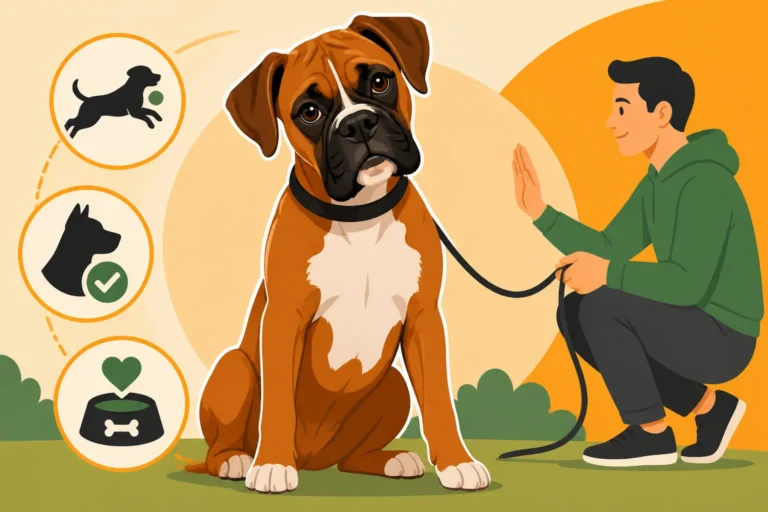
This means that for the first two to three years, your training sessions need to be short, sweet, and engaging. Think 5-10 minute bursts several times a day rather than one long, arduous session. Incorporate play into training, making it a fun game rather than a chore. Use high-value rewards – not just kibble, but tasty treats or their favorite squeaky toy. If you find your Boxer disengaging or getting frustrated, it’s a sign to end the session on a positive note and try again later. They thrive on novelty and enthusiasm, so keeping things fresh is key to avoiding Why Repetition Loses a Boxer and maintaining their focus. Remember, a Boxer will often choose fun over formality, so make formality fun!
Consistency is King: Reinforcing Good Habits
With a Boxer's extended puppy phase, consistency in training isn't just a recommendation; it's an absolute necessity. Because they take longer to mature mentally, they need continuous reinforcement of good habits and boundaries well beyond what you might expect for other breeds. Every member of the household must be on the same page, using the same commands, expecting the same behaviors, and providing consistent feedback. If one person lets them jump on the couch while another scolds them for it, your Boxer will get mixed signals and take much longer to understand the rules.
There will be times, especially during their "teenage" phase (roughly 6 to 18 months, though for Boxers this can extend to two years), when it feels like all your training has gone out the window. They might develop selective hearing, ignore previously mastered commands, or test boundaries they once respected. This is normal developmental behavior for an adolescent dog, amplified by the Boxer's playful nature. Don't get discouraged! Double down on your consistency, keep your tone upbeat, and continue to use positive reinforcement. Building a strong foundation with clear, consistent communication helps them navigate these phases and ensures that the good habits eventually stick, even if it feels like a slow process.
Overcoming Common "Puppy" Behaviors in an Adult Body
One of the biggest frustrations for Boxer owners is dealing with classic "puppy" behaviors when their dog is already a full-grown, seventy-pound powerhouse. Mouthing, jumping, and chewing are completely normal for a young puppy, but when a two-year-old Boxer is still doing them, it can be a real handful.
Boxer Mouthing From Puppy to Adult is a common complaint. Their playful nature and strong jaws mean they often use their mouths to interact with the world, and sometimes, that means gently (or not so gently) grabbing your arm or clothes during play. It's crucial to teach bite inhibition early on, redirecting their mouthing onto appropriate chew toys and consistently disengaging if teeth touch skin. Similarly, Stopping a Seventy-Pound Boxer From Jumping requires consistent training. Teach them to keep "four on the floor" with a "place" command or by turning your back and ignoring them until they calm down.
Crate training can be incredibly beneficial for a Boxer, providing a safe den and preventing destructive behaviors when unsupervised. In fact, Why a Boxer Needs a Crate More Than Most is often due to their high energy and propensity for mischief when left to their own devices. Providing plenty of appropriate chew toys is also vital, steering them away from your furniture or shoes. Consistency, redirection, and patience are your best tools during these extended "puppy" years, as you guide your big, playful Boxer toward more appropriate adult behaviors.
Socialization Beyond Puppy Classes
Socialization isn't just for tiny puppies; for a Boxer with an extended adolescence, it's a continuous, ongoing process that helps them become well-adjusted adults capable of navigating a complex world. While early exposure is paramount, the work doesn't stop once they're out of puppy class.
The Critical Early Window and Ongoing Exposure
The period from roughly 8 to 16 weeks is often called the critical socialization window, and for a Boxer puppy, it's absolutely non-negotiable. During this time, every positive experience they have with new sights, sounds, smells, people, and appropriate dogs helps build their confidence and shapes their view of the world. Socializing a Boxer Puppy Before Sixteen Weeks lays the groundwork for a stable temperament. This means safe, supervised exposure to friendly strangers, children (if applicable), different environments like parks and pet stores (once fully vaccinated), and other well-mannered dogs.
However, because Boxers mature more slowly, this exposure needs to continue throughout their first two to three years. What they were fine with at six months, they might suddenly be wary of at eighteen months if not regularly reinforced. Continue taking them to new places, introducing them to different people, and allowing positive interactions. The goal isn't to make them love every single thing, but to teach them to be calm and confident in a variety of situations. Avoid overwhelming them, and always ensure experiences are positive, stepping in if they seem stressed or fearful.
Learning Appropriate Play Styles
Boxers, by nature, have a very physical, rough-and-tumble play style. They use their front paws to "box," body-slam each other, and engage in boisterous wrestling matches. While this is perfectly normal and healthy for Boxers playing with other Boxers or robust, tolerant dogs, it can be intimidating or even dangerous for smaller, more delicate breeds or for people. During their extended puppyhood, it's essential to teach them appropriate play styles and impulse control.
Supervised interactions with a variety of dog temperaments are crucial. A patient, older dog can be an excellent teacher, letting your Boxer know when they're playing too hard. Use a long line in open spaces to practice recall during play, allowing you to interrupt and redirect if things get too rambunctious. Teaching them a clear "break" or "settle" cue can help them calm down when their play drive is in overdrive. This ongoing practice helps them understand social cues, learn when to dial down their energy, and ultimately become dogs that can safely and appropriately interact with a wider range of canine companions and people, rather than being seen as "too much" to handle.
Living with a Teenage Boxer: Practical Strategies
Navigating the "teenage" phase of a Boxer, which, as we know, can feel like it stretches on forever, requires patience, consistent effort, and a realistic understanding of their developmental stage. It's during this time that you really lean into the practical strategies that will make life with your energetic, sometimes exasperating, but always endearing Boxer a joy.
Setting Boundaries and Managing Expectations
It's easy to look at your physically mature Boxer and expect them to act like a fully-fledged adult. But remember, a two-year-old Boxer is still very much in a developmental phase that many would call "adolescence." They're pushing boundaries, testing limits, and sometimes just acting on instinct rather than learned behavior. This is where setting clear, consistent boundaries and managing your own expectations become paramount.
Don't assume they "know better" just because they're big. Revisit basic obedience, practice impulse control exercises like "leave it" and "stay," and reinforce house rules without exception. Understand that their attention might still wander, especially in stimulating environments. The phase around Managing a Boxer Between Six and Eighteen Months can be particularly challenging, but for Boxers, aspects of it can persist well beyond that. Celebrate the small victories – the times they choose to settle, the moments of perfect recall, the greetings where they keep all four paws on the floor. These are signs of progress, even if they're interspersed with moments of pure Boxer goofiness. Adjusting your expectations to meet them where they are developmentally, rather than where you wish they were, will reduce frustration for both of you.
Enriching Their Environment: Beyond Just Walks
While walks and physical exercise are fundamental, a Boxer, especially during their extended puppyhood, also needs significant mental stimulation to prevent boredom and destructive behaviors. Their intelligence, combined with their play drive, means their brains need a workout just as much as their bodies.
Puzzle toys, like those found easily on Amazon or at local pet stores, are fantastic for keeping their minds engaged and making meal times a stimulating activity. Scent work, even simple "find it" games where you hide treats around the house or yard, taps into their natural instincts and is mentally exhausting. Trick training is another excellent way to bond and challenge them – Boxers love to learn new things, especially if it involves treats and praise. Rotating their toys keeps them interested, and providing appropriate, durable chew items is crucial for their oral health and to redirect any chewing instincts. Boredom is often the root cause of Why a Boxer Wrecks Things When Under-Exercised, so a rich, varied environment that engages both their body and mind is key to a harmonious household.
The Role of Professional Guidance and Online Resources
Sometimes, despite your best efforts, you might feel overwhelmed by your Boxer's energy or challenging behaviors. This is where professional guidance can be invaluable. A certified professional dog trainer who understands the Boxer breed can offer tailored advice, help you troubleshoot specific issues, and provide strategies for managing their unique temperament. They can also assist with more advanced obedience, dog sports, or behavioral modification if needed.
Beyond in-person trainers, a wealth of online resources can support you. Comprehensive online training programs, such as those offered by BAXTER & Bella, provide structured curricula, video tutorials, and often access to trainers for personalized advice. These resources can be incredibly helpful for maintaining consistency in training, learning new techniques, and connecting with a community of other dog owners facing similar challenges. Remember, seeking help isn't a sign of failure; it's a sign of a responsible owner committed to giving their Boxer the best possible life. Utilizing these tools can make the journey through their extended puppyhood much smoother and more rewarding.
| Age Range | Typical Dog Breed (Mental Maturity) | Boxer Dog (Mental Maturity) | Common Boxer Behavior |
|---|---|---|---|
| 8 weeks – 6 months | Rapid learning, basic obedience | Extremely curious, high energy, frequent mouthing | Nipping, chewing, house training challenges |
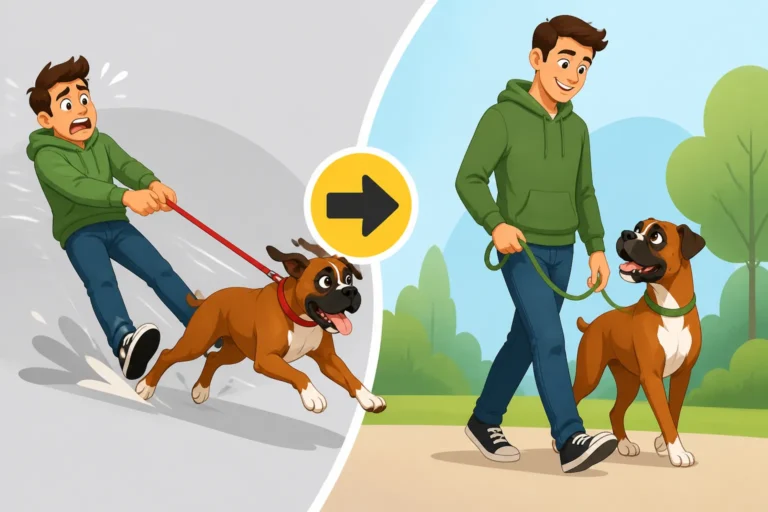
| 6 months – 18 months | Adolescence, testing boundaries | "Teenage" phase, selective hearing, increased strength | Jumping, leash pulling, continued mouthing, zoomies |
| 18 months – 2.5 years | Approaching adult temperament | Still highly energetic, can be impulsive, attention drifts | Bouncing, enthusiastic greetings, "boxing" play |
| 2.5 years – 3 years | Fully mature adult | Settling, better impulse control, consistent listening | More reliable, calmer indoors, still loves to play |
| 3 years + | Fully mature adult, stable temperament |
Embracing the Journey: The Joy of a Long Puppyhood
It's easy to focus on the challenges of a Boxer's extended puppyhood – the energy, the training, the occasional mischief. But when you shift your perspective, you'll find that these years are also filled with immense joy, laughter, and the unique charm of a breed that truly lives in the moment. Embracing this journey allows you to appreciate the special bond you build with your Boxer.
Appreciating Their Enduring Spirit
The enduring spirit of a Boxer, with their playful antics and unwavering enthusiasm, is truly one of the most delightful aspects of the breed. While some might yearn for a calmer, more "adult" dog sooner, the Boxer's refusal to fully grow up for three years means you get a prolonged period of that infectious puppy joy. They maintain a youthful exuberance that can brighten even the dreariest day, constantly reminding you not to take life too seriously. Their goofy expressions, their famous "wiggles," and their tendency to burst into spontaneous play are hallmarks of the breed.
Understanding that The Age a Boxer Is Mentally Grown Up is later than average allows you to appreciate these traits for what they are: part of the Boxer's unique charm, not a deficit in their training or intelligence. This longer period of immaturity fosters a deeper, more profound bond, as you navigate their development together. You'll witness their personalities blossom, from curious puppy to boisterous adolescent to, eventually, a settled but still spirited adult. It’s a privilege to experience such a long stretch of pure, unadulterated canine joy.
The Lifelong Rewards of Patience and Investment
The investment of patience, time, and consistent training during your Boxer's three-year puppyhood pays dividends for their entire life. Those challenging moments of redirecting mouthing, reinforcing boundaries, and providing endless exercise are all contributing to the creation of a well-adjusted, confident, and happy adult Boxer. By the time they truly settle into their mature selves, typically around three years of age, you'll have a companion who is not only a beloved family member but also a dog who understands their place, respects your leadership, and knows how to navigate the world appropriately.
The strong foundation you build during these formative years translates into a lifelong relationship built on trust and mutual understanding. You'll have a dog that, despite their continuing love for play, can also be a calm, loving presence in your home. The companionship of a well-raised Boxer is unparalleled – they are fiercely loyal, incredibly affectionate, and always ready for an adventure or a cuddle. So, while the journey through their extended puppyhood might sometimes feel like a marathon, the finish line is a lifetime of devotion and joy with one of the most remarkable breeds on the planet.
Disclaimer
This article is for general informational purposes only and does not constitute professional advice. Laws, prices and regulations vary by location and change over time. Consult a qualified professional for guidance on your specific situation.