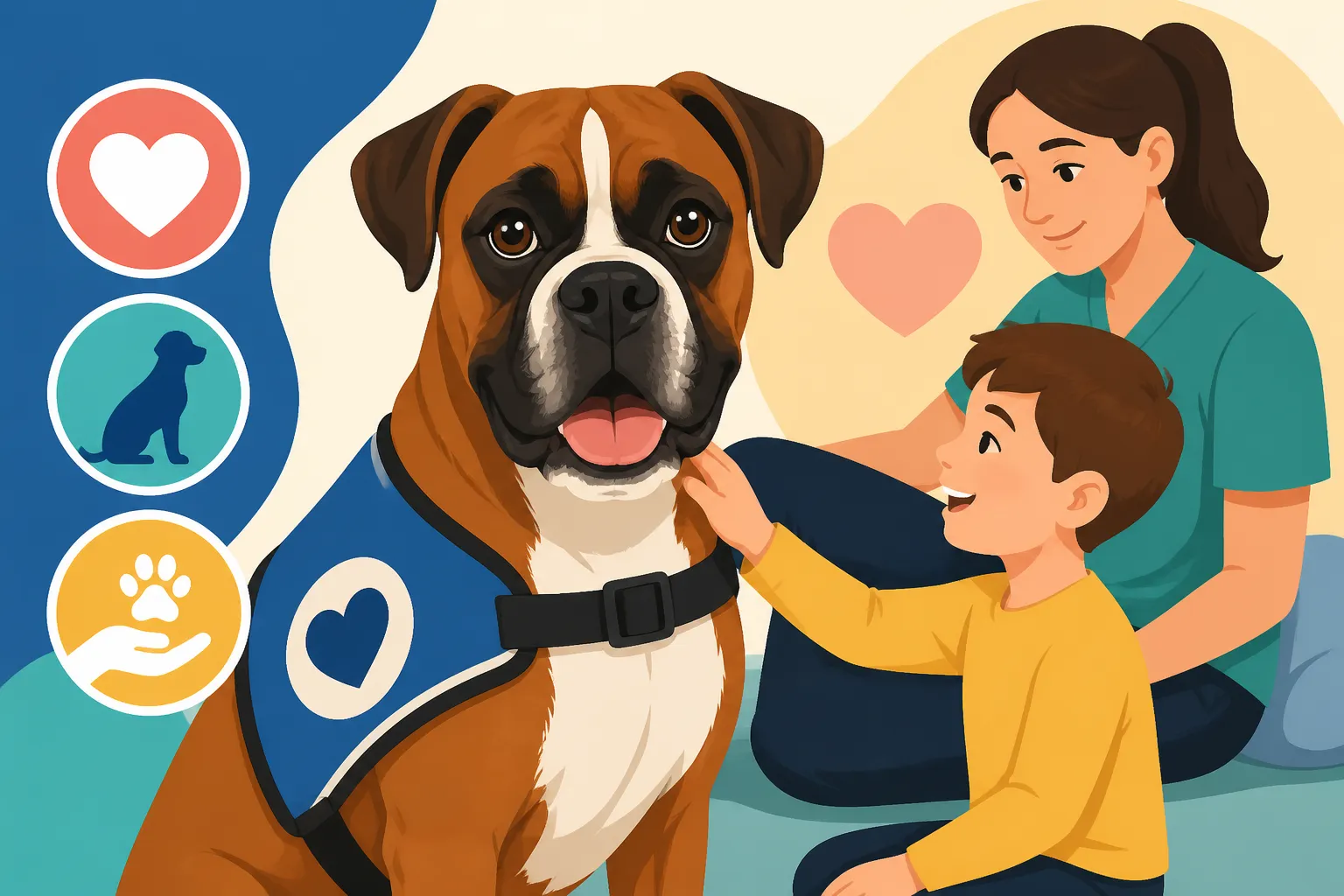
Getting a Boxer Ready for Therapy Work
Bringing a Boxer into the world of therapy work is a truly rewarding endeavor, but it's far from a walk in the park. Many owners mistakenly believe their sweet, goofy companion is automatically cut out for it, only to find the specific demands and nuanced expectations of therapy environments present unique challenges. This guide will walk you through everything you need to know to prepare your Boxer, from temperament assessment to the crucial certification process, ensuring both you and your dog are ready for this incredible journey of service.
The Heart of the Boxer: Temperament for Therapy Work
Boxers are renowned for their playful, affectionate nature and boundless energy. These traits, while endearing in a family setting, need to be carefully channeled and understood when considering therapy work. It’s not just about being friendly; it’s about being consistently calm, predictable, and genuinely enjoying interactions with people who might be vulnerable or easily startled.
Natural Empathy and Affection
One of the Boxer's most wonderful qualities is their deep capacity for empathy and their loving disposition. They connect strongly with their people and often seem to intuitively sense when someone needs a gentle nudge or a comforting presence. This inherent sweetness is a huge asset for a therapy dog. I've seen Boxers walk into a room full of strangers and gravitate directly to the person who needed them most, offering a soft muzzle nudge or a quiet lean. Their gentle, soulful eyes can melt even the most reserved heart.
However, this affection needs to be tempered with control. A Boxer's enthusiasm can sometimes be overwhelming. While they mean well, a full-body lean from a seventy-pound dog, or an excited "wiggle butt" greeting, might knock over a fragile senior or scare a nervous child. We want their loving nature to shine through, but always within acceptable boundaries, ensuring every interaction is positive and safe for the recipient.
Managing the "Clown" Instinct
Ah, the Boxer clown! It's one of the things we adore most about them – their silly antics, the zoomies, the way they "box" with their front paws. In a therapy setting, however, this exuberance needs to be managed with a very firm hand. Imagine your Boxer suddenly deciding to "box" with a patient in a hospital bed, or getting a case of the zoomies in a quiet library. It's simply not appropriate, and it can be disruptive or even dangerous.
Therefore, a key part of preparing your Boxer is teaching them to differentiate between play time at home and working time in public. This involves a lot of impulse control training, teaching them to stay calm and focused even when their natural goofy instincts are bubbling up. It’s about building a solid "off switch" so they can relax and be a comforting presence without feeling the need to entertain. Training aids like puzzle feeders can help channel that mental energy, reducing the likelihood of spontaneous clowning when it’s not wanted.
Assessing Sensitivity and Resilience
Therapy environments can be unpredictable and sometimes overwhelming. Your Boxer might encounter strange noises, unusual equipment, strong smells, or people behaving in unexpected ways (e.g., loud talking, sudden movements, wheelchairs, IV poles). A good therapy dog needs to be unflappable, not easily startled, and able to recover quickly if something does surprise them.
Some Boxers are more sensitive than others. We need to assess if our dog is resilient enough to handle these stressors without becoming fearful or reactive. A dog that cowers from a wheelchair or barks at a sudden clang is not a good candidate. It's about finding a Boxer who is inherently calm and confident in a variety of situations. Look for a dog that is curious but not overreactive, that can take new experiences in stride, and that genuinely enjoys the novelty of new places and people without becoming anxious.
Building Blocks: Essential Obedience and Manners
No matter how sweet-natured your Boxer is, formal obedience training is the bedrock of successful therapy work. This isn't just about passing a test; it's about building reliable communication and control in unpredictable environments, ensuring safety and comfort for everyone your dog meets.
Mastering Basic Commands
Every therapy dog needs rock-solid basic obedience. "Sit," "stay," "down," and "come" aren't just parlor tricks; they're vital tools for managing your Boxer in a public setting. Your Boxer must respond to these commands instantly, without hesitation, even with distractions all around. A "stay" that lasts only a few seconds or a "come" that's ignored when a squirrel darts by simply won't cut it.
Practice these commands everywhere: in busy parks, outside grocery stores, in quiet waiting rooms. Increase duration and distance gradually. Use high-value treats and enthusiastic praise to make training fun and rewarding. If your Boxer finds it hard to focus, consider investing in a comprehensive online program like those offered by BAXTER & Bella, which can provide structured lessons and support to build these foundational skills before you even step foot in a public class. Consistency is absolutely key here; it's about repetition, patience, and making sure your Boxer understands what's expected in every situation. Why a Boxer Stops Working Mid-Session might be a useful read if you find your Boxer's attention waning during these sessions.
Perfecting Loose-Leash Walking and Greetings
One of the biggest challenges for many Boxer owners is teaching them to walk politely on a leash. A pulling Boxer is not only difficult to manage, but also unprofessional and potentially dangerous in a therapy setting, especially around people who might be frail or unsteady. Your Boxer needs to walk calmly by your side, without lunging, pulling, or zig-zagging.
Equally important are polite greetings. This means keeping all four paws on the floor when meeting new people. We love their exuberance, but jumping up, even out of joy, is unacceptable for a therapy dog. Teach a "four on the floor" command, using redirection and rewarding calm behavior. Practice with volunteers who pretend to be patients or residents. Equip yourself with a comfortable, non-restrictive harness that gives you good control without causing discomfort to your dog, many excellent options are available on Amazon. This focus on controlled greetings is critical; imagine your Boxer excitedly jumping on someone using a walker. We want gentle, controlled approaches every single time. Teaching a Boxer to Keep Four Feet Down delves deeper into managing this common Boxer behavior.
Impulse Control and Distraction Proofing
Therapy environments are full of potential distractions: dropped food, other animals, loud noises, medical equipment, new smells. Your Boxer must be able to ignore these things and remain focused on their human companion or the person they are interacting with. Impulse control is paramount. This means not sniffing food off tables, not reacting to loud sudden noises, and not being overly interested in other dogs passing by.
Exercises like "leave it" and "wait" are indispensable. Practice walking past tempting items, having people drop keys or crinkle papers, and gradually introduce more complex scenarios. The goal is a dog that is calm and collected, able to maintain a neutral demeanor regardless of what is happening around them. This takes extensive practice in a variety of settings. Start with low-distraction environments and slowly build up to busier, more chaotic places. Your Boxer's ability to remain composed under pressure will make all the difference in their effectiveness and acceptance as a therapy dog.
Socialization and Exposure: Broadening Your Boxer's World
A well-socialized Boxer is a confident Boxer. For therapy work, this means not just being friendly with family and friends, but being comfortable and calm around a huge diversity of people, places, sounds, and objects. The more varied experiences your Boxer has had, the less likely they are to be startled or behave inappropriately in a new therapy setting.
Varied Environments and Novelty
Exposure to a wide range of environments is crucial. Think beyond your usual park walks. Take your Boxer to pet-friendly stores (like hardware or craft stores), stroll through busy outdoor markets (if allowed), visit quiet waiting rooms, or walk around the perimeter of a school playground when children are out. The goal is to normalize different sights, sounds, and smells. Each new experience should be positive and low-stress.
If your Boxer is naturally a bit nervous, introduce new places slowly and always ensure they have a safe "out." Reward calm curiosity generously. The more "novelty" you introduce in a controlled, positive way, the less likely your Boxer will be to react with fear or over-excitement when confronted with something new in a therapy setting. This wide exposure builds a robust sense of confidence and adaptability. You might also find Socializing a Boxer Puppy Before Sixteen Weeks an interesting read for establishing this foundation early on.
Interactions with Diverse People and Equipment
A therapy Boxer will encounter people of all ages, sizes, and abilities. This includes children, seniors, people in wheelchairs, using walkers, crutches, or even oxygen tanks. It's vital that your Boxer sees these things as normal and non-threatening. Arrange controlled introductions with friends or family members who use mobility aids or wear hats, glasses, or uniforms.
Expose your Boxer to different types of touch as well – gentle petting from strangers, quick pats, even awkward pats from less experienced hands. Practice being around medical equipment like IV poles or hospital beds. The key is desensitization: making the unusual normal through repeated, positive exposure. Always supervise these interactions closely, ensuring they remain positive for your dog and that your dog is never overwhelmed. We want them to associate diverse people and equipment with pleasant experiences.
Desensitization to Strange Sights and Sounds
Therapy locations, particularly hospitals or nursing homes, can have unique and sometimes alarming sounds: alarms, intercom announcements, beeping machines, or even sudden shouts. Your Boxer needs to be desensitized to these. You can start this at home by playing recordings of common therapy environment sounds at a low volume and gradually increasing it, always pairing the sound with something positive like a treat or playtime.
Similarly, exposure to strange sights – flickering lights, reflections, or unusual objects – needs to be managed. A dog that lunges at a reflection or barks at a shadow is not ready for therapy work. This process is about building a dog's confidence in their world, teaching them that most strange things are not a threat, and that you are their reliable guide. A calm, confident Boxer is a comforting presence, whereas an anxious or reactive one can create more stress.
| Training Milestone | Description | Why it's Important for Therapy Work |
|---|---|---|
| Sit/Stay (30+ seconds) | Boxer holds position reliably, even with moderate distractions. | Allows handler to manage interactions, prevent jumping, ensure patient safety. |
| Down/Stay (60+ seconds) | Boxer lies down and remains calm for an extended period. | Essential for long visits, allowing quiet comfort beside a bed or chair. |
| Come When Called | Boxer immediately returns to handler, regardless of distractions. | Crucial for safety and control in open or busy environments. |
| Loose Leash Walking | Boxer walks politely by handler's side without pulling. | Prevents handler from being pulled, ensures safe navigation around patients. |
| "Leave It" Command | Boxer ignores tempting items (food, dropped objects) on cue. | Prevents ingestion of unsafe items, maintains focus on the interaction. |
| Polite Greetings | Boxer keeps all four paws on the floor when approached by strangers. | Prevents accidental injury to frail or unsteady individuals. |
| Comfort with Strangers | Boxer shows no fear or aggression towards people of all ages/abilities. | Fundamental for all therapy work, ensures positive interaction for patients. |
| Tolerance of Petting | Boxer accepts being petted (including clumsy or unusual petting) calmly. | Patients may have limited motor skills; dog must tolerate varied touch. |
| Comfort with Equipment | Boxer is unfazed by wheelchairs, walkers, medical devices, uniforms. | Therapy settings often feature these items; dog must remain calm. |
| Noises & Movement | Boxer is not startled by sudden sounds or unexpected movements. | Minimizes disruption and stress in potentially chaotic environments. |
Navigating the Certification Journey
Once you feel your Boxer has truly mastered all the necessary skills and exhibits the ideal temperament, it's time to seek official recognition. Therapy dog certification isn't just a formality; it ensures that dogs and their handlers meet a consistent standard of safety and behavior, providing peace of mind for the facilities they visit.
Understanding Therapy Dog Organizations
There are several reputable organizations that register and certify therapy dogs. Major players often include Therapy Dogs International (TDI), Pet Partners (formerly Delta Society), and Alliance of Therapy Dogs (ATD). Each organization has its own specific requirements, testing procedures, and philosophy. It's a good idea to research them all and choose one that aligns with your values and the type of work you envision for your Boxer. Some focus heavily on handler control, while others emphasize the dog's natural interaction.
These organizations typically require a certain age for the dog (usually at least one year old), proof of current vaccinations, and a clean bill of health from a veterinarian. They also usually require you, the handler, to undergo some training or coursework to ensure you understand ethical interactions, canine body language, and the protocols of visiting various facilities. Don't skip this human-side of the training, as it's just as important as your Boxer's skills. Knowing the rules and regulations for visits is paramount for everyone's safety and success.
The Evaluation Process: What's Tested
The certification evaluation is a comprehensive assessment designed to ensure your Boxer is safe, reliable, and comfortable in a therapy setting. It goes beyond basic obedience. Evaluators will observe your Boxer's temperament, reaction to distractions, manners around people and other dogs, and how well you can control them. Expect tests that simulate real-life scenarios.
This often includes: walking through a crowd, ignoring dropped food or loud noises, being approached by a "clumsy" stranger, remaining calm during a brief separation from you, and accepting petting from multiple people. They will look for any signs of aggression, excessive shyness, or uncontrolled exuberance. Your Boxer's ability to Get a Boxer's Attention Outdoors despite distractions will be key here. The evaluator wants to see a dog that is relaxed, confident, and genuinely enjoys interacting, not one that is stressed or merely tolerating the situation. Remember, this test is about proving your Boxer can be a gentle, predictable presence.
Preparing for Your First Visits
Once certified, the real adventure begins! Your first few visits to a facility should be treated as training exercises. Start with shorter visits to less stimulating environments, like a quiet wing of a nursing home. Talk with the staff beforehand to understand their specific rules and the needs of their residents. Always go in with a clear plan and a calm demeanor. Your Boxer will pick up on your energy.
Be mindful of your Boxer's body language. Are they still enjoying it? Are they showing signs of stress? It's okay to take breaks or end a visit early if your dog seems overwhelmed. Always advocate for your Boxer's comfort. Carry a small bag with water, treats, and a favorite blanket or mat for them to settle on if needed. Reflect on each visit afterwards: What went well? What could be improved? This reflective practice will help you and your Boxer become even more effective and compassionate therapy partners. Boxer Training Class and Trainer Costs might give you an idea of how to structure your training budget around these ongoing efforts.
The Life of a Therapy Boxer: Rewards and Ongoing Care
The journey to becoming a certified therapy dog is substantial, but the rewards are immeasurable. It’s a commitment that requires ongoing dedication to training, health, and emotional well-being, but the impact you and your Boxer can have on others is truly profound.
The Profound Impact of Therapy Work
There is nothing quite like witnessing the transformation a Boxer can bring to someone's day. I've seen quiet, withdrawn patients light up at the sight of a Boxer, eyes sparkling as they reach out to stroke that soft fawn coat. The simple act of petting a dog has been shown to lower blood pressure, reduce anxiety, and even help people recall memories. For someone feeling isolated or ill, your Boxer offers a connection to the outside world, a moment of unconditional affection, and a much-needed distraction from their pain or loneliness.
Consider a visit to a children's hospital where a Boxer provides comfort before a scary procedure, or to a school where children read aloud to a non-judgmental furry listener. These moments are powerful, offering comfort, joy, and sometimes even aiding in physical or emotional recovery. The unique blend of a Boxer's goofiness and their deep empathy makes them particularly suited to this kind of heart-to-heart connection, making their visits truly impactful.
Maintaining Skills and Well-being
Becoming a therapy dog isn't a "one and done" achievement. It requires ongoing maintenance of skills and a keen awareness of your Boxer's physical and emotional well-being. Continue practicing obedience commands regularly, even after certification. Seek out new, positive socialization opportunities to keep your Boxer sharp and confident. Many therapy dog organizations require re-testing every year or two to ensure standards are maintained.
Crucially, always prioritize your Boxer's health. Therapy work can be tiring, both physically and mentally. Ensure they get plenty of rest, a high-quality diet, and regular veterinary check-ups. Keep an eye out for signs of stress or fatigue during visits – excessive yawning, lip licking, panting, or reluctance to engage are all signals that your Boxer might need a break. It's vital that therapy work remains a positive experience for your dog, otherwise, their ability to help others will diminish. Remember, a happy, healthy Boxer is the best therapy dog. You'll want to be familiar with Caring for a Boxer Past Eight as they age in service, and understand What Changes in a Boxer After Seven to keep them comfortable.
Knowing When to Retire
Just like human volunteers, therapy dogs don't work forever. There will come a time when your Boxer needs to "retire" from active duty. This might be due to age, health issues like Degenerative Myelopathy in an Older Boxer or Arthritis in an Older Boxer, or simply a decreased enthusiasm for the work. Watch for subtle changes in their behavior: are they less excited to go on visits? Do they seem tired or withdrawn afterwards? Are they struggling with stairs or long walks?
It's a difficult decision, but a loving and responsible one. Your Boxer has given so much to others, and now it's your turn to ensure their golden years are spent in comfort and peace. There's no shame in ending a therapy dog's career when they're no longer enjoying it or are physically unable to perform. Celebrate their contributions, cherish the memories, and let them enjoy their well-deserved retirement as beloved family pets. Their legacy of love will continue through the countless lives they touched.
Disclaimer
This article is for general informational purposes only and does not constitute professional advice. Laws, prices and regulations vary by location and change over time. Consult a qualified professional for guidance on your specific situation.