Feeding a Boxer Past Eight
Senior Boxer nutritional needs change after age eight, requiring fewer calories and lean proteins to maintain muscle and joint health.

Senior Boxer nutritional needs change after age eight, requiring fewer calories and lean proteins to maintain muscle and joint health.

White Boxers lack protective melanin pigment, leaving their noses, ears, and bellies vulnerable to painful sunburns and skin cancer.

Whether food bowl height affects bloat in Boxers, whose deep chests and fast gulping raise the risk of gastric dilatation-volvulus, plus feeding precautions.

Boxer jaw anatomy and aggressive chewing styles require specific safe chews to prevent dental fractures and emergency vet visits.

Boxer dental care strategies explain how to clean crowded lower jaws and prevent plaque, tartar, and periodontal disease.
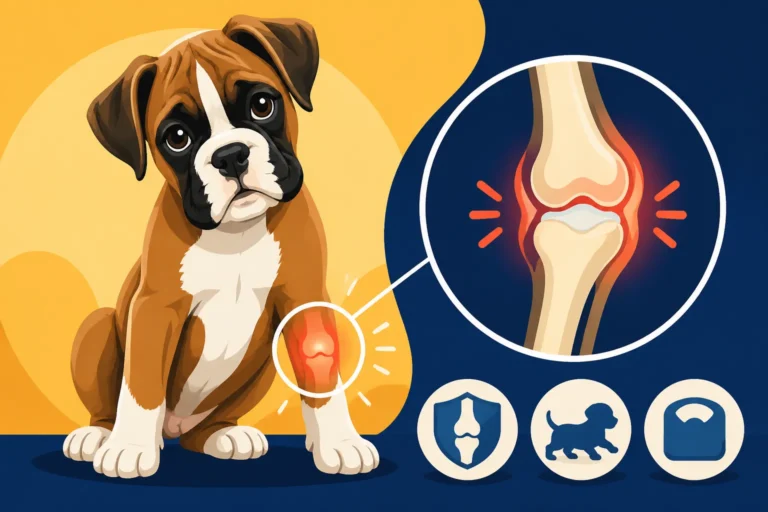
Boxer puppy joint health depends on managing rapid skeletal development, proper nutrition, and avoiding excessive physical activity.

Boxer puppy classification as a large breed explains adult weight thresholds of fifty to eighty pounds and nutritional needs.

Boxer puppy nutrition guidelines explain breeder food transitions and daily portion sizes for young dogs aged eight to twelve weeks.

Cooling gear and strategies help brachycephalic Boxers regulate body temperature and prevent dangerous overheating in warm weather.

Boxer heat sensitivity and brachycephalic anatomy explain dangerous temperatures for walking these energetic dogs safely.