The Temperature a Boxer Should Stop Walking At
It's a heartbreaking scenario many Boxer owners know all too well: the sun is shining, your Boxer is full of beans, and you're ready for a walk, only to realize the temperature is climbing rapidly. Boxers, with their unique physiology, simply don't handle heat the same way other breeds do, making it crucial to know exactly when to ditch the leash and stay indoors. This guide will walk you through understanding why your Boxer struggles in the heat, how to identify dangerous conditions, and what practical steps you can take to keep them safe and cool, even when their energy is boundless.
Why Boxers and Heat Don't Mix: The Brachycephalic Reality
Owning a Boxer means a deep dive into understanding their specific health needs, and one of the most critical is their sensitivity to heat. It's not just about a furry coat; it's fundamentally about how they are built, right down to their skull structure. This isn't a problem that can be wished away; it's a physiological reality that demands constant vigilance from us, their devoted companions.
The Anatomy of a Boxer's Airway
Boxers are a brachycephalic breed, which is just a fancy way of saying they have a "short head." This distinct facial structure, with its shortened snout and often crowded soft tissues in the back of the throat, looks adorable but severely impacts their ability to breathe efficiently. Unlike breeds with long muzzles, Boxers have less surface area in their nasal passages to cool and humidify incoming air before it reaches their lungs. Their airways can also be narrower, and they might have an elongated soft palate or everted laryngeal saccules, all of which obstruct airflow.
When a Boxer needs to cool down, they pant. This is how dogs evaporate moisture from their tongues and respiratory tracts, carrying heat away from their bodies. However, a Boxer's compromised airway makes this process less effective. They have to work harder to move air, which ironically generates more heat, creating a dangerous cycle where the harder they try to cool down, the hotter they become. It's like trying to cool your house with a clogged air filter — the system works overtime but achieves little.
Heat Production from Their Energetic Nature
Boxers are renowned for their boundless energy, their playful "wiggle butt" antics, and their sheer athleticism. They are working dogs at heart, bred for strength, agility, and a strong drive to play and perform. This inherent energy, while one of their most charming traits, becomes a significant factor in their heat sensitivity. When a Boxer plays hard, runs, or engages in vigorous exercise, their muscles produce a considerable amount of metabolic heat.
For a dog with an efficient cooling system, this isn't a major issue; they can pant effectively to dissipate the heat. But combine a Boxer's high-energy output with their inefficient cooling mechanism, and you have a recipe for rapid overheating. That spirited game of fetch or a long, brisk walk that a Labrador might enjoy on a warm day can quickly push a Boxer into dangerous territory. Their muscular build, which helps them excel in sports and play, also means they have a higher muscle mass to generate heat during activity, further compounding the challenge of staying cool.
Other Factors Increasing Heat Risk
Beyond their brachycephalic traits and high energy, several other elements can amplify a Boxer's susceptibility to heatstroke. Their short, single coat, while not appearing heavy, doesn't offer much insulation from external heat, and darker brindle or reverse brindle coats can absorb more solar radiation. Furthermore, a Boxer's age and overall health play a crucial role. Older Boxers, much like older people, may have reduced organ function and less efficient physiological responses to heat stress.
Underlying health conditions common in the breed, such as heart issues like Boxer Cardiomyopathy and the Holter Monitor or Subaortic Stenosis in a Boxer Puppy, can significantly impair their body's ability to cope with heat. A compromised cardiovascular system struggles to circulate blood effectively to the skin for cooling. Even a Boxer carrying a few extra pounds can be at higher risk; fat acts as an insulator, and excess weight means more strain on their heart and lungs. This is why Taking Weight Off a Boxer Without Losing Muscle is so important for their overall well-being, especially in warmer climates.
Gauging the Danger: Temperature, Humidity, and Pavement
It’s easy to look at a thermometer, see a number, and think you know the whole story about whether it's safe to walk your Boxer. But for our flat-faced friends, it's never that simple. The real danger isn lies in a complex interplay of environmental factors that, when combined, create a much higher risk than any single measurement might suggest.
The Critical Role of the Heat Index
While air temperature is the most obvious indicator, humidity is its silent, insidious partner in crime when it comes to heat risk for Boxers. We humans sweat to cool down, and humidity makes it harder for our sweat to evaporate. Dogs, however, primarily cool themselves through panting, which is a process of evaporative cooling from their respiratory tract. When the air is saturated with moisture, that evaporation becomes far less efficient. The body simply can’t shed heat as effectively.
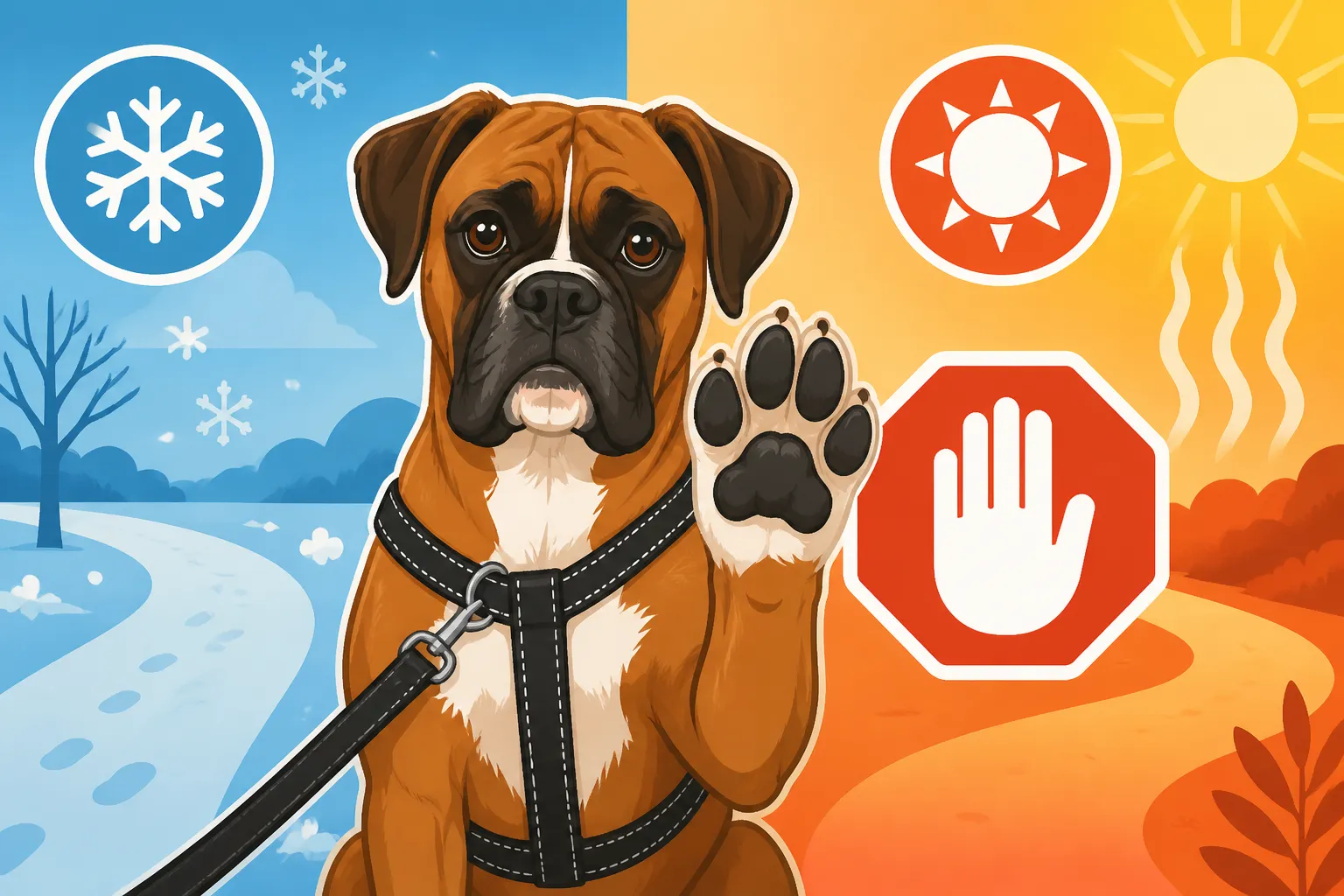
Think of it like this: on a 75°F day with low humidity, your Boxer might be able to manage a moderate walk in the shade. But on a 75°F day with 90% humidity, that same walk could quickly become life-threatening. The combination of heat and humidity creates a "real feel" temperature, often called the heat index, that is much higher than the actual air temperature. It's a measure of how hot it actually feels to a body trying to cool itself. Always check the heat index, not just the raw temperature, before considering any outdoor activity with your Boxer. A good rule of thumb is that once the heat index climbs above 80°F (around 26-27°C), it's generally too hot for anything more than a very quick potty break, especially for a Boxer.
The Unseen Threat of Hot Pavement
One of the most overlooked dangers in warmer weather isn't the air temperature itself, but the temperature of the surfaces your Boxer walks on. Asphalt, concrete, and even artificial turf can absorb and radiate heat at an astonishing rate, often becoming significantly hotter than the ambient air temperature. On a day when the air is 85°F (29°C), asphalt can easily reach temperatures of 130-140°F (54-60°C). That's hot enough to cook an egg in five minutes, and certainly hot enough to cause severe burns to your Boxer's paw pads in a matter of seconds.
Your Boxer's paw pads are tough, but they are not immune to such extreme heat. Unlike human feet, they don't develop calluses that can withstand these temperatures. They are designed for traction and shock absorption, not heat resistance. To test the pavement, simply place the back of your hand on the surface for five to seven seconds. If it's too hot for your hand, it's definitely too hot for your Boxer's paws. This means even if the air feels tolerable, if the ground is scorching, that walk is a non-starter. Look for shady, grassy areas if you absolutely must go out, but ideally, avoid hot surfaces altogether during peak heat.
Personalizing the Temperature Threshold
While general guidelines are helpful, it’s crucial to remember that every Boxer is an individual, and their tolerance for heat can vary. Factors like age, fitness level, acclimation to the local climate, and existing health conditions all play a significant role. A young, fit Boxer living in a cooler climate might handle a slightly higher temperature than an older, less active Boxer or one with a known health issue. For instance, a Boxer with underlying brachycephalic airway syndrome, which might only be fully revealed during a procedure like Anesthesia Risk in a Flat-Faced Boxer, will be far more vulnerable to heat.
It’s important to observe your Boxer closely. Are they already panting excessively before you even leave the house? Are they reluctant to go out? These are subtle cues that tell you the conditions might be too much for them. The goal is to avoid the point where they are struggling. Therefore, while a heat index above 80°F is a solid red light, you might find that your particular Boxer starts showing signs of discomfort even in the low 70s with high humidity. Pay attention to their unique signals and always err on the side of caution. If you have any doubts, it's always safer to stay home and find alternative ways to exercise them indoors.
Here's a quick reference table to help guide your decisions:
| Air Temperature (°F / °C) | Heat Index (°F / °C) | Pavement Check (Hand Test) | Recommended Activity Level for Boxer |
|---|---|---|---|
| Below 60°F / 15°C | N/A | Cool | Normal activity, long walks/runs |
| 60-70°F / 15-21°C | Varies | Often tolerable | Moderate activity, watch for exertion |
| 70-75°F / 21-24°C | Up to 80°F / 26°C | Becomes warm | Shorter walks, early/late day, shade |
| 75-80°F / 24-27°C | 80-85°F / 26-29°C | Warm to Hot | Quick potty breaks only, strictly shade/grass, very early/late |
| 80°F+ / 27°C+ | 85°F+ / 29°C+ | Hot (Burns skin!) | NO walks, stay indoors in AC |
Note: This table provides general guidelines. Always observe your individual Boxer and consult your vet for personalized advice.
Recognizing the Red Flags: Signs of Overheating in Your Boxer
When it comes to Boxers and heat, prevention is paramount, but knowing the signs of overheating is equally critical. Boxers can go from playful to dangerously overheated very quickly, and their stoic nature might mask their discomfort until it's severe. As their guardians, we need to be hyper-vigilant and able to spot the subtle cues before they escalate into an emergency.
Early Warning Signals to Watch For
The first signs of a Boxer struggling in the heat are often subtle and can easily be mistaken for normal exertion. The most prominent early indicator is excessive panting. While all dogs pant, an overheated Boxer's panting will be notably more intense, rapid, and labored than usual. It might sound louder, almost like they're gasping, and they won't seem to calm down even when you stop moving. Coupled with this, you'll likely see an increase in drooling, sometimes stringy or thick, as their body tries desperately to evaporate moisture.
Another key sign is a change in their gums. Instead of a healthy pink, they might appear bright red or even dark brick red, indicating increased blood flow as their body attempts to cool itself. Their tongue might also look abnormally red and large. You might also notice sluggishness or weakness; your normally boisterous Boxer might lag behind, be reluctant to play, or seem unusually tired. They might seek shade more intensely or try to lie down frequently. Paying close attention to these initial Signs a Boxer Is Overheating can make all the difference in preventing a full-blown heatstroke.
The Progression to Heatstroke: What It Looks Like
If the early warning signs are missed or ignored, a Boxer's condition can quickly deteriorate into full-blown heatstroke, a life-threatening medical emergency. As their body temperature continues to rise to dangerous levels (typically above 104°F or 40°C), more severe symptoms will emerge. You might see vomiting or diarrhea, sometimes bloody, as their internal organs begin to suffer damage. Their muscles might become stiff or uncoordinated, leading to stumbling or a drunken gait. They may even collapse entirely.
At this stage, their gums might change from bright red to pale, gray, or bluish, indicating circulatory shock. Their eyes can become glazed over, and they might appear disoriented or unresponsive. Seizures can occur as their brain struggles with the extreme heat. The panting, which was once rapid, might become shallow and ineffective as their respiratory system starts to fail. It's a terrifying progression that highlights why early intervention is so critical. This is not a situation that resolves on its own; immediate, aggressive cooling and veterinary care are essential.
Urgent Action: When Every Second Counts
Spotting any of these signs, especially the more severe ones, demands immediate and decisive action. There is no time to wait and see if your Boxer will "perk up." Your priority is to get them out of the heat and begin cooling them down as rapidly and safely as possible. This means moving them to a cool, shaded area or indoors into air conditioning. Offer them small amounts of cool, fresh water if they are conscious and able to drink without difficulty.
Begin actively cooling them by wetting their body with cool (not ice cold) water. Focus on areas where major blood vessels are close to the surface, such as the armpits, groin, and paw pads. You can use a hose, wet towels, or even a spray bottle. If you have access to a fan, direct it at them to aid evaporative cooling. While you are doing this, you or someone else should be calling your veterinarian or the nearest emergency animal hospital to alert them that you are on your way with a suspected heatstroke case. Prompt veterinary attention is crucial for survival and to assess for internal organ damage. Knowing Getting a Boxer's Temperature Down in Minutes and acting fast can be the difference between life and death.
Strategies for Safe Exercise in Warmer Weather
Given their heat sensitivity, keeping an active Boxer adequately exercised while staying safe in warmer weather requires thoughtful planning and adaptation. You can't just stop exercising them altogether, but you certainly can't follow the same routine you would in cooler months. It's about working smarter, not harder, to meet their needs.
Timing Your Walks and Choosing Your Routes
The most effective strategy for managing walks in warmer weather is to change when you go out. During spring and summer, the early morning hours, typically before 8 or 9 AM, and late evening after sunset, are your Boxer's safest windows for outdoor activity. At these times, both the air and ground temperatures are at their lowest for the day, and the sun's intensity is much weaker. A brisk walk at 6 AM might be perfectly fine, while the exact same walk at 1 PM could be deadly.
Beyond timing, consider your route. Opt for paths that offer ample shade from trees or buildings. Walking on grass is always preferable to asphalt or concrete, as grass doesn't retain heat to the same extent. If you live near a park with a walking trail that winds through wooded areas, that's an excellent choice. Avoid open, sunny areas, especially those with dark-colored pavement that absorbs maximum heat. These strategic choices are part of keeping your Boxer safe when they do need to stretch their legs.
Essential Gear and Hydration Habits
Being prepared with the right gear and practices is non-negotiable for Boxer owners in warmer climates. Always carry fresh, cool water for your Boxer, along with a collapsible bowl. Even on short walks, they need access to water, and you should offer it frequently, not just when you notice them panting. Dehydration can exacerbate heat issues, so consistent hydration is key. Many excellent portable water bottles with attached bowls are available on Amazon or Chewy.
Consider investing in cooling accessories like cooling vests or bandanas. These products, often soaked in water and then wrung out, use evaporative cooling to help lower your Boxer's core temperature. They can be particularly helpful for Boxers with darker coats or those who tend to overheat quickly. However, remember these are aids, not solutions, and should never be relied upon to extend a walk into unsafe temperatures. Ensure any harness or collar your Boxer wears doesn't impede their breathing. Avoid muzzles that restrict panting, as this is their primary cooling mechanism. Cooling Gear for a Flat-Faced Boxer can really make a difference on the margin.
Embracing Indoor Alternatives and Mental Stimulation
When the temperatures soar and outdoor walks are genuinely unsafe, it's time to get creative with indoor exercise and mental stimulation. Your Boxer's energy doesn't just disappear because it's hot outside; it needs an outlet. Instead of focusing solely on physical exhaustion, shift to mental engagement. Puzzle feeders, which require your Boxer to work for their food or treats, are fantastic for this. Brands like Kong and Nina Ottosson make durable puzzle toys that can keep a Boxer mentally occupied for significant periods, many of which are available through Chewy or Amazon.
Indoor fetch in a long hallway or a cool, air-conditioned room can provide some physical exertion without the dangers of outdoor heat. Basic obedience training sessions, learning new tricks, or playing hide-and-seek with toys or treats can burn mental energy and strengthen your bond. Remember that Training a Boxer That Gets Bored Fast means you'll need a variety of activities to keep them engaged. Some Boxers even enjoy treadmill training, though this should be introduced gradually and always supervised closely. The key is to provide structured activity that satisfies their drive without putting them at risk. Indoor Exercise for a Boxer in a Heatwave is not just a suggestion; it's a necessity.
Emergency Response and Long-Term Heat Management
Even with the best precautions, accidents can happen, or conditions can change unexpectedly. Knowing how to react in a heat emergency is vital for any Boxer owner. Furthermore, truly managing a Boxer's heat sensitivity involves more than just avoiding hot walks; it requires a comprehensive, proactive approach to their daily life.
First Aid for an Overheated Boxer
If you suspect your Boxer is overheating, immediate and effective first aid can be life-saving. The absolute first step is to get them out of the heat source and into a cooler environment – shade, air-conditioned car, or indoors. Next, begin cooling them down. The most effective way is to wet their entire body with cool (not ice-cold) water. Focus especially on the head (avoiding the nose and mouth), neck, armpits, belly, and groin area where major blood vessels are close to the surface. You can use a hose on a gentle setting, wet towels, or even a sponge.
Crucially, do not use ice or extremely cold water. While counterintuitive, very cold water can cause the blood vessels on the skin surface to constrict, trapping heat inside their body and potentially leading to dangerous complications. Cool tap water is ideal. You can also direct a fan at them to help with evaporative cooling. Offer small amounts of cool water to drink, but only if they are conscious and can swallow easily. If they are unresponsive or gagging, do not force water, as it could lead to aspiration. Continue cooling until their panting starts to subside and they seem more alert, or until you can get them to a vet.
When to Immediately Seek Veterinary Care
While first aid is critical, it is not a substitute for professional veterinary care in a heatstroke situation. Heatstroke is a medical emergency that can lead to severe organ damage, neurological problems, and even death. As soon as you begin first aid, or have someone help you, call your veterinarian or the nearest emergency animal hospital. Let them know you're coming and describe your Boxer's symptoms and the first aid measures you've taken. This allows them to prepare for your arrival and begin treatment immediately.
Even if your Boxer seems to recover quickly with home cooling, a veterinary check-up is still highly recommended. Boxers can suffer internal damage to their kidneys, liver, brain, or gastrointestinal tract that isn't immediately apparent. A vet can assess their core temperature, perform blood tests to check organ function, and provide intravenous fluids to combat dehydration and flush out toxins. They can also look for secondary complications like disseminated intravascular coagulation (DIC), a severe bleeding disorder that can be triggered by heatstroke. Never underestimate the seriousness of heatstroke in a Boxer.
Building a Proactive Heat Safety Plan
A comprehensive heat safety plan is essential for every Boxer owner, especially those in regions prone to high temperatures. This plan starts with prevention: understanding The Degrees at Which a Boxer Struggles and actively avoiding those conditions. Always plan outdoor activities for the coolest parts of the day. If you live in a hot climate, like those asking Whether a Flat-Faced Boxer Suits Arizona Summers, be prepared for most of your Boxer's exercise to happen indoors or during very brief, shaded potty breaks for several months of the year.
Ensure your home is kept cool, especially if your Boxer is home alone during the day. This might mean adjusting your thermostat or even considering the Cooling Bills in a Household With a Boxer as a regular part of your pet ownership budget. Never, ever leave your Boxer in a parked car, even for a few minutes with the windows cracked. The interior temperature of a car can rise to dangerous levels in minutes, even on mild days. Educate family, friends, and pet sitters about your Boxer's heat sensitivity. Make sure they understand the risks and what to do in an emergency. Being proactive and consistent with these measures is the most loving and responsible way to care for your heat-sensitive Boxer.
Disclaimer
This article is for general informational purposes only and does not constitute professional advice. Laws, prices and regulations vary by location and change over time. Consult a qualified professional for guidance on your specific situation.