Boxers in Police and Military Work
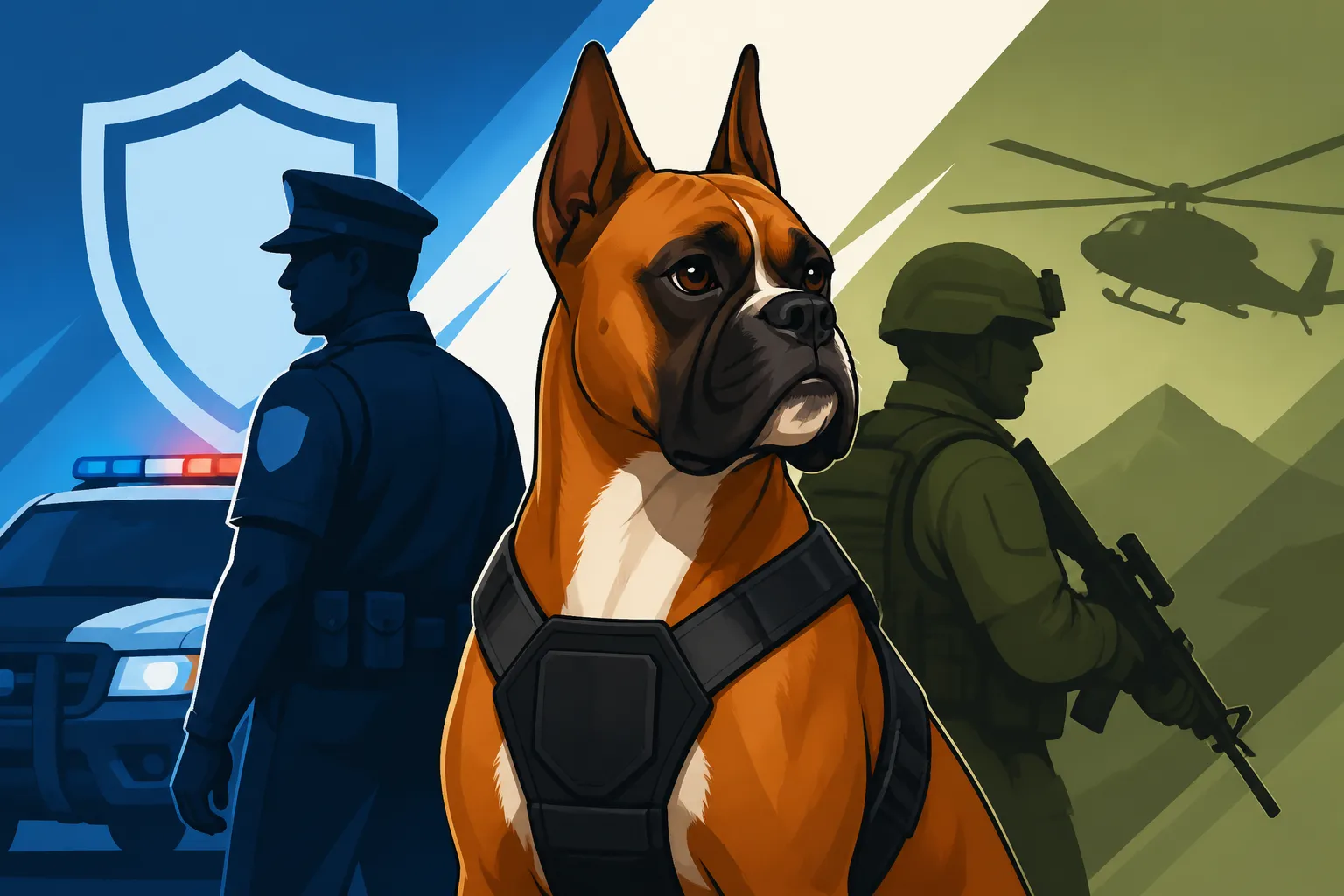
It's easy to look at a goofy, wiggly Boxer, with their expressive faces and boundless energy, and see nothing but a loving, if sometimes clumsy, family companion. Many owners wouldn't ever connect their beloved "clown" to the serious work of police or military service. However, Boxers actually have a fascinating, albeit often overlooked, history as working dogs in these demanding fields. This guide will explore the surprising past of Boxers in uniform, examining what made them excellent candidates for such roles and how their journey has evolved over time.
The Boxer's Forgotten Military History
When you think of a military working dog, certain breeds immediately spring to mind: the stoic German Shepherd, the intense Belgian Malinois. But back in the early 20th century, especially during the tumultuous periods of the World Wars, the Boxer played a significant, if less celebrated, role on the front lines. Their contributions were invaluable, and they earned their stripes through sheer courage and unwavering devotion.
World War I and II Service
During World War I, dogs were deployed in a variety of roles, from pulling carts of medical supplies to locating wounded soldiers. Boxers, with their strength and athleticism, were among the breeds chosen for such tasks. They served notably as messenger dogs, a role that required incredible bravery and a strong bond with their handlers. Imagine a Boxer navigating the chaos of battle, dodging shellfire and navigating treacherous terrain, all to deliver a vital dispatch that could change the course of a skirmish. These dogs were literally lifelines, connecting command posts with forward units when traditional communication lines were often severed.
Their resilience and loyalty were tested daily. Boxers were also utilized as guard dogs, standing watch over critical supplies, ammunition depots, and prisoner-of-war camps. Their presence alone, coupled with their innate protective instincts, was a significant deterrent. They were known for their alertness and ability to detect intruders, even in the dead of night, providing an extra layer of security when human resources were stretched thin. It truly speaks volumes about their character that they could perform these duties with such fidelity amidst the horrors of war.
Early Police Force Contributions
The Boxer's journey into service work actually predates their widespread military deployment, with their roots firmly planted in early German police forces. In the late 19th and early 20th centuries, as police forces began to recognize the immense potential of canine partners, breeds with intelligence, courage, and trainability were sought after. The Boxer, having been developed from mastiff-type dogs like the Bullenbeisser, possessed the physical prowess and determined nature perfect for police work.
They were initially used as all-around utility dogs, assisting officers in patrolling, tracking suspects, and even apprehension. Their powerful build and firm grip, a legacy of their hunting ancestors, made them formidable in a confrontational situation, yet their inherent good nature meant they could be reliably managed. This versatility was highly valued. However, as the demands of police work became more specialized, and as other breeds like the German Shepherd were specifically developed and refined for tasks such as complex scent work and intense bite work, the Boxer's role gradually began to shift from a primary police dog to a more specialized or less common choice. This doesn't diminish their early impact, however, as they proved the concept of canine partners in law enforcement.
Physical and Temperamental Attributes That Suited Service
It might seem counterintuitive to picture a Boxer in a serious working role given their modern reputation for being playful and somewhat goofy house pets. Yet, the breed standard itself describes a dog of strong character, powerful build, and keen intelligence. These are not merely superficial traits; they are the bedrock upon which the Boxer's success in demanding service roles was built.
Athleticism and Stamina
A Boxer, when properly conditioned, is a powerhouse of lean muscle and boundless energy. This robust physical makeup was absolutely crucial for the taxing duties they undertook in military and police service. Their strong, compact bodies were built for endurance, enabling them to cover significant distances, whether on patrol with an officer or as a messenger dog on a battlefield. They could maintain a decent pace for extended periods without faltering, a testament to their inherent stamina.
Think about the physical demands: a Boxer might have to track a suspect through difficult terrain for hours, or carry a heavy satchel of messages over miles of uneven ground. Their well-developed musculature and impressive lung capacity, despite their brachycephalic features, allowed them to perform these strenuous tasks. Compared to some other breeds that might have excelled in specific areas, the Boxer offered a balanced package of strength, agility, and the sheer grit needed to push through physically demanding situations. This combination of speed and power was a true asset in their working days.
Courage and Loyalty
Beyond their physical capabilities, it was the Boxer's indomitable spirit and profound loyalty that truly made them shine as service dogs. These dogs possess an innate courage, a fearlessness that allows them to face challenging or dangerous situations head-on when protecting their handler or fulfilling a task. This isn't a reckless bravado, but rather a deep-seated determination that stems from their protective instincts and strong bond with their human companions. The Boxer's Working History talks more about how these dogs were bred to be courageous.
A Boxer's bond with its handler is legendary, often described as an almost human-like connection. In the high-stress environments of military combat or police operations, this unwavering devotion meant a working Boxer would literally put its life on the line for its partner. They wouldn't back down, displaying an incredible focus and resolve to complete their mission or protect their human, no matter the perceived threat. This combination of bravery and fidelity created an incredibly reliable and trustworthy partner in the field, making them far more than just a tool, but a true comrade. This kind of loyalty is one of the core aspects of Boxer Temperament in the Standard and in Life.
Specialized Roles Boxers Excelled In
While Boxers might not be the first breed that comes to mind for military or police applications today, their historical contributions highlight specific roles where their unique blend of physical attributes and temperament made them exceptionally valuable. They were not just "general purpose" dogs; they filled critical niches that demanded their specific strengths.
Messenger and Communication Dogs
One of the most vital and dangerous roles Boxers performed in wartime was that of messenger dog. In an era before advanced radio technology, or when communication lines were frequently destroyed, a reliable way to transmit messages across active battlefields was paramount. These dogs were trained to carry written dispatches securely and quickly between posts, often through areas under fire. Imagine the scene: a soldier frantically writing a message, attaching it to a specially designed harness on a Boxer, and then sending the dog off into the maelstrom of battle.
The Boxer's speed, agility, and incredible focus were essential here. They had to be able to navigate complex, war-torn landscapes, avoiding obstacles and dangers, all while staying on course to their destination. A hypothetical scenario might involve a Boxer running through a trench network, delivering critical intelligence about enemy movements, or carrying urgent requests for medical aid. This wasn't merely about speed; it was about intelligence, independence, and an unshakeable resolve. The training for these tasks was rigorous, instilling in the dogs the drive to push through adversity and reach their objective, knowing that lives depended on their success.
Sentry and Patrol Dogs
Beyond carrying messages, Boxers were highly effective as sentry and patrol dogs. Their natural alertness and keen senses made them excellent detectors of intruders, whether human or animal, often long before a human guard might notice anything amiss. They would work alongside soldiers or police officers, quietly patrolling designated areas, using their superior hearing and sense of smell to pick up on any anomalies.
Their ability to work silently was a significant advantage in guard duties, allowing them to remain undetected until a threat was positively identified. While their imposing physical presence could be a deterrent, it was their vigilance and protective nature that truly made them invaluable in these roles. If an intruder was detected, a well-trained Boxer could alert its handler, or, if necessary, apprehend the individual with a firm, controlled bite. They provided an extra set of "eyes and ears" in critical situations, offering a layer of security that was both intelligent and formidable. Their presence on patrol not only deterred potential threats but also provided a sense of security and companionship to the human officers working in often isolated or dangerous conditions.
The Shift Away From Boxer Service Roles
While Boxers undeniably proved their worth in early military and police applications, their prevalence in these roles significantly diminished over time. This wasn't due to any failing on the Boxer's part, but rather a natural evolution in working dog programs, driven by changing operational needs and the development of breeds specifically tailored for increasingly specialized tasks.
Emergence of Other Breeds
The primary reason for the Boxer's reduced role was the rise of breeds such as the German Shepherd Dog and, later, the Belgian Malinois. These breeds were meticulously developed and selectively bred for specific traits that became highly desirable in modern police and military K9 units. German Shepherds, for example, were celebrated for their exceptional trainability, keen intelligence, and superior scent detection capabilities, making them ideal for tracking, search and rescue, and bomb or drug detection.
Belgian Malinois, while sharing many traits with German Shepherds, are often noted for their even higher drive, intensity, and extreme agility, making them supreme athletes for protection work and rapid deployment. These breeds also often possess physical characteristics that were seen as more advantageous for prolonged, strenuous work in diverse climates. Their longer muzzles and more open airways, for instance, typically allowed for more efficient panting and heat regulation compared to the Boxer's brachycephalic (flat-faced) skull, which can be a significant factor in hot environments. The focus shifted towards hyper-specialized dogs, and while Boxers are versatile, they didn't always fit the emerging mold as precisely as these other breeds.
Modern Service Dog Requirements
Contemporary police and military K9 programs demand an extraordinarily high level of specificity in their working dogs. The tasks are complex, the environments often extreme, and the training is incredibly intense. Modern service dogs are expected to perform a multitude of roles, from intricate scent detection to high-speed apprehension, often in varying and challenging conditions. This requires breeds with an almost unparalleled drive, a specific physical conformation, and a deep well of resilience.
One of the significant disadvantages for the Boxer in modern military and police work is their brachycephalic nature. While their determination is unquestionable, the flattened face and shorter airways can make them more susceptible to overheating, especially during prolonged, strenuous physical activity in hot climates. How Fast a Flat-Faced Boxer Overheats explains this in more detail. In scenarios where a dog needs to maintain peak performance for extended periods, or operate in desert-like conditions, this physiological limitation can become a serious concern for the dog's welfare and operational effectiveness. Furthermore, the genetic predispositions to certain health conditions, such as Boxer Cardiomyopathy and the Holter Monitor, mean that rigorous health screenings are absolutely critical for any working Boxer, adding another layer to the selection process. While all working dogs are screened, the prevalence of certain conditions in Boxers can make the pool of suitable candidates smaller for these extreme roles.
Training and Temperament for a Working Boxer (Then and Now)
Whether it was a Boxer from a century ago running messages through battlefields or a modern pet Boxer learning basic manners, the core principles of effective training and understanding their unique temperament remain surprisingly consistent. However, the stakes and the specific applications differ dramatically between a family pet and a service dog.
Foundation of Obedience and Control
For any Boxer, be it a pet or a potential working dog, a strong foundation in obedience and control is non-negotiable. Their intelligence is undeniable, but it's often paired with a playful spirit and a tendency to get bored if training isn't engaging. This means that trainers, both past and present, have needed to be creative and consistent. For a service Boxer, the obedience had to be absolute, often a matter of life and death. They needed to respond instantly to commands, even under extreme duress. This requires a level of focus that is built through positive reinforcement, clear communication, and often, high-value rewards. Keeping Boxer Training Sessions Interesting is crucial because they're easily distracted.
Training a working Boxer also involved extensive desensitization to loud noises, chaotic environments, and unfamiliar sights and smells. This couldn't be achieved by simply getting loud or harsh, as Why a Boxer Shuts Down When You Get Loud explains. Instead, patience and repetition, gradually increasing the distractions, were key. Handlers of working Boxers, then as now, would invest in robust, durable equipment—think heavy-duty leashes, secure harnesses, and tough training collars. Many modern working dog handlers or serious hobbyists find themselves browsing extensive online catalogs at places like Chewy, looking for gear that can stand up to the rigorous demands of training and deployment. From specialized treat pouches to long lines for recall practice, having the right tools makes a huge difference in consistency and success.
Socialization and Environmental Exposure
For a Boxer destined for military or police work, early and extensive socialization was, and remains, absolutely critical. A service dog cannot be timid, reactive, or easily spooked. They must be confident and stable in every conceivable situation, from bustling urban environments to quiet, dark rural areas. This means exposing a Boxer puppy to a vast array of sights, sounds, textures, and people from a very young age, creating a well-adjusted and unflappable adult. Socializing a Boxer Puppy Before Sixteen Weeks is a foundation for any Boxer, but especially those in demanding roles.
Contrast this with a typical pet Boxer's socialization needs, which, while important, are usually less intense. A working Boxer needs to differentiate between a friend and a foe, remain calm under fire, and execute commands amidst explosions or screaming crowds. This level of environmental exposure builds resilience and adaptability. For equipping a service dog that needs to be ready for anything, from protective vests for K9 units to specialized booties for extreme terrains, handlers often turn to comprehensive pet supply retailers. Places like Chewy offer a wide selection of specialized equipment designed for durability and performance, allowing owners and trainers to find everything from advanced training tools to protective gear for their dedicated canine partners.
Here's a quick comparison of the traits sought in a Boxer for service work versus those often prized in a family companion:
| Trait | Boxer in Service Work | Boxer as Family Companion |
|---|---|---|
| Courage | Absolute fearlessness in dangerous situations, protective instincts. | Protective of family, wary of strangers, but not aggressive. |
| Loyalty | Unwavering devotion to handler, willingness to obey without question. | Deep bond with family, loves to be close and involved. |
| Trainability | High capacity for complex commands, consistent performance under pressure. | Eager to please but can be stubborn, needs engaging methods. |
| Stamina/Athleticism | Endurance for long patrols, strength for apprehension/carrying. | High energy for play, walks, runs; needs daily exercise. |
| Socialization | Stable and confident in all environments, adapts to chaos. | Well-adjusted to people and other dogs, but can be boisterous. |
| Bite Inhibition | Controlled, powerful bite for apprehension; clear "out" command. | Soft mouth, playful nipping (especially as a puppy). Boxer Puppy Biting That Does Not Stop |
Life After Service: The Boxer's Enduring Legacy
Even if their direct involvement in police and military K9 units has waned, the legacy of the Boxer as a capable, courageous, and loyal working dog lives on. Many Boxers still embody the spirit and drive of their ancestors, finding purpose and fulfillment in civilian life, whether as cherished family pets or as stars in various dog sports.
The Transition to Family Life
For those Boxers that did serve, or for those whose lineage carries that strong working drive, the transition to family life is often seamless. Their inherent loving and loyal nature, which made them such dedicated partners in service, translates beautifully into a home environment. They thrive on human companionship, becoming deeply attached to their families and expressing their affection through their famous "wiggle butts" and enthusiastic greetings. Whether a Boxer Would Protect You is still true, just in a domestic sense.
A Boxer who might once have stood guard or delivered messages now finds joy in guarding the kids during playtime or delivering a slobbery toy to their owner. They retain their protective instincts, often becoming excellent watchdogs, alerting their families to visitors or unusual sounds. Their playful "clown" persona often masks a keen intelligence and a deeply devoted heart, making them adaptable and cherished members of any household lucky enough to have them. The years that make up Boxer Lifespan and the Years That Decide It are filled with companionship.
Preserving the Working Dog Spirit
For modern Boxer owners, even if their dog isn't destined for military precision or police patrol, there are countless ways to honor and channel the breed's impressive athleticism and intelligence. Dog sports such as agility, obedience, rally, and even scent work are fantastic outlets for a Boxer's energy and brains. These activities not only provide physical exercise but also mental stimulation, which is vital for a breed that gets bored easily. Competing in Agility and Dock Diving With a Boxer can be incredibly rewarding.
By engaging in these activities, owners help to preserve the working dog spirit that is so deeply ingrained in the Boxer. It allows them to use their natural talents – their speed, agility, problem-solving skills, and desire to please – in constructive and fun ways. Finding good quality, engaging toys for an active Boxer, especially those that are durable enough to withstand vigorous play sessions and channel their strong chewing instincts, is a focus for many owners. Online stores like Chewy offer a vast array of choices, from puzzle toys that challenge their minds to tough fetch toys that can handle their powerful jaws, ensuring that their working drive is satisfied in a healthy and enriching manner. This way, the Boxer's impressive capabilities continue to be celebrated and put to good use, even if it's on a local agility course rather than a battlefield.
Disclaimer
This article is for general informational purposes only and does not constitute professional advice. Laws, prices and regulations vary by location and change over time. Consult a qualified professional for guidance on your specific situation.