Socializing a Boxer Puppy Before Sixteen Weeks
Bringing home a Boxer puppy is an absolute whirlwind of joy, energy, and sometimes, a little bit of chaos. Those first few weeks fly by in a blur of zoomies and adorable puppy breath, but it's a critical, irreplaceable time that shapes the temperament and confidence of your future adult dog. Many new Boxer owners feel overwhelmed by the sheer volume of advice out there, or they might not fully grasp just how vital the period before 16 weeks is. This guide will walk you through exactly why this short window is so important for your Boxer, what "socialization" truly means, and how you can effectively introduce your puppy to the world in a positive and lasting way.
The Irreplaceable "Critical Socialization Window" for Boxers
There’s a reason why experienced dog trainers and breeders emphasize the first few months of a puppy’s life so strongly, and it’s not just to get ahead on potty training. For a Boxer, just like any other dog, there's a specific, biologically-driven window of time, typically ending around 16 weeks of age, where their brains are most open to new experiences and learning that the world is a safe and interesting place. Missing this window, or having too many negative experiences within it, can profoundly impact your Boxer's adult behavior.
Why the First Four Months Are Different
Imagine your Boxer puppy's brain as a sponge, soaking up every sight, sound, smell, and interaction. During this critical period, their natural curiosity outweighs their fear response. They're wired to explore, to investigate, and to form associations about what's normal and what's threatening. This isn't something you can easily replicate or "catch up on" later in life. After about 16 weeks, puppies naturally become more cautious and fearful of novel things. What might have been a mildly interesting new noise at 12 weeks could become a terrifying, fear-inducing event at 20 weeks if they haven't been properly exposed.
This means that every single interaction, every person they meet, every sound they hear, and every surface they walk on leaves a deep imprint. For a breed as sensitive and intelligent as the Boxer, these early impressions are everything. We want them to develop into confident, friendly, well-adjusted companions, not timid or reactive adults.
The Impact of Undersocialization on an Adult Boxer
Undersocialized Boxers often grow up to be anxious, fearful, or even aggressive towards things they weren't properly introduced to as puppies. You might see a Boxer that barks relentlessly at strangers, lunges at other dogs on leash, or cowers from unfamiliar noises like fireworks or vacuum cleaners. Imagine a seventy-pound Boxer who is terrified of the mail carrier — that's not just an inconvenience, it's a significant stressor for both dog and owner. This fear isn't their fault; it's a direct consequence of not having the right positive exposure during their formative weeks.
A Boxer is a powerful, boisterous dog. While their friendly and clownish nature is legendary, without proper socialization, that energy can be misdirected into nervousness or reactivity. They might struggle with something as simple as a trip to the vet, or be a handful around new people. Investing the time and effort in early socialization isn't just about good manners; it's about setting your Boxer up for a lifetime of happiness and confidence, and making your own life with them much more enjoyable and less stressful. It's about ensuring your dog understands the world isn't a scary place.
What "Socialization" Truly Means for Your Boxer Puppy
When most people think of "socialization," they often picture their puppy playing exuberantly with other dogs at a dog park. While interaction with other well-adjusted dogs is certainly a component, true socialization is far more comprehensive than that. It’s about creating a rich tapestry of positive experiences involving people, places, sounds, sights, textures, and controlled interactions with other animals.
Beyond Just Meeting Other Dogs
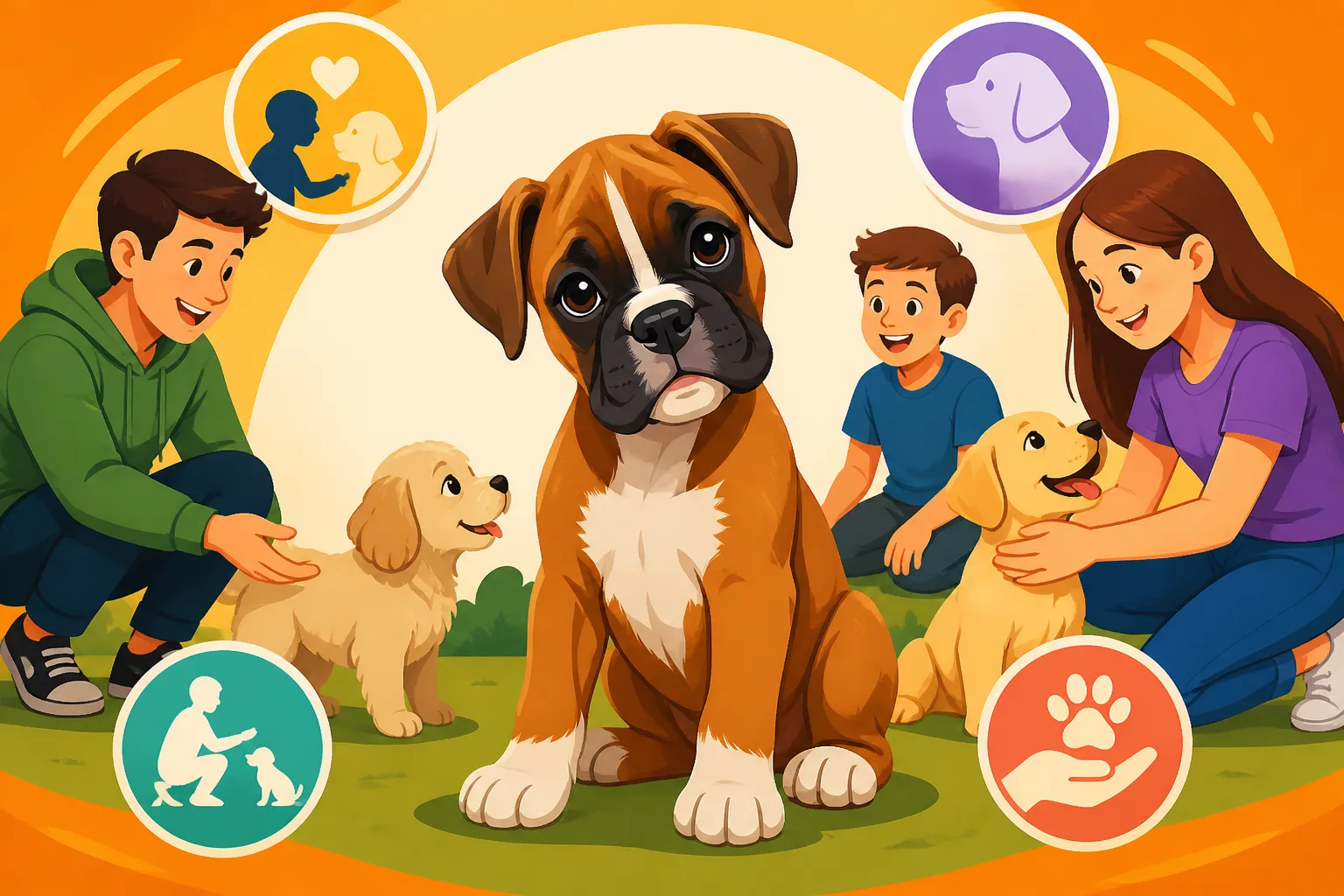
Think of socialization as exposing your Boxer puppy to as much of the world as possible in a positive, controlled, and safe manner. This means letting them encounter:
- Different types of people: Men with beards, women with hats, children of various ages, people in uniforms, people using walkers or wheelchairs. Encourage gentle interactions, perhaps offering a small, tasty treat from a friendly hand.
- Various environments: Quiet parks, bustling sidewalks (from a distance at first), pet-friendly stores, the vet's office (just for a happy visit, no shots!), car rides, elevators, stairs.
- Diverse sounds: Traffic, construction noises, sirens, children playing, thunderstorms (controlled exposure via recordings can help), vacuum cleaners. You can even find sound CDs or apps on Amazon specifically designed for desensitization.
- A range of surfaces and textures: Grass, concrete, gravel, wood floors, carpet, grates, sand, puddles. Getting them used to walking on different materials helps build confidence and body awareness.
- Objects in motion: Bicycles, skateboards, strollers, umbrellas opening and closing.
The key is always to keep these experiences short, positive, and never overwhelming. You want your puppy to associate novelty with good things, like treats and praise, not fear or stress. If your puppy seems hesitant, back off the intensity and try again at a lower level later.
Quality Over Quantity in Puppy Interactions
It's tempting to want your Boxer puppy to meet every single dog they see, especially because they are so naturally friendly and bouncy. However, not all dog-dog interactions are good ones, and one bad experience during this critical window can leave a lasting negative impression. Instead, focus on quality interactions.
- Seek out known, vaccinated, friendly adult dogs: These dogs can teach appropriate play manners much better than other puppies, who are often still learning themselves. A calm, stable adult dog can model good behavior and gently correct your puppy's over-exuberance.
- Avoid dog parks until fully vaccinated and well-socialized: Dog parks can be chaotic and unpredictable, exposing your puppy to potential disease and dominant or poorly-socialized dogs that could traumatize them. It's not worth the risk during these delicate weeks.
- Enroll in a well-run puppy class: This is an ideal way for your Boxer puppy to interact with other puppies in a controlled, supervised environment. A good puppy class will also incorporate exposure to new sounds, surfaces, and people, as well as basic obedience. Many online platforms, like BAXTER & Bella, offer structured puppy programs that can supplement in-person classes or be a great alternative if local options are limited.
Remember, the goal is not for your Boxer to be friends with every single dog or person, but for them to be neutral and confident in the presence of others. They should learn to calmly observe rather than reacting with fear or uncontrollable excitement.
Practical Steps to Socialize Your Boxer Puppy
So, you understand why it's important. Now, let's talk about the how. Actively socializing your Boxer puppy before 16 weeks means being intentional and consistent with their experiences. It doesn't require grand adventures every day, but rather a thoughtful approach to their daily life.
The "Rule of Twelves" and Daily Exposure
A popular guideline that really resonates with the comprehensive approach to socialization is the "Rule of Twelves." It suggests that by the time your puppy is 12 weeks old, they should have experienced:
- 12 different surfaces: Carpet, wood, tile, grass, dirt, gravel, concrete, sand, puddles, plastic, grates, blankets.
- 12 different types of people: Babies, toddlers, children, teenagers, adults, seniors, people in hats, people with glasses, people with beards, people in uniform, people of different ethnicities.
- 12 different locations: Your home, a friend's home, the vet's office (for a happy visit), a park, a store (pet-friendly), a busy street corner (from a distance), a car ride, a quiet field, etc.
- 12 different sounds: Car horns, vacuum cleaner, doorbell, thunder (again, recorded is fine), children yelling, construction, music, television.
- 12 different moving objects: Skateboards, bicycles, strollers, shopping carts, remote control cars, a frisbee flying.
- Handled by 12 different people: Gently check ears, paws, mouth, tail, and belly. This helps them accept handling from vets and groomers later.
This isn't an exhaustive list, but it gives you a fantastic framework. The goal is to make these exposures positive. Always bring high-value treats (like small pieces of cooked chicken or cheese) to reward calm or curious behavior. Keep sessions short and fun. If your puppy shows any signs of fear, such as tail tucked, ears back, lip licking, or trying to hide, stop immediately. Retreat to a comfortable distance and try again later, or with a less intense version of the stimulus.
Remember that while you need to be cautious about diseases before your Boxer puppy is fully vaccinated, you don't need to isolate them completely. Carry your puppy in a sling or a sturdy bag (check options on Amazon) through pet-friendly stores, sit on a park bench and observe the world go by, or have friends and family come over to meet your puppy in a controlled home environment. These experiences are invaluable.
Structured Puppy Classes and Online Programs
Enrolling your Boxer puppy in a reputable puppy socialization class is one of the best investments you can make. These classes offer a safe, supervised environment for puppies to play, learn basic manners, and get exposed to new sights and sounds with a professional trainer guiding the experience. The trainer can help you interpret your puppy's body language and ensure interactions are appropriate. Look for classes that prioritize positive reinforcement and focus on building confidence rather than just obedience drills.
For those who might not have access to good local puppy classes, or who want to complement in-person training, online programs can be incredibly helpful. Platforms like BAXTER & Bella offer comprehensive online puppy training and socialization courses that can guide you step-by-step through exercises to expose your puppy to different stimuli at home and in controlled outdoor settings. These resources often include video tutorials and expert advice, which can be a lifesaver for busy new owners. Even if you attend an in-person class, an online program can provide consistent reinforcement and new ideas for at-home practice.
A great approach is to combine the two: in-person classes for the direct, supervised play and interaction, and an online program for daily at-home desensitization exercises and structured learning.
| Type of Exposure | Examples for Your Boxer Puppy | Why It Matters |
|---|---|---|
| People | Children, men with hats, runners, elderly, vets (for happy visits) | Prevents fear/reactivity towards diverse human forms |
| Environments | Park (carried), pet store (carried), car rides, busy sidewalk (from distance), quiet nature trail | Builds confidence in various settings, prevents 'home-only' comfort |
| Sounds | Doorbell, vacuum, traffic, distant sirens, kids playing, rain, thunder (recordings are great) | Prevents noise phobias, promotes calmness |
| Surfaces | Concrete, grass, gravel, wood, carpet, metal grates, puddles, sand | Develops paw confidence and body awareness |
| Objects | Bicycles, skateboards, strollers, umbrellas, shopping carts, balloons | Reduces startle response to moving or unusual items |
| Handling | Feet, ears, mouth, tail, belly (by various gentle people) | Crucial for vet visits, grooming, and general comfort with touch |
Common Pitfalls and How to Avoid Them
Even with the best intentions, it's easy to make mistakes during this crucial socialization period. Understanding these common pitfalls can help you navigate them more successfully and ensure your Boxer puppy develops into a well-adjusted adult.
Overwhelm and Negative Experiences
One of the biggest mistakes owners make is thinking more exposure equals better exposure, leading to overwhelm. Throwing a young, unvaccinated puppy into a busy, uncontrolled dog park, for example, is a recipe for disaster. Not only is there a risk of illness, but a negative encounter with an aggressive or overly-boisterous dog can teach your Boxer that other dogs are scary. This can lead to lasting fear or reactivity. Similarly, forcing your puppy to interact with a person or object they are clearly afraid of can be damaging.
Instead, prioritize positive and controlled experiences. Keep sessions short, fun, and always end on a good note. If your puppy seems stressed, take a break. Observe their body language: yawning, lip licking, looking away, tucking their tail, or trying to hide are all signs they're uncomfortable. Listen to your puppy, and don't push them past their comfort level. A few calm, positive interactions are far more beneficial than many overwhelming ones. Remember, your goal is to build confidence, not instill fear. This approach also holds true for any behavioral issues that might arise during The Boxer Puppyhood That Lasts Three Years.
Missing the Window Due to Vaccine Concerns
It's a common dilemma: you want to socialize your puppy, but you're worried about diseases like parvo before they're fully vaccinated. This concern is valid, and you should always follow your vet's advice on vaccination schedules. However, "isolation" doesn't mean avoiding all exposure. As mentioned before, you can safely socialize your Boxer puppy by carrying them in public, taking them on car rides, or having known, healthy, vaccinated dogs and people visit your home.
Puppy classes held at reputable facilities often have strict vaccination requirements and cleaning protocols to minimize disease risk, making them a safer option than a public dog park. The risk of behavioral issues from undersocialization can be far more challenging to deal with in the long run than the carefully managed, minimal risks of appropriate early exposure. Consult with your vet to discuss safe ways to get your puppy out and about before their full vaccine course is complete. They can provide guidance tailored to your local disease prevalence.
Not Continuing Socialization as They Grow
The critical socialization window closes around 16 weeks, but that doesn't mean socialization stops. It simply means the primary learning period is over, and subsequent learning often takes more effort. Continuing to expose your Boxer to new places, people, and experiences throughout their adolescence and adulthood is vital to maintaining their confidence and well-adjusted temperament.
An adolescent Boxer, typically between 6 months and 2-3 years, can be a handful, as detailed in The Age a Boxer Is Mentally Grown Up. They might start to test boundaries, become more easily distracted, or even develop new fears. Continuing positive reinforcement training and diverse exposure helps reinforce the good habits you built in puppyhood. Take your Boxer on different walking routes, visit new parks, introduce them to new friends, and enroll in advanced training classes. Keeping their world wide and interesting ensures they remain resilient and happy. Consistent training can help address issues like Boxer Reactivity Toward Strange Dogs or A Boxer That Chews Doorframes When Left.
Remember, socialization is an ongoing process, a journey that evolves with your Boxer. By being proactive and thoughtful during those crucial first four months, and continuing with positive experiences throughout their life, you’ll lay the strongest foundation for a happy, confident, and well-behaved Boxer companion.
Disclaimer
This article is for general informational purposes only and does not constitute professional advice. Laws, prices and regulations vary by location and change over time. Consult a qualified professional for guidance on your specific situation.