Teaching a Boxer to Sit Before the Door Opens
Teaching a seventy-pound Boxer to sit calmly before the door opens prevents jumping on guests during arrivals and departures.
Work with the temperament you have.
House-training and crate work, recall, leash manners, separation anxiety, and the behaviors this breed is wired for.

Teaching a seventy-pound Boxer to sit calmly before the door opens prevents jumping on guests during arrivals and departures.

Boxer jumping behavior stems from friendly enthusiasm, requiring practical strategies to teach polite greetings and clear boundaries to guests.

Retraining an adult Boxer is possible through positive reinforcement, clear communication, and understanding their unique mindset.

Boxer adolescence causes dogs to ignore cues between six and thirty-six months due to hormones, increased distractions, and natural boundary testing.

Boxer adolescence explains why dogs test rules, experience selective hearing, and exhibit prolonged puppyhood behaviors.
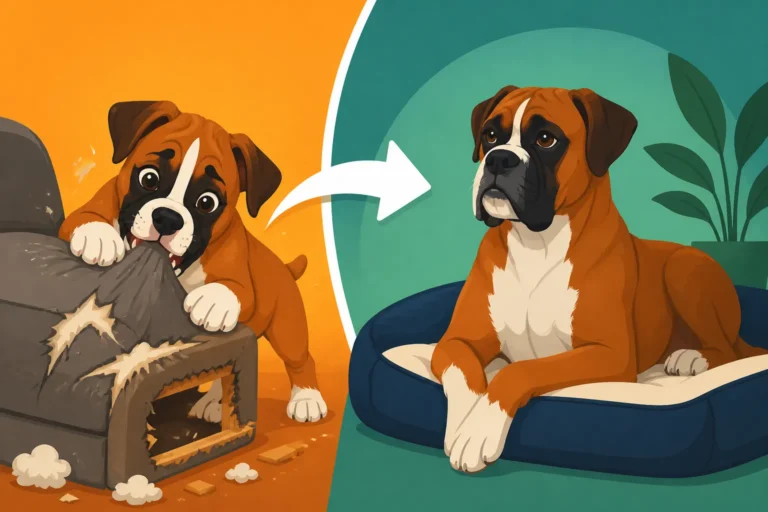
Boxer furniture chewing stops when extended puppyhood ends by the second or third year of age, often driven by boredom and underexercise.

Two-year-old Boxers with endless energy and zoomies need patience because their prolonged adolescence lasts until age three.

Neutering a male Boxer removes testosterone to reduce roaming and marking, but surgery does not lower high energy or stop learned habits.

Boxer mental maturity usually happens around three to four years old, explaining their extended puppyhood and high energy levels.

Boxer development differences explain why this breed keeps boundless energy and acts like a rambunctious toddler for years.