The Age a Boxer Stops Chewing Furniture
The frustration of coming home to a chewed-up chair leg or a shredded cushion is something far too many Boxer owners know intimately. You might lovingly stare at your gorgeous, goofy companion and wonder, when will they finally stop seeing the world as one giant chew toy? This guide dives deep into why Boxers chew furniture, offering practical strategies and a realistic timeline to help you navigate this common, albeit exasperating, Boxer behavior.
The Boxer's Extended Puppyhood and Chewing Instincts
It's easy to look at a year-old Boxer, all muscle and imposing stature, and assume they're a full-grown adult. Physically, they might be, but mentally and emotionally? That's a whole different story. This breed famously matures at a slower pace than many others, which directly impacts behaviors like chewing.
Why Boxers Mature Slower Than Other Breeds
Boxers, bless their energetic hearts, are known for having an extended puppyhood that can stretch well into their second or even third year. While a Labrador might be considered a mature adult by 18 months, your Boxer might still be acting like a boisterous teenager at two and a half. This prolonged developmental stage means that behaviors commonly associated with puppyhood, such as mouthing, jumping, and yes, destructive chewing, often persist longer than you might expect. They retain that youthful exuberance and curiosity, which, without proper outlets, can lead them to explore the world with their powerful jaws. It's not out of malice or spite; it's simply a reflection of their still-developing minds and boundless energy. Understanding this extended phase is crucial for managing their behavior effectively. If you've ever felt like your Boxer acts like a puppy forever, you're not wrong, and this can be a big part of why the chewing continues. Why a Boxer Acts Like a Puppy Until Three discusses this phenomenon in detail.
The Natural Urge to Chew
Chewing is an absolutely natural, instinctual behavior for dogs, and Boxers are no exception. For puppies, it's often about teething, relieving the discomfort of new teeth coming in. But for older Boxers, the reasons are far more varied and complex. They might chew for comfort, much like a child sucks their thumb. It can be a stress reliever, a way to cope with anxiety, or a method to self-soothe when they're feeling overwhelmed or under-stimulated. Sometimes, it's pure exploration; they use their mouths to investigate new textures and objects, much like humans use their hands. Then there's the ever-present factor of boredom. A Boxer with pent-up energy and nothing interesting to do will almost certainly find something inappropriate to chew on. Whether it's a sofa leg, a remote control, or your favorite pair of shoes, the act of chewing provides mental and physical stimulation. It's not an inherently "bad" behavior; it's a dog being a dog, but it's our job as owners to guide that natural instinct towards appropriate targets.
Identifying the Root Cause of Furniture Chewing
Before you can effectively address the problem, you need to understand why your Boxer is chewing your furniture. Pinpointing the root cause is the first critical step in finding a lasting solution.
Boredom and Underexercise: The Usual Suspects
For a high-energy breed like the Boxer, boredom and a lack of adequate exercise are frequently the primary culprits behind destructive chewing. These dogs were bred to be active, intelligent working companions. They need not just physical exertion but also mental stimulation to feel fulfilled. If they're not getting enough opportunities to run, play, and engage their minds, that energy has to go somewhere.
Imagine a scenario: you've had a busy week, and your Boxer has only managed a couple of short walks around the block each day. They're full of beans, perhaps pacing restlessly, and when you leave for work, they're left alone with all that unspent energy. What happens? That beautiful antique coffee table suddenly looks like a fascinating new challenge, or the corner of the sofa becomes the perfect shredding project. This isn't out of spite; it's a direct result of their physiological and psychological needs not being met. They are simply trying to entertain themselves and burn off steam in the only way they know how. It's vital to ensure your Boxer gets plenty of appropriate physical activity, whether it's vigorous play sessions in the yard, long brisk walks, or even a run if suitable for their age and health. But physical exercise alone isn't always enough. Mental exercise, like puzzle toys, training sessions, or scent games, can be just as exhausting and satisfying for their clever minds. Why a Boxer Wrecks Things When Under-Exercised goes deeper into this common issue.
Anxiety and Stress-Related Chewing
While boredom is a common factor, sometimes the chewing stems from deeper emotional issues, particularly anxiety. Boxers are incredibly bonded to their families, and separation anxiety can manifest as destructive behaviors when they're left alone. This type of chewing is often more frantic and intense than simple boredom chewing, and it's usually accompanied by other tell-tale signs. You might come home to not only chewed furniture but also excessive barking or howling reports from neighbors, house-soiling accidents, or even self-harm behaviors like excessive licking.
Think of it this way: when your Boxer is overwhelmed by the stress of being alone, chewing becomes a coping mechanism. It's a self-soothing action that helps release tension and provides a sense of control in an otherwise frightening situation. Common triggers for separation anxiety can include changes in routine, a new home, or even just being left alone for longer periods than they are used to. If you suspect anxiety is at play, merely correcting the chewing won't solve the underlying problem. It requires a more holistic approach, potentially involving desensitization exercises, counter-conditioning, and sometimes, even veterinary consultation for medication in severe cases. You might find that A Boxer That Chews Doorframes When Left is experiencing this very issue.
Lack of Appropriate Chewing Outlets
This might seem obvious, but it's often overlooked. If your Boxer doesn't have a readily available supply of appealing and durable chew toys, they will find something else to gnaw on – and it's usually something you value. Dogs have a natural drive to chew, and it's up to us to direct that drive towards acceptable items.
Consider the variety and durability of the chews you offer. A small, soft puppy toy won't cut it for a powerful adult Boxer jaw. They need sturdy, long-lasting options that can withstand their chewing power. If the toys you provide aren't engaging enough, or if they're too easily destroyed, your Boxer will quickly lose interest and turn their attention to your furniture. It's also important to rotate toys to keep things fresh and exciting. If they see the same three toys every day, they might get bored and seek out something "new" – like the leg of your dining table. Providing a mix of textures and types of chews can help satisfy different chewing moods, from softer rubber toys to harder nylon chews.
Practical Strategies to Redirect Chewing Behavior
Once you have a better understanding of why your Boxer is chewing, it's time to put practical strategies into action. This involves a multi-pronged approach of prevention, provision, and positive reinforcement.
Environment Management and Prevention
The easiest way to stop your Boxer from chewing furniture is to make it impossible for them to do so, at least when you can't directly supervise them. This is where strategic environment management comes in.
First and foremost, crate training is an invaluable tool for Boxer owners. A well-sized crate, used correctly, becomes a safe den for your dog, not a punishment. When you can't watch your Boxer like a hawk, especially during those unpredictable puppy and adolescent stages, the crate prevents them from getting into trouble. It also helps with house-training. Why a Boxer Needs a Crate More Than Most explains the benefits further. If a crate isn't feasible, designate a puppy-proofed room – one stripped of anything valuable or dangerous that could be chewed. This might mean moving lamps, remotes, shoes, and any easily accessible furniture out of reach. Think like a toddler-proofing parent, but for a dog with powerful jaws.
Another preventive measure is using deterrents. While not universally effective, some Boxers are put off by bitter-tasting sprays like bitter apple or citrus scents applied to furniture. Always test a small, inconspicuous area first to ensure it doesn't stain. The key here is consistency: every time they go for the furniture, it tastes unpleasant. This teaches them that those items are not rewarding to chew.
Providing Appropriate Chew Outlets and Engagement
This is where you proactively give your Boxer acceptable alternatives to your furniture. You need to offer a rotating selection of durable, enticing chew toys that can stand up to a Boxer's strong jaws.
Think about variety:
- Durable Rubber Toys: Brands like Kong offer classic options that can be stuffed with peanut butter, yogurt, or kibble and frozen for extended chewing pleasure. These can keep a Boxer occupied for a good long while.
- Nylon Chews: Products designed for heavy chewers are excellent for satisfying that deep-seated need to gnaw.
- Natural Chews: Items like bully sticks or appropriate dental chews can also be great, but always supervise to ensure they don't break off large pieces.
You can find a vast selection of these on platforms like Amazon, making it easy to stock up on different types. The goal is to make these designated chew toys far more interesting and rewarding than your furniture. Regularly rotate the toys so your Boxer always feels like there's something new to discover. For instance, if you have five good chew toys, keep two out and rotate them every few days, putting the others away. This novelty factor can significantly boost their appeal. Remember, a bored Boxer is a destructive Boxer, so engaging their minds with puzzle feeders or interactive toys is just as important as providing physical chews.
Training and Reinforcement
Consistent training and positive reinforcement are critical for teaching your Boxer what is acceptable to chew. It's not enough to just prevent; you must also teach.
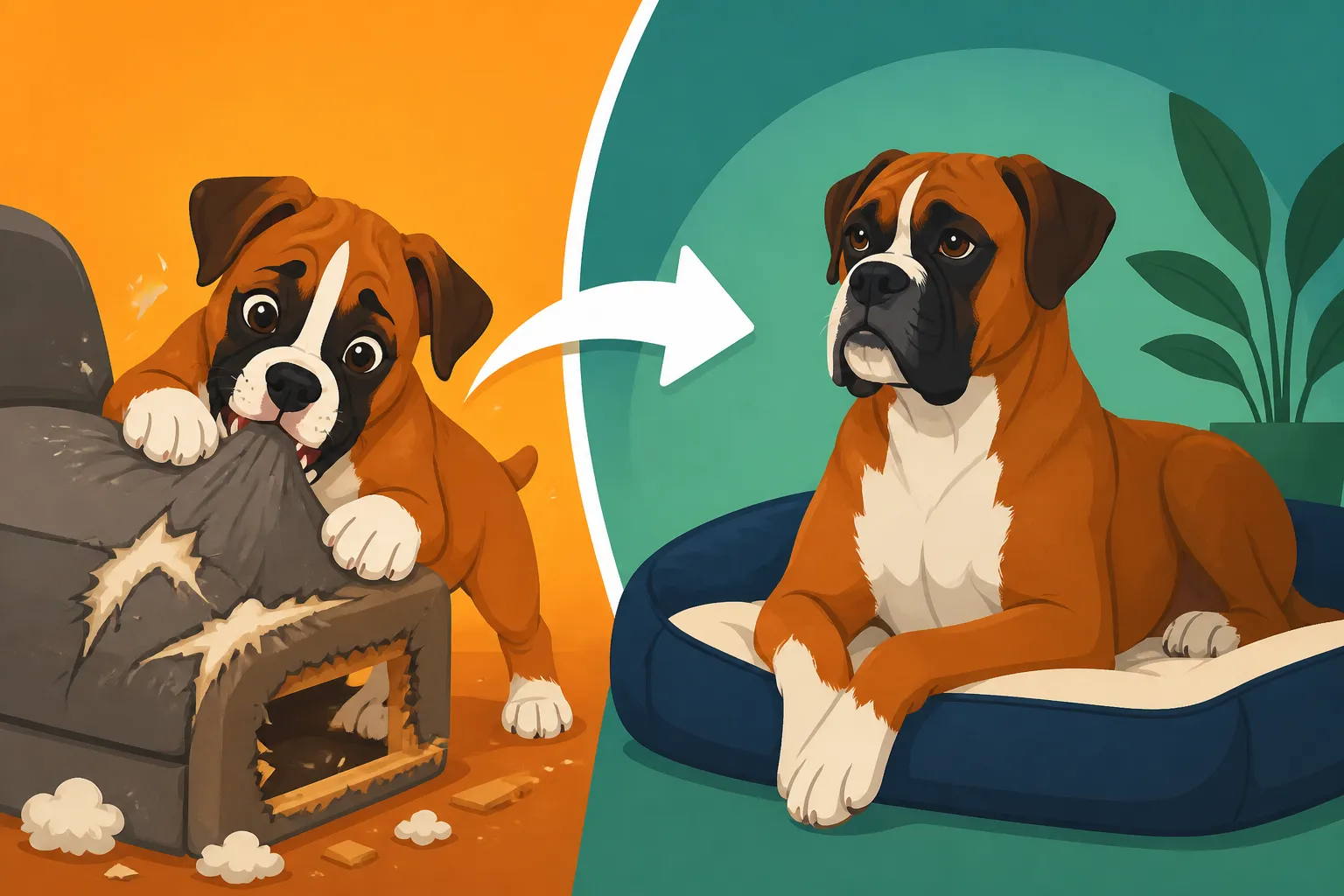
When you catch your Boxer chewing furniture (and not causing damage, hopefully, if your environment management is good), calmly interrupt the behavior. A firm "no" or "leave it" is appropriate, but avoid shouting, as this can confuse or even frighten your sensitive Boxer. Immediately redirect their attention to an appropriate chew toy. As soon as they take the toy in their mouth and start chewing it, lavish them with praise and perhaps a small, high-value treat. This teaches them: "When I chew this toy, I get rewarded. When I chew the furniture, I don't." Rewards a Boxer Will Work Hard For can give you ideas for the best motivators.
Consistency is paramount. Every single person in the household must be on the same page with this approach. If one person allows it sometimes, or doesn't redirect, your Boxer will get mixed signals and the training will be undermined. Consider professional guidance if you're struggling. Companies like BAXTER & Bella offer online puppy and dog training programs that emphasize positive reinforcement, which can be incredibly effective for Boxers and their unique personalities. They can help you establish clear communication and consistent expectations for your dog's behavior.
Addressing Underlying Behavioral Issues
If, despite your best efforts with exercise, appropriate chews, and consistent redirection, your Boxer's furniture chewing persists, particularly if it seems intense, frantic, or is accompanied by other signs of distress, it's time to consider that there might be an underlying behavioral issue at play. Separation anxiety is a common one in Boxers, but other forms of anxiety, fear, or even medical issues can sometimes manifest as destructive chewing.
In these situations, consulting with a qualified professional is essential. This could be your veterinarian, who can rule out any medical causes for the behavior and, if necessary, discuss medication to help manage severe anxiety. Alternatively, a certified professional dog trainer or a veterinary behaviorist can assess your Boxer's specific situation and help you develop a tailored behavior modification plan. They have the expertise to identify subtle cues and develop strategies that address the root cause of the anxiety, rather than just the symptom of chewing. Remember, asking for help isn't a sign of failure; it's a sign of a responsible owner committed to their dog's well-being.
When to Expect a Change and Long-Term Management
The question of "when will they stop?" is valid, but the answer isn't a simple age. It's a journey of development and consistent management.
The Realistic Timeline for Boxers
There isn't a magic age when a Boxer suddenly decides, "Okay, no more furniture for me!" Because of their extended puppyhood, many Boxers might continue to exhibit chewing behaviors that are problematic until they are 2 or even 3 years old. While some breeds might settle down and largely stop destructive chewing by 12-18 months, Boxers are often still quite rambunctious and mouthy during this period. The Age a Boxer Is Mentally Grown Up is a good read to understand their development.
The timeline is less about a hard-and-fast age and more about the effectiveness and consistency of your training and management strategies. With dedicated effort, you should see a gradual reduction in furniture chewing as your Boxer matures and learns what is acceptable. It's a process, not an event. Don't get discouraged if you have setbacks; they are normal. Each time you redirect successfully, you are reinforcing the correct behavior.
| Age Range | Typical Chewing Reasons | Recommended Actions |
|---|---|---|
| 8 weeks – 6 months | Teething, exploration, boredom | Puppy-proof home, crate training, soft chews, redirection |
| 6 months – 18 months | Adolescence, energy, boredom, anxiety | Durable chews, increased exercise, advanced training, manage alone time |
| 18 months – 3 years | Extended puppyhood, energy, occasional stress | Continued management, rotation of engaging toys, monitor for anxiety |
| 3+ years | Boredom, stress, habit | Lifelong provision of chews, consistent exercise, address any new stressors |
Lifelong Management of a Boxer's Chewing
Even after your Boxer has "outgrown" the worst of their destructive chewing, understanding that it's a behavior that might need lifelong management is key. Just because they're 4 or 5 years old doesn't mean they'll never chew inappropriately again.
Life happens. A change in routine, a period of increased stress (perhaps due to a move or a new baby), or even just a few days of insufficient exercise can sometimes trigger a relapse in chewing behavior. An adult Boxer, if left bored and unfulfilled, can still decide that the corner of your rug is an excellent place to relieve tension.
Therefore, the commitment to providing ample exercise, mental stimulation, and a consistent supply of appropriate chew toys remains crucial throughout their life. It becomes a part of their routine care, much like feeding and walking. Regular check-ins with yourself about their energy levels and mental engagement can help you preempt destructive behaviors. By understanding and embracing this ongoing commitment, you can ensure your Boxer remains a happy, well-behaved companion who only chews the things they're supposed to. If you are struggling with their mouthing, Boxer Puppy Biting That Does Not Stop or Chews That Redirect a Mouthy Boxer could be helpful resources.
Disclaimer
This article is for general informational purposes only and does not constitute professional advice. Laws, prices and regulations vary by location and change over time. Consult a qualified professional for guidance on your specific situation.