The Boxer Wiggle and What It Signals
The Boxer wiggle is a powerful full-body movement that communicates intense joy, affection, and excitement in this breed.
Work with the temperament you have.
House-training and crate work, recall, leash manners, separation anxiety, and the behaviors this breed is wired for.

The Boxer wiggle is a powerful full-body movement that communicates intense joy, affection, and excitement in this breed.

Boxer play styles involving boisterous wrestling, pawing, vocalizations, and three-year puppyhood explained for safe dog interactions.
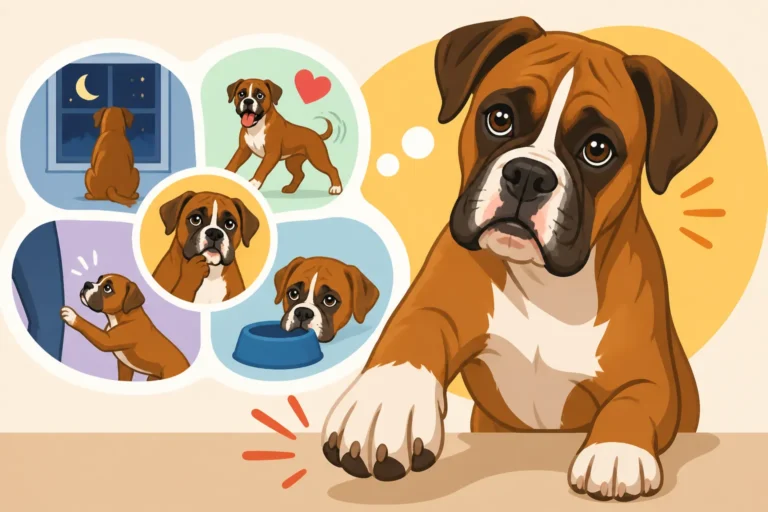
Boxer pawing behavior comes from German Bullenbeisser ancestors that hunted wild boar and deer using their muscular front paws.
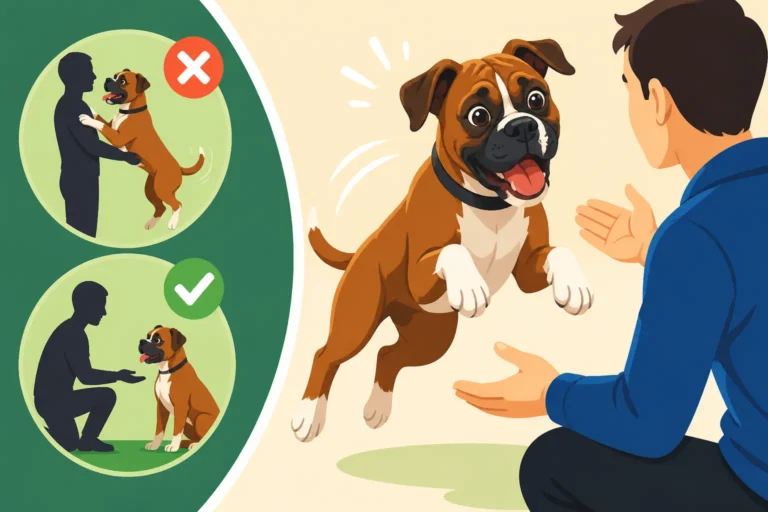
Boxer greeting manners training explains why seventy pound dogs jump and teaches calm behaviors during door knocks.
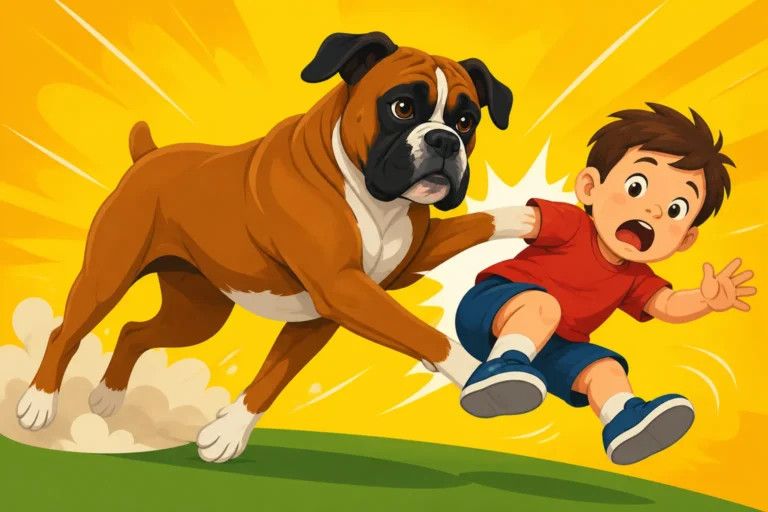
Boxer dog behavior towards children explains why playful pets knock kids over and teaches three training strategies to stop jumping.
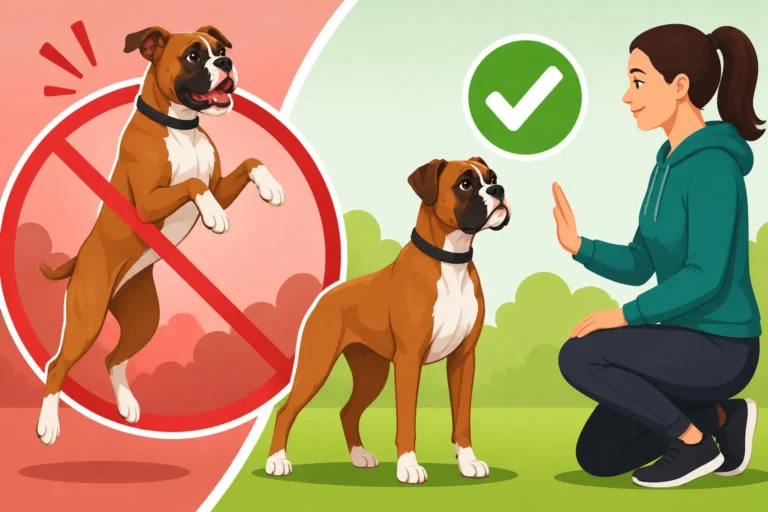
Boxer jumping behavior stems from natural instincts, seventy pounds of canine enthusiasm, and a strong desire for social connection.
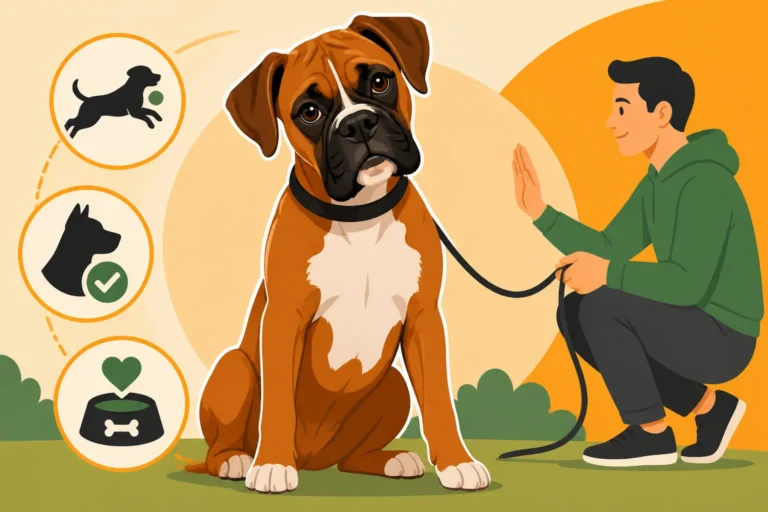
Managing a Boxer from six to eighteen months involves handling surging hormones, increased curiosity, and new behavioral boundaries.

Boxer dog adolescence begins around six to eight months and lasts until three years, causing behavioral challenges during this developmental stage.

Seventy-pound Boxer dogs reach full physical size by two years, but mental maturity and self-control take up to four years.

Boxer puppy behavior and prolonged adolescence explain why seventy-pound dogs maintain playful, youthful temperaments until age three.