Where the Boxer’s Pawing Habit Comes From
If you've ever owned a Boxer, you know the feeling: you're sitting on the couch, minding your own business, and suddenly a large, muscular paw lands squarely on your lap (or chest, or head). This endearing, if sometimes startling, behavior is a hallmark of the breed. But where does this famous "boxing" habit actually come from? It's not just a cute quirk; it's rooted in their history, their instincts, and their unique physical makeup. Let's delve deep into why Boxers love to use their front paws and how we can understand and manage this fascinating trait.
The Historical Roots of the Boxer's Pawing
To truly understand why your Boxer is so fond of using their front paws, we need to take a trip back in time, tracing their lineage through working dogs bred for very specific tasks. It's not a habit that appeared out of nowhere; it's deeply ingrained.
Ancestors and Their Hunting Role
The Boxer's direct ancestors, particularly the Bullenbeisser, were formidable dogs from Germany. Their name literally translates to "bull biter," and their primary role was to hunt large game like boar, bear, and deer. These dogs weren't just chasing prey; they were bred to seize and hold it until the hunter arrived. Imagine the strength and agility required for such a task. A dog in this role needed a powerful front end, not just for running but for engaging and maintaining a grip on a struggling animal.
This constant engagement with their front limbs, bracing, pushing, and holding, required incredible muscular development and an innate understanding of how to use their paws and chests as tools. While your modern Boxer isn't wrestling a wild boar in your living room, the genetic blueprint for that physical interaction is still very much alive. The direct, forceful use of their front paws, sometimes playfully swatting, can be seen as a diluted echo of this ancestral hunting technique. These dogs were literally "grapplers" in their original form. If you're curious about their origins, you can read more about What the Boxer's Bullenbeisser Ancestor Hunted.
Early Boxer Development and Working Traits
As the Bullenbeisser was refined and eventually crossed with Bulldogs from England, the breed we now know as the Boxer began to take shape. While their original hunting role diminished, the Boxer found new purpose as a versatile working dog. They became prized for their intelligence, courage, and athleticism, serving in roles as diverse as guard dogs, cattle dogs, and even early police and military dogs. The very foundation of the breed's character was built on being an active, engaged, and physically capable companion.
In these new working capacities, the ability to use their body effectively, including their front paws, remained crucial. Whether they were pushing against a perpetrator in police work or simply moving livestock, their powerful forequarters were an asset. This ingrained physicality, combined with their naturally exuberant personality, contributes to the pawing behavior we see today. They are not delicate creatures; they are robust and ready to use every part of themselves to interact with their world and the people in it. The history of the breed's development is truly fascinating, and you can learn more by exploring The German Origins of the Boxer.
Instinctual Reasons Behind the "Boxing" Behavior
Beyond their historical roots, the Boxer's pawing habit is heavily influenced by a range of instinctual behaviors that are common among dogs, but often amplified and expressed in a unique "Boxer" way due to their specific breed traits.
Play and Social Communication
Boxers are renowned for their playful, clownish personalities. They maintain a puppy-like exuberance well into adulthood, often described as having a "puppyhood that lasts three years" or more. For a Boxer, pawing is often a clear invitation to play. When they bat at you with a front paw, it's often accompanied by a low play bow, a wagging nub, or a goofy grin. They're saying, "Hey! Let's have some fun!" It's a key part of their social communication, both with humans and with other dogs.
Think about how puppies wrestle and use their paws to engage each other in mock battles. Boxers never really grow out of this. They use their paws to initiate games, to encourage a game of tug-of-war, or to try and "win" a toy from another dog. If you've ever seen two Boxers play, you'll notice a lot of pawing, mock-boxing, and body-slamming. It's all part of their natural, energetic, and often boisterous play style. For more on this, check out Boxer Play Style With Other Dogs.
Attention-Seeking and Demand Behavior
Boxers are deeply people-oriented dogs. They thrive on human companionship and connection, and they are not shy about demanding your attention. If pawing has ever successfully gotten your attention – even if it was just a quick glance or a "No!" – your Boxer has learned that it's an effective way to communicate their desires. They might paw at you for pets, to get you to throw a toy, to remind you it's dinner time, or simply because they want to be acknowledged.
This demand behavior can sometimes be frustrating, especially if the pawing becomes persistent or overly forceful. Your Boxer isn't trying to be rude; they're just being a Boxer, using a method that has worked for them in the past. It's a prime example of how dogs learn through consequences, and if pawing gets them what they want, they'll keep doing it. Understanding this is the first step in managing it, as we'll discuss later. You might be interested in reading about A Boxer That Paws at People for more specific insights on this.
Exploratory and Investigative Paws
Boxers are intelligent and curious creatures, and they use all their senses, including their paws, to explore their environment. A Boxer might paw at a new object to investigate its texture, stability, or whether it hides a treat. They might bat at a dangling toy, dig at a blanket to find a comfortable spot, or even "herd" a stray crumb on the floor towards their mouth. Their paws are not just for walking; they are an extension of their inquisitive nature.
This exploratory pawing is particularly evident when they're interacting with novel items or when they're trying to manipulate something to their advantage. It’s part of how they gather information about their world. For example, if a treat rolls under the couch, a Boxer is more likely to use their paw to try and hook it out rather than just nudge it with their nose. It's a testament to their problem-solving abilities, even if the "problem" is just retrieving a dropped toy.
The Physicality of a Boxer's Front Paws
It's not just about history and instinct; the Boxer's physical build itself plays a huge role in why they are so adept and prone to using their front paws. They are athletic animals, and their body is built for action.
Powerful and Agile Limbs
Take a good look at a Boxer's physique. They are robust, muscular, and incredibly athletic dogs. Their chest is deep and their forelegs are straight and strong, designed for powerful, dynamic movement. This muscularity isn't just for show; it gives them the ability to move with incredible agility and to exert considerable force with their front paws when needed. Compared to many other breeds, a Boxer's front assembly is built for engagement and impact, whether it's for running, jumping, or, yes, "boxing."
This physical prowess means that when a Boxer chooses to use its front paws, it can do so with significant power. A playful tap from a Boxer isn't like a gentle nudge from a smaller, finer-boned breed; it can be a real thwack! This is why managing the behavior is important, especially around children or elderly individuals, because even a playful swat can easily knock someone off balance. The breed standard itself emphasizes their powerful, athletic build, which you can learn more about in The Boxer the Breed Standard Describes.
The Boxer's Unique Gait and Stance
Boxers have a distinctive gait and an often-observed stance that makes their front paws readily available for action. They are known for their lively, free-striding movement, and their tendency to stand with their weight often slightly forward, ready to spring. This athletic posture means their front paws are always poised, whether for a sudden sprint, a playful leap, or that characteristic "wiggle" that starts with their entire body and often involves those front paws.
When a Boxer greets you, their whole body wiggles with excitement. This isn't just their rear end; it's a full-body expression of joy that often involves their front paws coming up, reaching out, or playfully batting. Their natural enthusiasm combined with their athletic build creates a perfect storm for this unique pawing habit. It’s a physical manifestation of their exuberant personality, and it’s one of the reasons we love them, even when it means a paw to the face! Dive deeper into their characteristic movement with The Boxer Wiggle and What It Signals.
Common Scenarios Where Boxers Paw
Understanding the "why" is one thing, but seeing it in action helps solidify the concept. Boxers will use their paws in a variety of situations, often to our amusement, and sometimes to our gentle frustration.
Greeting Behavior and Excitement
This is perhaps the most common scenario where you'll experience the Boxer pawing habit. Picture this: you walk through the door after a long day, and your Boxer is there, a tornado of wiggles and pure joy. Their tail is blurring, their whole body is wriggling, and before you know it, a paw is extended, sometimes gently, sometimes with a surprising amount of force, to connect with you. This isn't aggressive; it's an outpouring of boundless enthusiasm and affection.
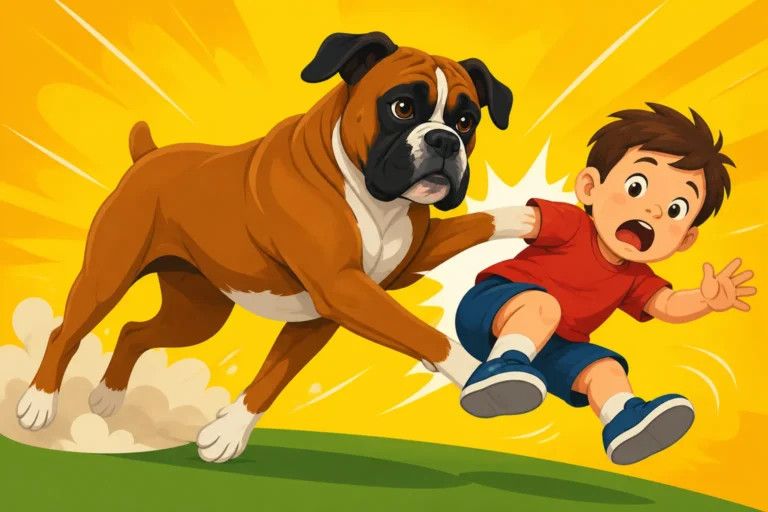
However, as endearing as this can be, it can also be a challenge. A 70-pound Boxer enthusiastically pawing at an elderly relative or a small child can easily knock them off their feet. It’s crucial for owners to understand this isn't malice, but simply an intense form of greeting that needs consistent management to ensure everyone stays safe and happy. You can learn strategies for managing this specific behavior in A Boxer That Jumps on Every Visitor.
During Playtime and Training
During play, Boxers will naturally use their paws as part of their game. Whether it's batting at a dangling toy, trying to "catch" a thrown object mid-air, or playfully sparring with another dog, their front paws are very much involved. If you're playing fetch, they might paw at you to drop the ball, or gently bat your hand if you're holding onto a tug toy. It’s all part of their energetic and interactive play style.
In training, this can sometimes be a distraction. A Boxer might paw at your hand to get a treat, or if they're trying to figure out what you want them to do, they might offer a paw as a default "trick." It highlights their intelligence and their willingness to engage, but it also means you need clear communication and redirection. Resources like BAXTER & Bella offer excellent online training programs that understand breed-specific quirks like this and can help you develop consistent strategies.
Seeking Comfort or Affection
Not all pawing is boisterous or demanding. Sometimes, a Boxer will use their paw in a much softer, more subtle way to seek comfort or affection. They might gently place a paw on your arm or lap as you're petting them, as if to say, "Don't stop!" or to draw you closer. They might even try to burrow their head under your hand with a paw-nudge, inviting more cuddles.
This softer pawing is a beautiful demonstration of their affectionate nature and their desire for physical closeness. It’s their way of initiating or prolonging an affectionate interaction. Differentiating this gentle request from a more forceful demand for attention is key to understanding your Boxer's emotional state and responding appropriately.
Managing and Redirecting the Pawing Habit
While the Boxer's pawing habit is a deeply ingrained and natural part of who they are, it doesn't mean you have to endure unwanted pawing on your guests or face. With consistent training and understanding, you can manage and redirect this behavior effectively.
Consistent Training and Clear Boundaries
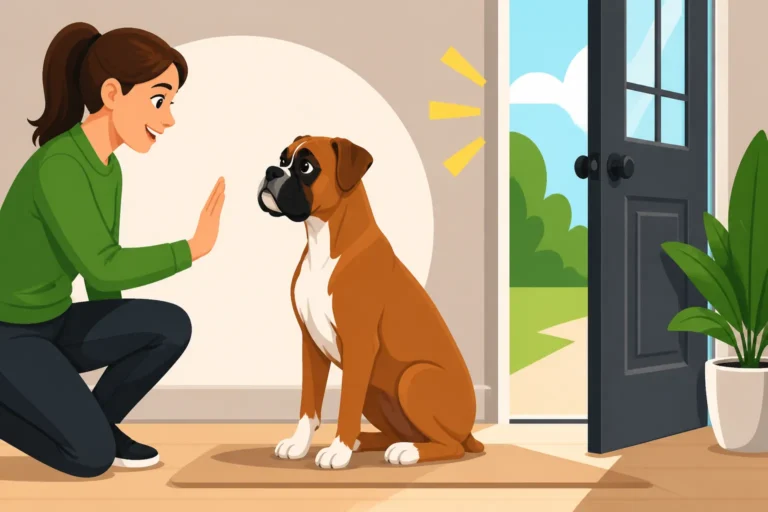
The absolute cornerstone of managing pawing is consistent training. Your Boxer needs to learn that "four on the floor" is the default expectation when interacting with people. This means all four paws should remain on the ground unless you explicitly cue them to give a paw. Positive reinforcement is your best friend here. When your Boxer approaches calmly with all four paws down, immediately reward them with praise, a treat, or a gentle pet.
If they jump or paw, calmly turn your back, cross your arms, and ignore them. The moment their paws hit the floor, turn back and reward. This teaches them that calm behavior earns attention, while pawing makes the attention disappear. Consistency is paramount. Everyone in the household needs to be on the same page, or your Boxer will quickly learn who they can "box" and who they can't. For more detailed steps, check out Teaching a Boxer to Keep Its Paws Down.
Providing Appropriate Outlets for Energy
Often, excessive pawing, jumping, and general boisterousness stem from an abundance of untapped energy and mental stimulation. Boxers are high-energy dogs, and if they don't get enough physical exercise and mental engagement, they will find their own (often less desirable) ways to entertain themselves, which can include increased pawing. Ensure your Boxer has plenty of opportunities for vigorous play, structured walks, and mental challenges.
Engaging toys, especially interactive puzzle feeders (easily found on platforms like Amazon), can be a fantastic way to redirect their pawing and investigative instincts. Instead of pawing at you, they can paw at a toy that dispenses treats. Chew toys that are durable and engaging also help. A tired Boxer is a well-behaved Boxer, and channeling their energy productively can significantly reduce unwanted pawing. Explore ideas for keeping them mentally stimulated in Puzzle Feeders That Hold a Boxer's Attention.
When to Seek Professional Help
Most Boxer pawing can be managed with consistent home training. However, there are instances where professional guidance can be invaluable. If your Boxer's pawing is accompanied by aggression, has become obsessive, or if you feel completely overwhelmed and unable to make progress on your own, don't hesitate to reach out to a certified professional dog trainer or a veterinary behaviorist.
They can help you identify the root cause of the behavior, develop a tailored training plan, and teach you advanced techniques for managing your specific situation. Remember, seeking help isn't a sign of failure; it's a sign of a responsible owner committed to their dog's well-being. An experienced trainer who understands the Boxer breed can provide specific strategies that resonate with their unique temperament and drives. Even adult Boxers can be retrained and learn new habits; it just takes dedication and the right approach. You might find some helpful context in Whether an Adult Boxer Can Be Retrained.
Distinguishing Pawing from Aggression or Injury
It’s vital for Boxer owners to understand that while pawing is generally a playful or attention-seeking behavior, there are instances where it might signal something more serious. Learning to read your dog's full body language is crucial.
Reading Boxer Body Language
Most playful pawing is accompanied by a relaxed body, a soft gaze, a wiggly tail, and an open, happy mouth. The overall demeanor is one of invitation and joy. However, if the pawing is accompanied by a stiff body, a hard stare, growling, snarling, or a tucked tail, it could be a warning sign of discomfort, fear, or even aggression. A dog in pain might also lash out defensively.
Always observe the context and your Boxer's entire body. Is the pawing a soft nudge, or a forceful strike? Are their muscles tense, or are they loose and fluid? Being attuned to these subtle cues will help you differentiate between a typical Boxer expressing excitement and a dog signaling that something is wrong.
Pain or Discomfort as a Cause
A sudden increase in pawing, especially if directed at themselves or a particular body part, could indicate pain or discomfort. Boxers, like all dogs, can suffer from joint issues, paw injuries, or other health problems. If your Boxer suddenly starts pawing excessively, limping, or seems withdrawn while pawing, it's time for a vet visit. They might be trying to tell you something hurts.
For instance, they might paw at their face if they have an ear infection or dental pain, or continually lick and paw at a paw pad if they have a cut, splinter, or irritation. Don't dismiss sudden changes in behavior. While Boxers are generally stoic, persistent self-directed pawing warrants veterinary attention. Maintaining good Paw Pad Care for a Boxer on Hot Pavement is just one aspect of general health that can prevent discomfort leading to excessive pawing.
Playful Pawing vs. Demand Pawing vs. Red Flag Pawing
Here's a quick guide to help you distinguish between the different types of pawing you might encounter with your Boxer:
| Feature | Playful Pawing | Demand Pawing | Red Flag Pawing |
|---|---|---|---|
| Body Language | Relaxed, loose, wiggly, play bow, happy expression | Focused, often persistent, direct eye contact, sometimes escalating in intensity | Stiff, tense, low growl, hard stare, tucked tail, backing away |
| Tail | Wagging rapidly | Wagging or still, depending on intensity | Stiff or tucked, potentially no wag |
| Sound | Happy grunts, playful growls, silent | Whining, impatient huffs, silent | Growling, snapping, whimpering (if pain) |
| Motivation | Invite to play, express joy, initiate interaction | Get attention, food, toys, go outside | Fear, pain, aggression, resource guarding |
| Action | Gentle taps, swats, pushes, often followed by a run | Repeated taps, nudges, hooks, escalating force | Forceful strike, quick withdrawal, defensive posture |
| Response Needed | Engage in play or redirect to an appropriate toy | Ignore until calm, then reward calm behavior | Stop interaction immediately, assess situation, seek vet/trainer help if recurrent |
The Boxer's pawing habit is a beautiful testament to their history, their vibrant personality, and their physical capabilities. While it can sometimes be a challenge, understanding its origins and implementing consistent, positive training strategies will allow you to enjoy all the wonderful qualities of this incredible breed, paws and all!
Disclaimer
This article is for general informational purposes only and does not constitute professional advice. Laws, prices and regulations vary by location and change over time. Consult a qualified professional for guidance on your specific situation.