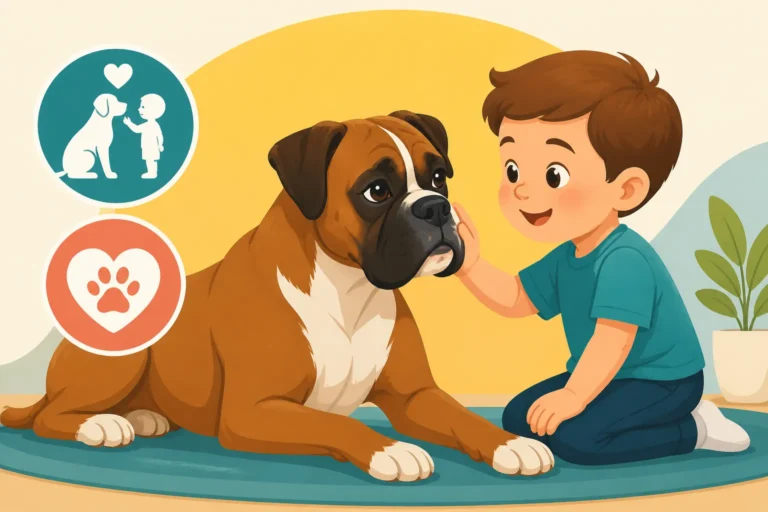
Why a Boxer Acts Like a Puppy Until Three
Many Boxer owners find themselves scratching their heads when their seemingly adult dog still behaves like a boisterous, clumsy, and endlessly playful puppy, often well past their first birthday. It’s a common frustration to have a seventy-pound dog with the brain of a six-month-old, but it’s also a defining charm of the breed. This guide will dive deep into why Boxers maintain their puppy-like demeanor well into their third year and offer practical advice for navigating this wonderfully long adolescence.
The Boxer's Extended Adolescence: Understanding Their Unique Timeline
It’s easy to look at a Boxer that has reached its full physical size and assume that its mental and emotional maturity must be right there alongside it. After all, most dog breeds start to "grow up" and settle into a more adult temperament by about two years of age. But with Boxers, the timeline is often considerably different, leading to a period of extended puppyhood that can delightfully surprise (or sometimes exasperate) their human companions.
Physical Maturity Versus Mental Development
Your Boxer might hit their full height and weight by 12 to 18 months, boasting the impressive musculature and deep chest that are hallmarks of the breed. They look every inch the strong, capable dog. However, this physical maturity can be incredibly deceiving. Beneath that powerful exterior, their brain is still very much in the "developmental" stage. You'll observe a full-grown dog that still struggles with impulse control, has seemingly boundless energy reserves that manifest in spontaneous "zoomies," and maintains an almost child-like approach to problem-solving. They might still chew on inappropriate items, forget their house training if over-excited, or leap onto guests with the enthusiasm of a tiny terrier, rather than a powerful working breed.
This disparity between their physical presence and their cognitive development is what often catches new Boxer owners off guard. While their bones might be set and their growth plates closed, their cognitive functions—such as executive control, emotional regulation, and attention span—are still very much works in progress. This means that a two-year-old Boxer can be seen body-slamming another dog at the dog park with incredible gusto one moment, only to crumple into an apologetic, wriggling puddle the next. They haven't quite mastered the art of nuanced social interaction or consistent self-regulation, traits typically associated with a fully mature canine.
Why a Boxer Acts Like a Puppy Until Three
The notion that Boxers remain puppies until around three years old isn't just an old wives' tale; it's a widely acknowledged characteristic within the breed community. While a Labrador or a Golden Retriever might begin to exhibit a more settled, adult demeanor by their second birthday, a Boxer is often just hitting their peak in terms of playful antics and youthful exuberance at that age. This isn't a reflection of their intelligence or a sign of inadequate training; rather, it’s an intrinsic part of the Boxer's genetic wiring and temperament. It's one of the defining traits that contributes to their beloved "clown of the canine world" reputation.
Their extended puppyhood means they retain that wide-eyed curiosity, boundless energy, and playful approach to life that other breeds often shed much earlier. They remain notoriously goofy, constantly inquisitive, and prone to dramatic displays of affection or mischief. For a new Boxer owner expecting a more "adult" dog after their first year, this prolonged adolescence can certainly be a learning curve. But for those who embrace it, it means more years of hilarious moments, devoted companionship, and a dog that never quite loses its inner child. It's why the term "forever puppy" resonates so deeply within the Boxer community, truly encapsulating their sustained youthful spirit.
The Genetic Blueprint: Why Boxers Are Wired for Youthful Zest
Understanding why Boxers have such an extended puppy phase requires a look back at their origins and the traits that have been selectively bred into them over generations. Their unique blend of strength, agility, and a deeply affectionate, playful nature is not accidental; it’s a carefully cultivated part of their breed identity. This genetic blueprint plays a significant role in their prolonged mental and emotional development.
Breed-Specific Traits and Temperament
The Boxer's history as a working dog, originating from the Bullenbeisser in Germany, meant they needed to be robust, courageous, and capable. However, they were also quickly prized for their companionship qualities, evolving into devoted family protectors and playmates. This dual role meant that while they needed physical toughness, they also needed an engaging and relatively good-natured temperament. This isn't a breed that was ever intended to be stoic or reserved from a young age; quite the opposite. Their joyful, exuberant personality, often described as "clownish," is deeply ingrained and has been cherished by breeders and owners alike for well over a century. You can even glean insights into their energetic character when considering Why a Boxer Is Called a Boxer.
This inherent playfulness often manifests as a sustained level of youthful enthusiasm. Boxers love to engage with their humans, be the center of attention, and use their expressive faces and bodies to communicate. They possess high intelligence, but it’s often paired with a strong will and a distinct preference for novel experiences over monotonous repetition. This combination can make them seem highly distractible and endlessly energetic, much like a puppy, even when they're physically fully grown. Their drive for interaction and their often silly antics are not just superficial behaviors; they are fundamental aspects of the Boxer character that persist through their prolonged adolescence.
The "High Energy" Misconception
It's common to hear people describe Boxers as "high-energy" dogs, and that's certainly true. They do require a substantial amount of physical activity to stay healthy and happy. However, the misconception often lies in equating this physical energy with a lack of mental maturity. While a Boxer's youthful zest includes plenty of running, jumping, and playing, their extended puppyhood is about much more than just physical stamina. It encompasses their mental and emotional developmental timeline. Even a Boxer who has had a good, long run or a vigorous game of fetch might still exhibit "zoomies" in the house, mouth at hands, or revert to other puppy-like behaviors if they are mentally under-stimulated or simply because their brain hasn’t quite caught up to their body.
Many owners constantly ask themselves Whether a Boxer Ever Settles Down, and the honest answer is that while they might calm down slightly with age, the core playfulness and exuberance remain signature traits for many years, sometimes even throughout their entire lives. It’s not simply about burning off physical steam; it’s about channeling that inherent zest for life and their need for engagement in constructive ways. Owners often find that a Boxer's energy isn't just a physical output; it's a mental state that needs constant management and redirection, much like you would with a perpetually curious and easily bored young puppy. Ignoring this mental component can lead to an "adult" Boxer whose energy manifests as destructive habits or incessant demands for attention, making the puppy phase seem even longer.
Navigating the Energetic Years: Practical Management Strategies
Living with a Boxer who still thinks they’re a puppy, despite their imposing size, requires a proactive and consistent approach. The strategies you implement during their true puppyhood need to be sustained and adapted well into their second and third years. The key is to understand that their developmental lag means you’ll be managing "puppy" behaviors on a larger, stronger scale.
Sustained Exercise and Mental Stimulation
One of the biggest mistakes an owner can make is assuming that once a Boxer is physically grown, a casual walk or a bit of backyard play will suffice. For a Boxer in their extended puppyhood, physical exercise alone is often not enough to tire them out and prevent boredom, which can quickly lead to destructive behaviors. They require significant and consistent mental stimulation alongside their physical activity. Think of it as needing to work both their body and their brain every single day.
Varying their activities is crucial. Instead of just walking, incorporate structured play sessions like fetch, training games, or even scent work where they have to find hidden treats. Puzzle toys are an absolute lifesaver for these intelligent, yet easily bored, dogs. Many owners find durable puzzle toys available on Amazon a lifesaver for keeping their young Boxers engaged when you need a moment of peace. Don't underestimate the power of a good sniffing walk, where your Boxer is allowed to explore and process new scents at their own pace; this is incredibly mentally fatiguing. As a general guideline, Boxers need Sixty to Ninety Minutes a Day With a Boxer of vigorous exercise, often split into two or three sessions to manage their sensitivity to heat and prevent overheating, especially due to their brachycephalic (flat-faced) structure. Structured play in a secure, fenced area, or even hiking on cooler days, can fulfill their deep-seated need for activity and exploration.
Consistency, Patience, and Positive Reinforcement
If there's one golden rule for navigating the Boxer's extended puppyhood, it’s consistency. A Boxer who still believes they're a puppy will constantly test boundaries, much like a human toddler. If one family member allows them to jump up for attention, they will try it with everyone, regardless of previous training. Every member of the household must be on the same page regarding rules, commands, and expectations. This unwavering consistency is fundamental to helping them understand what's acceptable and what's not, especially when their mental development is still catching up.
Patience is another virtue you'll need in spades. What might take a few weeks for another breed to grasp could genuinely take months for a Boxer to fully internalize and consistently execute, simply because of their distractibility and sustained exuberance. Don't get discouraged if you feel like you're retraining them on something they seemed to know perfectly last week. Boxers are sensitive souls, and they thrive on positive reinforcement. Focusing on praise, high-value treats, and rewarding play is far more effective than harsh corrections. Negative training methods can shut them down, make them resistant, or even lead to anxiety, especially in a dog who is still very much in a "puppy" mindset. Remember, Why Shouting Sets a Boxer Back is not just about their sensitive nature, but also how their attention span is wired.
Managing Common "Puppy" Behaviors in an Adult Body
As Boxers mature physically but remain puppies mentally, some behaviors become particularly challenging simply due to their size and strength. These include jumping, mouthing, occasional house-training regressions, and the notorious "selective hearing." These are normal puppy behaviors, but they are significantly harder to manage when coming from a powerful, seventy-pound dog. Addressing them proactively and consistently is key.
For jumping, which can easily knock over children, elderly relatives, or unsuspecting guests, it's crucial to implement techniques like turning your back, teaching a solid "off" cue, or consistently asking for a "sit" before any greeting can occur. Teaching a Boxer to Teaching a Boxer to Keep Four Feet Down is not just about manners; it's about safety. For mouthing, which can be annoying even if not aggressive, consistent redirection to appropriate chew toys is vital. Even if they’re not biting hard, a mouthing Boxer can be intrusive and, for some, intimidating. Remind yourself and them, constantly, that Boxer Mouthing From Puppy to Adult is a habit that needs continuous management and redirection throughout their younger years. If your seemingly house-trained two-year-old suddenly has an accident indoors, treat it like you would with a young pup: without punishment, and by reinforcing good habits. Their "selective hearing" outdoors often means you need to work harder on recall in distracting environments, utilizing long lines in secure areas to build reliability.
Tailored Training for the Long Haul
Training a Boxer during their extended puppy phase isn't a one-and-done affair; it's a marathon that requires adaptability, creativity, and a deep understanding of their unique learning style. Since they retain their puppy-like attention spans and enthusiasm for a longer period, your training approach needs to be tailored to keep them engaged and motivated without overwhelming them.
Short, Engaging Sessions are Key
Due to their extended puppy-like attention span and their tendency to get bored quickly, short, frequent training sessions are significantly more effective than long, drawn-out ones. Think of it in bursts: five to ten minutes, several times a day, will yield much better results and help information stick more consistently than trying to force a twenty-minute session that ends in frustration for both of you. Boxers are smart, but they're easily distracted, and their enthusiasm can wane rapidly if they perceive the activity as dull or repetitive.
The key is to keep training fun and varied. Incorporate play into your sessions, using their favorite toys or a quick game of fetch as rewards. Leverage their natural drives and playful instincts; for example, if they love to "box" with their front paws, you can teach them a controlled "shake" or "high five." Novelty is a powerful motivator for Boxers. Change up your training locations, introduce new commands, or even revisit old ones in a fresh way. As we've discussed before, Why Repetition Loses a Boxer is a fundamental truth for this breed. For owners looking for structured, engaging programs that understand this, online resources can be invaluable. Training programs, such as those offered by BAXTER & Bella, are excellent for providing varied, engaging content that keeps both you and your Boxer puppy (or forever puppy!) motivated. This continuous engagement helps to build stronger neural pathways, making learned behaviors more ingrained over time. This approach also helps when you are Training a Boxer That Gets Bored Fast, as it taps into their inherent need for mental stimulation and fun.
Socialization Beyond Puppyhood
While the critical socialization window for puppies is typically before 16 weeks of age, a Boxer's extended adolescence means that continued, positive exposure to new people, places, sounds, and well-behaved dogs is beneficial well into their second and third years. Think of it as ongoing learning and reinforcement. Just because they're past the "puppy class" stage doesn't mean their social education is complete. Their mental development is still occurring, and repeated, positive interactions help to solidify their confidence and good manners.
This continued socialization helps them develop into a well-adjusted, confident adult, rather than an overgrown puppy who might become fearful or reactive to unfamiliar situations or individuals. Arrange supervised playdates with calm, stable adult dogs who can gently correct over-the-top puppy behavior, teaching your Boxer appropriate social manners. Expose them to new environments—bustling parks, quiet trails, even pet-friendly stores—always prioritizing positive experiences. A bad experience, even at two years old, can create lasting negative associations. Remember what we learned about Socializing a Boxer Puppy Before Sixteen Weeks; it's a foundation, but Boxers often need an extended curriculum.
Professional Guidance and Advanced Training
If you find that your "forever puppy" behaviors are becoming overwhelming or if you're struggling to make progress, do not hesitate to seek professional help. A certified dog trainer or a behaviorist experienced with Boxers can offer tailored strategies, identify specific triggers, and provide a fresh perspective that can be invaluable. Sometimes, an outside eye is exactly what’s needed to break through a training plateau.
Consider exploring advanced training classes or dog sports. Activities like Rally Obedience, Scent Work, or even Agility (with careful attention to their developing joints, particularly during the early years) can provide incredible mental and physical outlets. Boxers excel in activities that combine physical exertion with problem-solving. These activities not only burn off excess energy but also build confidence, strengthen the bond between you and your dog, and provide the structured environment that a Boxer, even an "adult puppy," desperately needs to thrive. Many Boxers absolutely adore these challenges, transforming their boundless energy into focused performance. Finding Dog Sports That Suit a Boxer can be a journey of discovery that enriches both your lives.
The Joys and Challenges of a Boxer's Youthful Spirit
Ultimately, owning a Boxer means accepting and embracing a longer period of spirited, sometimes challenging, youth. While their extended puppyhood requires patience and consistent effort, it also comes with immense rewards, shaping a unique companionship unlike any other.
Embracing the "Clown" of the Canine World
While the prolonged puppy phase can bring its share of challenges, it's essential to shift perspective and embrace the incredible joy and laughter that come with it. A Boxer's extended youth means more years of hilarious antics, playful companionship, and an unwavering zest for life that is truly infectious. They genuinely light up a home with their exuberance, their comical expressions, and their sheer delight in every moment.
Their unique personality quirks—from the full-body The Boxer Wiggle and What It Signals to their expressive faces that seem to communicate every thought—are all part of the wonderful package that comes with their sustained youthful spirit. They bring an unmatched level of devotion and entertainment, constantly reminding you not to take life too seriously. Many Boxer owners wouldn't trade these "forever puppy" years for anything, recognizing that the extra effort invested in their early development pays off tenfold in the form of a loyal, loving, and endlessly entertaining family member.
Adjusting Expectations for Long-Term Ownership
Being realistic about owning a Boxer means understanding that you are signing up for a longer period of intensive management and consistent training compared to many other breeds. This is not a "set it and forget it" dog that will magically mature and become perfectly sedate after their first birthday. Their journey to full maturity is a marathon, not a sprint, and your commitment needs to reflect that.
Owners should be prepared for the time, energy, and mental engagement required for a Boxer well into their third, and often fourth, year. This means continuing with structured training, providing ample mental and physical outlets, and maintaining unwavering consistency in household rules. While they will eventually "settle" to some degree, the playful, goofy, and sometimes clumsy nature of the Boxer tends to endure. The payoff for this dedication is immense: a deeply loyal, affectionate, and constantly entertaining companion who will fill your life with joy and laughter for years to come.
Here’s a snapshot of how a Boxer's developmental timeline compares to an average dog breed:
| Developmental Stage | Average Dog Breed (Estimate) | Boxer Dog (Estimate) | Key Boxer Behaviors |
|---|---|---|---|
| Physical Maturity | 12-18 months | 12-18 months | Full size, but often clumsy, uncoordinated, and energetic like a pup. |
| Mental & Emotional Maturity | 1.5 – 2 years | 2.5 – 3+ years | Prone to zoomies, mouthing, selective hearing, easily distracted, high play drive. |
| Impulse Control | 1.5 – 2 years | 2.5 – 3+ years | Struggles with self-control, bursts of energy, difficulty settling, still testing boundaries. |
| Settling into Adulthood | 2 – 3 years | 3 – 5+ years | Gradually calms, but retains core playfulness, exuberance, and a distinctive goofy charm. |
Lifespan Considerations and Seniority
It's important to keep in mind that while Boxers mature mentally later, their overall Boxer Lifespan and the Years That Decide It is unfortunately not extended. This makes their prolonged youthful period even more precious, as you get to enjoy more "puppy" years within their average lifespan. It highlights the importance of making the most of these energetic years, providing them with rich experiences and consistent care.
Even as Boxers enter their senior years, which typically begin around seven or eight years old, many retain a spark of their youthful selves. While they might slow down physically and require more naps, the joy for life, the silly antics, and the playful spirit often endure. What Changes in a Boxer After Seven is more about their physical capabilities than a complete overhaul of their personality. They may be slower to rise, their muzzles may whiten, but a gleam in their eye and a happy wiggle for a favorite person will often remain, reminding you that deep down, they're always your beloved "forever puppy."
Disclaimer
This article is for general informational purposes only and does not constitute professional advice. Laws, prices and regulations vary by location and change over time. Consult a qualified professional for guidance on your specific situation.