Teaching a Boxer to Keep Four Feet Down
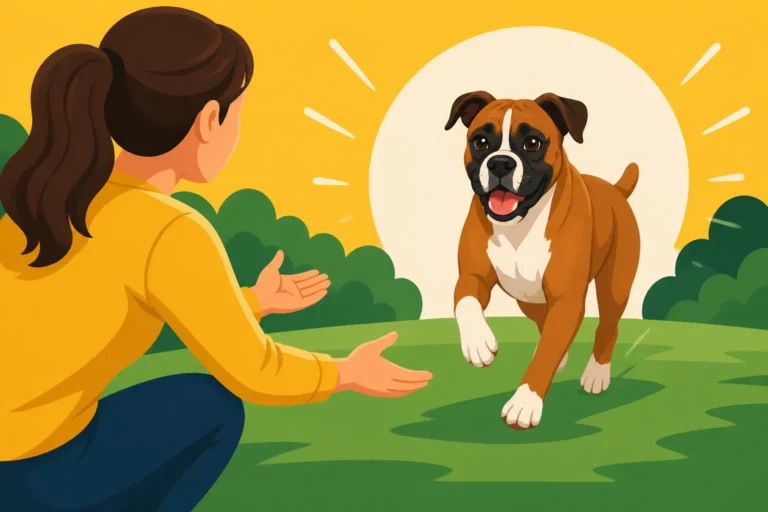
There's nothing quite like the boundless enthusiasm of a Boxer, is there? That full-body wiggle, that excited tail thump that practically shakes the house, and then… BAM! A seventy-pound canine missile launches itself directly at your chest, or worse, at an unsuspecting guest. It's frustrating, it can be embarrassing, and frankly, it can be dangerous, especially with children or elderly family members around. You love your Boxer's joy, but you desperately need to teach them that four paws firmly on the ground is the polite way to say hello. This guide is all about giving you the practical, empathetic strategies you need to manage your Boxer's jumping and help them become the well-mannered companion you know they can be.
The Enthusiastic Leap: Why Boxers Jump Up So Much
It’s easy to feel like your Boxer is purposefully trying to bowl you over, especially when you’re wrestling a bag of groceries or trying to balance a hot cup of coffee. But the truth is, most of the time, their jumping isn't born of malice or disobedience. It's an expression of pure, unadulterated Boxer joy and a deeply ingrained instinct. Understanding why they do it is the first step toward teaching them a more appropriate way to greet the world.
Understanding the Boxer's Natural Instinct to "Box"
Have you ever watched your Boxer play, especially with another dog or even with a favorite toy? You’ll notice they use their front paws with remarkable dexterity. They bat, they push, they "box" – it's where the breed even gets its name! This isn't just a quirky habit; it's a part of their heritage, harking back to their ancestors who used their front paws in a more practical, defensive manner. For your modern-day Boxer, this instinct often translates into interaction with people.
When your Boxer jumps up, they’re not usually trying to hurt you. They're trying to engage, to communicate, and often, to get closer to your face, which is their way of saying hello and seeking connection. Imagine if you only communicated with the top of someone's head – you'd probably try to get up to eye level too! It's their intense desire for social interaction and their high energy that fuels these aerial greetings. They want to be right there with you, sharing their excitement. This can be particularly pronounced in younger Boxers, who often act like puppies well into their second or even third year. If you've ever felt like the Why a Boxer Acts Like a Puppy Until Three phenomenon is a bit much, their jumping is a prime example of it. They simply haven't learned the "rules" yet, or we haven't clearly communicated them.
The Role of Excitement, Attention, and Under-Stimulation
Boxers are creatures of habit and also creatures of immense excitement. Think about the triggers: the sound of your car pulling into the driveway, the jingle of keys, the doorbell ringing, or a friend arriving for a visit. These are all high-value events that send a Boxer's enthusiasm into overdrive, making it incredibly difficult for them to control their impulses. For many Boxers, jumping is a learned behavior that gets them what they want: attention. Even if that attention is you pushing them off, or saying "No!" loudly, it's still engagement. To a Boxer, any attention is often better than no attention at all.
Furthermore, a Boxer's physical and mental exercise needs are significant. These are athletic, intelligent dogs who thrive on activity. If a Boxer isn't getting enough appropriate outlets for their energy, that pent-up exuberance can manifest as excessive jumping and other undesirable behaviors. A bored Boxer is often a creative Boxer, and not always in a good way! If your Boxer is also prone to Why a Boxer Wrecks Things When Under-Exercised, then addressing their exercise needs might actually help reduce the jumping too. They need a healthy balance of physical exercise, like brisk walks or games of fetch, and mental stimulation, such as puzzle toys or obedience training, to keep them calm and focused. Without these outlets, every new person or exciting event becomes an excuse to let loose with a burst of frantic energy.
Starting Early: Training a Boxer Puppy for "Four on the Floor"
They say an ounce of prevention is worth a pound of cure, and this absolutely holds true for Boxer jumping. If you can start instilling good manners from the moment your Boxer puppy trots into your life, you'll save yourself a lot of headache (and bruised shins!) down the line. It's much easier to shape desirable behavior than to undo deeply ingrained habits in an adult dog.
Setting the Ground Rules from Day One
The key to preventing jumping is unwavering consistency. From the very first day, your Boxer puppy needs to understand that jumping up on people, whether it’s you, family members, or visitors, simply doesn't get them what they want. This means everyone in the household needs to be on the same page. If one person allows the puppy to jump for attention, even occasionally, you're sending mixed signals that will confuse your Boxer and undermine your training efforts.
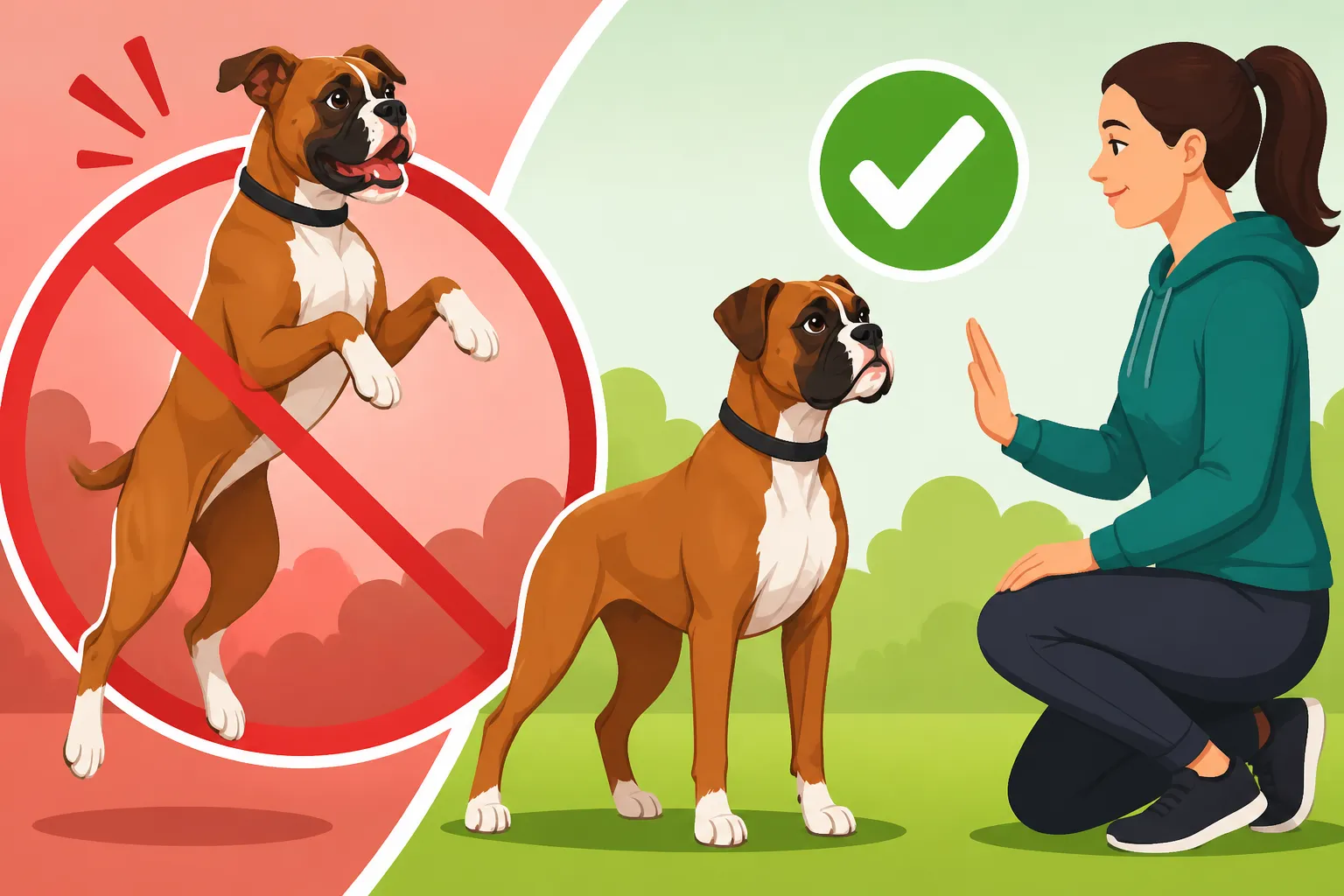
Begin by teaching your puppy to greet calmly. Whenever your puppy approaches you, especially when excited, wait for all four paws to be on the floor before you offer praise, a treat, or affection. If they jump, immediately turn your back, cross your arms, and completely ignore them. The moment their feet touch the ground, even for a split second, turn back, praise them enthusiastically ("Good four on the floor!"), and offer a tiny, high-value treat. Repeat, repeat, repeat. This teaches them: "Calm gets attention, jumping gets ignored." This kind of consistent, positive reinforcement is crucial for a breed that thrives on knowing what's expected of them. You might even find structured online programs, like those offered by BAXTER & Bella, incredibly helpful for guiding you through these early stages with clear, consistent lessons.
If your Boxer puppy is also going through a phase of Boxer Puppy Biting That Does Not Stop, the same principles apply: redirecting unwanted behavior towards appropriate outlets and rewarding calm, desired actions. Instead of letting them jump and mouth at you, immediately offer a suitable chew toy.
Managing Over-Excitement During Greetings
Greetings are often the biggest trigger for jumping. Whether it's you coming home after a short errand or a friend coming over, the surge of excitement can make a Boxer forget every lesson they've ever learned. For these situations, management and controlled introductions are your best friends.
When you arrive home, instead of immediately engaging with your excited Boxer, try to make your entrance as calm as possible. Ignore the initial frenzy – put down your bags, take off your coat, and only acknowledge them when they've settled, even if it's just for a second. Over time, they'll learn that calm behavior is the fastest way to get your attention.
For visitors, using a barrier can be incredibly effective. Before guests arrive, have your Boxer on a leash or behind a baby gate, or even crated in another room. This gives you control over the initial, most excitable moments. When your guests are settled, you can then bring your Boxer out on a leash for a controlled introduction. Instruct your guests to completely ignore the dog if they jump. They should turn their back and not make eye contact. The moment your Boxer has all four paws on the ground, your guest can calmly offer a treat and a quiet pet. This prevents your Boxer from practicing the undesirable behavior and teaches them proper Greeting Manners for an Excited Boxer. Remember, every successful calm greeting reinforces the desired behavior. A sturdy crate, sized appropriately, can be invaluable for managing these situations, helping you ensure a safe and calm environment for everyone. If you're looking for one your Boxer can't easily demolish, check out options on Amazon for Choosing a Crate a Boxer Cannot Wreck.
Retraining the Adult Boxer: Strategies for Established Jumpers
So, your Boxer isn't a puppy anymore, but the jumping habit is deeply ingrained. Don't despair! While it takes more effort to undo established behaviors, it's absolutely possible to teach an old Boxer new tricks. Patience, consistency, and a clear strategy are your most powerful tools.
The "Ignore and Reward" Method for Attention Jumpers
This method is the cornerstone of retraining an adult Boxer who jumps for attention. The premise is simple but requires ironclad discipline from you: jumping never, ever gets the desired outcome.
Here’s how to implement it step-by-step:
- Anticipate the Jump: As your Boxer starts to get excited and looks like they're about to launch, be ready.
- Turn Away and Ignore: The instant your Boxer's paws leave the ground, or even if they just brace to jump, turn your back completely. Cross your arms, look at the ceiling, or even walk into another room if necessary. Make yourself a boring, unresponsive wall. Absolutely no eye contact, no verbal cues (positive or negative), and no physical interaction. Your goal is to remove all reinforcement.
- Wait for "Four on the Floor": Wait until all four of your Boxer's paws are firmly on the ground. They might try again, so be prepared to turn away again. It might take a few seconds, or even a minute, but be patient.
- Reward Calmly: The moment those four paws are down, turn back, praise them in a calm, happy voice, and immediately offer a high-value treat. "Good four on the floor!" is a great phrase to use consistently. You can also use a clicker right as their feet touch the ground, followed by the treat, to mark the exact moment of desired behavior. Marker Training a Boxer is incredibly effective for this precision.
- Repeat, Repeat, Repeat: This isn't a one-and-done solution. You'll need to practice this every single time your Boxer attempts to jump. It will feel tedious at first, but with consistent repetition, your Boxer will begin to understand the new rules.
The hardest part of this method is often the human element. It's counter-intuitive to ignore your beloved dog, especially when they're so excited to see you. But remember, you're teaching them a better way to communicate their joy. Pushing them off or yelling "No!" might stop them in the moment, but it still gives them attention, inadvertently reinforcing the jumping behavior in the long run. Boxers can also be sensitive to loud noises or harsh corrections; too much shouting can cause a Boxer to withdraw or shut down, making training even harder. If you’ve found yourself getting loud out of frustration, you might want to read more about Why a Boxer Shuts Down When You Get Loud.
Leash Management and Structured Greetings
Sometimes, simply ignoring isn't enough, especially with a particularly persistent or strong Boxer. This is where a leash, even indoors, becomes an invaluable training tool. A lightweight house leash can give you just enough control to guide your Boxer without having to physically wrestle them.
When expecting guests, or even just for practicing your own greetings, keep your Boxer on a leash. As they approach you or a guest, if they start to spring up, gently but firmly guide them back down with the leash. The moment their feet are on the floor, immediately reward them. This hands-on guidance, combined with immediate reward for the correct behavior, helps them learn faster. You're physically preventing the jump while clearly communicating what is acceptable.
You can also use the leash to practice "structured greetings." Have your Boxer on leash, sit them down a few feet from where a person (you or a guest) will be. Ask the person to approach. If your Boxer remains sitting or standing with all four feet down, the person can give a quick pet and a treat. If your Boxer breaks their position or tries to jump, the person immediately turns and walks away. This teaches your Boxer that calm, controlled greetings yield positive interactions. For Boxers who also pull on walks, a front-clip harness can provide better control for both jumping and pulling, offering a physical deterrent without causing discomfort. You can find a wide variety of these control harnesses, along with long lines for practicing recall in a safe, open space, on Amazon. A long line can be a great tool for practicing greetings with more distance, allowing you to manage their excitement while still having a physical connection.
Consistency is Key: Generalizing Behavior and Preventing Relapse
You’ve been diligently working on "four on the floor" at home, and things are looking great. Your Boxer greets you calmly at the door, and they’re even doing well with family members. Then you go to the dog park, or a friend's house, and suddenly it's like all your training has flown out the window. This is a common hurdle, and it highlights the importance of generalizing behavior. A Boxer needs to learn that the rules apply everywhere, not just in specific situations or with specific people.
Practicing in Various Environments and With Different People
For a Boxer, the environment plays a huge role in their behavior. What they learn in the quiet of your living room might not immediately transfer to the stimulating chaos of a public park or a bustling pet store. To truly solidify the "four on the floor" command, you need to practice it in a variety of settings, gradually increasing the level of distraction.
Start by practicing in different rooms of your house, then move to the backyard, then a quiet street, and eventually to more exciting places like a park or the vet's office. Each new environment is like a fresh lesson for your Boxer, and you might need to go back to basics (ignoring, rewarding for brief calm moments) in these new settings. When you're out and about, manage expectations. If you know your Boxer gets overly excited by strangers, keep them on a short leash, or even have them sit a bit further away from approaching people. When a stranger asks to pet your dog, take a moment to explain, "We're working on polite greetings. If he keeps four feet on the floor, you can pet him." Then, if your Boxer stays down, reward them and allow the interaction. If they jump, gently redirect them and explain to the person that they need to wait for calm behavior. This helps ensure that the positive reinforcement only happens for the desired action. It might take time, as a Boxer's puppy-like energy can persist longer than you might expect, but it's crucial for their long-term success.
Enlisting the Whole Team: Family, Friends, and Professional Help
As mentioned earlier, consistency is absolutely non-negotiable when training a Boxer to stop jumping. If even one person in their life allows or encourages jumping, it can undo weeks of progress and confuse your dog. Think of it like a chain: it's only as strong as its weakest link.
- Family Members: Hold a family meeting. Explain the "four on the floor" rule and demonstrate how to ignore jumping and reward calm behavior. Role-play scenarios with each other to make sure everyone is comfortable and consistent. Ensure children are taught how to interact calmly with the Boxer, always keeping their feet on the ground.
- Friends and Regular Visitors: Don't be shy about explaining your training efforts to friends and visitors. Most people will be happy to help once they understand your goals. You can even keep a jar of high-value treats by the door for guests to use when greeting your Boxer appropriately.
- Professional Help: If you're struggling to make progress, especially with a particularly strong-willed or reactive Boxer, don't hesitate to seek the help of a certified professional dog trainer. A good trainer can observe your Boxer's behavior, identify specific triggers, and tailor a training plan to your unique situation. They can also teach you advanced techniques and provide support. Sometimes, an outside perspective and expert guidance can make all the difference. While Boxers are intelligent, they can also be quite stubborn, and a good trainer can help you navigate that. For instance, sometimes Getting a Boxer's Attention Outdoors is a challenge that requires specialized techniques.
Here's a quick comparison of different greeting scenarios and how to respond:
| Scenario | Typical Owner Reaction (Often Inadvertent Reinforcement) | Recommended "Four on the Floor" Approach |
|---|---|---|
| Coming Home | "Hi buddy, I missed you!" (leans down, gets jumped on) | Ignore until calm, then reward. |
| Guest Arrives | "Oh, don't jump, Fido!" (pushes dog off, makes eye contact) | Guest turns back, ignores jumping, rewards stillness. |
| Playtime Excitement | "Stop jumping on me!" (yells, engages physically) | Stop play, turn away. Resume when calm. |
| Seeking Attention | Petting or talking to a dog that's pawing/jumping | Ignore all jumping/pawing; reward only calm sitting. |
| At the Dog Park | Allowing dog to jump on friendly strangers | Keep on leash, advocate for your dog's training. |
Common Mistakes and How to Avoid Them
Even with the best intentions, it's easy to fall into common traps that can hinder your progress when teaching a Boxer to keep all four feet on the ground. Being aware of these pitfalls can help you avoid them and ensure your training is as effective as possible.
Unintended Reinforcement and Frustration
One of the biggest mistakes owners make is inadvertently reinforcing the very behavior they want to stop. As discussed, for a Boxer, any attention can be a reward. This means:
- Pushing Them Off: While it might stop the jump in the immediate moment, pushing your Boxer away or physically correcting them is still an interaction. It's energy and attention directed at them, which can reinforce the idea that jumping gets a response.
- Making Eye Contact or Talking: Even a stern "No!" or "Off!" can be seen as attention. Your Boxer might think, "Oh, they're talking to me! This is great!"
- Rewarding Jumping "Almost" Calmly: If you wait until they've jumped multiple times, and then finally put their feet down, and you reward them, you're still teaching them that persistence in jumping eventually pays off. The reward must come immediately after the first instance of desired behavior.
This cycle of unintended reinforcement often leads to immense frustration for owners. You might feel like your Boxer isn't listening, or that they're being stubborn. But often, it's a communication breakdown where your Boxer is simply responding to the (unintended) cues you're giving them. Trying to force a Boxer into submission through shouting or physical intimidation can also backfire, potentially causing them to shut down or become fearful, which makes training much harder and damages your bond. Boxers respond best to positive, clear communication and rewards for good behavior.
Lack of Consistency and Overlooking Energy Needs
Another common pitfall is inconsistency. If one family member always ignores the jumping, but another laughs and allows it, your Boxer is receiving mixed messages. They're smart enough to learn that "Mom doesn't like it, but Dad thinks it's funny," and they'll adjust their behavior based on who they're interacting with. This makes training incredibly slow and frustrating for everyone. Every single person who interacts with your Boxer must commit to the "four on the floor" rule. This means asking visitors, even if they're dog lovers, to participate in your training by ignoring jumps.
Furthermore, it's crucial not to overlook your Boxer's fundamental energy requirements. Boxers are powerful, energetic dogs who need a significant amount of physical and mental exercise every day. A Boxer who is under-exercised is often a frustrated Boxer, and that excess energy has to go somewhere. Jumping can be an outlet for this pent-up energy. While it might seem unrelated, ensuring your Boxer gets enough appropriate exercise can significantly reduce overall excitement levels and make them more receptive to training. This means not just a quick stroll around the block, but engaging walks, games of fetch, or even structured training sessions that challenge their minds.
A tired Boxer is a good Boxer, and they'll be far more likely to respond to your commands when their basic needs are met. Consider activities like obedience classes, agility, or even long, controlled walks with a Harnesses That Hold a Pulling Boxer if they tend to get over-excited on a leash. Providing appropriate toys that redirect their energy, like puzzle feeders or durable chew toys, can also help. Remember, your goal isn't to suppress their joy, but to channel it into polite and appropriate expressions that make living with your wonderful Boxer a pleasure for everyone.
Disclaimer
This article is for general informational purposes only and does not constitute professional advice. Laws, prices and regulations vary by location and change over time. Consult a qualified professional for guidance on your specific situation.