Grinding Down a Boxer Nail That Split
Discovering your energetic Boxer has split a nail can be a truly heart-stopping moment, often accompanied by blood, a frantic dog, and your own rising panic. It’s a common scenario that leaves many Boxer owners feeling helpless and unsure of the best steps to take. This guide is here to walk you through exactly how to safely and effectively manage a split Boxer nail, especially when grinding is the best path forward, ensuring you can bring relief to your beloved companion.
Understanding Why Boxer Nails Split and When to Intervene
Boxers are magnificent, active dogs, full of exuberance and powerful energy. They leap, they run, they dig, and sometimes, in all that glorious motion, their nails can take a hit. A split nail isn't just a cosmetic issue; it's often a painful injury that can lead to infection if not addressed promptly. It's a real worry for owners, and knowing what you're looking at can help you decide how urgently to act.
The Anatomy of a Boxer's Nail and the Quick
To understand a split nail, you first need to understand the nail itself. A Boxer's nail, like ours, is made of keratin. But unlike our nails, theirs contain a "quick" – a sensitive core of blood vessels and nerves that extends part-way down the nail. When a nail splits, especially if it's deep, it often involves the quick, which is why there can be significant bleeding and pain. The quick grows with the nail, so if your Boxer's nails are long, the quick will be long too, making them even more susceptible to being torn or split in daily activities.
Boxers tend to have strong, thick nails, which paradoxically can make them more prone to a painful split rather than a clean break if they catch on something. Think of it like a piece of sturdy wood splintering rather than snapping. This is particularly true for their dewclaws, which don't make contact with the ground and can grow long and curved, becoming prime candidates for snagging. Regularly checking your Boxer's paws and nails is a key part of their Weekly Lump Checks on a Boxer and overall health.
Common Scenarios Leading to Split Nails
Your Boxer's boundless enthusiasm can be their downfall when it comes to nails. Picture this: your Boxer is rocketing around the yard, enjoying a vigorous game of fetch, and suddenly skids to a halt, catching a nail on a root or a loose piece of pavement. Or maybe they're trying to dig that imaginary mole out of the lawn, digging with such force that a nail gets leveraged and tears. Even an innocent snag on carpet or furniture can be enough.
Another common scenario involves nails that have simply grown too long. When a Boxer's nails extend past their paw pads, they hit the ground first with every step. This not only puts pressure on the toe joints, which can contribute to orthopedic issues like Boxer Hip Dysplasia and Spondylosis over time, but it also increases the likelihood of the nail getting caught, bent, or ripped. A long nail is like a lever, and the leverage makes splitting easier. It's a vicious cycle where discomfort from long nails can even change their gait, predisposing them to further issues.
Immediate Steps and Assessing the Damage
Finding a split nail is never fun, but staying calm is the first step in helping your Boxer. Your immediate reaction can set the tone for how they handle the situation. A calm, reassuring presence helps them understand that while it might hurt, you're there to fix it.
Stopping the Bleeding and Cleaning the Area
The moment you see blood, it's natural to feel a rush of panic, but most nail bleeds, even if they look dramatic, can be managed at home. First, try to apply direct pressure to the bleeding nail with a clean cloth or gauze. If the bleeding is persistent, you'll need something more. Styptic powder is a lifesaver here. You can find it at most pet stores or easily order it online from retailers like Chewy or Amazon. Just take a pinch of the powder and firmly press it onto the bleeding tip of the nail for a few minutes. Cornstarch or flour can also work in a pinch if you don't have styptic powder on hand, though they are less effective.
Once the bleeding has stopped or slowed significantly, it's time to clean the area. Gently wash the paw with warm water and a mild antiseptic solution, like diluted chlorhexidine or even just plain saline. This helps prevent infection from setting in, which is a real risk with open wounds on paws that are constantly exposed to the ground. Pat it dry thoroughly. Inspect the nail closely to understand the extent of the split. Is it just a superficial chip, or is the split deep into the quick? Is there a piece of nail hanging precariously, or is it firmly attached but simply cracked?
Deciding If a Vet Visit Is Necessary
Not every split nail requires an emergency vet visit, but knowing when to call your veterinarian is crucial.
You should definitely contact your vet if:
- The bleeding is profuse and you can't get it to stop after several minutes of firm pressure with styptic powder.
- The split is very deep and extends high up into the nail bed, potentially exposing the bone or causing significant tissue damage around the base of the nail.
- A large piece of nail is completely detached or hanging loosely, as this might require sedation for removal and proper bandaging.
- Your Boxer is showing extreme pain, limping heavily, or refusing to put weight on the paw. They might need pain medication or a more thorough examination to rule out other injuries.
- There are signs of infection, such as swelling, redness, pus, or a foul odor around the nail, which could indicate a problem that needs antibiotic treatment.
For minor splits or chips where the quick isn't exposed and bleeding is minimal, managing it at home with grinding is often perfectly appropriate. However, when in doubt, a quick call to your vet clinic can give you peace of mind and professional guidance. They might advise you to come in or give you specific instructions for home care.
The Art of Grinding a Split Boxer Nail
Once you've assessed the situation and determined that a vet visit isn't immediately necessary, grinding becomes your best friend. It's often less traumatic than clipping for a split nail, as it allows for more control and less concussive force.
Choosing the Right Tools
The right tools make all the difference, both for effectiveness and for your Boxer's comfort.
- Dremel or Rotary Tool: This is the gold standard for nail grinding. Brands like Dremel offer various speeds and attachments. You'll want a medium-grit sanding band. Many pet-specific grinders are also available on Chewy or Amazon, designed to be quieter and vibrate less, which can be a huge bonus for nervous Boxers.
- Styptic Powder: Essential for any accidental quicking. Keep it close.
- High-Value Treats: Crucial for positive reinforcement. Think small, meaty treats that your Boxer absolutely loves.
- A Quiet, Comfortable Space: Pick a spot where your Boxer feels safe and can relax. This might be on a mat, on the couch next to you, or even cradled in your lap.
- A Headlamp or Good Lighting: Helps you clearly see the quick, especially on dark nails.
A table outlining the pros and cons of different tools can be really helpful here:
| Tool Type | Pros | Cons | Best For |
|---|---|---|---|
| Rotary Grinder | Smooth finish, less risk of quicking if careful, seals quick, good for dark nails, ideal for split nails | Noise/vibration can scare dogs, learning curve, takes longer | Regular maintenance, split/damaged nails |
| Scissor-Style Clippers | Fast, inexpensive, easy to find | Can crush nail, higher risk of quicking, leaves sharp edges, not ideal for splits | Quick trims on well-maintained, healthy nails |
| Guillotine Clippers | Quick, common, good for smaller to medium nails | Can crush, less precise, harder to use on very thick Boxer nails | Similar to scissor-style, often preferred by some pros for speed |
Gradual Introduction and Positive Reinforcement
Your Boxer might be wary of a noisy, vibrating tool. The key is a slow, positive introduction.
- Introduce the grinder (off): Let your Boxer sniff and investigate the grinder while it's turned off. Give them treats and praise. Repeat this several times over a day or two.
- Introduce the sound: Turn the grinder on briefly in another room, then in the same room but far away. Gradually bring it closer, always pairing the sound with treats and praise. Don't touch their paws yet.
- Introduce the vibration: With the grinder off, gently touch it to different parts of their body (shoulder, leg, paw pad) before ever touching a nail. Let them get used to the feel.
- Touch the nail (briefly): Once they're comfortable with the sound and vibration, start by grinding just one tiny bit of one healthy nail for literally a second. Immediately stop, give a high-value treat, and offer lavish praise. Build up from there.
For a split nail, this process might need to be condensed if the injury is acute, but the principle remains: make it a positive experience. If your Boxer is struggling, don't force it. Take a break. Forcing them will only create a negative association, making future nail care even harder. Patience is paramount, especially with an already sensitive paw.
The Grinding Technique for a Split Nail
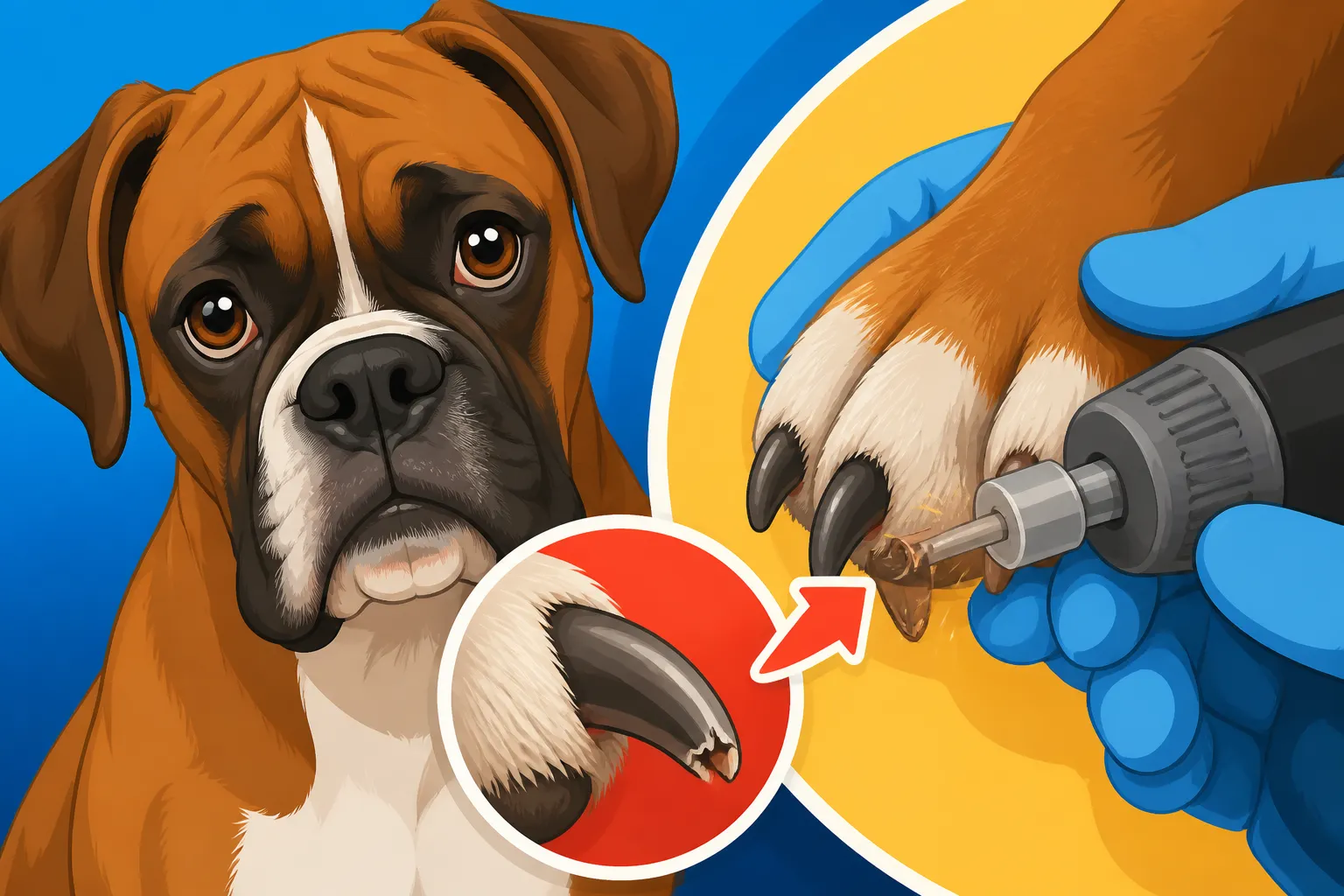
When tackling a split nail, your goal is to smooth out any rough edges, prevent further tearing, and shorten the nail enough so it's not catching on things, all while avoiding the quick.
- Positioning: Have your Boxer lie down or sit comfortably. Hold their paw firmly but gently. Use your thumb to push up the pad behind the nail you're working on, extending the nail fully and making it easier to see.
- Identify the split: Look closely at the split. Is there a loose piece? Your goal is to gently grind down the rough edges around the split, smoothing them so they don't snag, and if a piece is partially detached, you might be able to carefully grind it away or shorten the entire nail to reduce tension on the split.
- Grinding Angle: Hold the grinder at about a 45-degree angle to the underside of the nail. Grind in short bursts of 1-2 seconds, always moving the grinder from the bottom of the nail up to the top. This technique helps push the quick back gradually.
- Check Frequently: After each short burst, check the tip of the nail. For light-colored nails, you'll see a white outer ring, then a pinkish center (the quick). For dark nails, this is trickier. Look for a small, dark dot appearing in the center of the nail, which indicates you're getting close to the quick. Stop grinding immediately if you see this.
- Be Gentle Around the Split: If the split is sensitive, work around it cautiously. Your primary aim is to remove the jagged edges that are causing pain or could worsen the split. If there's a loose piece, you might be able to gently grind the attached part shorter, which can sometimes cause the loose piece to detach more easily or make it less likely to catch.
- Cooling Down: Grinding creates heat. Touch the nail frequently with your finger to ensure it's not getting too hot, especially if you're working on a sensitive area. Short bursts prevent overheating.
- Reward, Reward, Reward: Every few nails, or after a particularly good session, offer a treat and praise. Make it the best thing that happens that day. Even if you only get one nail done, celebrate the small victory. It’s all about building trust and comfort. Your Boxer might be a goofball, but they're sensitive creatures, and this helps them endure the process.
Remember, a Two-Year-Old Boxer That Still Zooms needs consistent nail care to avoid these kinds of injuries.
Preventing Future Split Nails and Ongoing Care
Once you've successfully managed a split nail, the last thing you want is for it to happen again. Prevention is always better than cure, especially when it comes to something as painful as a nail injury.
Establishing a Regular Nail Care Routine
The single most effective way to prevent split nails is consistent, regular nail maintenance. For most Boxers, this means grinding or clipping their nails every 2-4 weeks. The goal is to keep the nails short enough so that they don't touch the ground when your Boxer is standing naturally. You should be able to slide a piece of paper under their nails.
- Weekly Checks: Make it a habit to check your Boxer's nails weekly as part of your overall grooming routine. This allows you to spot any chips, cracks, or excessive length before they become a serious problem. It's also a great time to check their paw pads for any issues, especially given how active Boxers are, sometimes on abrasive surfaces. Paw Pad Care for a Boxer on Hot Pavement is equally important.
- Keep a Log: Some owners find it helpful to keep a log of when they last trimmed or ground their Boxer's nails. This helps maintain consistency and ensures you don't let them go too long.
- Slow and Steady: If your Boxer's nails are currently too long, don't try to take them all the way back in one session. You risk hitting the quick. Instead, trim or grind a small amount every few days or once a week. This allows the quick to recede over time, making it safer to shorten the nail gradually.
Many owners swear by specific pet nail grinders, such as those from Dremel's pet line, available on Chewy or Amazon, for their quiet operation and effectiveness. Investing in a good quality tool makes the process less stressful for both of you.
Environmental Considerations and Lifestyle Adjustments
Your Boxer's environment and daily activities also play a huge role in nail health.
- Appropriate Exercise Surfaces: While Boxers love to run, try to ensure a good portion of their exercise is on surfaces that naturally wear down their nails, like pavement or concrete. However, be mindful of temperature. The Temperature a Boxer Should Stop Walking At is critical, as hot pavement can burn paw pads. Balance these surfaces with softer terrain like grass to protect their joints.
- Avoid Snag Hazards: Be aware of potential hazards in your home and yard. Check for loose carpet fibers, frayed rugs, exposed wires, or uneven paving stones where a nail could get caught. If your Boxer is a prolific digger, ensure their digging spots are free of sharp rocks or debris that could damage nails.
- Dewclaw Attention: Don't forget the dewclaws! These nails don't get worn down by walking and are particularly prone to growing long, curving, and snagging on things. Make sure they are included in every nail care session.
- Diet and Overall Health: A balanced diet, such as what healthy options like Ollie provides, contributes to overall canine health, including strong nails. While no diet will completely prevent injury, good nutrition can support nail integrity. Discussing Feeding a Boxer to Stay Lean and Muscled is part of holistic care that extends to paw health.
By implementing a consistent routine and being mindful of your Boxer's environment, you can significantly reduce the risk of future painful split nails. It's an ongoing commitment, but one that is well worth it for the comfort and well-being of your beloved Boxer.
Disclaimer
This article is for general informational purposes only and does not constitute professional advice. Laws, prices and regulations vary by location and change over time. Consult a qualified professional for guidance on your specific situation.