How a Boxer Should Move at a Trot
It’s easy to watch your Boxer prance around the yard or stretch out into a run at the dog park and think, "Wow, they move beautifully!" But what does "beautiful" or, more accurately, correct movement actually look like for a Boxer, especially at a trot? Understanding the nuances of their gait, as defined by the breed standard, is key to appreciating your dog's athletic build and identifying any subtle issues that might be developing. This guide will walk you through the specifics of the Boxer's ideal trot, helping you see your dog's movement through an informed lens.
Understanding the Boxer Trot: More Than Just Moving
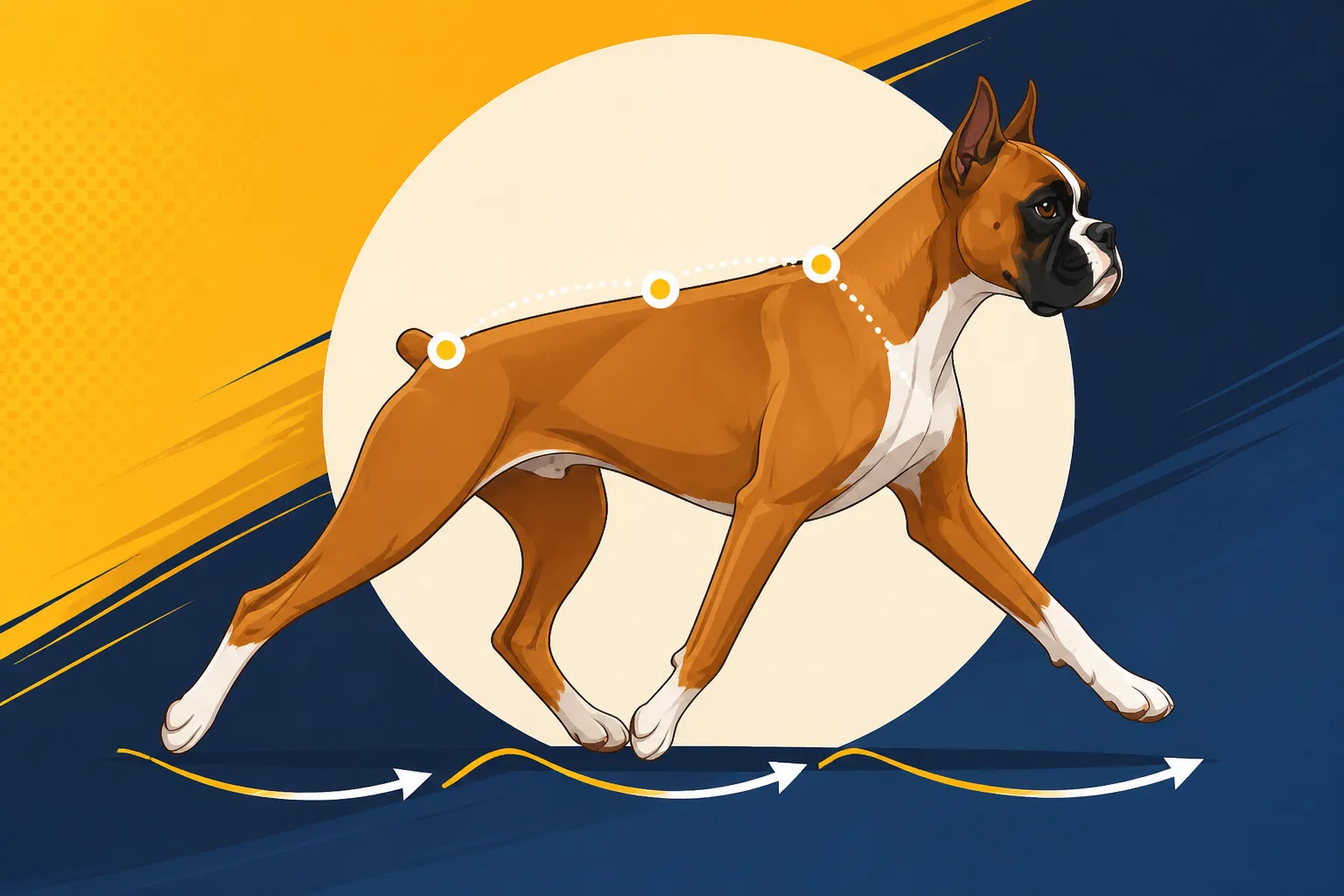
When you think about a dog moving, the trot might seem like just another way for them to get from point A to point B. But for a Boxer, the trot is the gait that truly showcases their athletic build, balance, and efficiency. It’s a rhythmic, diagonal gait where opposing pairs of legs (e.g., left front and right rear) move forward and back at the same time, separated by a moment of suspension. This isn’t just about looking good; it's about optimal function and health.
Why the Trot is the Benchmark
The trot is often considered the most telling gait for evaluating a dog's structure and soundness. While a gallop might be exhilarating to watch, and a walk is casual, the trot demands a specific coordination and balance that reveals how well a dog is put together. It’s at this speed that subtle structural strengths and weaknesses become most apparent. For a Boxer, whose very heritage is rooted in working ability, an efficient trot means they can perform their tasks—whether that’s patrolling a property or just keeping up on a long walk—with minimal wasted energy and maximum stamina.
Think of it like a finely tuned engine. When a Boxer trots, every part of their anatomy, from their shoulder angulation to their powerful rear drive, should be working in perfect synchronicity. A strong, steady trot indicates a healthy, well-constructed dog. It’s why conformation judges spend so much time observing dogs at this gait, looking for harmony and purpose. If you're interested in how their movement is assessed in a formal setting, our article on Boxer Gait and Movement in the Ring goes into more detail.
The "Elastic" and "Powerful" Description
The official breed standard uses some very specific words to describe the Boxer's ideal movement: "elastic" and "powerful." These aren't just flowery terms; they paint a picture of exactly how a Boxer should look when they trot.
"Elastic" refers to the springiness and resilience in their step. It means the dog's movement should appear effortless, not stiff or heavy. There should be a noticeable bounce, a slight give and take in their joints that allows for smooth ground coverage. An elastic trot suggests good joint health, well-developed muscles, and appropriate angulation that absorbs impact and propels the dog forward efficiently. When you see a Boxer trot with true elasticity, it looks like they could go on all day without tiring. This isn't just about speed; it's about the quality of each stride.
"Powerful" speaks to the drive and propulsion generated by the Boxer’s muscular rear end. This isn't brute force, but rather a controlled, forceful push that moves the dog purposefully forward. The rear legs should extend well behind the body, providing strong thrust, while the front legs reach forward to cover the ground. This combination of powerful drive and reaching stride allows the Boxer to cover significant distance with each step. It's the engine behind the movement, and it’s why a Boxer feels so sturdy and capable when they're in motion. Without adequate power, the trot can look weak, choppy, or simply lacking in the characteristic Boxer presence.
Common Misconceptions About Boxer Movement
Many new Boxer owners, and even some experienced ones, can have misconceptions about what a Boxer's movement should look like. One common one is that a Boxer should always be bounding, jumping, or doing their characteristic "wiggle." While these are delightful parts of the Boxer personality and play style, they aren't indicative of a correct trot. The trot is a controlled, purposeful gait. A dog that is constantly "bouncing" or has an overly high-stepping action, often called "hackneying," is actually demonstrating a fault in their movement, rather than showing off.
Another misconception is that a lack of dramatic flashiness means poor movement. Sometimes, the most efficient and correct movement can appear almost understated because it’s so smooth and fluid. It’s not about how high their knees lift, but how much ground they cover with each rhythmic stride. Also, Boxers are known for their athleticism, but this doesn't mean they should be running full-tilt all the time. A correct trot is a balanced, efficient gait, not a flat-out sprint. Understanding what The Boxer the Breed Standard Describes can help clarify these points.
The Mechanics of a Proper Boxer Trot
To truly appreciate a Boxer's trot, we need to break it down into its constituent parts. Each segment of the dog’s body plays a vital role in creating that harmonious, powerful, and elastic movement. It's a complex interplay of skeletal structure, muscle, and coordination that allows them to move with such purpose.
Front End: Reach and Drive
The front end of a Boxer, specifically the shoulder assembly, is crucial for dictating how much "reach" they have in their stride. When a Boxer trots correctly, their front legs should extend far forward, without any wasted motion or excessive lifting of the paws. This "reach" means the dog is covering a good amount of ground with each step. The legs should move straight forward, parallel to each other, like pistons, not swinging out (paddling) or crossing over (weaving).
The shoulder blade and upper arm bones, along with the powerful muscles that connect them, should work together to allow this long, free-striding motion. The layback of the shoulder and the angulation of the upper arm are key structural components that allow for this reach. When the front assembly is well-angulated and correctly muscled, the dog can absorb the impact of landing and propel itself forward smoothly. You shouldn't see any "hackneying" – a high-stepping, exaggerated front action reminiscent of a hackney horse – as this indicates incorrect angulation or muscle development. Instead, the focus is on a low, efficient sweep of the leg.
Rear End: Propulsion and Extension
While the front end provides reach, the rear end is the true power plant, providing the "drive" and "propulsion" that defines a Boxer's trot. The hind legs should push off strongly, extending well behind the body, creating a powerful thrust that propels the dog forward. Like the front legs, the rear legs should move in a straight line, neither too close together nor too far apart.
Proper angulation in the stifles (knees) and hocks (ankles) is essential for this powerful drive. A Boxer with good rear angulation will be able to flex and extend these joints fully, generating maximum power. The muscles of the thigh and hip are paramount here; they are what give the Boxer its distinctive spring and force. The rear paws should track in line with the front paws, indicating balance and efficiency. A dog whose rear legs don't track properly might be crabbing or sidewinding, moving diagonally rather than straight. This can be a sign of discomfort or structural imbalance, and sometimes even relate to conditions like Boxer Hip Dysplasia and Spondylosis.
Topline and Tail Carriage
Beyond the legs, the Boxer's topline – the line of the back from the withers to the tail – is a critical indicator of correct movement. When a Boxer trots, their topline should remain firm, strong, and level. You shouldn't see it bouncing excessively, rolling from side to side, or dipping. A strong, stable topline indicates a well-muscled back and good core strength, which are essential for supporting the powerful movement of the legs.
The tail carriage, particularly important if the tail is docked according to tradition, also contributes to the overall picture. A docked Boxer's tail should be carried gaily, curving upward without being overly curled or clamped down. It acts as a counterbalance and reflects the dog's confident demeanor. If a Boxer has a natural, undocked tail, it should flow gracefully with the dog's movement, complementing the energy of the trot. The overall silhouette should be one of strength, elegance, and balance as the dog moves. Observing the whole dog, not just the individual parts, is key to assessing their true movement.
What to Look For (and What to Look Out For)
Once you understand the mechanics, you can start to really see your Boxer's movement. It's about paying attention to the details, noticing the rhythm, coordination, and overall impression. Watching your Boxer trot on a loose leash, especially on a firm, level surface, can give you the best view.
Identifying Correct Movement
A Boxer moving correctly at a trot presents a picture of efficient athleticism. Here’s what you should be looking for:
- Rhythmic and Balanced: The trot should have a steady, almost metronomic rhythm. Each stride should look equal in length and power, with no hesitation or choppiness. The dog should look perfectly balanced, neither leaning nor listing.
- Good Reach and Drive: The front legs extend well forward, covering ground, while the rear legs push strongly from behind, propelling the dog. There should be a brief moment of suspension where all four feet are off the ground.
- Tracking True: The legs should move in straight lines, directly forward and back. From the front, you should see the legs coming directly at you, then separating evenly as they go past. From the rear, the hocks should not turn in or out.
- Firm Topline: The back should remain level and steady, without rolling or sagging. It’s a testament to their strength and structure.
- Confident Carriage: The head is carried proudly, eyes alert, and the tail (if docked) is carried gaily, complementing the purposeful stride. The dog should exude an air of eagerness and power.
It's the overall impression of seamless, effortless power that truly defines a correct Boxer trot. When all these elements come together, it’s a beautiful thing to behold.
Recognizing Faults in the Trot
Just as there are indicators of correct movement, there are clear signs of faults that can indicate structural issues, discomfort, or inefficiency. Catching these early can be important for your Boxer's long-term health.
Here are some common faults to watch out for:
- Crabbing (or Sidewinding): The dog moves with its body angled, essentially moving diagonally, rather than straight forward. This often happens because the rear legs are trying to avoid interfering with the front legs, indicating an imbalance in stride length or angulation.
- Paddling: The front paws swing out wide like a rower's oars. This indicates looseness in the shoulder or incorrect front assembly.
- Hackneying: An exaggerated, high-stepping action of the front legs, reminiscent of a hackney horse. This is inefficient and often a sign of straight shoulders.
- Close Hocks or Cow Hocks: From the rear, the hocks turn inward, bringing the rear paws too close together. This can strain joints and reduce propulsion.
- Narrow or Wide Movement: Legs that are either too close together (rope walking) or too far apart. Both indicate structural issues that prevent proper tracking.
- Rolling or Soft Topline: The back appears to bounce or sway excessively, indicating weak back muscles or a structural weakness in the spine.
- Choppy Gait: Short, stilted steps lacking fluid reach and drive. This can indicate pain, stiffness, or insufficient angulation.
- Interfering: The front and rear legs actually knock into each other during movement, which is a clear sign of poor coordination or structural imbalance.
If you observe these faults regularly, it's worth a conversation with your veterinarian. Issues like Boxer Hip Dysplasia and Spondylosis or even pain from arthritis can manifest as changes in gait.
The Importance of Professional Evaluation
If you have concerns about your Boxer's movement, don't hesitate to seek professional advice. A veterinarian, especially one with an interest in canine sports medicine or orthopedics, can evaluate your dog's gait and physical structure to rule out pain, injury, or developing conditions. They can assess joint health, muscle development, and neurological function.
An experienced Boxer breeder or conformation judge can also offer valuable insights into breed-specific movement and help you identify subtle deviations from the ideal. Early detection of a gait abnormality can sometimes lead to interventions that prevent conditions from worsening, whether it's adjusting exercise, diet, or starting a therapeutic regimen. Knowing what to look for empowers you to be a more vigilant advocate for your Boxer's well-being.
How Diet and Exercise Support a Healthy Trot
A Boxer's impressive trot isn't just a matter of genetics; it's also profoundly influenced by their overall health, which is directly tied to their diet and exercise regimen. Without proper nutrition and adequate physical activity, even a structurally sound Boxer can develop issues that compromise their movement. It's a holistic approach to maintaining that powerful, elastic gait throughout their life.
Fueling a Boxer for Optimal Movement
Just like any athlete, a Boxer needs the right fuel to perform optimally. A high-quality diet, rich in easily digestible protein, is crucial for building and maintaining strong, lean muscle mass. These muscles are what power their powerful rear drive and support their topline during the trot. Look for foods with real meat as the first ingredient. Many reputable brands offer excellent options; for instance, Chewy offers a vast selection of dog foods tailored for active large breeds.
Beyond protein, the right balance of fats provides sustained energy, while carbohydrates offer readily available fuel. Don't forget the importance of essential vitamins and minerals, particularly those that support joint health, such as glucosamine and chondroitin, which are often found in large breed formulas. Keeping your Boxer at a healthy, lean weight is paramount. Extra pounds put unnecessary strain on their joints and can dramatically alter their gait, making it heavier and less elastic. Our article on Feeding a Boxer to Stay Lean and Muscled provides detailed guidance on this.
It's not just about what they eat, but also how they eat. Splitting their daily ration into two or three meals can help with digestion and maintain steady energy levels, which is important for consistent performance and overall health.
Maintaining Muscle and Joint Health
Consistent, appropriate exercise is non-negotiable for a Boxer to maintain a healthy trot. They are an energetic breed, and their muscles and joints need regular activity to stay strong and flexible. This isn't just about letting them zoom around the yard; it means purposeful exercise.
Daily walks are a good start, but Boxers often benefit from more vigorous activities like fetch, controlled running, or even swimming. Swimming is an excellent low-impact exercise that builds muscle without stressing joints. However, always be mindful of their brachycephalic (flat-faced) nature, which makes them susceptible to overheating. Our guide on Boxer Exercise Needs and the Heat That Limits Them offers crucial advice on this.
It’s also important to avoid over-exercising a young Boxer puppy, as their growth plates are still developing. Conversely, as they age, maintaining controlled, regular exercise helps to keep them mobile and strong, potentially mitigating the effects of age-related joint stiffness. Regular vet check-ups can also help monitor joint health and suggest appropriate supplements or interventions if needed. Ensuring they have a comfortable, supportive bed can also make a huge difference in their joint comfort and readiness for daily activity. Chewy has many options for orthopedic beds that can be a game-changer for active or older Boxers.
Here's a quick comparison of what makes up a good vs. a problematic Boxer trot:
| Characteristic | Ideal Boxer Trot (Correct) | Faulty Boxer Trot (Problematic) |
|---|---|---|
| Rhythm | Rhythmic, steady, balanced, effortless | Choppy, inconsistent, unbalanced, hesitant |
| Reach | Front legs extend far forward, covering ground with each stride | Front legs have short, stilted reach; high-stepping (hackneying) |
| Drive | Powerful propulsion from rear, strong extension behind body | Weak push-off, rear legs don't extend fully; shuffling or dragging |
| Tracking | Legs move in straight, parallel lines, front and rear tracking in line | Crabbing (moving diagonally), paddling (front paws swing out), close hocks/cow hocks (rear turns in) |
| Topline | Firm, level, stable; no rolling, bouncing, or sagging | Rolling, wobbly, or sagging; dips or humps |
| Footfall | Light, springy, elastic; brief moment of suspension where all feet are off ground | Heavy, plodding, stiff; lack of spring or suspension |
| Stamina | Appears capable of maintaining trot for extended periods with ease | Quickly tires, shows signs of discomfort or lack of conditioning |
| Overall | Coordinated, purposeful, efficient, powerful, and reflects true athleticism, confidence, and sound structure | Uncoordinated, strained, inefficient, indicates structural flaws, pain, or lack of conditioning |
Observing these aspects will help you understand your Boxer's unique way of moving and ensure they stay healthy and happy on the go.
Disclaimer
This article is for general informational purposes only and does not constitute professional advice. Laws, prices and regulations vary by location and change over time. Consult a qualified professional for guidance on your specific situation.