Dog Sports That Suit a Boxer
Boxer dog sports and working heritage provide physical and mental energy outlets to prevent destructive behaviors and barking.

Boxer dog sports and working heritage provide physical and mental energy outlets to prevent destructive behaviors and barking.

An under-exercised Boxer destroys household items because working dog instincts and high energy require physical and mental outlets.

Boxer temperament with children and other pets requires supervision because their prolonged puppyhood creates safety challenges.

Boxer protective instincts explained through breed history, showing how to build a vigilant watchdog without aggression.
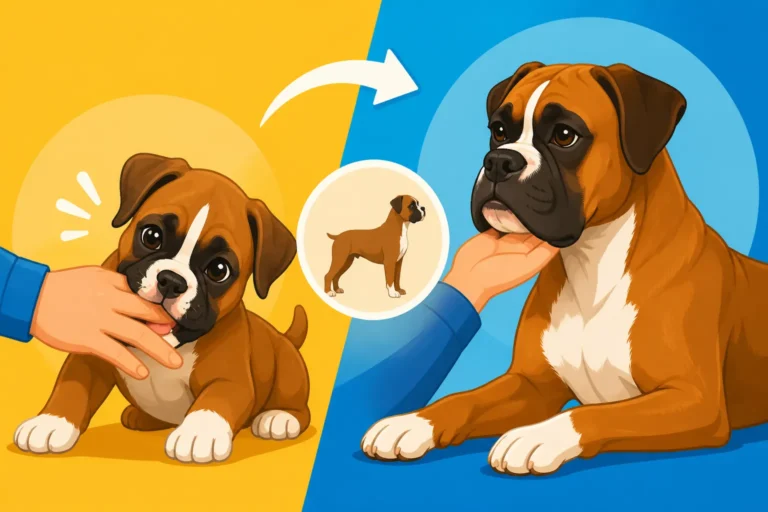
Boxer mouthing behavior from puppy teeth to adult jaws, with practical strategies to teach appropriate habits and stop nipping.
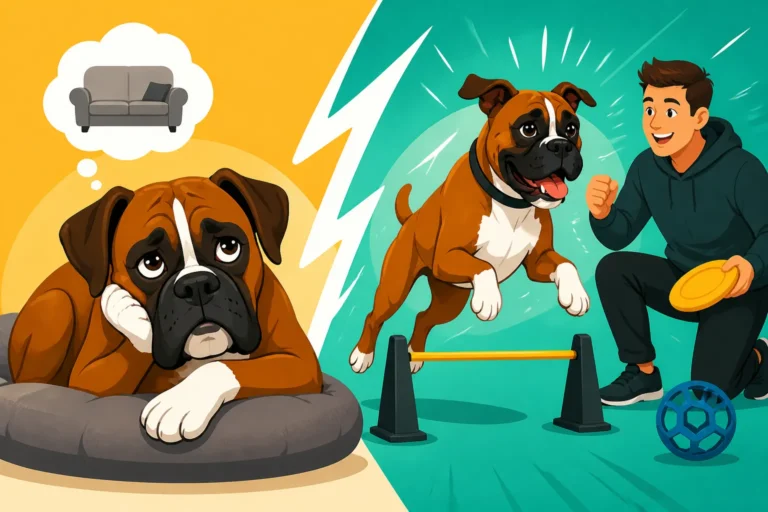
Boxer training challenges caused by high intelligence and endless energy require dynamic methods instead of boring repetition.

Boxer exercise needs and heat risks require safe activity limits for German working dogs designed for power and short bursts.

Boxer paw swatting stems from natural instincts, high energy levels, and brachycephalic traits that make paws useful tools.
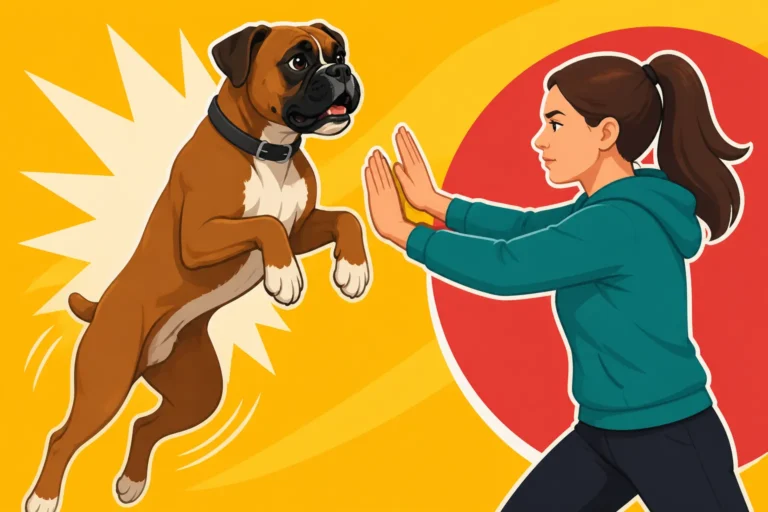
Stopping a seventy-pound Boxer from jumping requires empathetic strategies, positive reinforcement, and using the four on the floor rule.

Boxer puppyhood lasts three years because mental maturity takes longer, meaning emotional development finishes much later.